Monday, April 6, 2026

Lost Between Forest and City: A Wolf’s Journey into Hamburg

Gray wolf

For centuries, wolves have roamed Europe’s forests and haunted the human imagination, symbols of both cunning and danger. Though they are the ancestors of our loyal domestic dogs, these elusive predators have long inspired fear, immortalized in timeless tales like Little Red Riding Hood and The Three Little Pigs. Legends of werewolves only deepened their mystique, born in an era when superstition and fear of the unknown shaped the way people saw the natural world. Yet behind the myths lay reality: wolves have historically threatened livestock, and occasionally humans, reminding us that the line between story and truth is often thinner than we imagine.

The IKEA building where the attack happened.

In a city where humans rarely expect to see wild predators, a young wolf wandered into the heart of Hamburg on March 31. At a bustling shopping center near an IKEA in the Altona district, the disoriented animal ran blindly into a glass wall, its confusion drawing the attention of passersby. A 65-year-old woman, thinking it was a stray dog, stepped forward to guide it to safety—and was bitten in the face. Rushed to the hospital, she left behind a wolf that slipped into the city streets, moving with uncanny stealth until it was finally cornered on the shores of Lake Binnenalster. Experts believe the wolf had strayed far from its natural territory, perhaps the same one spotted days earlier in Blankenese on the city’s outskirts. The episode remains under investigation, a vivid reminder that even the wildest creatures can occasionally cross the boundaries of human civilization.

Hamburg skyline with Lake Binnenalster in the foreground.

This incident marks the first wolf attack in Germany in nearly three decades, since the species was reintroduced in 1998. Since then, the population has flourished, with over 200 packs now documented across the country, reflecting a broader recovery across Europe. Wolves are typically shy and avoid human contact, but as their territories expand across an increasingly urbanized continent, encounters with people have become more frequent. Such interactions often involve livestock predation, and occasionally, pets or even prized animals—most famously in 2022, when European Commission President Ursula von der Leyen’s pony, Dolly, was killed by a wolf. The incident sparked calls to relax protection measures, prompting national authorities in Germany, France, and Austria to ease conservation rules, though the European Court of Justice has emphasized that wolf populations must not be jeopardized.

Experts stress that lethal responses—hunting or poisoning—do not address the root causes. Wolves are not the cold-blooded killers of legend; their occasional attacks stem largely from human-driven changes such as habitat loss and depletion of natural prey. Effective coexistence requires public awareness of the ecological role wolves play, the adoption of non-lethal measures like livestock guardian dogs, and careful mapping of wildlife corridors to anticipate human-wolf encounters. The Hamburg attack serves as a stark reminder of the delicate balance between humans and one of Europe’s most iconic predators, highlighting the urgent need for conservation strategies that allow both to thrive side by side.      

Coexisting with Tigers: Bangladesh’s Community-Led Approach to Safety and Conservation

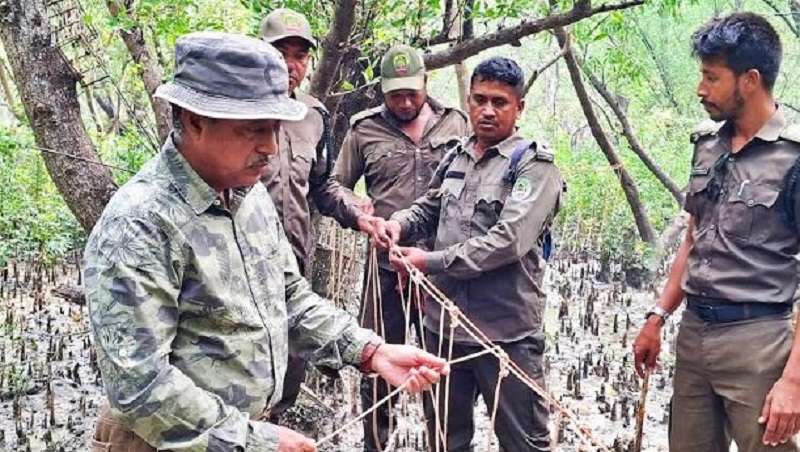
Residents living on forest edges unite through safety-training to protect their communities and preserve the Sundarbans. 

In the heart of Bangladesh’s Sundarbans, a new initiative is empowering the people who live at the forest’s edge. WildTeam, a local nonprofit, recently launched a training program designed to keep forest-dependent communities safe while protecting the wildlife around them. The sessions took place in Joymoni, under the Chandpai Range of Mongla, and Kolbari, in the Satkhira Range, bringing vital knowledge directly to those who need it most. The program is part of a five-year effort, “Protecting Bengal Tiger and Biodiversity of the Sundarbans,” supported by the Bangladesh-U.K. partnership through Echotex and Echoknits. Its goal is clear: safety and conservation must go hand in hand. Participants learn practical skills—from handling human-tiger encounters and understanding forest laws, to basic first aid and sustainable harvesting techniques. Each participant also received an emergency kit box, making their trips into the forest safer and more prepared for unexpected situations. This year, 200 community members—100 from Chandpai and 100 from Satkhira—took part, a milestone in building safer, better-informed communities. Over the next five years, the program aims to train more than 1,000 people, creating a network of empowered forest dwellers who can protect themselves and the wildlife they coexist with. It’s a step toward a future where humans and tigers not only survive side by side but thrive together.

Safety kits being distributed to bolster emergency preparedness among forest-dependent people.

The initiative carries profound conservation significance. In forest-edge communities, unsafe encounters with wildlife often lead to tragic outcomes—fatal injuries, or retaliatory killings of tigers and other animals. WildTeam’s program helps residents stay safe while protecting the Sundarbans’ delicate ecological balance, teaching practical skills such as safe forest entry, group movement, early risk detection, and emergency response during tiger encounters. Timing is critical: the honey collection season, from April 1 to June 30, draws large numbers of collectors into the forest, raising the risk of accidents and tiger encounters. Rashed Hossain, Assistant Commissioner (Land) of Shyamnagar Upazila, highlighted the serious dangers honey collectors face, noting that many have been injured or killed over the years. He emphasized that following basic safety practices and entering the forest legally with Forest Department permission can greatly reduce conflicts. Social Welfare Officer S.M. Delowar Hossein reinforced the ethical dimension, urging collectors to maintain integrity and not adulterate honey, emphasizing respect for both nature and its resources. Dipon Chandra Das, Assistant Conservator of Forests in Chandpai Range, called on locals to care for the Sundarbans, especially ahead of the honey-collecting season. He reminded communities that the forest asks only for awareness, restraint, and responsibility, cautioning against harming wildlife—like deer, wild boar, or tigers—or damaging the ecosystem through tree-cutting or poison fishing. Together, these messages promote a culture of safety, stewardship, and harmony with the forest.

A live demonstration teaching villagers how to respond during a tiger encounter. 

Bangladesh is setting a powerful example of how conservation and community welfare can go hand in hand. The five-year program in the Sundarbans builds on lessons from earlier initiatives under the Integrated Tiger Habitat Conservation Programme (ITHCP), supported by KfW and IUCN. Those experiences—improved community preparedness, reduced pressure on forest resources, and stronger local response systems—have informed the current unified approach in the Chandpai and Satkhira ranges. The training equips residents not only to stay safe in the forest and harvest resources responsibly, but also to coexist peacefully with wildlife. Historically, human-tiger conflicts have arisen when villagers—primarily men—enter the forest for fishing, honey collection, or firewood. Now, with proper guidance, they can avoid potentially fatal encounters. Complementary community-based measures, such as upgraded cooking stoves and solar light installations, further reduce dependency on forest resources, improve safety in high-risk zones, and foster a more balanced, resilient relationship between the villages and the Sundarbans. WildTeam is also expanding awareness through community platforms, ensuring conservation knowledge reaches adults, children, and youth alike. The success of this program offers a model that could be replicated in other regions facing human-tiger conflicts, such as Nepal, where rising tiger populations have led to increased attacks and limited support for survivors. Initiatives like this are crucial to secure a future where people and wildlife can thrive side by side.     

Between Conservation and Coexistence: The Hidden Cost of Nepal’s Tiger Recovery

Bengal tiger

Nepal has drawn international praise for nearly tripling its tiger population—from 121 in 2010 to 355 in 2022. But behind this conservation milestone lies a quieter, more troubling reality. For many of the country’s poorest communities living along the fringes of national parks, the return of tigers has brought not just pride, but fear, injury, and lasting hardship. Survivors of tiger attacks are often left with permanent disabilities and crushing medical expenses—costs that government relief programs rarely cover in full. Pushpa Tamang is one of them. In June 2019, she set out for Bhawani Community Forest, just a short walk from her home, to cut grass for her cattle. It was a routine task—until, without warning, a tiger lunged from the undergrowth and attacked her from behind. Its claws tore deep into the left side of her scalp, and she collapsed almost instantly. The animal retreated only after her companions raised frantic cries. Pushpa was rushed to Kohlapur Teaching Hospital, where doctors stitched 60 wounds across her head. The first three days of treatment alone cost Rs. 50,000—an overwhelming sum for a family already living on the edge. But the immediate injuries were only the beginning. Today, Pushpa lives with chronic headaches, partial paralysis on her left side, and frequent spells of unconsciousness. She cannot be left alone; even simple tasks can leave her confused and disoriented. Her husband, Mitra Lal, once an experienced furniture maker, had no choice but to abandon his work to care for her full-time. The financial strain is relentless. Her treatment costs about Rs. 3,500 each month, with another Rs. 1,500 spent on travel to the hospital. Because she is extremely sensitive to temperature, the family must keep ice at home year-round—an added expense they can scarcely afford. To keep up, they have borrowed heavily from multiple sources, and their debt has now climbed beyond Rs. 700,000. What remains to them is fragile: a modest home built on unregistered land and a small plot of just four katthas. For Pushpa and her family, the price of conservation is not measured in statistics, but in pain, sacrifice, and a future burdened by debt.

Bardiya National Park

Pushpa’s story is far from isolated—it is one of many that ripple across the Terai. In Bardiya District, Juna Chaudhary of Barbardiya Municipality-10 was attacked by a tiger five years ago while harvesting rice in her field. She survived, but only after spending fifteen days in the hospital and accumulating medical bills exceeding Rs. 350,000. Despite the treatment, her hand remains partially paralyzed. Her husband, a police officer, now bears the weight of supporting a family of four on a modest income. After navigating a long and exhausting bureaucratic process, Juna received Rs. 135,000 in compensation from Bardiya National Park—less than half of what it cost to save her life. On paper, Nepal’s amended Guidelines for Distribution of Relief against Wildlife Damage 2023 appear more substantial. Families of those killed by wild animals are entitled to Rs. 1 million, while individuals with permanent disabilities can claim up to Rs. 500,000, and those seriously injured may receive Rs. 200,000. In practice, however, these amounts rarely match the true cost of survival. Private hospital fees, ongoing treatment, and long-term rehabilitation quickly outstrip the relief provided. Worse still, accessing this compensation is often a burden in itself. The claims process is slow, complex, and can take months to complete—time that victims and their families simply do not have when faced with mounting bills and uncertain futures.

Tiger in Bardiya National Park

It is deeply unsettling that years of dedicated efforts to protect Nepal’s tigers have brought unintended consequences for the very people living alongside them. As tiger numbers have rebounded, so too has the frequency of human–tiger conflict. In Bardiya National Park alone, 35 people were attacked between 2016 and 2024. The trend is alarming: in the first four years, 16 people were attacked and six lost their lives, while in the fiscal year 2022–23 alone, 10 attacks resulted in six deaths. For local communities, the danger is inescapable. Their daily survival depends on the forest—for grazing, fodder, and fuel—placing them directly in harm’s way. Conservationist Ashish Chaudhary emphasizes that the solution lies not just in protecting tigers, but in reshaping their habitat. Expanding grasslands and creating water sources deeper within forests could help keep predators away from human settlements. A single tiger requires roughly four square kilometers of territory, including several hectares of grassland and access to water—resources that cost an estimated Rs. 1.8 to 2 million to develop and maintain. At the same time, proposals to reduce communities’ dependence on forests have existed for years but remain largely unimplemented. Many residents feel that authorities have grown complacent, relying on compensation schemes for deaths and injuries as a substitute for meaningful prevention. Yet for those living on the front lines, relief payments are no replacement for safety—and no substitute for a future where coexistence does not come at such a high human cost.

Wildlife conservation cannot be measured solely by the recovery of tiger populations after years of poaching and other human-driven threats. Its true success lies in fostering a sustainable balance between wildlife and the communities that live closest to it. This means not only protecting animals, but also safeguarding people—ensuring that victims of human–wildlife conflict receive adequate medical care, financial support, and long-term assistance. In Nepal, while some local municipalities have stepped in to provide relief to affected families, these efforts remain uneven and insufficient. Areas like Rapti Sonari Rural Municipality, where attacks are frequent, often lack the resources to respond effectively. This gap underscores the urgent need for stronger, more coordinated intervention from the government and its agencies to support communities living under constant threat. At the same time, prevention must take priority. Raising awareness among residents, improving settlement planning, and reducing the likelihood of wildlife straying into human spaces are essential steps. Habitat management—such as expanding grasslands and building artificial water sources deeper within forests—can help redirect animals away from villages. Equally important are long-discussed but under-implemented initiatives to reduce dependence on forest resources in high-risk areas.

Relying solely on compensation for injuries and deaths is not a sustainable solution. Protecting lives requires practical, community-centered measures: regulated forest access, improved cooking stoves, solar lighting, and locally driven conservation efforts that empower residents while reducing risk. These strategies not only enhance safety but also ease pressure on forest ecosystems. There are models to learn from. Bangladesh, for instance, has introduced a five-year training program around the Sundarbans aimed at protecting both communities and wildlife. By adopting similar proactive and inclusive approaches, Nepal can move beyond reactive measures and work toward a future where conservation and coexistence go hand in hand.

Wednesday, March 25, 2026

The Mexican Wolf Returns to Mexico: From Brink to Wilderness

A Mexican wolf being released into Mexico's Durango state.

For centuries, the Mexican wolf roamed freely across the rugged mountains and forests of northern Mexico and the American Southwest. But as human expansion spread, its haunting call grew faint—silenced by decades of persecution and mounting human pressures. By the mid-20th century, the species had all but disappeared from the wild. Its survival, however, would depend on an extraordinary alliance. In the 1970s, Mexico and the United States launched a binational effort to pull the Mexican wolf back from the brink. Agencies such as the Arizona Game and Fish Department, the New Mexico Department of Game and Fish, and the U.S Fish and Wildlife Service worked alongside Mexico’s Comisión Nacional de Áreas Naturales Protegidas (CONANP) and the Secretaría de Medio Ambiente y Recursos Naturales (SEMARNAT). Through captive breeding, cross-fostering, and carefully managed reintroductions, a subspecies on the edge was given a second chance. Today, its numbers are slowly rising—more than 300 wolves in the United States and a fragile but growing population in Mexico.

Now, in the remote spine of the Sierra Madre Occidental, a new chapter begins. After more than fifty years of silence, a wolf pack has returned to the wilds of Durango. An alpha pair, accompanied by their two young pups, has made a quiet journey south from the United States—carrying with them the legacy of decades of conservation work. Their arrival is the result of deep collaboration across borders. Supported by U.S. wildlife agencies and Mexican conservation authorities, the wolves were transported to the forested lands of El Tarahumar and Bajíos del Tarahumar, in the municipality of Santa Catarina de Tepehuanes. Here, landscapes carefully managed by ejidos and local communities remain rich and intact—offering a rare refuge where the species can once again take hold. For now, the pack waits—held within a pre-release enclosure, learning the rhythms of their ancestral home. The scent of pine, the movement of prey, the distant sounds of the forest—all are new, yet deeply familiar. Soon, they will step beyond the boundary and disappear into the wilderness. When they do, scientists from both nations will follow their journey through radio telemetry and camera traps, tracking each movement as the story unfolds. But the wolves’ future will depend on more than science alone. It will rest on coexistence—on the fragile balance between people and predator. And if that balance can be found, the ancient howl of the Mexican wolf may once again echo across the mountains of Durango.

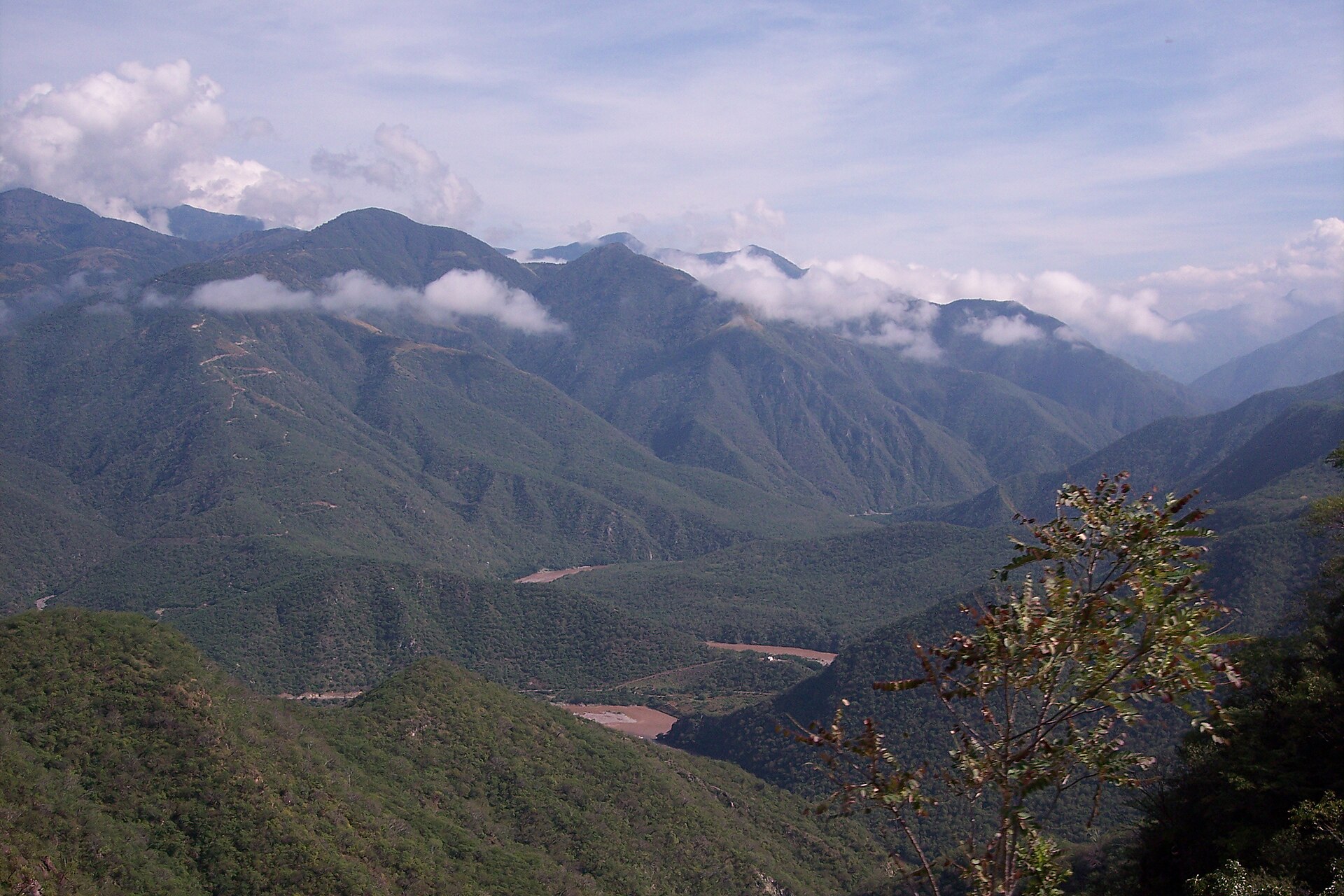
Sierra Madre Occidental with Santiago River winding through it.

The return of these wolves to Durango is more than a single conservation milestone—it is the living proof of a decades-long partnership between nations. Since the 1970s, agencies such as the U.S. Fish and Wildlife Service and the SEMARNAT, working alongside initiatives like the Saving Animals from Extinction (SAFE) program, have helped guide the Mexican wolf’s fragile recovery. Through their shared efforts, wolves have begun to reclaim fragments of their former range on both sides of the border. Now, with just 45 individuals in Mexico, the arrival of this small pack in Durango carries outsized significance—a signal of cautious hope. As they are monitored and studied, plans are already forming for a second reintroduction into the Sierra Madre Occidental, extending this slow return to the wild.

Yet the fate of the Mexican wolf will not be decided by wilderness alone. Its survival depends on a delicate balance between predator and people. Across forests and ranchlands, coexistence must be carefully built—through education, awareness, and the use of non-lethal measures that protect both livestock and wolves. Mexican authorities are working closely with rural communities to foster this relationship, but the challenge stretches beyond borders. In the ranching landscapes of the American Southwest, the same coexistence must take root. Only then—through shared responsibility, understanding, and respect—can the story of the Mexican wolf truly come full circle, its echoing howl once again a lasting presence across the lands it has long called home.

Friday, March 20, 2026

A Game of Survival: How Game Theory Is Transforming Tiger Conservation

A schematic image describing the study.

In wildlife conservation, a key priority is identifying corridors that allow animals to move safely between habitats. Traditionally, this has been done by mapping habitat connections using GPS collar data, aerial imagery, and field evidence such as tracks, scat, and camera trap footage. However, researchers in India have introduced an innovative approach to better understand how tigers navigate an increasingly human-dominated landscape. Led by a team from the Indian Institute of Remote Sensing and IILM University, the study focused on the Central Indian region, which is home to nearly 40% of the country’s tiger population. Their findings highlighted the PenchKanhaAchanakmar landscape as a critical movement corridor, offering a data-driven framework to prevent tigers from becoming isolated in fragmented forest patches. To examine the impact of habitat fragmentation, the researchers applied concepts from game theory—the study of strategic decision-making in situations where outcomes depend on multiple interacting agents. Using the Hawk–Dove model, they treated tigers as decision-makers weighing potential rewards against risks. In this context, the reward is access to prey-rich forests, while the risks include human-made barriers such as roads and railways. By simulating these trade-offs across a digital landscape, the team was able to predict the routes tigers are most likely to choose. They further integrated graph theory, representing forest patches as interconnected nodes in a network. This allowed them to pinpoint which areas function as vital links, maintaining connectivity across the broader ecosystem.

The game-theoretic approach integrates insights into tiger behavior with the influence of specific human-made obstacles. By assigning payoff values to different landscape features, the researchers can predict not just where a tiger might travel, but the routes it is most likely to choose to maximize its chances of survival. This results in a more nuanced and realistic understanding of how animals navigate landscapes that are constantly being reshaped by human activity. However, the team emphasized the need for more empirical data from GPS-collared tigers to validate these predictions—specifically, to determine how closely real-world movement patterns align with the model’s projected pathways.

The application of game theory to tiger movement highlights the powerful role that mathematics and scientific modeling can play in wildlife conservation. This study represents a promising step forward in identifying and protecting critical wildlife corridors, particularly for wide-ranging species like tigers, while supporting their safe movement into new territories. By pinpointing likely bottlenecks—areas where tigers are most at risk of encountering human settlements—this approach can guide more informed planning decisions, such as where to build wildlife crossings or limit infrastructure development. Ultimately, it demonstrates that with the right combination of data, technology, and analytical tools, it is possible to balance rapid human expansion with the ecological needs of apex predators, allowing both to coexist and thrive.      

Sunday, February 8, 2026

From Villagers to Guardians of the High Snows: The Women Protecting India’s Snow Leopards in Spiti Valley

These women work with the Himachal Pradesh forest department to track and protect snow leopards.

High in the frozen mountains of Central and South Asia, the snow leopard moves almost unseen. It is the charismatic apex predator of the high snows, perfectly adapted to some of the harshest terrain on Earth. Of the twelve countries where it is found, India is home to one of the world’s largest populations. In 2023, the country completed its first comprehensive national survey, estimating that more than 700 snow leopards survive across its Himalayan and trans-Himalayan landscapes. One of their strongholds lies around the village of Kibber, in Himachal Pradesh’s Spiti Valley—a stark, high-altitude cold desert carved into the Himalayan belt. For generations, the snow leopard was regarded here chiefly as a threat to livestock and livelihoods. Now, in Kibber and nearby villages, attitudes are beginning to shift, as communities come to see the animal not as an adversary, but as a vital presence in a fragile mountain ecosystem. One group of women has gone a step further, placing themselves at the centre of efforts to protect it.

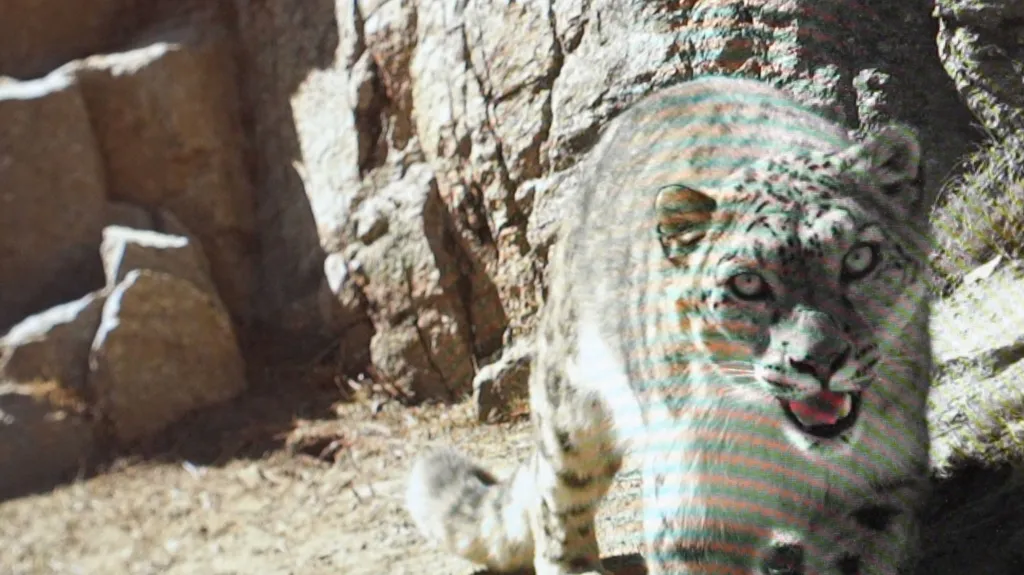
A snow leopard captured on camera trap.

They call themselves Shenmo, taking their name from the local word for the snow leopard—shen. The group is made up of nearly a dozen women who work alongside Himachal Pradesh’s forest department and conservation scientists to monitor and safeguard the cats. Trained to install and maintain camera traps fitted with unique identification codes and memory cards, they help capture fleeting images of wildlife as it passes silently through the mountains. Among them is Lobzang Yangchen, a local coordinator working with a small community group supported by the Nature Conservation Foundation (NCF) in partnership with the forest department. She was part of the team that contributed data to Himachal Pradesh’s snow leopard survey in 2024, which recorded 83 snow leopards in the state—up from 51 just three years earlier. Spread across nearly 10,000 square miles, the camera traps also documented 43 other species. Individual snow leopards were identified by the distinctive rosette patterns on their fur, and the findings are now shaping wider conservation and habitat management plans.

One of the women recording data from a camera trap.

Much of this work takes place in winter, when heavy snowfall pushes snow leopards and their prey down to lower elevations, revealing tracks that would otherwise remain hidden. For the women of Shenmo, a survey day begins after household chores are finished. They gather at a base camp and travel by vehicle for as long as the terrain allows, before continuing on foot—often hiking several kilometres to camera sites more than 14,000 feet above sea level. One such trek in December was accompanied by the BBC. Along a narrow mountain trail, the women paused where fresh pugmarks marked the snow. They searched for other signs—scrapes and scent-marking spots—before carefully fixing a camera to a rock overlooking the path. To test the setup, one woman carried out a “walk test,” crawling along the trail to ensure the camera’s height and angle would capture a clear image. Later, they visited older camera sites to retrieve memory cards and replace batteries installed weeks earlier. By mid-afternoon, the team returned to camp to log and analyse the images using specialised software.

Snow leopard images captured by camera traps being analyzed.

The women who joined the camera-trapping programme in 2023 did not set out to become conservationists. In Spiti Valley, winter is long and unforgiving, a season when fields lie dormant and work is scarce. With little agricultural labour to fall back on, curiosity—and the chance to earn a small daily wage—drew them in. As Lobzang Yangchen recalls, the income of 500 to 700 rupees a day mattered. What none of them anticipated was how this work would slowly alter not only their own perspectives, but the way their community viewed the snow leopard. Over time, their role expanded beyond tracking wildlife. The women now help villagers navigate government insurance schemes to offset livestock losses, and encourage the use of predator-proof corrals made of stone or wire mesh to keep animals safe through the night. Their efforts coincide with a growing recognition of the region’s ecological importance. Spiti Valley has recently been included in the Cold Desert Biosphere Reserve, a UNESCO-recognized landscape designed to protect fragile ecosystems while sustaining the people who live within them. As climate change reshapes the trans-Himalayan plateau, conservationists say such local partnerships are no longer optional—they are essential. Deepshikha Sharma, program manager with the NCF’s High Altitudes initiative, describes the women of Shenmo not as volunteers, but as practitioners—active participants in wildlife monitoring and protection. For the women themselves, the work carries a simpler meaning. It brings them closer to the land they have always called home. 

Their story, however, does not stand alone. Thousands of kilometers away, in the dense mangrove forests of the Sundarbans, women who have lost their husbands to tiger attacks are restoring damaged coastlines by planting mangrove saplings—natural defences against cyclones that are becoming more intense as the climate warms. From the frozen slopes of Spiti to the shifting delta of eastern India, local women are emerging as unexpected guardians of some of the country’s most fragile environments. Through quiet, persistent effort, they are showing that conservation does not begin in distant institutions, but in the daily lives of those who live closest to the wild.       

Saturday, February 7, 2026

Nature Reborn: From Desert to Oasis in Kuwait’s First Private Wildlife Sanctuary

Shabeeb Mubarak Al-Ajmi 

About 50 kilometers southwest of Kuwait City, in the heart of a stark desert, lies a remarkable sanctuary often regarded as the country’s first private nature reserve. Here, gazelles and the iconic Arabian oryx roam freely across a landscape slowly transformed into a lush haven. This oasis of life is the vision of environmental activist Shabeeb Mubarak Al-Ajmi, who over the past four years has devoted himself to collecting, cultivating, and preserving a diverse array of plant species. What was once barren sand is now a thriving, sustainable ecosystem, with over 27 plant species—including 14 native to Kuwait—creating a vibrant backdrop that comes alive in the spring.

Arabian oryx in the reserve.

Al-Ajmi described the antelopes’ lives with warmth and care: they are fed clover and fodder, reproduce naturally every eight months, and thrive without human interference—a testament to the reserve’s balanced habitat. He likens his bond with the animals to that of a father with his children, yet he is ready to release them into official reserves under the Environment Public Authority to support ecotourism. Speaking of the Arabian oryx, he takes pride in maintaining purebred animals and emphasizes Kuwait’s pivotal role in protecting the species, honoring the legacy of the late Sheikh Jaber Al-Abdullah Al-Sabah, a pioneer in international oryx conservation.

Al-Ajmi and a staff worker tending to gazelles.

Looking ahead, Al-Ajmi hopes the project will gain official backing to further Kuwait’s environmental objectives and raise public awareness. He stresses that the sanctuary’s success is a collective effort, supported by the volunteer group “Our Environment,” which aims to turn the reserve into a scientific and educational hub. Through research programs, workshops, and awareness courses, the site welcomes students, researchers, and environmental enthusiasts, nurturing a generation attuned to sustainability. Beyond being a refuge for wildlife, the reserve demonstrates how dedication, patience, and love for nature can transform even the harshest desert into a thriving ecosystem—sending a powerful message that life can flourish wherever care and vision are applied. 

The Risk Behind Recovery: What the Death of Wolf No. 2305 Reveals

A northwestern wolf wearing a radio collar.

Wildlife conservation efforts rely heavily on strict safety protocols, particularly during critical interventions meant to support the survival of vulnerable species. Despite these safeguards, operations do not always unfold as intended. Such was the case with a breeding male wolf from Colorado’s King Mountain wolf pack, which died on January 28 during a collaring operation conducted by Colorado Parks and Wildlife (CPW) staff in Routt County. The three-year-old wolf, identified as No. 2305, had been captured in Oregon and released in Grand County in 2023. According to CPW Acting Director Laura Clellan, both agency staff and contractors adhered to established animal care guidelines throughout the operation. However, when the wolf was transferred from the capture site to CPW field personnel, he was found unresponsive. Despite immediate resuscitation efforts, staff determined that the animal had died. Clellan noted that while CPW has previously conducted successful capture operations, this incident has led the agency to temporarily suspend such activities while it reviews the circumstances surrounding the wolf’s death. To determine whether underlying health issues may have contributed, CPW conducted a necropsy at its Fort Collins health laboratory. Final laboratory results are still pending. The U.S. Fish and Wildlife Service authorized the necropsy, as the death of No. 2305 was not considered a potential law enforcement matter. 

No. 2305 was the first wolf to die during a collaring operation in Colorado and the twelfth wolf released as part of the state’s reintroduction effort. In January 2025, an additional 15 wolves were released in Eagle or Pitkin counties after being relocated from British Columbia. Of those animals, three collared wolves—two gray females, No. 2504 and No. 2506, and one male, No. 2513—were later found dead under unexplained circumstances, with mortality investigations still ongoing. The U.S. Fish and Wildlife Service has also conducted necropsies on several wolves that have died in Colorado, and those results remain pending. The death of No. 2305 underscores the reality that even when conservation protocols are carefully followed, unpredictable factors can arise and alter outcomes. Such setbacks are an inherent part of wildlife conservation and should not be viewed as insurmountable obstacles. While the loss of No. 2305 introduces uncertainty—particularly regarding its potential impact on the King Mountain pack and Colorado’s broader wolf recovery efforts—CPW wolf conservation program manager Eric Odell emphasized that the agency will continue monitoring the pack to assess its status and contribution to establishing a self-sustaining wolf population in the state.       

Wednesday, January 28, 2026

At the Forest’s Edge: How Technology Is Helping Japan Coexist with Bears

Brown bear

In Japan’s northern and mountainous regions, the boundary between human settlement and wild habitat is growing ever thinner. As bears venture closer to towns and cities, encounters that were once rare are becoming increasingly common—posing risks to both people and animals. In the coastal city of Ishinomaki, in Miyagi Prefecture, local authorities are testing an unconventional response. Rather than fences or force, they are turning to technology. Specially equipped drones, designed to disperse bear repellent, are being introduced as a way to discourage bears from entering populated areas without direct human confrontation. The drones are produced by Terra Drone, a Japanese company that says the system allows bears to be deterred remotely and with precision. Operated from distances of up to half a mile, the aircraft can be deployed swiftly, keeping wildlife officers and residents out of harm’s way. An initial drone will be launched as a trial, with plans to expand the program next spring. The initiative, expected to cost several million yen, will be managed by a private operator appointed by the city. Officials hope the approach will reduce damage and defuse encounters, while allowing bears to retreat back into the surrounding forest. A demonstration video offers an early glimpse of the technology in action. Though filmed in Japanese and staged using a person in a bear costume, it reflects a broader ambition: to find new ways for humans and wildlife to share an increasingly crowded landscape.

An anti-bear attack drone equipped with bear spray. 

Bear sightings and attacks have become an increasing concern across Japan. Data from the country’s environment ministry show that reported sightings rose by 163 percent between 2021 and 2025. Since April alone, bear encounters have resulted in around 100 injuries and 12 fatalities. In response, authorities have introduced a range of countermeasures. In December, units from Japan’s Self-Defense Forces were deployed to northern regions where repeated sightings had been recorded. Their task: to install trap cages designed to capture bears that had strayed too close to human settlements. Technology has also begun to play a growing role. Alongside repellent-spraying drones, other aerial deterrents are being tested. In November, Gifu Prefecture launched drones fitted with oversized “googly eyes,” loudspeakers that mimic barking dogs, and firecrackers—an effort to frighten bears and drive them back toward forested areas before encounters escalate.

The Karelian Bear Dog; once used to hunt bears is now used to mitigate human-bear conflict.

While drones represent a strikingly innovative way to deter bears without causing harm, they are only one part of a much broader solution. Long-term coexistence depends just as heavily on prevention—particularly public awareness programs that teach bear safety and improve waste management in regions where sightings are frequent. Poorly stored food and rubbish remain among the strongest attractants drawing bears into human settlements. On the ground, more traditional methods continue to prove their worth. Specially trained hunting dogs have been used with notable success to reduce human–bear conflict. One such breed, the Karelian Bear Dog, was originally developed in Finland to confront large and dangerous wildlife. Today, its natural prey drive is employed not to hunt bears, but to drive them away. By standing its ground—barking persistently and nipping when necessary—the dog teaches bears to associate human areas with discomfort and risk. In Japan, these hardy dogs were first introduced in 2004 in Karuizawa, a popular resort town near Tokyo. The results were striking: reported bear incidents fell from 255 in 2006 to just four by 2017. Wildlife managers attribute this success to both the dogs’ presence and scent, which discourage repeat incursions. Their effectiveness, however, depends on careful application. The dogs are not used solely to chase bears away in the moment, but also as part of a process known as “hard release.” In this method, dogs are used to intimidate a captured bear before it is released back into the wild—often accompanied by loud noises such as bean-bag rounds fired into the air. The aim is to recondition the animal, reinforcing a lasting fear of human spaces. Taken together—public education, improved waste practices, drone technology, capture-and-release programs, and trained dogs—these approaches point toward a more sustainable future. It is through this layered strategy, rather than any single solution, that Japan may yet achieve a lasting and peaceful coexistence between people and bears.                

Monday, January 26, 2026

A Fragile Comeback at a Crossroads: The Mexican Wolf and the Politics of Survival

A Mexican wolf in New Mexico's Sevilleta National Wildlife Refuge.

Once driven to the very edge of disappearance across the deserts and mountains of the American Southwest and Mexico, the Mexican wolf has clawed its way back from oblivion. Decades of painstaking conservation and captive-breeding efforts have returned at least 286 wolves to the wild—a fragile but remarkable recovery. Protected under the Endangered Species Act, the wolf’s survival has long depended on this legal shield. Now, that protection hangs in the balance. A House committee has advanced a bill that would remove the Mexican wolf from the endangered list. Introduced last summer by Arizona Representative Paul Gosar and titled the Enhancing Safety for Animals Act, the proposal reflects the enduring conflict between wolves and ranchers and is set to advance to the House floor. The challenge does not end there. Additional bills introduced this year by Representative Lupe Diaz would allow private landowners to obtain permits to kill wolves on private property and even open the door to sport hunting. Conservationists warn that such measures could unravel decades of progress and push the species back toward extinction. “This is very bad news for the wolves,” said Michael Robinson of the Center for Biological Diversity—an echo of a wider fear that the Mexican wolf’s hard-won return to the wild may once again be at risk.

Rep. Paul Gosar

In the wild today, the Mexican wolf clings to recovery with a population of just 286 animals, as of 2024. Under the strict benchmarks of the Endangered Species Act, that number still falls short—true downlisting is permitted only once the population reaches at least 326. Yet, in a move that startled conservationists, the House Natural Resources Committee has backed the Enhancing Safety for Animals Act, a bill that would remove the wolf from the endangered species list altogether. The proposal is one of four measures introduced amid growing frustration from ranching communities, who argue that wolves prey on livestock and household pets, inflicting financial strain on rural Arizona. But critics warn that delisting could undermine the very recovery it claims to address. Arizona’s wolf conservation program depends heavily on federal funding tied to the ESA, and that support is now in limbo. The effects are already visible. A stall in federal funding has halted coordinated aerial surveys across Arizona and New Mexico—vital tools for tracking wolf numbers. Forced to adapt, wildlife officials now conduct surveys by foot and vehicle, a slower and less effective approach. As Jim deVos of the Arizona Game and Fish Department explains, without helicopters, keeping watch over one of North America’s rarest predators becomes a far greater challenge.

Gila National Forest, one of many places home to Mexican wolves.

The U.S. Fish and Wildlife Service reports that livestock losses linked to Mexican wolves have been declining since 2022. Yet, despite this downward trend, wolves remain firmly in the political crosshairs. At both state and federal levels, lawmakers are advancing bills that would strip the species of its endangered status—moves that conservationists say risk undoing decades of fragile progress. In the landscapes of the American Southwest, the Mexican wolf plays a quiet but vital role, shaping the balance of forests and grasslands. Conflicts with livestock, scientists argue, are less a symptom of wolf behavior than of human transformation of the land—where wild habitat has been converted to ranches and natural prey has been pushed aside. There are alternatives. Non-lethal measures, such as the use of livestock guardian dogs, have proven effective in protecting cattle while allowing wolves to survive. By contrast, shooting wolves on sight threatens not only their recovery, but the health of the ecosystems they help sustain. Critics also warn that removing federal protections now would violate the Endangered Species Act itself, given that recovery targets have not yet been met. Compounding the risk, delays in federal funding are already weakening efforts to monitor wolf populations, leaving scientists with an incomplete picture of how well the species is truly faring. The future of the Mexican wolf, it seems, hinges not on conflict, but on cooperation—between ranchers, conservationists, lawmakers, and communities—working together to find a way for people and predators to share the same land in peace.               

Saturday, January 10, 2026

Returning the King: Saudi Arabia’s Asiatic Lion Project

Asiatic lion

Once true to its name, the Asiatic lion roamed a vast realm that stretched from the forests of India to the plains of Greece. Its presence is etched into human history—carved into Mesopotamian and Iranian reliefs, cast in sculptures and statues, and woven into the stories of ancient texts. From the biblical tales of Daniel, David, and Samson to the Greek legend of Hercules, the lion stood as a symbol of power and awe. Yet the most compelling testimony to its former dominion lies buried in the earth itself, where lion bones have been uncovered at archaeological sites across these regions. Over centuries, relentless hunting and the steady loss of habitat drove the Asiatic lion from Greece and West Asia, with the last confirmed sighting in Iran recorded in 1942. In India, it vanished from the north and the heart of the subcontinent, surviving today only in a final stronghold—the Gir Forest of Gujarat.

Andrew Zaloumis, CEO of Prince Mohammed bin Salman Royal Reserve

Now, a bold vision is taking shape in the deserts of Saudi Arabia. Within the vast expanse of the Prince Mohammed bin Salman Royal Reserve, plans are emerging to return the Asiatic lion to a land it once knew. The proposal forms part of an ambitious conservation program aimed at restoring 23 endangered or locally extinct species across the kingdom. Progress is already visible. Last year, the Persian onager—native to Iran—was released into the reserve, stepping into the ecological role once filled by its closest genetic relative, the now-extinct Syrian onager. Earlier, in 2022, Arabian oryx were reintroduced, their numbers steadily rising to 86 today. Preparations are also underway for the return of the Arabian leopard, with breeding programs established in the city of Ta’if. Yet the lion’s homecoming remains undecided. According to the reserve’s chief executive, Andrew Zaloumis, no timeline has been set, and discussions are still at the consultation stage—though they have met no resistance from the board of directors, chaired by Crown Prince Mohammed bin Salman. Alongside these plans, the reserve works closely with local communities, holding regular consultations and prioritising local recruitment, seeking to ensure that conservation and coexistence go hand in hand.

View of Prince Mohammed bin Salman Royal Reserve.

Evidence of the Asiatic lion’s former presence in Arabia is written into the stone itself. Ancient rock carvings, some more than 10,000 years old, bear silent witness to a predator that vanished from the region by the 19th century. Today, with plans for its return, Saudi Arabia could become only the second nation—after India—to once again host wild lions. The Prince Mohammed bin Salman Royal Reserve offers a landscape vast enough to sustain such an ambition. Spanning 24,500 square kilometres—more than twice the size of Lebanon—it surpasses even Kruger, the Serengeti, and Yellowstone in scale. Within its boundaries lie fifteen distinct ecosystems, rising to peaks over two kilometres in the Hejaz Mountains, stretching across the volcanic lava fields of the Harrat Plateau, and plunging to depths of a thousand metres beneath the Red Sea, where deep-water corals flourish. Across this extraordinary range, more than 300 species of birds, mammals, and plants have already been recorded.

A herd of Persian onagers in the reserve.

While plans to return the lion remain under discussion, conservationists agree that the immediate priority lies elsewhere. The Arabian leopard, a subspecies now teetering on the edge of extinction, numbers no more than 100 to 120 individuals worldwide, and its population is believed to be in decline. In response, captive breeding programs have been established across the region—in Israel, Oman, the United Arab Emirates, Yemen, and Saudi Arabia—offering a fragile lifeline to this elusive predator. Though smaller than the lion, the Arabian leopard fulfils a similar ecological role, helping to maintain balance within the Middle East’s terrestrial ecosystems. Only once these populations are securely restored would conditions be right for the return of the lion, whether in Saudi Arabia or elsewhere in West Asia where it once reigned. As with the leopard, any future reintroduction of the Asiatic lion would depend on carefully managed captive breeding, made possible through close collaboration between conservation organisations, governments, and local stakeholders.