 |
| A Mexican wolf being released into Mexico's Durango state. |
For centuries, the Mexican wolf roamed freely across the rugged mountains and forests of northern Mexico and the American Southwest. But as human expansion spread, its haunting call grew faint—silenced by decades of persecution and mounting human pressures. By the mid-20th century, the species had all but disappeared from the wild. Its survival, however, would depend on an extraordinary alliance. In the 1970s, Mexico and the United States launched a binational effort to pull the Mexican wolf back from the brink. Agencies such as the Arizona Game and Fish Department, the New Mexico Department of Game and Fish, and the U.S Fish and Wildlife Service worked alongside Mexico’s Comisión Nacional de Áreas Naturales Protegidas (CONANP) and the Secretaría de Medio Ambiente y Recursos Naturales (SEMARNAT). Through captive breeding, cross-fostering, and carefully managed reintroductions, a subspecies on the edge was given a second chance. Today, its numbers are slowly rising—more than 300 wolves in the United States and a fragile but growing population in Mexico.
Now, in the remote spine of the Sierra Madre Occidental, a new chapter begins. After more than fifty years of silence, a wolf pack has returned to the wilds of Durango. An alpha pair, accompanied by their two young pups, has made a quiet journey south from the United States—carrying with them the legacy of decades of conservation work. Their arrival is the result of deep collaboration across borders. Supported by U.S. wildlife agencies and Mexican conservation authorities, the wolves were transported to the forested lands of El Tarahumar and Bajíos del Tarahumar, in the municipality of Santa Catarina de Tepehuanes. Here, landscapes carefully managed by ejidos and local communities remain rich and intact—offering a rare refuge where the species can once again take hold. For now, the pack waits—held within a pre-release enclosure, learning the rhythms of their ancestral home. The scent of pine, the movement of prey, the distant sounds of the forest—all are new, yet deeply familiar. Soon, they will step beyond the boundary and disappear into the wilderness. When they do, scientists from both nations will follow their journey through radio telemetry and camera traps, tracking each movement as the story unfolds. But the wolves’ future will depend on more than science alone. It will rest on coexistence—on the fragile balance between people and predator. And if that balance can be found, the ancient howl of the Mexican wolf may once again echo across the mountains of Durango.
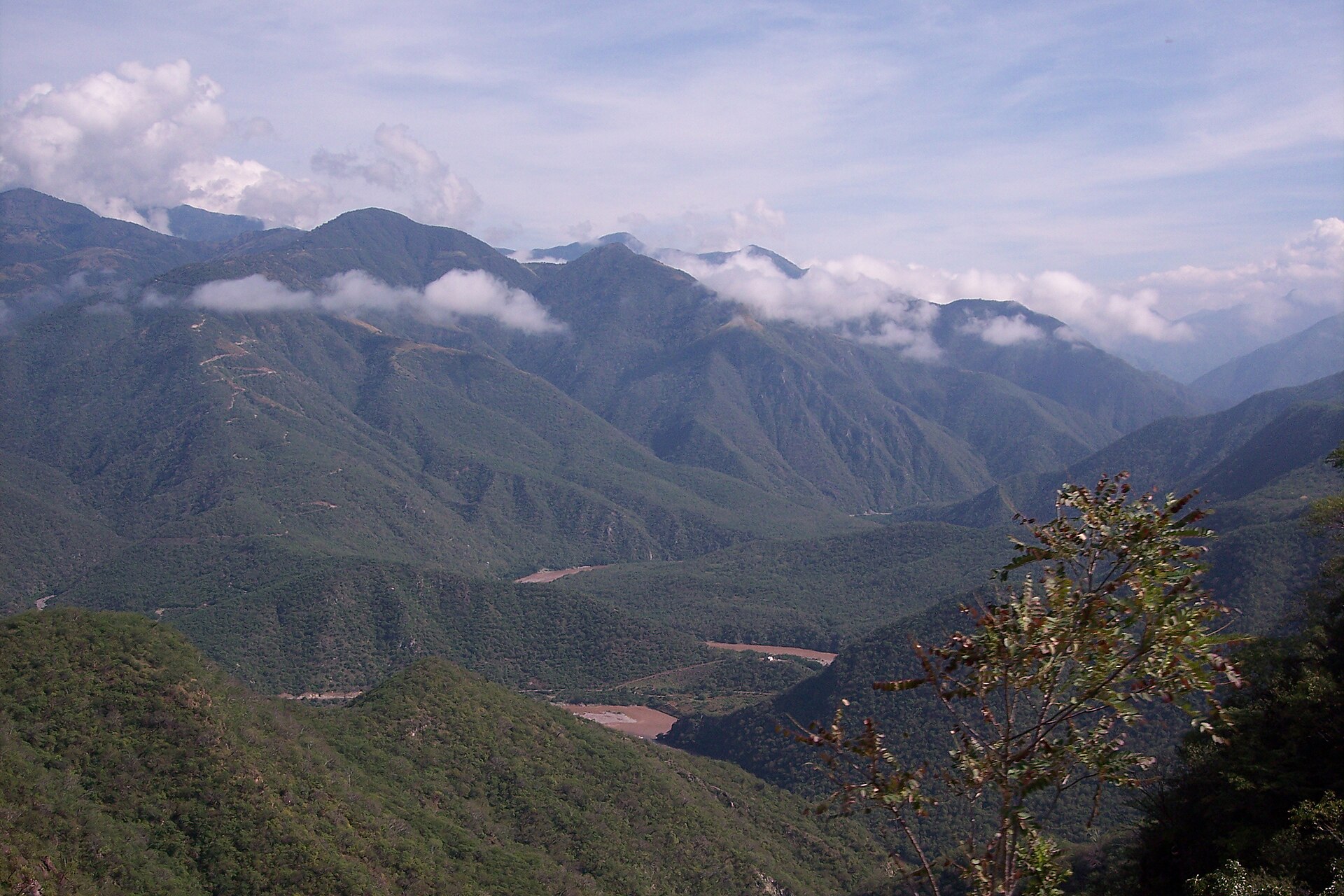 |
| Sierra Madre Occidental with Santiago River winding through it. |


No comments:
Post a Comment