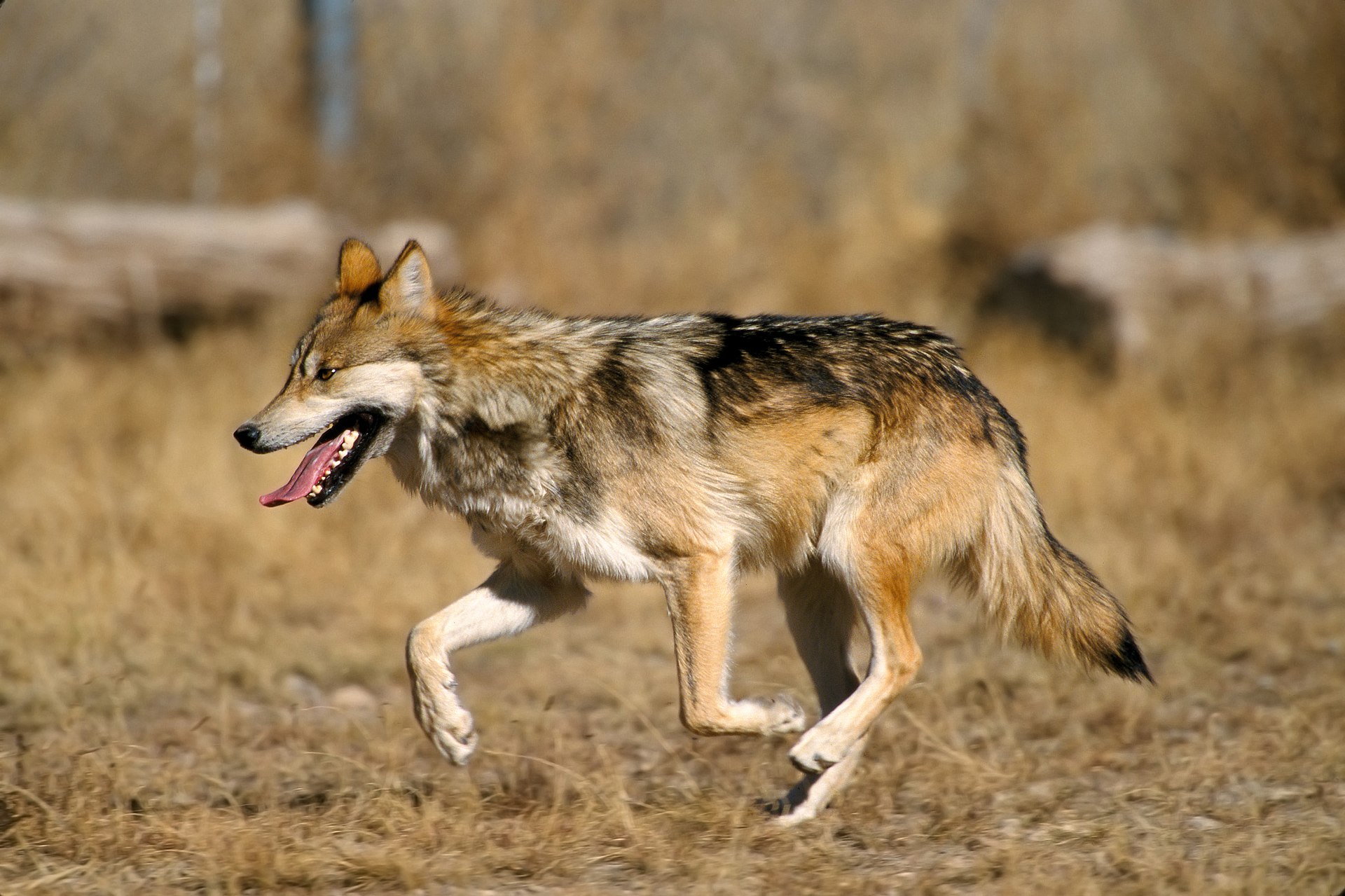
Once driven to the very edge of disappearance across the deserts and mountains of the American Southwest and Mexico, the Mexican wolf has clawed its way back from oblivion. Decades of painstaking conservation and captive-breeding efforts have returned at least 286 wolves to the wild—a fragile but remarkable recovery. Protected under the Endangered Species Act, the wolf’s survival has long depended on this legal shield. Now, that protection hangs in the balance. A House committee has advanced a bill that would remove the Mexican wolf from the endangered list. Introduced last summer by Arizona Representative Paul Gosar and titled the Enhancing Safety for Animals Act, the proposal reflects the enduring conflict between wolves and ranchers and is set to advance to the House floor. The challenge does not end there. Additional bills introduced this year by Representative Lupe Diaz would allow private landowners to obtain permits to kill wolves on private property and even open the door to sport hunting. Conservationists warn that such measures could unravel decades of progress and push the species back toward extinction. “This is very bad news for the wolves,” said Michael Robinson of the Center for Biological Diversity—an echo of a wider fear that the Mexican wolf’s hard-won return to the wild may once again be at risk.
 |
| Rep. Paul Gosar |
In the wild today, the Mexican wolf clings to recovery with a population of just 286 animals, as of 2024. Under the strict benchmarks of the Endangered Species Act, that number still falls short—true downlisting is permitted only once the population reaches at least 326. Yet, in a move that startled conservationists, the House Natural Resources Committee has backed the Enhancing Safety for Animals Act, a bill that would remove the wolf from the endangered species list altogether. The proposal is one of four measures introduced amid growing frustration from ranching communities, who argue that wolves prey on livestock and household pets, inflicting financial strain on rural Arizona. But critics warn that delisting could undermine the very recovery it claims to address. Arizona’s wolf conservation program depends heavily on federal funding tied to the ESA, and that support is now in limbo. The effects are already visible. A stall in federal funding has halted coordinated aerial surveys across Arizona and New Mexico—vital tools for tracking wolf numbers. Forced to adapt, wildlife officials now conduct surveys by foot and vehicle, a slower and less effective approach. As Jim deVos of the Arizona Game and Fish Department explains, without helicopters, keeping watch over one of North America’s rarest predators becomes a far greater challenge.
The
U.S. Fish and Wildlife Service reports that livestock losses linked to Mexican wolves have been declining since 2022. Yet, despite this downward trend, wolves remain firmly in the political crosshairs. At both state and federal levels, lawmakers are advancing bills that would strip the species of its endangered status—moves that conservationists say risk undoing decades of fragile progress. In the landscapes of the American Southwest, the Mexican wolf plays a quiet but vital role, shaping the balance of forests and grasslands. Conflicts with livestock, scientists argue, are less a symptom of wolf behavior than of human transformation of the land—where wild habitat has been converted to ranches and natural prey has been pushed aside. There are alternatives. Non-lethal measures, such as the use of
livestock guardian dogs, have proven effective in protecting cattle while allowing wolves to survive. By contrast, shooting wolves on sight threatens not only their recovery, but the health of the ecosystems they help sustain. Critics also warn that removing federal protections now would violate the Endangered Species Act itself, given that recovery targets have not yet been met. Compounding the risk, delays in federal funding are already weakening efforts to monitor wolf populations, leaving scientists with an incomplete picture of how well the species is truly faring. The future of the Mexican wolf, it seems, hinges not on conflict, but on cooperation—between ranchers, conservationists, lawmakers, and communities—working together to find a way for people and predators to share the same land in peace.


No comments:
Post a Comment