 |
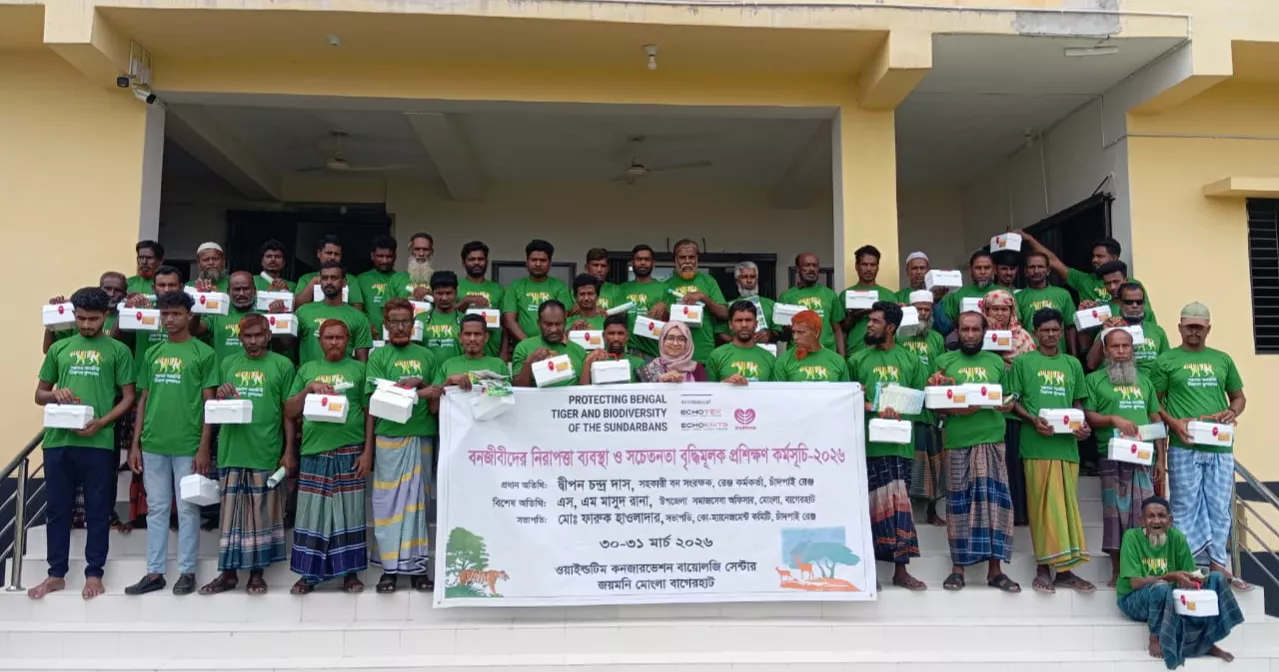
| Residents living on forest edges unite through safety-training to protect their communities and preserve the Sundarbans. |
In the heart of Bangladesh’s Sundarbans, a new initiative is empowering the people who live at the forest’s edge. WildTeam, a local nonprofit, recently launched a training program designed to keep forest-dependent communities safe while protecting the wildlife around them. The sessions took place in Joymoni, under the Chandpai Range of Mongla, and Kolbari, in the Satkhira Range, bringing vital knowledge directly to those who need it most. The program is part of a five-year effort, “Protecting Bengal Tiger and Biodiversity of the Sundarbans,” supported by the Bangladesh-U.K. partnership through Echotex and Echoknits. Its goal is clear: safety and conservation must go hand in hand. Participants learn practical skills—from handling human-tiger encounters and understanding forest laws, to basic first aid and sustainable harvesting techniques. Each participant also received an emergency kit box, making their trips into the forest safer and more prepared for unexpected situations. This year, 200 community members—100 from Chandpai and 100 from Satkhira—took part, a milestone in building safer, better-informed communities. Over the next five years, the program aims to train more than 1,000 people, creating a network of empowered forest dwellers who can protect themselves and the wildlife they coexist with. It’s a step toward a future where humans and tigers not only survive side by side but thrive together.
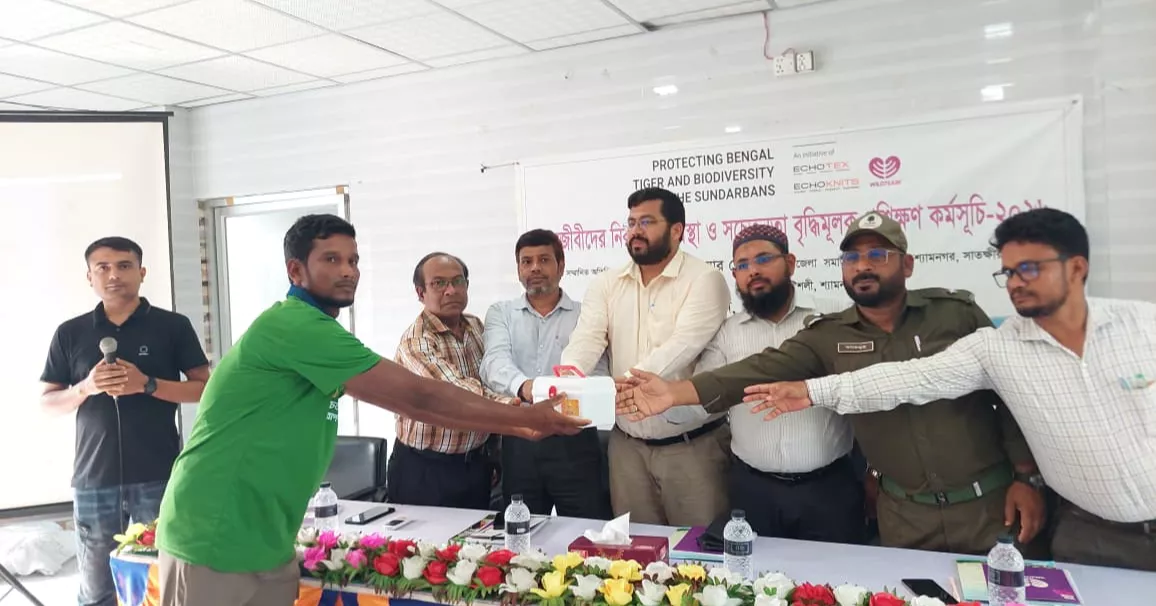 |
| Safety kits being distributed to bolster emergency preparedness among forest-dependent people. |
The initiative carries profound conservation significance. In forest-edge communities, unsafe encounters with wildlife often lead to tragic outcomes—fatal injuries, or retaliatory killings of tigers and other animals. WildTeam’s program helps residents stay safe while protecting the Sundarbans’ delicate ecological balance, teaching practical skills such as safe forest entry, group movement, early risk detection, and emergency response during tiger encounters. Timing is critical: the honey collection season, from April 1 to June 30, draws large numbers of collectors into the forest, raising the risk of accidents and tiger encounters. Rashed Hossain, Assistant Commissioner (Land) of Shyamnagar Upazila, highlighted the serious dangers honey collectors face, noting that many have been injured or killed over the years. He emphasized that following basic safety practices and entering the forest legally with Forest Department permission can greatly reduce conflicts. Social Welfare Officer S.M. Delowar Hossein reinforced the ethical dimension, urging collectors to maintain integrity and not adulterate honey, emphasizing respect for both nature and its resources. Dipon Chandra Das, Assistant Conservator of Forests in Chandpai Range, called on locals to care for the Sundarbans, especially ahead of the honey-collecting season. He reminded communities that the forest asks only for awareness, restraint, and responsibility, cautioning against harming wildlife—like deer, wild boar, or tigers—or damaging the ecosystem through tree-cutting or poison fishing. Together, these messages promote a culture of safety, stewardship, and harmony with the forest.
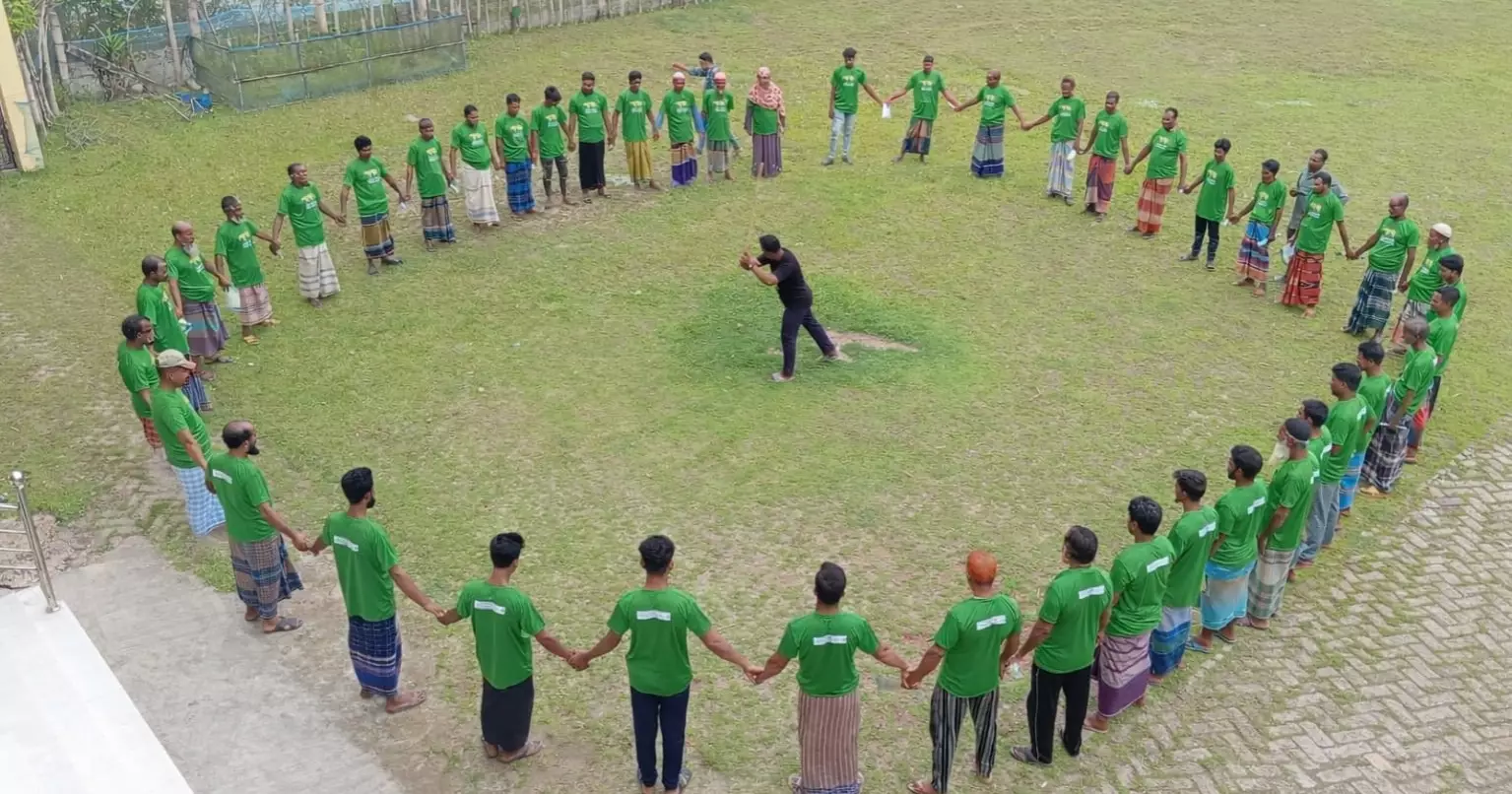 |
| A live demonstration teaching villagers how to respond during a tiger encounter. |
Bangladesh is setting a powerful example of how conservation and community welfare can go hand in hand. The five-year program in the Sundarbans builds on lessons from earlier initiatives under the Integrated Tiger Habitat Conservation Programme (ITHCP), supported by KfW and IUCN. Those experiences—improved community preparedness, reduced pressure on forest resources, and stronger local response systems—have informed the current unified approach in the Chandpai and Satkhira ranges. The training equips residents not only to stay safe in the forest and harvest resources responsibly, but also to coexist peacefully with wildlife. Historically, human-tiger conflicts have arisen when villagers—primarily men—enter the forest for fishing, honey collection, or firewood. Now, with proper guidance, they can avoid potentially fatal encounters. Complementary community-based measures, such as upgraded cooking stoves and solar light installations, further reduce dependency on forest resources, improve safety in high-risk zones, and foster a more balanced, resilient relationship between the villages and the Sundarbans. WildTeam is also expanding awareness through community platforms, ensuring conservation knowledge reaches adults, children, and youth alike. The success of this program offers a model that could be replicated in other regions facing human-tiger conflicts, such as Nepal, where rising tiger populations have led to increased attacks and limited support for survivors. Initiatives like this are crucial to secure a future where people and wildlife can thrive side by side.


No comments:
Post a Comment