Monday, October 30, 2023

Poachers Turned Protectors: A Tale of Two Odia Men

Raghupati Dharua (left) and Satyaban Sahu (right)

Illegal poaching is an ongoing issue all over the world. Whenever there is a poaching incident, the investigation involves authorities following clues and other crucial information which would lead them to the culprits. Once apprehended, the culprits are usually convicted and sentenced to considerable jailtime. But what happens when the culprits are released after serving time? Do they resort again to their illegal activities and the process is repeated all over again? Or do they find an alternative which steers them away from a life of crime? One such case was seen with two men named Raghupati Dharua and Satyaban Sahu from the state of Odisha in India. For thirty years, they were infamous poachers and labeled as "most-wanted" in both police and forest departments. But now, these men have renounced their life of crime by working as informants and assisting the forest department combat poaching and capture the perpetrators in Odisha's Debrigarh Wildlife Sanctuary. In their own words, the men wanted to give up poaching because their respective children are growing up and they did not want the younger generation to live in disgrace. Due to their familiarity with the dense forest and difficult terrain, the duo gave information on snares poachers lay out to catch or kill animals. One of the officials who is grateful for their help in protecting the sanctuary and its wild inhabitants is Anshu Pragyan Das, a divisional forest officer of the Hirakud wildlife division. In addition to being informants, Dharua and Sahu have other jobs in the sanctuary. For example, Sahu mans a gate at Zero Point of the sanctuary. Dharua, on the other hand, is a carpenter in the sanctuary's ecotourism facilities and also plumbing and electrical repairs.

Debrigarh Wildlife Sanctuary

I cannot think of any better way to improvise the fight against poaching than recruiting former poachers in assisting wildlife officials in protecting the world's wild places and wildlife. This would be an alternative to the life of crime for them and provide a second chance. Furthermore, ex-poachers have an intimate knowledge of the inner workings in poaching gangs which would be beneficial for authorities in apprehending the gangs' active members and accumulate enough evidence to convict them of their crimes. It goes to show that it takes a thief to catch a thief. Raghupati Dharua and Satyaban Sahu are ideal examples of individuals who once used to make a living poaching wildlife, but decided to give up that lifestyle and turned over a leaf to assist in the battle against poaching. Each one of them had a rough past. Sahu, who hails from the village of Khajuria in the foothills of Debrigarh, dropped out of primary school and made a living grazing livestock before taking up poaching at 17 after his mother passed away. He was involved in a notorious tiger hunting case in 2018 for which he was sentenced to nine months imprisonment. He was arrested again in 2020 after being caught with a leopard skin. Since then, he turned his life around and is now working with the forest department earning Rs. 12,000 per month. He has even been involved in ecotourism activities. I really think that Sahu and Dharua should be seen as role models to various people living in the vicinities of protected areas in India and other tropical places. Their stories and experiences should be taken as life lessons by people who are either actively involved in any type of wildlife crime or even thinking of resorting to these types of illegal activities. I also believe that in countries where poaching is rife in protected areas, there should be special programs geared at people living in the margins of societies providing them jobs in working with wildlife and law enforcement officials in combating various wildlife crimes. It would very much help, especially when there are individuals who are knowledgeable in how poaching gangs and other wildlife crime syndicates function.          

Friday, October 27, 2023

Bangladesh's Sundarbans Tiger Conservation Success Story

A tiger in the Sundarbans.

Five years ago, the decline of tiger population in the Sundarbans mangrove forest caused a great deal of concern to the conservation community of Bangladesh. However, in recent times, the forests are signs of recovery of the species. This positive turn of events is an outcome of a series of committed efforts initiated by the government of Bangladesh and several stakeholders showing promising results, renewing hope for the survival and growth of tigers. The main strategies used in this joint conservation campaign have focused around conserving the tigers' habitat, dealing with prey scarcity issues, and tackling poaching through a concerted community-based approach. These actions have not only helped tigers but also the whole Sundarbans ecosystem. The latest surveys carried out simultaneously by the government's forest division, German Cooperation, and the Swiss unit of the International Union for Conservation of Nature (IUCN) revealed two very important discoveries. The surveys have noticed a reassuring increase in populations of prey species such as chital (spotted deer), wild boars, and monkeys in the Sundarbans. In addition, the surveys also hinted that the forest may now be containing a higher number of tigers due to successful habitat conservation measurements.

Spotted deer herd in the Sundarbans.

One of the surveys titled "Status of Tiger Prey Species in the Sundarbans of Bangladesh" highlighted the importance of six prey species for tigers. It indicated that even though the number of barking deer has decreased, the populations of spotted deer, wild boars, and monkeys have increased in number over the past thirty years. The number of spotted deer, which comprises 79 percent of the tigers' prey consumption, was 1,41,357. The last census recorded the population to be 80,000-85,000 in the 1980s. Wild boars, which contribute about 11 percent of prey consumption, were found to have increased to 45,110 from around 28,000. According to M.A. Aziz, professor in Jahangirnagar University's zoology department and one of the researchers involved in the study, the result of the survey would mean that crucial measures can be taken for the conservation of tiger prey species. He further stressed that prey species need to be protected from poachers.

A tiger in its mangrove forest habitat.

Another survey, a four-month camera trapping study stretching 1,615 miles in the forest's western zone, is being carried out by the forest department. 1,330 cameras were set up to record tigers and their prey in the mangroves. The census currently shows that at least 53 percent of the cameras revealed the tigers' movement, garnering hope and optimism about the increased numbers. Some of the images were of tigers in places where they had not been recorded in the last two censuses. The survey is scheduled to be completed in April 2024, and the number of tigers recorded will be annouced on July 29. According to Sundarban West Division Forest officer Abu Naser Mohsin Hussain, tiger numbers may increase since the government took various measures over the years to protect them. One of them was increasing the amount of protected areas, in which the government proclaimed 52 percent of the Sundarbans as protected areas in 2020 from only 23 percent earlier. In addition, the government has also focused on curbing human-tiger conflict. Mohsin stated that there has not been a single human-tiger conflict in the last five years.

View of the Sundarbans

I truly admire the efforts Bangladesh has put in ensuring the protection of tigers in the Sundarbans. It's amazing to see the roles played by both the government and various stakeholders which resulted in promising outcomes for both the tigers and other wildlife. One of the things that struck me was that there was no reported incident of human-tiger conflict in the Sundarbans in the last five years. This is really extraordinary since human-tiger conflict has been one of the main issues in the Sundarbans for decades. An implementation of 49 village tiger response teams whose job is to protect any tiger that strays into a locality and help the villagers must have contributed to the mitigation of human-tiger conflict. But this probably had occurred on the Bangladeshi side of the Sundarbans. Could it be possible that majority of human-tiger conflicts are currently occurring on the Indian side of the Sundarbans? I think this is something that should be looked into thoroughly in order to get a better understanding of the overall Sundarbans' human-tiger conflict situation. I was also surprised to hear that the Sundarbans were terrorized by pirate gangs some years ago; a situation which has quelled since 2018. It's interesting to see that dangers in the Sundarbans not only come in the form of tigers or anything nature-related, but at one point in the form of human beings. The alleviation of Sundarbans' pirate situation in the forest also helped in tiger conservation by allowing the big cats to stay undisturbed guaranteeing an ideal breeding environment. While there has since been no threat of piracy, I think there should be measurements implemented to ensure it stays that way. This includes patrolling of Sundarbans' waters by both India's and Bangladesh's coast guards. In addition, a joint collaboration between both the countries' governments and stakeholders should be implemented in protecting the Sundarbans' wildlife and villagers. This would further improvise the conservation of tigers and other wildlife in Bangladesh and India.

Wednesday, October 25, 2023

Joint Collaboration Essential in Hong Kong's Battle Against the Illegal Wildlife Trade

A giant Asian pond turtle at an Agriculture, Fisheries and Conservation Department press conference.

In Hong Kong, the illegal wildlife trade is thriving despite the implementation of stricter laws targeted at stopping syndicates from making millions of dollars off of endangered species. According to Amanda Whitfort, a lawyer for the environmental group ADM Capital Foundation, a law known as the Organized and Serious Crime Ordinance was revised two years ago to deal with certain crimes related to wildlife trafficking. The amendment, which was praised as "historic" and "landmark" at the time, enables authorities to secure court orders to obtain documents essential to their investigations that they would otherwise not be able to acquire. It also allowed judges to seize the profits of wildlife crimes and administer harsher punishments. However, the changes have so far proven useless. Whitford further added that law enforcement officers claim there is no evidence proof of organized crime inspite of the extremely large seizures. In 2020 and 2021, more than 676 tonnes of endangered species estimated to be worth more than HK$221 million were seized by customs. Confiscations included 26 tonnes of smuggled dried shark fins in April and May 2020 and 4.12 tonnes of red sandalwood in January 2022. In July, authorities seized a shipment of about sixty pieces of hippopotamus ivory and approximately 3,300 live tortoises, among other things, worth HK$2 million. According to Dr. Astrid Andersson, a wildlife forensics expert from University of Hong Kong, for a relatively small space, the city confiscated huge volumes of endangered animals and their body parts.

Amanda Whitford

 The ADM Capital Foundation said it discovered that authorities had failed to use their new jurisdictions in a meeting with the Customs and Excise Department in February. Whitford, on the other hand, indicated that the situation was brought to her a month later during a meeting of the government's interdepartmental task force on wildlife crime. This task force is comprised of customs, the Agriculture, Fisheries and Conservation Department (AFCD), Environment Bureau, and the police. When called for comment, customs and the AFCD cut short of revealing whether the ordinance had ever been enforced in its wildlife smuggling cases, while the police refused to comment. A closer investigation of the ordinance disclosed that only customs or the police have the authority enforce it, not the AFCD. It is known that after customs make confiscations at the borders, the case is given within a day or two to the AFCD, which handles wildlife. This leaves the customs and police unable to investigate the cases.

Staff at a pet shop in Prince Edward.

I very much feel that there should be a strong collaboration between the customs, police, and the AFCD in the battle to curb the illegal wildlife trade in Hong Kong. With the amendment of the Organized and Serious Crime Ordinance in 2021, it looked like there was going to be a game changer but it seems that neither the customs nor the police are doing their part in investigating the cases involving seizures of endangered species in Hong Kong. Despite having the authority to enforce the ordinance, the customs and the police simply hand over the case to the AFCD after confiscating such illegal contraband. This is simply not the way to combat the illegal wildlife trade. Members of customs, police, and AFCD should investigate such cases together in order to identify key figures in wildlife smuggling rings and come up with solutions in prosecuting such figures. Head of protection of endangered species at WWF-Hong Kong Brian Gonzales proposed the task force should establish specially designed units committed to particular cases. He further added that this would allow the task to delve into the money trails through the ordinance so that the government of Hong Kong could make use of its anti-money laundering jurisdictions against wildlife crimes. Dr. Andersson stated that she and other scientists are developing and providing tools for the police such as a rapid test that verifies the species of shark fins within a few hours. However, she also argued that boosting enforcement is essential. I strongly think that suggestions from these two people should be taken into consideration in improvising Hong Kong's battle against the illegal wildlife trade. It is highly essential that a joint collaboration between the authorities and wildlife and conservation experts is needed.   

Sunday, October 22, 2023

Bears and Humans: Understanding the Scarcity of Acorns and Preventing Deadly Encounters in Japan


Ussuri brown bear

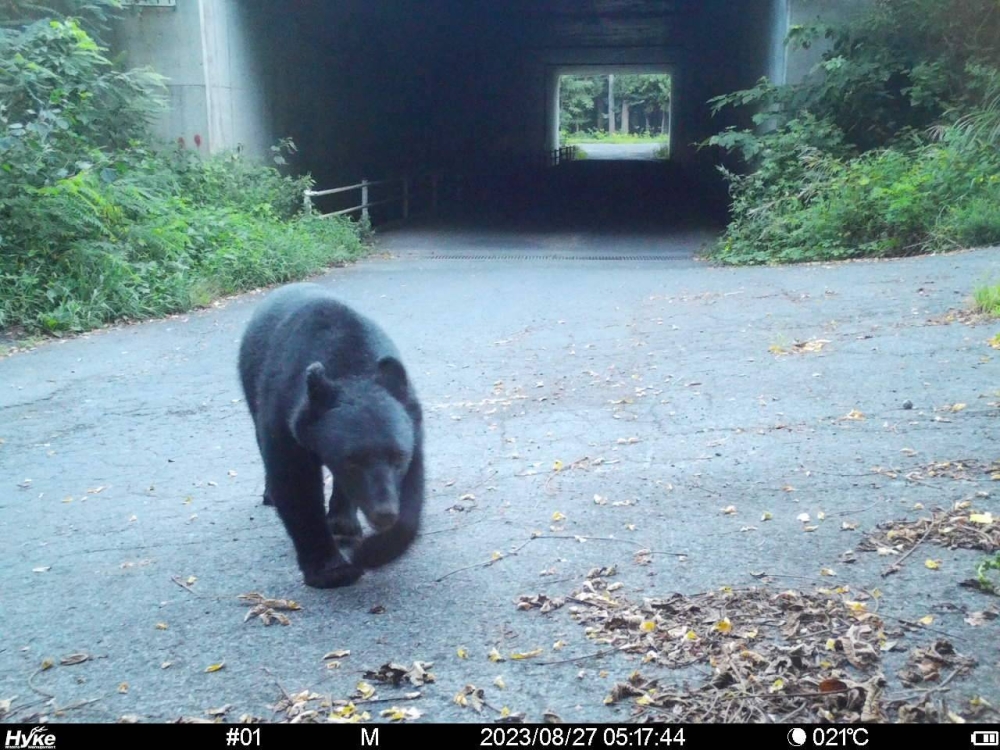
Bear attacks have become increasingly common in regions where bears coexist with humans. Similar to other animal attacks, these incidents are primarily caused by human-related factors that influence the interactions between bears and people. Japan has witnessed a surge in bear attacks, particularly in Akita and Iwate Prefectures. For instance, in a recent incident, a 75-year-old woman in Hachimantai city lost her life after being attacked by a bear while mushroom picking with her husband in a nearby mountainous area. Her husband, who attempted to protect her, also sustained injuries to his head and hand and was hospitalized in Morioka city. On the same day, five individuals, including a 16-year-old girl, were attacked in Kitaakita city. An 83-year-old person suffered a broken arm and shoulder in the attack. Additionally, earlier this month, an Asian black bear attacked four elderly citizens in a residential area of Akita. The number of bear attacks in Akita Prefecture reached 39 from April to October 11, marking the highest since 1979 when records began. Furthermore, the number of bear sightings reached 1,785 as of October 9, the highest since 2009. Iwate Prefecture also reported an increase in such incidents, with 34 people attacked from April to October 12, resulting in one fatality. To address the situation, local authorities have been distributing leaflets advising people to exercise caution while outdoors. According to Shinsuke Koike, an ecology professor at Tokyo University of Agriculture and Technology, the scarcity of acorns is driving bears to search for food in unfamiliar areas. Bears are attracted to compost waste, chestnuts, and persimmons, emphasizing the importance of locals not leaving fruits and nuts unharvested in fields or trash, which can draw bears into populated areas.

An Ussuri brown bear captured on trail camera in Kazuno.

I strongly believe that urgent measures are necessary to prevent deadly encounters between bears and humans in Akita and Iwate Prefectures. These actions should include proper disposal of trash in bear-proof containers and carrying bear spray while hiking. However, I personally consider investigating the scarcity of acorns to be the most crucial approach. Understanding the reasons behind this scarcity is vital in comprehending why bears venture into residential areas in search of food, especially during this time of year when they need to stock up for winter hibernation. When their natural food sources decline, bears are forced to seek nourishment elsewhere, often leading them into human habitats and resulting in tragic, fatal encounters. A poignant example of this is the Sankebetsu Brown Bear Incident that occurred over a century ago in Hokkaido, Japan. This incident, involving an Ussuri brown bear, claimed seven lives and injured three others. It was a consequence of human-induced factors such as deforestation and the depletion of the bear's natural diet. I believe this historical event should serve as a valuable lesson for local residents, particularly those living near bears, regarding the reasons behind bear attacks and the factors driving their dangerous behavior. Moreover, it should guide researchers and wildlife officials in their efforts to mitigate human-bear conflicts and deepen their understanding of bear behavior. Therefore, it is imperative to investigate the scarcity of natural foods like acorns that are essential to bears' diets.

Tuesday, October 17, 2023

Nepal's Wildlife Crime Investigators Facing Hurdles that Need Addressing

A poached rhino in Chitwan National Park

Nepal is renowned for its biodiversity, due to its variety of different habitats from snow-covered mountains to lush evergreen forests and grasslands. These habitats support a rich variety of wildlife. However, the diversity has attracted the threat of poaching and wildlife smuggling. Despite the efforts to curb poaching and ensure protection of the country's endangered species, several frontline wildlife crime investigators face challenges such as lack of proper training in forensic investigations and legal agendas. According to Hemanta Malla Thakuri, a former deputy inspector general for the Nepal Police who began training the investigators last year, the way they operated was similar to the police almost forty years ago. These investigators are local officers from the Department of National Parks and Wildlife Conservation (DNPWC), who are based at various protected areas across Nepal and are entitled to investigate wildlife crimes (and in some cases give verdicts) inside the areas and neighboring buffer zones. Then there are investigators from provincial divisional forest offices, who investigate crimes that occur outside the protected areas and buffer zones.

Confiscated wool of the Tibetan antelope

Many of these investigators are generally forestry graduates lacking training in legal issues. One of those investigators is Salina Kadal, an assistant forest officer at the Bhaktapur division, who pointed out that she and other students were only taught the theoretical aspects of conservation law and once they joined the government service, they were directly authorized to work as investigation officers. She further added that there are times when the officers would destroy the evidence at the crime scene since they do not know how to keep it safe. Karuna Karki, who is stationed at the Nawalpur division, indicated that another challenge for the officers is that investigations come along with administrative work that they have to do. She also added that local officials and politicians try to influence the result of investigations.

View of Kathmandu Valley in Bhaktapur district

Before the proclamation of Nepal's current constitution, in 2015, forest offices and offices in protected areas were entitled to investigate as well as give verdicts in all wildlife crime cases. Now, they can only pass verdicts in cases that only carry a sentence of less than one year while more serious cases should be tried in district courts. Kadal, who has worked on cases both before and after the 2015 change, indicated that guaranteeing a conviction is far more difficult in court than in the forest office. In addition, it is easier to produce missing evidence as expected by the semijudicial forestry officer since the hearing takes place in the same office. However, the judge is not that flexible. Kadal further added that the government of Nepal does not manage an updated database of wildlife crimes and convicts. Not only does this make it more hard for investigative officers across the country to work together on related cases, but also repeat offenders who should face stiffer sentences for their crimes get off with more lenient punishment required for first-time offenders. Despite these drawbacks, the investigative officers are undeterred and are doing their best to ensure convictions. Several governmental and nongovernmental organizations are also working to address the challenges faced by Nepal's wildlife crime investigators. The National Trust for Nature Conservation (NTNC) recently carried out a progressive wildlife crime scene procedure for 24 frontline investigators, with funding from the U.S State Department.

Chitwan National Park

I strongly feel that the challenges wildlife crime investigators in Nepal are facing should be given full attention to. Despite their dedication to protect Nepal's wildlife from various crimes, they are presented with hurdles which need serious addressing. For example, many of them are only taught theoretical aspects of conservation law and never received proper training before joining the government service. This includes how to properly safeguard crime scene evidence, instead of destroying it. Otherwise, how would it help in prosecuting the perpetrators for the crimes they committed? Furthermore, when politicians influence the outcome of investigations, it can have frustrating consequences like repeat offenders being granted leniency. This allows them to further commit crimes in Nepal's wild places. In addition, the government does not maintain an updated database of such crimes and convicts. It is highly essential to address these issues and take steps in improvising Nepal's fight against wildlife crimes.

View article here

Monday, August 16, 2021

Will India's Upcoming Elephant Census Help in the Country's Elephant Conservation?

An elephant herd

The Ministry of Environment, Forests and Climate Change (MoEFCC) recently announced that it will launch an elephant census next year. However, this upcoming elephant count will be along the lines of tiger population evaluation and estimation. That is, it will involve identifying each elephant, their herds as well as health and nutrition of each individual. In order to mark World Elephant Day, Environment, Forest, and Climate Change Minister Bhupender Yadav issued the population estimation obligation to be ratified for the project. Ministry officials stated that this will be the first time elephants, tigers, and leopards will be counted together. While speaking on the occasion at an event at Indira Paryavaran Bhawan in New Delhi, the minister emphasized on the engagement of local communities and indigenous people in elephant conservation and stated that a bottom-up approach is the way forward. This would also help in mitigating human-elephant conflict. According to ministry officials, the process for next year's assessment will involve "rigorous statistical analyses of ground data on animal signs, human impacts, habitat attributes and absolute density." The assessment will be carried out in three stages and consist of ground surveys, analyses of remotely sensed data, and camera traps. There will also be an assessment of human footprint indices, landscape characteristics, and habitat quality. Individual elephants will be determined using a group of microsatellite markers from dung DNA. As part of the third stage, biologists and forest department personnel will examine elephant groups for demographic criteria and body condition. The animals will be aged based on size and body characteristics such as ears and tusks. They will be recorded for nutritional status based on body condition.

India's new elephant count will be similar to the country's tiger census.

I think it is very interesting that India's upcoming elephant census will be conducted the same way as the tiger census. I also think that this could be an improvement in the country's elephant conservation. Unlike tigers, elephants were not counted with the use of camera traps and individually identified through body size and various physical characteristics until now. Elephants may not have clearly defined body markings like tigers and leopards. However, they can be distinguished from each other individually by combinations of physical characteristics such as the position and size of their tusks, missing tusks (called "makhnas" in males), unique marks (i.e. notches) on their ears, scars on their bodies, tails, etc. It just goes to show that wild animals, regardless of what species, can be individually distinguished from one another. I hope this new elephant census will help in the conservation of India's elephants and indicate the overall health of the country's elephant population.

View article here          

Friday, June 4, 2021

Can Commercial Fishing Influence the Body Size of North Atlantic Right Whales?


Scientists from NOAA Fisheries Services attempting to disentangle a young North Atlantic right whale. 

A recent study has shown that North Atlantic right whales are now growing smaller in size compared to four decades ago and suggests that commercial fishing is responsible. This research, published in the journal Current Biology, pointed out that a North Atlantic right whale born today would grow to be about one meter shorter than a whale born in 1980. Presently, full-grown whales average 43 to 46 feet. The researchers used high-resolution aerial photographs to record the size and body condition of 129 right whales. North Atlantic right whales usually migrate up and down the East Coast from Canada to Florida. In recent years, more than half the population has been seen off the coast of Cape Cod, Massachusetts where they come into contact with fishing gear. Researchers discovered that entanglement causes long-term harm to the whales even when they do not die. This happens when the whales get caught in the gear and drag it around. During the process, the whales end up spending more energy in fighting to survive, instead of growing or repopulating their decreasing numbers. In addition to contributing to decreased body size, entanglement also causes nursing female right whales to produce smaller offspring. This threatens the repopulation of this right whale species whose numbers are so few. The stunted growth of whales corresponds with a growing rate of entanglements. A study from the New England Aquarium in 2012 indicated that more than 80 percent of right whales have been entangled at least once in their lives and 60 percent have been tangled more than twice. The researchers recognized that entanglements do not explain all of the decreased growth. Other causes might be collisions and noise from ships, climate change, and the changing availability of copepods, the whales' main food source. The researchers are now trying to determine whether other whales and marine mammals are experiencing similar declines in growth.

A photographic illustration comparing the size of North Atlantic right whales from the past thirty years to recent years. The dotted outline in each image shows how long researchers expected each whale to be if it had been born in 1981.

I strongly believe that a great deal of research needs to be done in order to determine this stunted growth in marine mammals, including North Atlantic right whales. These whales are critically endangered and their population recently diminished from 481 in 2011 to 366 now. Due to their namesake, they have been targeted by commercial whaling for their high fat content ultimately pushing them to the brink of extinction by the early 1890s. Even though whaling is now banned, these whales are threatened by commercial fishing and various other human-induced factors such as climate change. I believe that in order to conduct further research on this issue, preventive measurements need to be carried out to ensure the right whales' safety, along with other whales and marine mammals. This includes better control of crab and lobster fisheries in the East Coast, noise pollution control, and even the testing and implementation of harmless fishing alternatives such as ropeless fishing. I also believe that research needs to be done to determine the source of gear found wrapped around the whales in order to prevent unfair blaming on fishing industries and putting them out of business.

View article here