Friday, June 28, 2019

Can Collecting Great Indian Bustard Eggs Help in Captive Breeding of the Species?

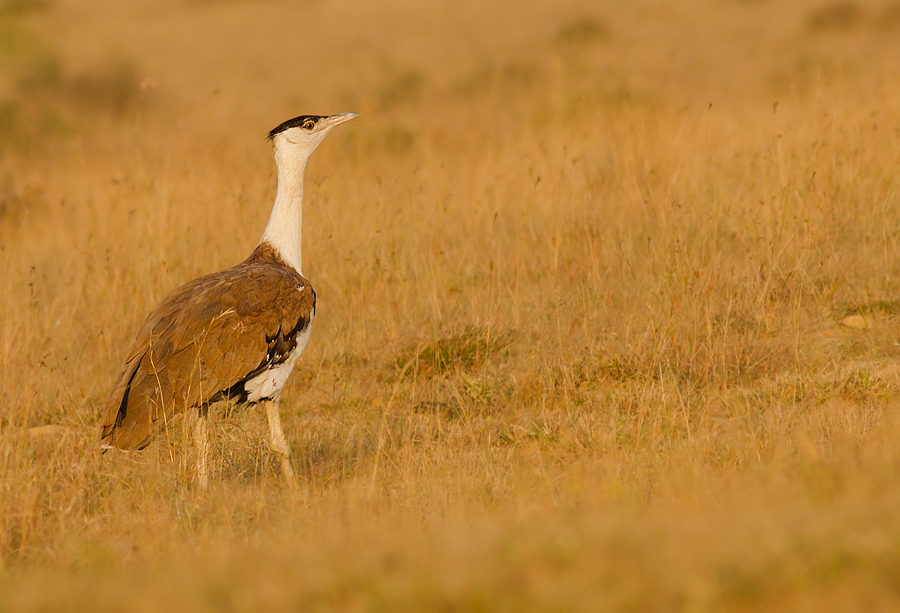
A pair of great Indian bustards in the Thar Desert

The great Indian bustard is on the precipice towards extinction. With some 150-odd individuals remaining in the wild, primarily in the state of Rajasthan, this majestic bird's survival is in dire jeopardy due to various anthropogenic activities taking over its natural habitat. These factors include agricultural fields and a flourishing network of power lines and wind turbines. In addition, there is even a threat of predators like stray dogs that destroy the birds' eggs which further hinders the bustard's chance of survival. In a last-minute effort, wildlife researchers and the forest department have begun a hunt for the bustards' eggs in Rajasthan to start the process of captive breeding. On June 20, the team managed to collect two eggs from the wild. Earlier this year, the Wildlife Institute of India (WII), Ministry of Environment, Forest and Climate Change (MoEFCC), and the Rajasthan Forest Department have agreed to construct two captive breeding facilities for the bustards. The main, larger facility is being built in the village of Sorsan in the southeast part of the state, while a second, smaller facility is being constructed in Jaisalmer, close to where the birds breed. According to Rajasthan's chief wildlife warden Arindam Tomar, the facilities will take a year or two to be built but the search for eggs is on because the teams "did not want to miss this year's breeding season." He further added that the teams are permitted to accumulate up to six eggs from the wild per year. However, he also pointed out that it would be a very long and challenging road since this is the first time bustard eggs are being collected for captive breeding and protocols varying from egg incubation to rearing chicks are still being determined. Although there is a lot that still needs to be ascertained, the teams have help from the International Fund for Houbara Conservation (IFHC), an Abu Dhabi-based organization that has had some success with captive breeding of the MacQueen's bustard, a close relative of the great Indian bustard. Nigel Collar, a bustard expert and Leventis Fellow in conservation biology at BirdLife International, said in an interview that bustards are difficult birds to breed in captivity. So it remains to be seen if gathering eggs from a small population of bustards will transform into a group of breeding individuals that can later survive in the wild. Some experts like Sumit Dookia, a wildlife biologist and assistant professor from Delhi's Guru Gobind Singh Indraprashta University, are hopeful who state that collecting eggs is a step towards the right direction.
Great Indian bustard

I think it appears to be that the conservation of great Indian bustard is in the process of going in the right direction. The collecting of eggs is the first-step process in saving this species from the brink of extinction. At the same time, it is great to see that two captive breeding facilities are being built in Rajasthan for the birds. However, I also believe it is highly crucial to determine the protocols necessary for captive breeding such as egg incubation and rearing of the chicks. These aspects are important to establish a founder population of bustards, in order to revive the species' population. In addition, I strongly believe that it is crucial to implicate more efforts to ensure the survival of the current bustard population in Rajasthan. This includes identifying areas where stray dogs frequent and capture them to prevent any further loss of the birds. Furthermore, efforts should be taken to set up power lines underground to prevent bustards and other birds from being electrocuted when flying. Furthermore, Gujarat needs to follow Rajasthan's example by looking for and collecting bustard eggs in Kutch and establish a captive breeding facility. The great Indian bustard is teetering on the brink of extinction and it is high time to implement strong and sufficient measurements to save it.

View article here                       

Sunday, June 2, 2019

Why are Africa's Elephants Still Threatened, Despite the Decline in Poaching?

African elephant

In 2014, Botswana implemented a ban on elephant poaching under the presidency of Ian Khama who is known for his conservationist fundamentals and a strong stand against poaching and trophy hunting. However, in 2018, when Mokgweetsi Masisi became president, he established a committee to reexamine the ban and as a result, the country's government overturned the ban allowing trophy hunting of elephants. The decision caused outrage among conservationists who have campaigned for preserving the ban. The news relates to a recent article published in the journal Nature Communications by a team of scientists from University of Freiburg, University of York, and the Convention on the International Trade of Endangered Species (CITES). The study disclosed that the yearly mortality rate of elephants from poaching declined from an estimated 10 percent in 2011 to less than 4 percent in 2017. The researchers investigated data from 53 protected areas across 29 African countries between 2002 and 2017. They concluded that even though poaching of elephants has declined, the animals remain threatened, especially without a continuing action to clear up corruption, poverty, and diminish the demand for ivory. One of the authors of the article, Dr. Colin Beale from University of York's Biology Department, stated in order to guarantee the long-term survival of Africa's elephants, there is a necessity to diminish the demand of ivory in Asia and better the livelihood of people living with elephants. The authors also underlined that corruption and poverty are two variables that influence local poaching rates. The number of elephants has decreased by 62 percent over the last ten years and could be extinct by the end of the next decade. As of 2018, there are still more elephants being killed for ivory than being born.
Elephant in the Okavango Delta

I strongly believe that this recently published article should be taken into serious consideration by government bureaucrats, stakeholders, and general public not just in Botswana but in other parts of Africa. It highlights the correlation between poaching and the issues of poverty and corruption in Africa. Even though this article mentions that poaching of elephants has dropped significantly, it does not mean that the elephants are safe on the long-run. They are still under threat from the ivory demand in Asia and as a result, continue to fall victim to humans for their tusks and other body parts. Botswana's recent decision to lift the ban on elephant poaching and trophy hunting has further put the lives of these animals at risk. I think that even though trophy hunting of elephants in Botswana would guarantee income to local communities, it will not alleviate the human-elephant conflict in the country. The reason is because when trophy hunters go and hunt elephants in the country, they don't know and don't care if the elephant they are after turns out to be a matriarch. In their mindset, all that matters to them is the size of the elephant and the quality of its tusks which they would show off to their families and friends. If suppose an elephant that somehow fell victim to trophy hunting turns out to be a matriarch, there is a good chance that the herd which she was leading would disintegrate and all its members would aimlessly wander about often straying into human habitations bringing them into conflict with people. Furthermore, hunting of solitary bull elephants would hinder the possibility of breeding. This is why I strongly urge that non-lethal and effective measurements should be implemented to ensure that people and elephants coexist with one another peacefully. I also suggest that measurements to mitigate corruption and poverty across Africa should be conducted, since both of these variables influence poaching rates. Lastly, it is highly crucial to reduce the demand of ivory in Asia. All three of these steps combined can guarantee the long-term survival of Africa's elephants.

View article here                 

Friday, May 24, 2019

Botswana's Decision to Allow Elephant Hunting is Unacceptable!

Elephants in Mashatu Game Reserve in Botswana

Botswana is known for having one of the largest elephant populations in Africa. Thanks to conservation efforts, the number of elephants in the country rose from 80,000 in 1996 to 129,000 in 2014. From the conservationists' standpoint, this sounds like a godsend. However, despite the success in protecting Botswana's elephants and ensuring their safety, the threat of poaching remains undeterred. Last September, 87 elephants were found ruthlessly slaughtered for their tusks close to a protected sanctuary in the country. Despite this latest incident, the government of Botswana recently announced that it will be lifting the ban on hunting elephants in the country as part of a series of decisions that could have enduring effects on Botswana's conservation efforts. The Ministry of Environment, Natural Resources, Conservation, and Tourism referred to elephants as "predators" in a letter to reporters and stated that their numbers "appear to have increased." It further added that a subcommittee discovered that conflicts between humans and elephants has increased, harming livestock and people's livelihoods. The announcement marked a sudden withdrawal from the policies of former Botswana president Ian Khama, who halted elephant hunting after statistics showed the population decreasing. The ban came into effect in 2014, but did not stop hunting in certified game ranches in the country. Earlier this month, newly-elected president, Mokgweetsi Masisi, made headlines for giving stools made of elephant feet to leaders from Zambia, Zimbabwe, and Namibia. His study group suggested "regular but limited elephant culling," along with setting up elephant meat canning for pet food and other products. In addition, it recommended the government increase Botswana's hunting safari industry. Although the government accepted all suggestions, it declined the idea of regular culling of elephants and the establishment of meat canning. Instead, it suggested for a more sustainable method such as selective cropping should be utilized. The government of Botswana further added that fewer than 400 elephant-hunting licenses will be authorized yearly and that it was planning for "strategically placed human-wildlife conflict fences" and compensation for wildlife damage. In addition, the government also announced that all migration routes that are not considered "beneficial" to the country's conservation efforts would be closed, including an antelope route to South Africa. Botswana's decision brought praise from groups such as Safari Club International (SCI), whose president Paul Babaz called the announcement "heartening." It also sparked strong criticism from conservationists around the world, who took to social media to castigate Botswana's decision. Among them included Paula Kahumba, CEO of WildlifeDirect in Kenya, who called the action "horrific beyond imagination." She further added that hunting was an "archaic way to address the problems of living with mega fauna." A Germany-based organization Pro Wildlife, in its Twitter posting, called it "cruel, outdated, unethical and often undermining."
Elephants in Chobe National Park

I cannot express how shocking and disappointing it is to see that Botswana made such a decision. How can the country's government make such an announcement, especially after a large number of elephants were killed for their tusks near a protected area not long ago? What aggravates me is that this is a clear example about how governmental bureaucrats alone make decisions of what they think is best for the conservation of their country's native wildlife. Just because Botswana's elephant population increased significantly over the years does not mean that the animals should be stripped of their protection status as endangered species. In addition, how can elephants be referred to as "predators?" These majestic animals are herbivorous by nature and while they are capable of killing other animals, including humans, they certainly do not feed on them like real predators such as lions, hyenas, and other carnivores. Furthermore, the government of Botswana should not just close down migration routes they think are not "beneficial" to the country's conservation. There has to be proper and strong scientific proof as to why such migration routes should be closed. Otherwise, they would be closed for nothing and that can have a negative impact on the movement of wildlife. This has got to stop! I strongly urge the government of Botswana to reconsider its decision and join forces with conservation groups and organizations in managing the country's elephant population, as well as its wildlife. Allowing hunting of elephants would fuel the illegal ivory trade and keep the demand for ivory high in various countries. The world has seen enough carnage towards elephants and other endangered species, and it is high time to save them from poaching and other anthropogenic factors that continue to take toll on such magnificent animals.

View article here                                      

Saturday, May 18, 2019

Government of Gujarat Must Act Proactively to Save the Great Indian Bustard!

Great Indian bustard

In Gujarat, the great Indian bustard population is down to the last few individuals in the state and the clock is ticking away fast to save the species. Ever since the disappearance of an all-breeding male bustard, the bustard population in Gujarat has comprised of mainly 16 female birds. Now, it has been four months since the male disappeared and, despite the breeding season just around two weeks away, the state's forest department has yet to either find him or work on a backup plan. There are thoughts that the male bustard must have flown to the Pakistan side of the Kutch border, where a flock of bustards lives. According to Deputy Conservator of Forest (DCF) B.J Asari, one of the workers saw the male about four months ago and the department's teams are trying to find him. He further added that they hope to find the male bustard as soon as the breeding season is coming. Although environmental factors may have affected the existence of the great Indian bustards, government inaction sped up the pace at which the birds are disappearing from the face of the Earth. In Gujarat, several bustards have been electrocuted by high-tension power lines passing through the Kutch Bustard Sanctuary. Despite requests, the state government is yet to go for underground lines. Ashok Chaudhary, an environmentalist from Kutch, stated that the only way to know whether the missing male bustard is around or has disappeared is after this year's breeding season. He further added that the state government must act aggressively to protect the species by moving power lines underground. While castigating the government's failing efforts, environmentalist Devesh Gadhvi stated that in order to continue breeding of the species, there is no choice but to bring a male bustard from neighboring Rajasthan.
Great Indian bustard in Kutch

It really frustrates and angers me that hardly anything has been done to save the great Indian bustard from the brink of extinction. This magnificent bird has been reduced drastically to 16 female birds in Gujarat and an only male bird has been missing for four months. But what really aggravates me is that Gujarat's forest department and bureaucrats have a very laid-back attitude towards the current status of the bustards. They cannot see that these birds are standing on a precipice towards extinction in their native homeland. I cannot take anymore of this! And neither can environmentalists and various citizens concerned about the future of the bustards. I strongly urge the government of Gujarat to take proactive steps in saving the great Indian bustard from extinction. This includes setting up a breeding center, which has never been done in all these years. All I have seen and the public has seen is nothing but talks about establishing a breeding center, but no absolute concrete proof that such work is being done. This has got to change! Furthermore, I strongly urge the governments of Gujarat and Rajasthan to move high-tension power lines underground because as long as the lines stay up, the birds will continue to move closer and closer to extinction. I would highly recommend searching for the missing male bustard and at the same time, Gujarat should put in a request with Rajasthan for a male bustard. I'm completely aware that Rajasthan's bustards would take time to adjust to the environment of Kutch, but the situation has come to a point where drastic measurements are required. And one of these measurements that should be implemented is establishing breeding centers for the great Indian bustard. Time is running out for this magnificent bird and it is high time for the government of Gujarat to take serious action; no questions asked!

View article here                   

Thursday, May 9, 2019

Gujarat's Illegal Lion Show Gang Must Be Stopped!

Lion family in Gir Forest

The Asiatic lion is known for being India's pride. Its image is depicted on the Lion Capital of Ashoka which is also the country's national emblem and is often seen accompanying Bharat Mata ("Mother India"), the national personification of India. In addition, the lion is closely associated with the Hindu mythology as being the representative of Narasimha, one of many avatars of God Vishnu, and as the vahana of Durga, the warrior goddess. However, despite its prominent role in India's culture and history, the Asiatic lion has constantly been the victim of anthropogenic pressure even after successfully recovering from the brink of extinction. The current threat to the lion in its native Gujarati homeland is in the form of so-called "lion shows." This form of entertainment involves local people harassing the animals by baiting them with domestic livestock for tourists coming to see lions in their natural habitat. Such incidences have caught the attention of law enforcement in Gujarat's districts, where lions are presently found and resulted in arrests of people responsible for holding such illegal and loathsome acts.
Gir vegetation

The most recent case involved a gang of twenty people from a small village in Shemardi, 25 kilometers from the town of Dhari in Amreli district. The location is known for being a hotbed for illegal lion shows. According to police sources, this gang has been heavily involved in wildlife crimes since 1996 with offences ranging from poaching to lion shows. However, some of these lowlifes have even been accused in attacks on police officers in Amreli. For example, on February 16, five members of this gang instituted a vicious attack on a team of Dhari police who went to arrest them in an illegal arms case. Among the victims of the attack included police sub-inspector Mahendra Vala who suffered a severe stabbing injury in the stomach. Police sources further stated that the gang is involved in looting and intimidating locals with country-made guns. A few months ago, police recovered lion claws and other body parts along with seven guns. In an effort to protect the lions, the police enforced Section 55 of the Gujarat Police Act which entitles the police to banish the gang from certain areas. The banishment was ordered by Amreli district magistrate Sri Aayush Oak after viewing the FIRs lodged against the members and local testimonies. In addition to Amreli district, members of this gang have been prohibited from entering talukas of Gir Somnath and Junagadh districts. These include Gir, Gir GadhadaKodinar, Malia Hatina, Mendarda, SutrapadaTalala, Veraval, Visavadar, and few others that border Gir Forest. The banishment is in effect until February 28, 2020.
Reservoir of Kamleshwar Dam in Gir

I find it extremely disturbing to see that the perpetrators behind the illegal lion shows in Gujarat are involved in crimes against people, including police. How can expelling these heartless animals from entering certain areas in the state help in protecting both lions and people? I strongly believe that this gang should be arrested and tried under full extent of the law, in order to make an example that anybody involved in crimes against wildlife cannot go unpunished. Some of the members of this gang were allegedly involved in a brutal attack against Dhari police in February. This makes them a menace to society and simply banning them from entering areas in the vicinity of Gir Forest would do little to change that. The gang would certainly travel elsewhere in Gujarat to conduct their illegal activities and that would make the situation more worse. I strongly urge the government of Gujarat to take necessary steps to capture the members of this nefarious gang and bring them to justice, in order to save both lions and people. The Asiatic lion is the pride of Gujarat and India, and it is in danger in its own homeland from ruthless lunatics who use this majestic animal as a source to make money from. And these lunatics will terrorize and attack anyone who tries to stop them.

View article here

Tuesday, May 7, 2019

High Time to Prevent Humankind From Further Devastating Nature

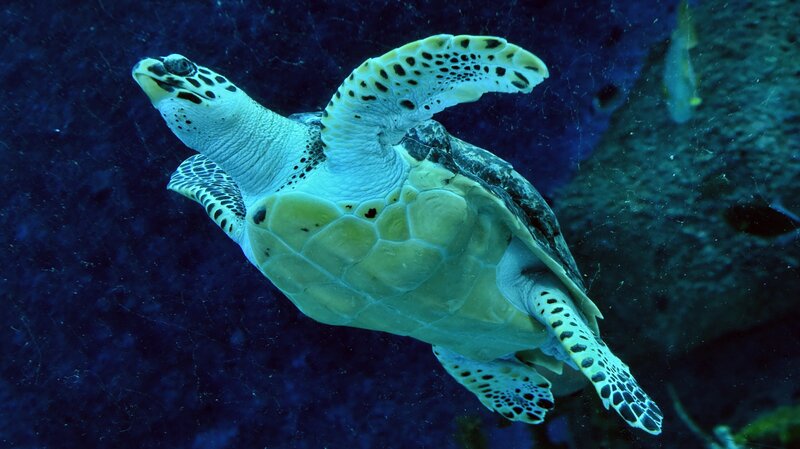
A hawksbill turtle in a Singapore aquarium

A recent U.N report published by scientists and researchers has pointed out that up to 1 million plant and animal species are in danger of extinction - many of them in decades. The emphasis of this report focuses on how humankind's sprouting growth is putting the world's biodiversity at hazardous risk. Some of the report's data is not new to those who have followed news of how humans have disturbed the environment, from changes in seasons to the predominance of plastics and other contaminants in water. However, the authors of the report indicated that the evaluation is the most precise and thorough review yet of the devastation human beings are imposing on the planet. And they cautioned that nature is deteriorating at "unprecedented" proportions and that the changes will put people at risk. According to Sir Robert Watson, chair of the Intergovernmental Science-Policy Platform on Biodiversity and Ecosystem Services (IPBES), the report paints "an ominous picture." He further stressed that business and financial concerns are at risk of diminishing, in addition to the health of the world's ecosystems which people and other species depend on. The report listed several major global threats, from humans' use of land and sea resources to threats presented by climate change, pollution, and invasive species. In its record of humankind's damage on the Earth, the evaluation stated that "approximately 60 billion tons of renewable and nonrenewable resources are now extracted globally every year," and further added that the figure has practically increased since 1980. One of the authors, Sandra Diaz of Argentina, and other experts described human beings as both the cause of the threat and the target of its perils. They indicated that as humankind calls for more food, energy, housing and other resources, it is also weakening its own food security and long-term possibilities. The report even found patterns of "telecoupling," which Eduardo S. Brondizio of Brazil and U.S, described as the phenomenon of resources being obtained and made into goods in one part of the world "to satisfy the needs of distant consumers in other regions." He further added that the pattern makes it more difficult to avoid damage to nature through the normal routes of accountability and governance. While the report's statistics about what the world stands to lose due to human activity are attracting headlines, conservation advocates stated that they hope the evaluation will help people understand the bigger picture. Among them is Collin O'Mara, president and CEO of the National Wildlife Federation (NWF), who stated that the report could help people "see that this is a systematic threat could potentially cause the sixth extinction, even if we don't act quickly."
Plastic pollution in Ghana

I strongly believe that the information and statistics shown in this U.N report should be greatly considered by the global community. This report is the work of hundreds of experts creating the international assessment, with 455 authors representing 50 countries who took part. Its findings are based on reviews of around 15,000 scientific and government sources and also includes awareness from indigenous and local communities. The report's authors stated that the goal of their work was not just to investigate a worsening circumstance but to give policymakers "the tools they need to make better choices for people and nature." I highly urge policymakers in the U.S and around the world to strongly consider this report if they want to benefit their people and their well-being. Human beings are responsible for the deterioration of nation and in turn, they are inadvertently the victims of the risks caused by the ongoing exploitation of the world's resources. This has got to change! Up to 1 million species of plants and animals are in the danger of extinction as a result of a wide-range of anthropogenic factors and it is up to us as a global community to take necessary steps to save them from extinction.

View article and report here                                

Monday, April 29, 2019

Fighting Canine Distemper and Providing Behavioral Enrichment Essential for Asiatic Lion Conservation

A pride of Asiatic lions in Gir Forest

Six months ago, a canine distemper outbreak devastated the Asiatic lion population killing over thirty lions in a span of three months. In fact, over 23 animals died in just twenty days in September 2018. Most of the lion deaths were reported in Gir Forest's Dalkhaniya range. Following this outbreak, 31 animals were rescued from the afflicted area near Semerdi in Gir in order to avoid further losses. The rescued lions were placed in a veterinary facility in Devaliya, where they were given vaccines imported from U.S and kept under close observation. However, despite the medical attention and care provided to ensure their well-being, the lions now have another major problem. After being kept in captivity for more than six months following the canine distemper outbreak, 26 adults and five cubs might never be released back into the wild. Experts think that the lions' prolonged stay in captivity combined with interaction with their human caretakers has resulted in their inability to sharpen their natural instincts thus reducing their possibility of surviving in the wild. Authorities have not yet determined the date to release the captive adult lions and cubs. However, Chief Conservator of Forest D.T Vasavada stated that the animals are healthy and doing well. Principal Chief Conservator of Forest and Wildlife Warden A.K Saxena added that a special protocol needs to be followed before releasing the vaccinated lions. The animals have to be kept under close observations as medical teams need to investigate their immunity and study the vaccines' effects. In addition, specific medical tests need to be conducted to check whether or not the lions have begun producing antibodies naturally. He further added that the cubs may have to stay in captivity for probably their whole life, as they have learned to eat artificially.
View of Gir Forest

I find it understandable why these captive lions cannot be released into the wild. They have been spending such a long time in captivity that they have eventually become used to being around humans. This means they have most likely lost their natural instincts to live and survive in the wild. If these lions were to be released into the wild, then their fearlessness of humans would bring them into conflict with people. But I don't see this as a sign of hopelessness in the conservation of the Asiatic lion. In fact, I find this obstacle as an opportunity to improvise the efforts to reintroduce the lions into the wilds of India. I strongly urge the experts, researchers, and anybody involved in the lion conservation to provide the captive animals substantial amount of enrichment to help stimulate their natural instincts of hunting and surviving in the wild. Majority of the captive lions, including cubs, were described by officials in this news as healthy and doing well. This means they can exercise and play in captivity, which would be of great help when surviving in the wild. In addition, I also urge the need to combat the canine distemper virus in Gujarat which includes identifying areas where the disease is prevalent and treating stray dogs, jackals, wolves, and foxes carrying the virus in those areas. Lastly, I strongly recommend identifying areas across India as possible reintroduction sites for the lions. We should never forget that the Asiatic lion historically ranged throughout northwest and central India before being confined to Gir Forest. And it is the responsibility of anyone involved in the conservation of the lion to ensure that it is brought back to its former haunts, where it had disappeared.

View article here