Saturday, January 31, 2015

Assam Requests Special Force to Protect Kaziranga's Rhinos

An Indian rhinoceros in Kaziranga National Park

The government of Assam has recently sent a proposal to the federal government for obtaining a special rhino protection force with more than 1200 people and seek help from the National Investigation Agency (NIA) to break the international rhino-poaching scheme. The action was taken in response to rhino poachers causing mayhem in Kaziranga National Park which has seen deaths of five rhinos so far this year while forty animals were killed last year. During a review meeting on anti-poaching measurements and other related concerns held at Kaziranga's Kohora Range, Chief Minister Tarun Gogoi indicated that the government has sent a proposal to Union Minister of Environment, Forests and Climate Change Prakash Javadekar and expected the new force would be augmented very soon. He further added that such a force would expedite use of modern technology for suppressing the threat of poaching. This includes deploying sophisticated equipment such as GPS, night vision tools, surveillance cameras, thermal scanners, etc. Minister Gogoi also requested Kazaringa's park authorities to take help from the NIA to tackle rhino poachers and break hidden rhino-horn trade roads across national and international borders. He even announced that he would shortly establish a development authority for the Kaziranga landscape under his chairmanship to discuss conservation and development issues. He stated that locals should be given environment-friendly opportunities and employment options balanced with wildlife conservation. He further added that a modern interpretation center and wildlife museum with 3D shows, tea museum, and tea tourism will be initiated in Kaziranga National Park and asked authorities to explore prospects of promoting off-season tourism through ecotourism and traditional activities.
Grassland in Kaziranga National Park

It is highly essential to have a special force with military background in protecting India's rhinos. These animals are continuously being targeted by poachers in Kaziranga National Park and a handful of other national parks in northeast India to satisfy the growing demand of rhino horns in China, Vietnam, and other countries infamous for selling body parts of endangered species to consumers. The action taken by Chief Minister Gogoi should also be implemented in other countries that contain rhinos. Indonesia is home to Sumatran and Javan rhinos which are labeled as "critically endangered" by the International Union for Conservation of Nature (IUCN) and are severely threatened by poaching, habitat loss, and other human activities. This is why it is extremely crucial to have a special force committed to the conservation and protection of these majestic animals and that local people living alongside them should be provided with environment-friendly opportunities and livelihood options to minimize human encroachment into their habitats. Furthermore, Indonesia should also promote ecotourism in order to help make minimum impact on its wildlife. Similarly, African countries housing black and white rhinos should take this step in order to save their individual rhino populations from such threats.

View article here                               

Protected Habitat Being Constructed for Nepal's Blackbuck Conservation

Blackbucks in Nepal's Blackbuck Conservation Area

Action has been recently taken to safeguard blackbucks by building a protected habitat for them at the Blackbuck Conservation Area (BCA) in Nepal's Khairapur district. Narayan Rupakheti, a conservation officer at the BCA, indicated that they were convinced to take such an initiative after forty blackbucks were swept away by floods in mid-August last year. As part of the effort, the habitat area covering a three-hectare area will be raised by three meters from the surface using mud deposits. Mr. Rupakheti further added that tree saplings will be planted in those parts of the conservation area located near the Babai River. Similarly, the road passing through the conservation area will be moved 25 meters east from its current location since the movement of local people and vehicles through the road has forced the blackbucks to migrate in large numbers looking for safer fields for grazing. The Hariyo Ban (Green Forest) Program has allotted Rs. 4.17 million and is anticipated to be finished within the current financial year. The government of Nepal had previously built a ten-kilometer long fence around the area at a cost of Rs. 20 million two years ago and officially proclaimed Khairapur district as Blackbuck Conservation Area on March 16, 2009. Covering an area of 479 hectares, the area is home to 245 blackbucks. Although conservation efforts have been obstructed due to lack of adequate infrastructure, care and habitat for blackbucks, the main problem authorities face for the animals' conservation is how to relocate 93 local families living in the area since 1971. Adding to their anguish, 49 families of illegal settlers have established temporary houses by trespassing in over seven hectares of land belonging to the BCA since 2006.
A male blackbuck

Although it is excellent news that protected habitat is being established for Nepal's blackbucks, there is still a current problem of local people settled in the conservation area and the problem of relocating them. It is crucial to work towards finding adequate substitute land for these people who have been living within the vicinity of the Blackbuck Conservation Area since 1971. This includes coming up with a compromise that would benefit both the local people and authorities working to ensure the survival and well-being of blackbucks. For now, the local residents should live alongside the blackbucks and it is important to ensure that they respect the antelopes by giving them their space and not attempt to retaliate against them when some problem arouses involving blackbucks. These magnificent antelopes are regarded as sacred animals in Hinduism. That is, they represent vahanas of the wind deity Vayu and lunar deities Anumati and Chandra. In order to help protect them, the local residents and authorities should form a joint partnership in looking after these animals and protecting them from poachers.

View article here    

Thursday, January 29, 2015

Rhino Deaths Suggest Doubts About Effectiveness of Conservation

Indian rhinoceros

Jaldapara National Park in West Bengal's Alipurduar district lost three rhinos in the last few days and the incidents raised doubts about the effectiveness of rhino conservation. While the forest department put the blame on a section of villagers for being accomplices of poachers, forest gram sabhas accused a section of the department's employees for the ongoing poaching of rhinos. On Saturday morning, members of Mendabari gram sabha reclaimed a decomposed rhino carcass under Mendabari beat of Jaldapara's Chilapata forest range. The animal was missing a horn which indicated that it was killed by poachers. Before that, two rhino carcasses were discovered under Mayurdanga and Sisamara beats in the national park. Foresters stated that one of the two rhinos died as a result of fighting and another of natural causes. The recovery of the three rhino carcasses occurred at the time when a rhino census was being conducted. On Sunday, members from five forest gram sabhas gheraoed forest officials at Chilapata and interrogated them on how the rhinos were killed when the census was going. According to secretary of Mendabari gram sabha Pabitra Rava and secretary of Kurmai gram sabha Sunder Singh Rava, the deaths of the rhinos were a result of the forest department's "lackadaisical" attitude towards continuous poaching. They further added that the forest officials were not ready to accept the death of a rhino recovered from Mendabari gram sabha as an incident of poaching. A senior wildlife official, however, suspected that some forest officials were involved in poaching.
Jaldapara National Park

It is very disturbing that forest villagers and wildlife officials are locked in an intense state of hostility towards one another as to who is responsible for the continuation of rhino poaching in Jaldapara National Park. This national park is one four national parks that are home to India's rhinos, but has been regularly hit by poaching bids numerous times. One incident occurred on the night of October 6 2014 when members from a forest gram sabha thwarted a poaching attempt at Chilapata range and captured one person from the town of Kokrajhar in Assam. The arrest and thwarting of the poaching attempt came in less than two months of the poaching of a male rhino inside Jaldapara by poachers. Although twelve gram sabhas have established a joint committee as per the Forest Rights Act to protect the forests and its wild animals, the forest department is yet to expand cooperation to the committee. The committee even presented letters to senior forest officials about the need for the forest department and gram sabhas to join forces to protect rhinos from poaching. It is highly essential that the forest department and forest villagers must team up to stand up against the threat of poaching instead of accusing one another for the ongoing poaching of rhinos in Jaldapara National Park. This national park has been frequently hit by poaching and one should not wait for another poaching incident to happen in order to protect the rhinos and other wildlife. It is time to start acting and fast.

View article here                      

Hoh Xil's Tibetan Antelope Habitat to be Nominated as UNESCO World Heritage Site

A young Tibetan antelope interacting.

The Tibetan antelope habitat of the Hoh Xil area in China's Qinghai Province is set to be nominated as a UNESCO World Heritage Site in 2017. According to Jia Yingzhong, director of the Department of Housing and Urban-Rural Development, preparation work on the effort began in late 2014. She estimated that preparations would be finished in 2017 in time for a vote at the annual World Heritage Committee meeting. As of now, China has 47 places listed as World Heritage Site and if Hoh Xil is added, it would be the first for Qinghai Province. The history of Hoh Xil dates back to 1995 when it was nominated as a national nature preserve in the border area of the Tibet Autonomous Region. Covering an area of 45,000 square kilometers and situated at an elevation of 4,600 meters, this is the largest area of desolate land that has long been a haven for wildlife. More than 230 species of animals call this stretch of land home. In addition to the Tibetan antelope, other animals include the Himalayan brown bearkiang, Thorold's deer, and the wild yak. Despite the abundance of wildlife, Hoh Xil has been targeted by poachers towards the end of the 20th century. Among the most targeted animals was the Tibetan antelope due to the popularity of shahtoosh. As a result, the population of the Tibetan antelope dwindled from 200,000 to 20,000 by 1997. One of the most extraordinary and brave stories behind the success of Hoh Xil revolved around a local official named Jesung Sonam Dargye, who spent his entire life trying to save the Tibetan antelope. His dedication and sacrifice helped awaken the public's awareness of Hoh Xil's ecosystem and even became immortalized in the film Kekexili: Mountain Patrol. As a result, the area's environment improved significantly. The Hoh Xil Nature Reserve Administration Bureau indicated that no poaching has been carried out since 2006 and the Tibetan antelope population increased to approximately 60,000 animals.
Hoh Xil landscape

This is an extremely amazing news that the Hoh Xil area will be nominated as a UNESCO World Heritage Site. Not only is it home to some breathtaking features, including the wildlife, but is an example of remarkable success in protecting the wildlife. This was due to an extraordinary courage and bravery of Jesung Sonam Dargye, who sacrificed his life in saving one of Hoh Xil's most iconic treasures: the Tibetan antelope. The Hoh Xil area is now home to about 60,000 of these magnificent antelopes and other amazing species of animals as well. Although the Tibetan antelope's population is relatively stable in Hoh Xil, the demand for shahtoosh has not ceased. This is especially seen in Pakistan where the demand remains high. It is essential to reduce the demand for shahtoosh through behavior change and awareness campaigns in Pakistan, as well as targeting poachers operating in areas that function as prime Tibetan antelope habitat. The goal is to ensure the survival of these antelopes and that includes conducting conservation efforts to possibly rebound their population higher than 60,000.

View article here                   

Wednesday, January 28, 2015

Opposition Against Legislation that Allows Fenced-In Hunting Preserves in Indiana

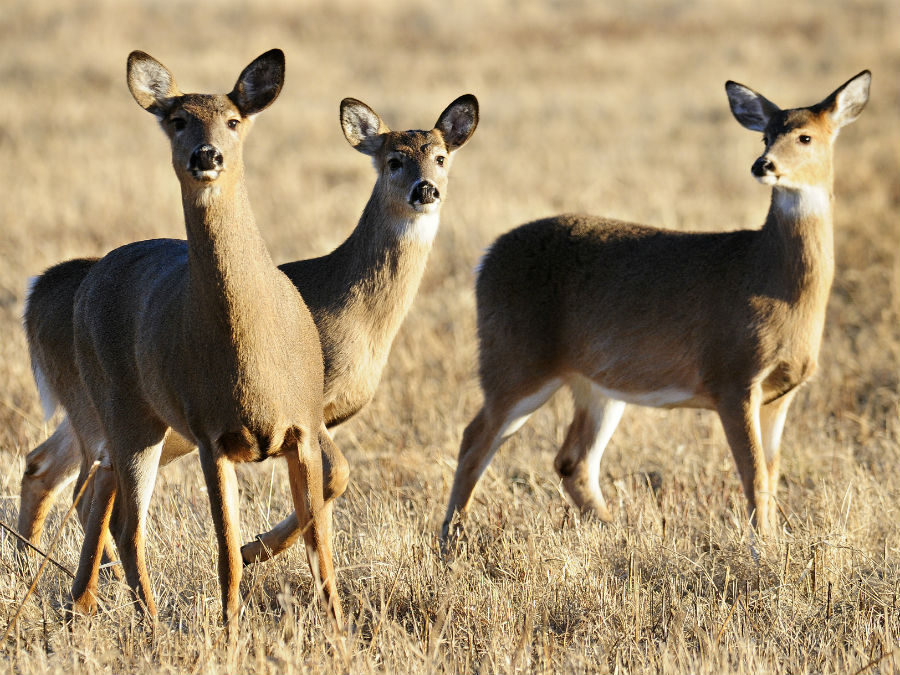
Deer

Several hunters and wildlife advocacy groups recently expressed opposition to a legislation that would allow fenced-in preserves around the state of Indiana for hunting deer. The legislation, which is backed by Republican Sean Eberhart, would need reserves to cover at least 100 acres, have fences at least 8 feet high, and have the Indiana Department of Natural Resources license. A small quantity of such preserves have functioned without state approval for many years, with courts arguing on whether the Department of Natural Resources could force their closing. Efforts in current legislative conferences to authorize them have failed to win permission. One of the supporters of legalizing hunting preserves is Gary Jacobson of the Indiana Deer and Elk Farmers Association, who stated that the legislation was a step that would help Indiana's almost 400 deer farms have customers for their animals. He further added that the farms are small businesses which are able to perform at a smaller rate than is required nowadays for raising livestock such as cattle, chickens, or pigs. Opponents of this legislation included the Hoosier Environmental Council, the Indiana chapter of the Humane Society, Indiana Deer Hunters Association, and the Indiana Wildlife Federation. These organizations called the hunting preserves "canned hunting" and pointed out that they increase the danger of spreading chronic wasting disease (CWD) to Indiana's wild deer population. One of the opponents, Doug Allman of Indiana Deer Hunters Association, argued that the deer in the preserves are raised in captivity which indicates they are used to being around people and that the preserves did not offer normal hunting. According to Mr. Eberhart, who is the chairman of the Indiana House of Representatives committee, he would contemplate probable changes to his legislation in the approaching days and that the committee would not enact the proposal until at least next week. He further added that he was trying to set up legitimate rules for license fees, land, fencing, surveillance, and record-keeping.

This legislation supported by Mr. Eberhart clearly spells danger for deer trapped inside these so-called "hunting preserves" with nowhere to run. Even worse is that the animals were raised in captivity and have lost the fight-or-flight response, which separates them from their wild counterparts. These are the components that define canned hunting. Wild animals are captive-raised and have lost their fear of humans, making them very easy to hunt and are trapped with no chance of escape. This brutal practice of hunting eliminates the concept of fair chase. In other words, it is a stark contrast of regular sport-hunting which presents real challenges to hunters and a chance for deer and other wild animals escape and live another day. In addition, deer raised in such hunting preserves are prone to spreading chronic wasting disease which is fatal to wild deer. Such preserves and similar facilities infamous for conducting canned hunting should be banned by any means necessary. It does not matter whether they are state-approved or not. Canned hunting is a form of animal cruelty that should be eliminated and there should never be a legislation granting permission to establish and run hunting preserves that spell doom for deer and other wild animals.

View article here      

Utah Experiences 30% Increase in Number of Poached Animals

A wildlife officer holding up a skull of a poached deer.

State wildlife officials have recently stated that Utah has recently experienced a 30 percent increase in the number of animals poached over the last two years. Authorities indicated that more than 1,287 animals were illegally hunted last year, compared to 958 two years ago. The figure from 2014 is anticipated to increase as officers found more kills from last year, but officials said that poaching still highly underreported. According to Captain Mitch Lane, most poaching cases begin with an animal either reported of found dead by officers. He further added that although authorities can conclude that an animal did not die of natural causes, it is difficult to determine how the animal was killed or who did it. In addition, ballistics tests are not much use without a firearm to compare bullets and other evidence collected at a scene of the crime. Instead, investigators depend on information from the public and people who either witness and animal killed or talk to someone bragging about poaching. Mike Kinghorn, a wildlife officer from Box Elder County, indicated that deer were among the most poached animals last year. These animals are primarily targeted for their antlers and carcasses are often left decapitated. In addition to deer, other animals targeted by poachers last year included bears, bison, eagles, elk, a desert tortoise, and a pelican. The pelican case is under investigation by Mr. Kinghorn, who indicated that a motorist reported hearing a gunshot and seeing the bird fall down from the sky in the city of Harrisville. However, evidence was lost after animal control officers responded and got rid of the body before a wildlife officer got there. While it is unclear why the number of animals poached animals has skyrocketed in recent years, Captain Lane stated that the total changes from year to year. The increase could be due to more wildlife officers patrolling the areas and investigating cases.

It is extremely disheartening to see that Utah has experienced such a spike in poaching of its native wildlife. But what is even more disturbing is that wildlife officers lack the necessary tools and resources to help them with poaching. For example, they are unable to perform ballistics tests without firearms to compare bullets and other evidence collected at a scene of the crime. Instead, all they are doing is relying on the public for vital information about poaching activities. This does little to help in combating poaching. Just as law enforcement has access to essential tools and resources as well as information from general public to help in crime investigations, wildlife officials should also have access to these two components vital for fighting poaching and other wildlife crimes. Another disturbing fact about this ongoing issue was the pelican poaching case in which animal control officers disposed of the evidence before any wildlife officers got to the scene. This was an extremely outrageous act, especially when it involves groups of people fully committed to the cause of ensuring the well-being of animals. By disposing of the pelican carcass, the animal control officers involved are a complete and utter disgrace to their organization and should be prosecuted under full extent of the law. Furthermore, Utah's wildlife officers need to join forces with the state's law enforcement agencies in tackling this ongoing poaching issue. Just working alone as a wildlife organization does little to make a difference to the natural environment and its inhabitants.

View article here                     

Saturday, January 24, 2015

Namibia Begins Moving Rhinos to Combat Surging Threat of Poaching

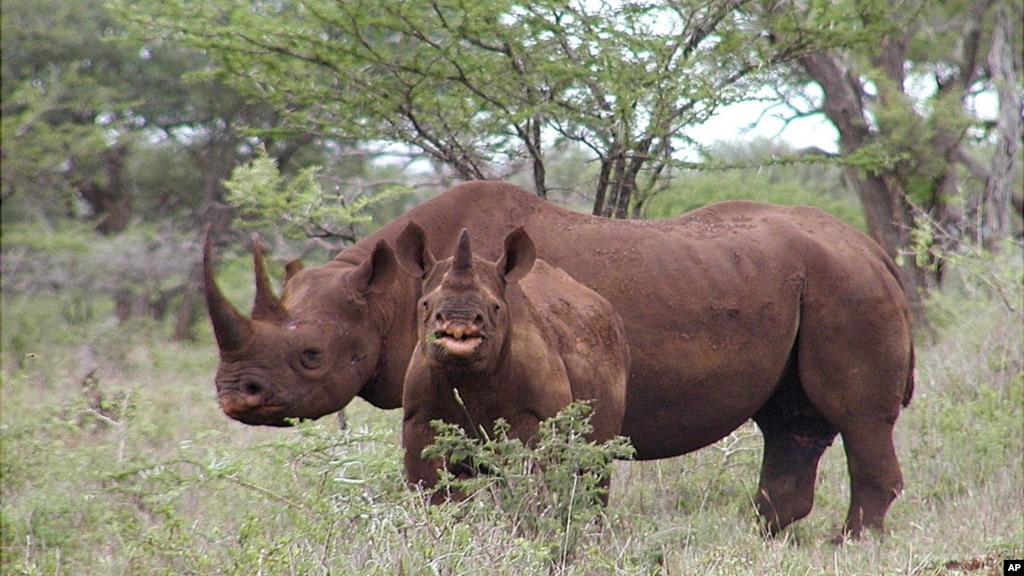
A black rhinoceros mother and calf in Etosha National Park

Africa, with its ongoing and ever-rising poaching epidemic claiming countless lives of elephants and rhinos, has been struggling to carry out measurements to prevent further losses of these majestic endangered animals. One of the methods implemented is relocating rhinos from poaching hot spots to undisclosed locations. This method has recently been started by Namibia which is home to about 1,750 black rhinos, out of the global population of 4,800 animals, making it home to the world's largest populations of black rhinos in Africa. These rhinos are being relocated to privately-owned ranches around the country as it battles to protect the animals from poachers who want to satisfy the rising demand in rhino horns used in traditional Asian medicine. Namibia lost 23 rhinos last year in the Kunene Region and Etosha National Park, a famed tourist attraction. That same year, 76 elephants fell victim to poachers. According to Pohamba Shifeta, Deputy Minister of Environment and Tourism, part of this safety measurement is considering efforts by farmers based on area security, grazing, and other causes before carrying out a relocation. He further added that dehorning rhinos is also being carried on and a projected anti-poaching unit comprised of 400 members will be ready once it ensures financing from the government of Namibia. In addition, a plan to use aerial drones to improvise surveillance in badly policed and isolated parks will be carried out once legal issues have been settled. Namibia's neighbor, South Africa, indicated that a record 1,215 rhinos were ruthlessly massacred by poachers last year.
A pair of black rhinos in South Africa
Africa has been struggling to combat the ongoing threat of poaching which is decimating its elephant and rhino populations at cataclysmic levels. One of the methods being implemented is transferring rhinos from areas labeled as hot spots for poaching to undisclosed areas in order to protect them from poachers. Namibia is one of the most recent countries that has begun relocating its rhinos to such areas. Earlier, South Africa had been engaged in transferring its rhinos from places like Kruger National Park to hidden areas. Just recently, the country has relocated 100 rhinos. But relocating animals and directly poachers are not the only ways of ensuring the survival of elephants and rhinos. It is also essential to establish and conduct conservation programs to guarantee that local people receive benefits from wildlife, increase law enforcement efforts, and that governments should take action at an international level. Furthermore, it is also crucial to work to reduce the demand for rhino horns and elephant ivory through change in behavior and awareness campaigns. People around the world, especially in Africa and Asia, need to wake up and understand that poaching of elephants and rhinos can seriously impact the socio-economic development of each other's countries. For example, African national parks which contain elephants and rhinos are major tourist attractions and the flow of tourists contribute significantly to the countries' economies and socio-economic developments. When poachers slaughter these animals at cataclysmic levels, it would greatly affect the national parks' status as tourist attractions and the decline in tourism would have a tremendous impact on the economies and socio-economic developments of countries that contain such parks. Mozambique is infamous for having majority of rhino poachers who are known to cross the border into South Africa to conduct their illegal activities. Pressure is especially needed on this country to take necessary steps to steer people living in poverty away from making a living by poaching or other illegal means and encourage them to make a living through honest means. Furthermore, governments in Asia, especially in China and Vietnam, need to encourage their people to refrain from purchasing rhino horns and elephant ivory. This means addressing to the public that there is no scientific proof whatsoever that rhino horns and products made from other endangered species can cure a wide-range of illnesses, including cancer. In addition, governments of China, Vietnam, and other countries should permanently shut down factories manufacturing such wildlife products, along with stores and pharmacies selling the merchandise and the so-called "medicine". But most of all, governments around the world must take essential steps to bring down powerful global criminal syndicates that are conducting and overseeing illegal poaching of rhinos and elephants. These organizations are known to use the money made through manufacturing, distributing, and purchasing of rhino horns, elephant tusks, and other endangered wildlife products to finance other illicit activities like arms trafficking, drug trafficking, human trafficking, and terrorism.

View article here