Tuesday, June 5, 2012

Global Fight Against Rhino Poaching Stepped Up

nm rhin ou (25885496)
A poster depicting a rhino poacher
It has been recently reported that Indonesia has announced an international rhino "emergency", and encouraged South Africa and all the other nations famous for having rhinos to join a global effort to prevent them from being pushed to extinction. At the urging of global conservation groups, Indonesian President Susilo Yudhoyono announced Monday to be the beginning of "International Year of the Rhino", strictly to guarantee the survival of two critically-endangered species of Asian rhinos: the Javan rhinoceros and the Sumatran rhinoceros. It is said that the total number of Javan rhinos has sunk to fewer than 50 animals, while only 200 Sumatran rhinos remain. In addition to his concern of ensuring the immediate survival of the Javan and Sumatran rhinos, President Yudhoyono further stated that he hopes all other rhino range states in Africa and Asia would establish a similar program to protect the animals worldwide from poaching by international crime syndicates. His message was praised by John Scanlon, secretary-general of CITES, who also hopes that this initiative will "serve as a catalyst for further high-level political support and commitments to protect the rhino in the wild across all states concerned."
The Javan rhinoceros (top) has diminished to fewer than 50 individuals, while the Sumatran rhinoceros (bottom) population consists of only 200 animals.

The announcement follows last week's killing of two white rhinos in the Hluhluwe-Umfolozi Park in KwaZulu-Natal, increasing the death toll of South Africa's rhinos to well over 230 animals in the first five months this year. According to Yolan Friedman, head of Johannesburg's Endangered Wildlife Trust, the illegal wildlife trade is now the third-largest form of illicit activity next to drug and human trafficking. She further added that her organization was proud to be working with the organizations, which had called for the Year of the Rhino. Meanwhile, senior official of TRAFFIC Tom Milliken stated that the dramatic rise in rhino poaching was no longer due to the demand from traditional Chinese medicine. Instead, the demand is solely linked among wealthy elites and business people in Vietnam. He further added that the only way to win the war against rhino poaching would be if both Africa and Asia align against the crime syndicates behind the ongoing slaughter.
Up to 230 white rhinos have been killed this year.

I'm very proud of what Indonesia has done, in order to address the issue of rhino poaching affecting the world's wildlife. This article also gives an idea of what various other countries housing rhinos should do, in order to protect them from powerful criminal syndicates. In fact, I happen to agree with what Mr. Milliken stated if the world is to win against the ongoing massacre of rhinos. The continents of Africa and Asia should form a tight alliance, and work side-by-side in methods such as information-sharing as a way to keep track of these criminal organizations targeting rhinos and prosecuting them. Both Asia and Africa have each lost their local rhino subspecies to extinction separately: the Vietnamese Javan rhinoceros and the West African black rhinoceros. The reason for these losses is the work of these criminal syndicates, who would go through any lengths to completely annihilate the rhinoceros off the face of the earth. This is why it is crucial that other countries besides Indonesia should conduct a similar program like the International Year of the Rhino, which not only covers battling poaching and the wildlife trade but other methods as well. These include intensive breeding programs in zoos around the world and other international fund-raising efforts to improve education and law enforcement. This way, the global rhino population will be revived and would lead to an increase in populations, especially in the cases of South Africa's rhinos and the Javan and Sumatran rhinos. The clock is ticking.

View article here

Monday, June 4, 2012

1.5 Tons of Ivory Seized in Sri Lanka

An African elephant family

It has been reported that customs authorities in Sri Lanka have recently seized 1.5 tons of ivory on the port of Colombo, marking the nation's single largest-ever haul of ivory. A total of 359 elephant tusks seized were hidden among logs inside a container labeled as plastic waste. It had originally come from Uganda, shipped from Kenya, and was destined for Dubai. According to Udayanath Liyanage, deputy director of Sri Lanka Customs' Central Intelligence Unit, customs authorities in the United Arab Emirates (U.A.E) and Kenya have been notified to further investigate the case. In addition to that, a recent analysis by CITES' Elephant Trade Information System (ETIS) showed that a number of Southeast Asian countries have turned out to be ports of call along the main ivory trade route in Asia to markets in China and Thailand. However, TRAFFIC Asia Program Director James Compton warned that this seizure indicates illegal ivory traders are forming new routes through South Asia for their illicit business. Furthermore, Sri Lanka Customs' Deputy Director Samantha Gunasekara addressed the need for further vigilance in the region. The seizure was made following a tip from the World Customs Organization's Regional Intelligence Liaison Office for Asia and the Pacific (RILO-A/P) based in Seoul.

I find this article both interesting and useful because it highlights what the operators of the illegal wildlife trade would do, in order to conduct their illicit activities overseas. When some countries increase their enforcement efforts to halt any movement of illegal merchandise through them, the operators would look for an alternative route(s) covering nations that are not on high alert. In this case, Sri Lanka was one of those countries. In his own words, Mr. Gunasekara stated that countries in South Asia should increase their enforcement efforts so that the operators of the illegal wildlife trade would find it difficult to transport their contraband to any given market. For this reason, I feel that countries around the world in different regions should follow Sri Lanka's example and enhance their enforcement efforts to prevent any flow of illegal wildlife products. This can be achieved by the need for further vigilance and information-sharing. In addition to that, according to TRAFFIC, there should also be an enhancement in capacity building efforts in these regions to better implementation of CITES and adequate enforcement of regulations in the trade. This way, the illegal operations specializing in the wildlife trade would find it difficult to conduct their illicit activities.

View article

Sunday, June 3, 2012

Dudhwa National Park Loses Seven Tigers in Five Years

Bengal tiger

It has been reported that India's forest mafia, which was infamous for cutting down hundreds of trees, has now laid its eyes in targeting the tiger. One particular place that has likely to have suffered in the hands of this powerful criminal syndicate is Dudhwa National Park in northern India. In spite of the special attention given by chief minister Akhilesh Yadav, Dudhwa's forest area is still facing the wrath of illegal poaching of tigers. While the deaths of tigers are still under investigation, the big question is regarding the security of the animals in the national park. The incidents in which the tiger carcasses were found indicated that poaching was the cause of the animals' deaths. It has been noted that seven tigers have died in the last five years in Dudhwa National Park. The first incident occurred four and a half years ago, where a carcass of a male tiger was found on Khutar Road. In 2009, a carcass of a tiger was found at the Bankey Ganj canal. A year later, another tiger carcass was found near the Paraspur checkpoint where the animal was electrocuted to death. That same year, another tiger carcass was found in the Paraspur area. Later, another tiger carcass was found entangled in the bushes near a farm at the Kishanpur range. Few days later, another tiger carcass was found in that area in which the animal was electrocuted to death. Then in 2011, a body of a tigress was found who had been hit by a DCM vehicle on Mailani Road. The most recent death occurred on Sunday after a tiger carcass was found at the Kishanpur Wildlife Sanctuary, marking the seventh death in the last five years.
Entrance to Dudhwa National Park

That one tiger, whose body was found in the wildlife sanctuary, was reported to have sustained injury marks all over the body and stinking badly. It is being determined that the animal's death had occurred three days ago. The forest department is currently waiting for a post-mortem to know the cause of its death. The animal's carcass was handed over to the warden of the Mailani area by Mohd Ahmad of the Indian Veterinary Research Institute in Bareilly. It is even said that the forest department's negligence has become the subject of focus after the carcass of the tiger was found. Two days before the incident, carcasses of two tigers were found at Pilibhit's Haripur range one after another. Both the animals had died under under unknown circumstances, which put Dudhwa National Park on high alert. However, at the same time, another tiger was found dead. When forest officials reached the spot where the animal had died, they stated that it had died as a result of infighting. Unfortunately, the injury marks on the animal's body were not those made by jaws or claws. Instead, the marks indicated that the tiger had been a victim of poaching. According to wildlife expert K.K Mishra, the tiger was electrocuted to death.
An Indian coal mine in Dhanbad allegedly dominated by the Mafia Raj.

I have a deep feeling that Dudhwa National Park is in a great need of help regarding its wildlife, especially tigers. It seems that over the period of five years, tigers had been dying of one by one under mysterious circumstances and the forest department has come under suspicion due to its negligence. But what truly shocks me about this report is that the perpetrators are suspected to be India's timber mafia. Originally responsible for the deforestation of wildlife habitats in the nation, this powerful criminal syndicate has now turned towards tigers as their prey of choice. It is said that individuals of this syndicate are very powerful in a sense that they can bribe the government, in order to carry out their illicit activities. For this reason, India is suffering from corruption because of such political bribing and manipulation that gives illegal organizations like the Mafia Raj the privilege to exploit our motherland's natural treasures. For this reason, I firmly believe that corruption is the cause of poaching and other illegal activities affecting India's natural environments and needs to be stopped by any means necessary. In addition to that, the government of India should also play its part in battling corruption and one way of doing it is to not accept bribes being given by these syndicates attempting to destroy the natural heritage of India.

View article here

Sunday, May 27, 2012

Campaign Established to Make the Bison America's National Animal

An American bison

It has been recently announced that a group of lawmakers in the western U.S sought to raise the status of the American bison to that of the bald eagle with a law to declare the shaggy beast as America's national animal. Advocates of the bison established a "vote bison" public relations campaign on Friday to accompany the law. The legislation, known as the National Bison Legacy Act, was brought to the Senate and is supported by lawmakers from the states of Colorado, Kansas, Nebraska, New Mexico, North Dakota, Rhode Island, South Dakota, and Wyoming. It is said that the measure would not provide added protections for the estimated 20,000 bison in North America, and that the bald eagle would still hold the position as a national emblem as declared by the Second Continental Congress in 1782. However, supporters of the bill stated that it would afford overdue recognition to a species that has a wide-ranging cultural and ecological importance. According to Senators Mike Enzi of Wyoming and Tim Johnson of North Dakota, the bison is an unsurpassed symbol of the U.S, its people, and way of life.
These bison were transported to the Fort Peck Indian Reservation in the state of Montana.

I'm completely amazed that there is a plan of naming the American bison (nicknamed "buffalo") as the nation's national animal. This is very special because over the years during my stay in the U.S, I had only heard the bald eagle was the national symbol of the nation. But now, the bison is on the verge of being given the same position as the eagle. And I think it is something that is worth giving. The American bison has for generations played a significant role in the culture of the Native American people in the U.S. They not only regarded these majestic beasts as their staple food source, but also worshipped them as gods and spirits. However, when the early settlers flocked into the U.S from Europe, they competed with the Native Americans and nearly wiped out tens of millions of bison across the country. This then led to conservation efforts to bring the bison back from the brink of extinction and as the years progressed, the bison population swelled up to an estimated half-million animals residing in national parks and private ranches across the western U.S.
About sixty bison were brought for the benefits of the Native American people.

In recent times, there have been issues regarding free-roaming bison herds in America. The most notable issue has been in Montana, where livestock producers and property rights advocates filed lawsuits to stop the spread of animals which ranchers say can break down fences, spread disease and compete with cattle for grazing. The most recent issue occurred this week in Boulder County, Colorado where city officials refused a proposal from media mogul Ted Turner to donate a bison herd for viewing purposes along U.S Highway 36. However, one of the "vote bison" campaign sponsors, John Calvelli of the Wildlife Conservation Society, stated that the plan was meant to surpass political concerns and mark the animal's place in the culture history of America. Other sponsors of the movement are the Intertribal Buffalo Council, which includes 57 Native American tribes and the National Bison Association. In addition to that, the Interior Department is also active in the project to bring the bison back onto public lands, including Badlands National Park and the Pine Ridge Indian Reservation of South Dakota and Colorado's Great Sand Dunes National Park. I feel that this is truly a path to a momentous occassion for the U.S and its people, and hopefully this new bill will come into effect.

View article here

Saturday, May 26, 2012

Recovery Program to Save India's Endangered Species

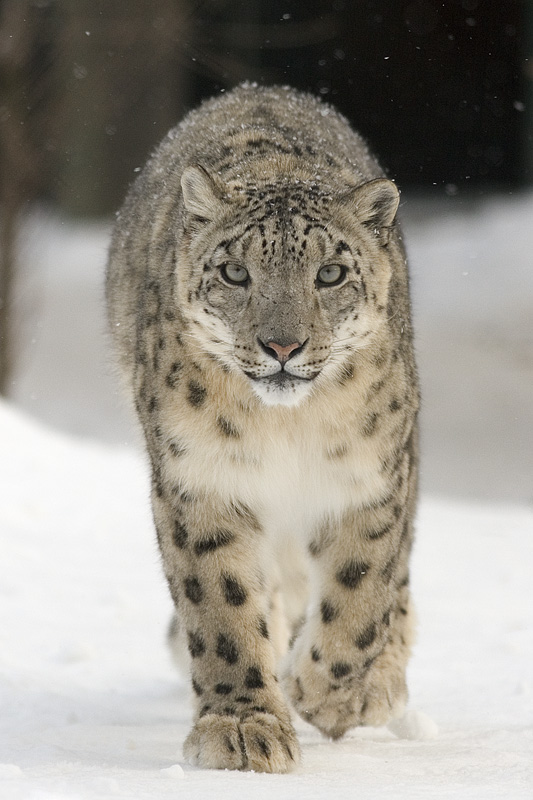
Snow leopard

It has been recently announced that India's Union Minister of State for Forests Jayanthi Nataranjan has declared a recovery program to save the nation's critically endangered species and their habitats. As part of the effort, sixteen species of animals have been identified for support. Among them include the snow leopard, great Indian bustards, floricans, the Ganges River dolphin, the Kashmir stag (hangul), the Nilgiri tahr, sea turtles, dugongs, coral reefs, edible-nest swiftlets, the Asian water buffalo, the Nicobar megapode, Manipuri brow-antlered deer, vultures, the Malabar civet, the Indian one-horned rhinoceros, the Asiatic lion, the swamp deer (barasingha), and the Jerdon's courser. In reaction to concerns related to the conservation of the species on the verge of extinction, Minister Nataranjan let the Rajya Sabha know that both financial and technical assistance is administered to the state governments under several centrally-sponsored schemes (CSS). Under the schemes, major projects such as Integrated Development of Wildlife Habitat, Project Tiger, and Project Elephant are mooted to guarantee better protection and conservation of the wildlife. In addition to that, the CBI has been given the privilege under the Wildlife Protection Act of 1972 to capture and prosecute offenders of wildlife. Minister Nataranjan also added, saying that state governments have been requested to intensify patrolling in and around their national parks and protected areas.
 Kashmir stag

I'm proud to see what Minister Nataranjan is doing regarding saving lives of various endangered species in India. Not only does this program involve helping the state governments, but it also includes the CBI in apprehending and prosecuting any would-be poachers or traffickers. In addition to that, this recovery project has also been introduced by wildlife activists such as Mr. K.V.R.K Thirunaranan, founder of the Nature Trust. He stated that the Nilgiri tahr is the state animal of Tamil Nadu, therefore the state should make use of the opportunity to conserve it. I that as part of this program, several local communities across India should lend their support by helping out in the conservation of these critically endangered species. Animals like the Manipuri brow-antlered deer, which is threatened by global warming in its homeland, and the great Indian bustard whose habitat is under constant pressure of human encroachment. This is why it is crucial that community support should be aimed at to further help in this project, along with patrolling of national parks and protected areas and monitoring any illegal activities.

View article here

Ex-Military Officer Helps in Battle Against Poaching

Ofir Drori; founder of the Last Great Ape

Earlier in one of my posts, I had written about a former CIA analyst who is now helping in the battle against poaching and the illegal wildlife trade. Now, there is a similar story involving a former Israeli military officer named Ofir Drori. Drori, who lives in Cameroon, is also the founder of LAGA (Last Great Ape), a non-governmental organization (NGO) named after the book of the same name, which he co-authored. The main purpose of this organization is to battle corruption, which according to Drori is the "major problem in fighting wildlife crime." Drori's love for wildlife began when he was a teenager, during which he traveled to Kenya between high school and the beginning of his military service. On his first day, he got lost and was found by a Masai family who adopted him. According Drori, it was then did he become fascinated with the wildlife and that the fascination turned him into an activist for the endangered species. He stated that Cameroon has lost 400 elephants to poachers, and that gorillas are suffering even worse. Since 2004, his team oversaw 50 prosecutions for ivory smuggling and 25 for gorilla poaching in Cameroon. His team consists of spies and informants, who pose as either consumers or traffickers and capturing video evidence of the illicit activities. In addition to Cameroon, Drori's program has also been copied in countries such as the Central African Republic, Chad, Congo, Gabon, Guinea, and Nigeria.

I'm extremely proud of what Mr. Drori has been doing in all these years with respect to fighting wildlife-related crimes. Not only does he battle poaching and the wildlife trade, but also corruption which is fueling these wildlife crimes in Africa. These people, who are the driving force behind such illicit activities, have such a high status that they are able to bribe the their way around the local governments. For this reason, I firmly believe that global corruption should be stopped. There are various other places in the world, including India, where corruption manipulates the nation's government such that even critically endangered wildlife suffer in the hands of mafia-like groups overexploiting the natural resources. I also believe that other countries in and outside of Africa should follow Mr. Drori's action in the battle against not just poaching and trafficking of wildlife, but also corruption.

View article and video here

Friday, May 25, 2012

Wildlife Reserve Needed to Save the Arabian Oryx

An Arabian oryx herd

It has been recently reported that a wildlife expert suggested to have a vast international wildlife reserve established in the Rub 'Al Khali Desert, in order to save the Arabian oryx. The idea was implemented by Dr. Reza Khan, a wildlife and zoo specialist of the Dubai Municipality. He stated that the wildlife sanctuary would stretch across the Empty Quarter, covering the U.A.E, Saudi and Omani territories, allowing the antelopes a wide range of open space to wander. He further added that intensive awareness campaigns need to be issued to the Bedouin tribes living around the edges of the desert to make the project a success. The project has been accepted by Dr. Elsayed Mohammed, program manager of the Dubai office of the International Fund for Animal Welfare (IFAW). In his own words, Dr. Mohammed said that a similar approach had been successfully adopted in Africa to protect its species, including the elephant. He further added that cooperation is needed between Saudi Arabia, Oman, and the U.A.E to have an area where the oryx would cross the borders between the three nations. In addition to that, the planning would cover conservation measures which includes battling the illegal wildlife trade and poaching. The project was also supported by conservationists such as Greg Simkins of the Dubai Desert Conservation Reserve (DDCR), who stated that the ultimate goal "is to have self-sustaining free-ranging herds across the historical range."

I'm extremely proud with what Dr. Khan proposed, regarding the conservation of the Arabian oryx. Ever since these magnificent antelopes made a comeback from the brink of extinction, they have all been living on privately-owned reserves and semi-wild parts in Abu Dhabi, Dubai, and other emirates. Some of the most notable of these reserves are the Dubai Desert Conservation Reserve and Sir Bani Yas Island of Abu Dhabi. However, some of these private collections are known to suffer problems related to inbreeding due to limited gene pools. This is one reason for the establishment of a major reserve that would cover such a vast area for the oryx to thrive. The main reason, I believe, is that the antelopes need miles of open space to wander around in their ancestral homelands where they had long disappeared. The setting up of this wildlife reserve would provide them the opportunity to recolonize the lands where there ancestors once reigned supreme. I certainly hope that this proposed project will go into effect soon, and that the numbers of the oryx will be saved in the process. In addition to that, I also believe that this technique should be implemented in Africa's Sahara region in order to save the scimitar-horned oryx. These North African relatives of the Arabian oryx are still being reared in captivity, and need to be brought back to their ancestral homelands in the Sahara in order to revive their populations.

View article here