Friday, August 26, 2011

U.S Court of Appeals Rejects Environmental Action to Halt Wolf Hunts

A mother wolf nursing her cubs in Yellowstone National Park

The battle against allowing wolf hunting in the states of Idaho and Montana has been met with the biggest disappointment for various conservation groups, who took the matter to the Ninth U.S Circuit Court of Appeals. The outcome was that the court rejected the groups' plan to halt the hunts in those two states. More than 1,500 wolves were delisted from the endangered species list. This, in turn, gave both the states a right to control their populations in legislation to a stopgap budget bill approved by the Congress in April. The move came amidst a battle between the groups and the U.S government on whether the animals had recovered successfully in the northern Rocky Mountains.
A northern Rocky Mountains wolf

Several environmental groups sought to overturn this congressional action, in which the animals were delisted through registration instead of a scientific review. Among the groups included WildEarth Guardians and the Alliance for the Wild Rockies, who petitioned the court in order to restore federal protection to the wolves. On August 13th, they asked the court to temporarily halt the hunting and trapping of the animals until the case was decided on its merits. However, much to their dismay, the three-judge panel agreed with the administration which consisted of both the states along with hunting and farm groups that the hunts will not jeopardize the wolves' recovery. According to WildEarth Guardians' executive director John Horning, although they were discouraged by the loss, they are cautiously optimistic in winning the lawsuit to protect the animals from future persecution.
Elk (real name "wapiti") is targeted both by wolves and human hunters

I'm personally disappointed as well by the decision made by the court. Although the agreement made will promise no endangerment in the recovery of wolves, it will not always be as hoped. The move will open a window of opportunity to radical misfits who will do whatever they can to simply eradicate the species. For these individuals, it would be the only way to prevent any further livestock predation and competition for any big game (in this case, elk). A similar situation is going on in Sweden where wolves are under a severe threat of undetected poaching. One of the reasons is may be due to competition for their food source, the moose, which is also a target for Swedish hunters. I fear that what is happening to wolves in Sweden would also happen to their North American counterparts.

View article here

Tuesday, August 23, 2011

Illegal Ownership of Endangered Species Still on the Rise in Abu Dhabi

The cheetah is one of several animals illegally sold in U.A.E as pets

Abu Dhabi is known to be one of most the richest cities in the world. The capital city of the U.A.E is famous for being the major center of commercial and cultural activities, as well as industrial and political. Like its sister emirate Dubai, Abu Dhabi is known for its luxurious hotels, upscale restaurants, and a thumping nightlife. But this bustling metropolis has a dark side. In June 2010, authorities seized fifteen cheetahs, fifteen baboons, and two striped hyenas illegally owned by the city's residents. In spite of a federal law enforcing punishments of fining 50,000 dirham and six months imprisonment of illegally purchasing, selling, and even sheltering endangered species, the numbers of such ownership are still on the rise.
A Hamadryas baboon in captivity

An annual report sent by the U.A.E to CITES last year showed that 313 animals and birds, considered most endangered and at risk of extinction, were found in the city. They included 128 tortoises, 65 falcons (including two Saker falcons), 71 parrots, 38 houbara bustards (found dead), five monkeys and five bush babies, and one Hamadryas baboon. According to Razan Khalifa Al Mubarak, secretary general of Abu Dhabi's Environment Agency (EAD), many people do not realize that the illegal wildlife trade is one of the major causes of species extinction. The EAD is now working on the report with full figures for 2010 to be released later this year. Deputy manager of CITES Scientific Authority at EAD Abdulrab Al Hemari pointed out that keeping of such exotic pets in U.A.E has become something of a status symbol. He further added that the solution to this issue should be through education, as well as law enforcement, and many animals carry zoonotic diseases which can easily spread to humans.
A houbara bustard

This article, in my opinion, gives a clear representation about the dangers of the illegal wildlife trade in Abu Dhabi. Several endangered species are being illegally sold as pets to local residents, who see them as symbols of their status. They include beautiful animals like the cheetah, which was once a favorite pet among emperors thousands of years ago. But now, it is a different story. Rather than running wild in its natural habitat, the cheetah has found itself confined inside a local residency deep in the concrete jungles of Abu Dhabi. In addition to that, the houbara bustard used to be a favorite target for Arab falconers who used to hunt it for its meat which was valued as an aphrodisiac. Now, it faces a new threat of illegal pet ownership. Ironically, falcons, which were used as hunting companions in the past, meet the same fate as their prey. The impact of the illegal wildlife trade in Abu Dhabi not only threatens the lives of animals, but people too. According to Mr. Al Hemari, neither the buyer nor a seller can be sure whether an animal has been professionally health-checked or not. This, in turn, puts people in the danger of diseases like monkeypox. This is why I believe it is crucial for the U.A.E to raise public awareness about the dangers of the illegal wildlife trade through education. If this illicit business continues to flourish, it would have an impact on the city so great that it will affect its foreign relations with other nations as well as domestic relations.

View article here 

Sunday, August 21, 2011

World Wildlife Fund Calls for Urgent Action to Save Cambodia's Dolphins

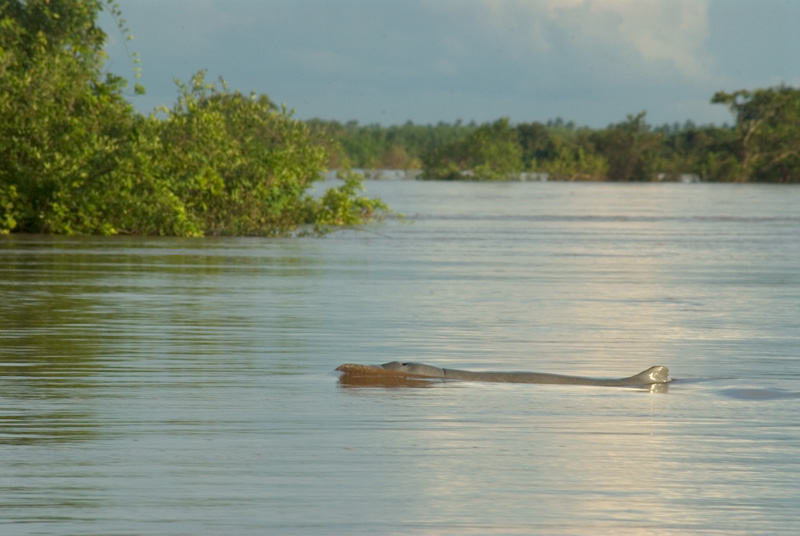
An Irrawaddy dolphin in the Mekong River

A recent research by the World Wildlife Fund (WWF) has revealed that the population of the Irrawaddy dolphin in Cambodia's Mekong River is on the brink of extinction. The research showed that just 85 animals currently remain, putting them on the brink of extinction. As proof of the investigation, researchers uncovered that the survival rate of dolphin calves was very slow. Li Lifeng, director of WWF's Freshwater Program, stated that the research was based on identifying the animals through individually unique features of their dorsal fins which is used to estimate the population size. The recent population estimate was found to be slightly higher than the previous one, but researchers indicated that it had not increased over the last few years. Mr. Li further added that very few youngsters survive to adulthood once the adults die off. He also stated that pressures of gill net entanglement and high calf mortality rate has left the team worried about the dolphins' future.
Fishing has contributed to the downfall of these dolphins

I'm also very much shocked to find out about the plight of these dolphins. But what really surprised me is that a man named Touch Seang Tana, who is the chairman of Cambodia's Commission for Conservation and Development of Mekong River Dolphins Eco-Tourism Zone, rejected WWF's finding. He stated that four dolphins were killed last year as a result of fishing nets, but seven newborns were found. He further added that the total population of these dolphins has now numbered between 155 and 177 from 100 animals in 2006. I personally do not know which theory is true, but based on this article, I can say that Irrawaddy dolphins are in a great need of help. Earlier, it was believed that the Yangtze River dolphin was declared "extinct" by researchers and no one knows to this day about the animal's status. But now, these dolphins are on the verge of extinction. Without any urgent action, their populations will disappear.

View article here

Maharashtra to Set Up Protection Task Force for the Great Indian Bustard

Great Indian bustard

The great Indian bustard has been labeled as a critically endangered species due to threats of habitat destruction and low genetic diversity, particularly in the Indian state of Maharashtra. But now, this magnificent bird is facing hope as a task force will be set up for its protection. This task force will be set up under the chairmanship of Patangrao Kadam, the state forests minister. He told that the purpose of the force will be to toughen the conservation of these great birds. It will be a multidisciplinary team consisting of academicians, experts, NGOs, and officers from the forest department who will investigate various problems with the conservation and suggest solutions for improvements.

Minister Kadam further added that in order to create public awareness, a book on bustard information will be distributed among schoolchildren. In addition to that, habitat management for breeding of the bird will be taken up in other places in which core areas will be identified. He was also keen on the issue of shortage of forest guards, in which he added that a recruitment of 1,600 forest guards will take place. This way, the strength in staff will be increased for monitoring. According to M.K Rao, Pune's chief conservator of forests, once the force is formed, it will commence a great deal of conservation measures as its guiding standards. He further added that the forest department is currently working on proper habitat management that the areas are free of disturbance and have appropriate climatic condition. Pramod Patil, director of the Great Indian Bustard Foundation, praised the movement saying Maharashtra will be the first state to have such a task force. He further added that it will help in the planning and development of directions, which will go a long way in protection of the birds.

I'm very happy and proud to see what step Maharashtra has taken, in order to help the great Indian bustard. Not only has it established a partnership with the local people, but will soon form a task force committed to the cause of reviving the last remaining populations of these birds. There are currently 300 of these birds in India, with 30-35 in Maharashtra alone. These birds are facing a massive decline in population due to habitat loss, change in crop pattern, and other developmental activities. But now, with the establishment of this task force underway, the birds are now on the verge of facing a bright future. I was amazed to see that as part of public awareness, a book about bustards will be given to local children. This is a prime example of inspiring and encouraging the younger generation about the importance of caring for and conserving the local ecosystem and the wildlife that makes its home there. In addition to that, I was also impressed to see that part of this procedure will be a recruitment of forest guards. This will help put in prevention of any poaching activities of the bustards. Overall, I have a feeling that this movement will guarantee a better and safe future for the Indian bustard. However, I also believe that if Gujarat, Madhya Pradesh, Rajasthan, and other states that house this bird will follow this example, it would help increase the its population of India.

View article here

Saturday, August 20, 2011

Trust Fund to Protect African Elephants Launched at U.N-Backed Meeting

An African elephant herd in Tanzania's Mikumi National Park

Recently, a U.N-backed meeting was held in the city of Geneva concerning the plight of endangered species around the world. This meeting was concluded with important decisions to protect these creatures, and even included the launching of a trust fund ensured for the long-term survival of Africa's elephant population. It had been reported that several nations had already contributed to the multi-donor technical trust for the execution of the African Elephant Action Plan. In addition to that, more were encouraged to do so by the meeting's participants who were part of the CITES' Standing Committee. According to CITES' Secretary-General John E. Scanlon, the committee hopes the donors will hear Africa's needs and support the execution of the plan. He also added that the goal is to raise $100 million over the next three years to amend the capacity of law enforcement, and secure the long-term survival of the elephants' populations.

I'm very happy to see that various global conservation experts decided to implement a plan to help the African elephant population in this meeting backed by the U.N. In addition to that, it was interesting to see what other conservation issues were part of the agenda. These included measures to reduce the current levels of poaching of rhinos, tigers and other big cats, illegal trade in mahogany and other timber, the plight of the sturgeon and the caviar trade, and the issue of reptile skins in the leather industry. The committee even looked at recent findings concerning both African and Asian elephants, poaching levels, and the illegal trade in ivory. It also recognized the poaching of rhinos and the illegal trade of their horns as a major challenge requiring cutting-edge approach. One delegation even described the as "almost out of control." I personally think the situation itself is out of control, particularly in South Africa and the surrounding areas where rhino populations had plummeted dramatically over the last few years. I sure hope that, in addition to elephants, this meeting will call for a similar action in helping the current population of rhinos and other endangered species around the world.

Illegal Poaching Threatens Sweden's Wolves

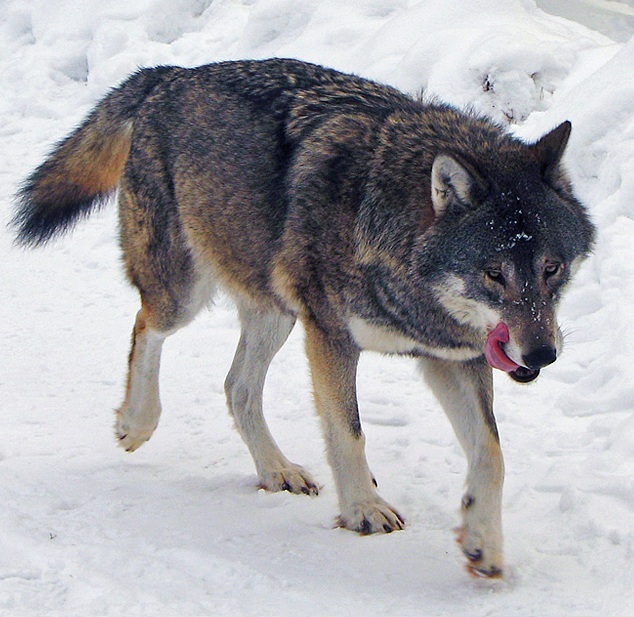
A Eurasian wolf in Sweden

It has been recently reported that populations of wolves in Sweden have been threatened due to poaching. A study has shown that more than half of all deaths were a result of such illegal activities with two-thirds going undetected in the last decade. Since then, the populations of the Eurasian wolf has been struggling to survive. According to Chris Carbone of London's Zoological Society, the study represents a crucial step in trying to measure the threat. This study predicted each year's wolf counts based on counts from the previous year by using radio-tracked animals and the "footprint count." The research team took wolf mortality cases into account such as, road kills, disease, and those found killed. But while comparing actual wolf numbers to expected numbers based on their models, the team found that the population was being overestimated. One of the members named Guillaume Chapron, stated that cryptic (undetected) poaching was the main factor in the differences in numbers, calling it the "tip of the iceberg." The team was based at the Grimso Wildlife Research Station and said that wolf numbers were supposed to have increased to 1,000 in 2009. In addition to poaching, the animals are also suffering from inbreeding and reproductive issues.
Eurasian wolf in Denmark

I'm very much shocked to see what the global population of wolves has been going through these past years. In North America, these animals are part of a debate that has pitted politicians and conservationists against one another in a fight to whether to delist them as endangered species or keep them as endangered species. While in Sweden, they have been suffering dramatically as a result of poaching incidences going undetected. The impact of this catastrophe has even led to the Swedish government to put a "temporary halt" on the nation's wolf hunts. Sweden allowed wolf hunting for the first time in more than forty years since last year. However, this move did not sit well with the European Union who claimed that the hunts violated an EU directive. I believe this idea opened up a window of opportunity for hunters seeking to decimate the populations when finding out the animals were competing against them for other big game animals such as elk (called "moose" in North America). In my opinion, this article gives a clear idea of what would happen to wolves in North America if they were stripped of their endangered species status and be targets for such hunts concerning livestock predation and competition for prey. There will always be individuals with intentions of simply annihilating the species so that they can hunt other prey species without any sort of competition.

View article here

Saturday, August 13, 2011

Cheetah to be Reintroduced in India's Palpur-Kuno Wildlife Sanctuary

A cheetah in its natural habitat

The cheetah has been widely noted for its grace, beauty, and speed for generations. When most people think about this feline, they mainly associate it with Africa. However, it had one time ranged from Africa to southern Asia. Coincidentally, the word "cheetah" derives from a Sanskrit word meaning "spotted one." This lean and swift creature was once a prized companion for emperors and maharajas during the Mughal Empire, who used it to hunt fast game such as blackbuck and gazelles. Unfortunately, as time progressed, its population began to deplete rapidly all over India and the Middle East. By 1947, India had lost its last cheetah amidst the period of independence from Britain. However, India considered to reintroduce the animal in early 2000s but the project could not be put into action after Iran refused to give its pair of cheetahs to India for cloning. But now since 2009, India has become keen in bringing the cheetah back; only this time it was going to be through importation of the African species from some nations. The goal was to breed the ones imported in captivity, and then release them in India's protected semi-arid habitats.

One recent site for reintroduction is the Palpur-Kuno Wildlife Sanctuary in the state of Madhya Pradesh. The plan will be to translocate cheetahs from Namibia to this sanctuary located in Sheopur district. Sartaj Singh, Forest Minister of Madhya Pradesh, hopes that if all goes well according to plan, the cheetah would be brought by either the end of December to early January. He further added that surveys had been done and experts were in favor of the project. At the same time, a team of experts from Namibia visited the 344.686 square kilometer-sanctuary with local conservationists and senior forest department officials to work on the reintroduction strategy.

Although I'm very happy to see that Madhya Pradesh has confirmed a location to reintroduce cheetahs, I'm only concerned about how this plan will go together with the Asiatic Lion Reintroduction Project. Minister Singh stated in this article that both the animals will coexist in Palpur-Kuno. However, it has been noted that cheetah has the highest mortality rate than any other animal. In fact, 90% of cheetah cubs do not survive to adulthood due to predation by lions and other powerful predators. My feeling is that suppose if this project will go along with that of the Asiatic lion, there would be a fair chance the lion will dominate over the cheetah. This would in turn spell disaster for India's cheetah reintroduction. I personally think that if conservationists and experts want to bring the cheetah to Palpur-Kuno, then they should put the plan to bring lions there on hold for sometime. Both these are the main conservation projects in India, and if one is affected in any significant way, then it would have a huge impact on the nation's conservation.

In addition to that, I'm also concerned about the status of the local Sahariya tribe living in the surrounding area. Ever since the Asiatic Lion Reintroduction Project was implemented, several members of this tribe were relocated to edge of the sanctuary where they live poverty. I also believe that, in order to revive populations of both the people and the cheetahs, there should be a plan to establish a buffer zone in the sanctuary for the tribe and a core zone for the animals. Before being forced to relocate, these tribes had access to various necessities like water but now they do not simply because of this idea of lion/cheetah reintroduction being given more attention to.

View article here