Monday, January 31, 2011

Craigslist Helps Florida Wildlife Officials Capture Reptile Dealers

An American alligator

The state of Florida is famous for being one of the warmest places state year-round in the U.S. With its sunshine, sandy beaches, and tropical weather, it is a paradise on earth for anyone looking for a place to go on a vacation. But beneath the sunny skies lies a dark secret. Florida has been known to be a gateway for the illegal trafficking of drugs flowing into the U.S from as far down as South America. In addition to being a superhighway for bringing in narcotics onto the U.S soil, the Sunshine State has also been a hotbed for the trade of exotic pets. This illegal, yet lucrative business dates back as early as 1979 when the first python was found along the fringes of the mighty Everglades. This vast network of subtropical wetlands is known to house a rich variety of native wildlife, such as alligators, crocodiles, manatees, and even the elusive Florida panther. However, due to the major impact of the pet trade, the Everglades and the surrounding regions have since been overrun by pythons, monitor lizards, and giant pouched rats. This has led to the local wildlife being put to the brink of conquest, as the invasive species do whatever they can to take over the native lands as the Spanish conquistadors had done hundreds of years ago.

With the rise of exotic pets breaking into the corridors of Florida's wild lands, wildlife officials have been doing whatever they could to slow down the process of the pet trade. Recently, the Florida Fish and Wildlife Conservation Commission (FWC) has taken its strategic steps to the internet; most notably on Craigslist to bust illegal reptile dealers. The department established the Internet Crime Unit (ICU) last year as a way of running sweeps across the cyberworld for dealers illegally selling reptiles. Many of these dealers operate without licenses or permits, which explains why non-native species like pythons and monitor lizards are often seen slithering free amongst the neighborhoods often showing up in people's backyards. In order to capture the culprits, the officials would respond to advertisements by posing as ordinary customers. Since the beginning of January, the FWC has been involved in several cases dealing with reptile dealers illegally selling reptiles online. The most recent case occurred earlier this week when officials responded to an ad listing an eighteen-inch alligator on sale for $100. However, the biggest seizure took place on August 2009 when a reptile dealer's plan was foiled after he was caught attempting to sell two nine-foot-long Burmese pythons, four reticulated pythons, and six juvenile albino Burmese pythons.

I think it is amazing to see what tactics wildlife officials would use when dealing with these types of situations. When one thinks about tackling a problem concerning wild or domestic animals, it is usually where a team of dedicated individuals would respond to a call regarding those animals' lives and go down with a warrant to a house or some other building housing them with hopes of bringing them back safely. However, that usually is not always the case. These individuals have been relying on modern technology, in order to get their job done. But what really surprises me is to see that among the unfortunate victims include alligators, which are native to Florida's wild places. These gigantic relatives of dinosaurs are a keystone species to the Everglades. Why would anyone want an alligator for a pet? Anyone who would own an alligator or even a python would be putting his/her life at risk of fatal injury or death. Furthermore, the animal itself is deprived of its natural habitat and is confined to a life of misery. I personally feel that the best strategy would be to reconsider Florida's laws regarding pets, in which no exotic pets would be sold in local pet stores. Otherwise, the people of the Sunshine State and the local wildlife would be further threatened by these alien species.

View article here      

Saturday, January 29, 2011

Tibetan Antelope Numbers Rise to 200,000

Tibetan antelopes

Recently, the Tibet Autonomous Region has witnessed some very good news. The numbers of the Tibetan antelope have risen to 200,000 animals from critically low numbers in the past years. This magnificent species of antelope was once threatened to extinction due to poaching for its prized coat which is made into shatoosh, along with habitat destruction. But now, it appears that it has made a comeback from the brink. According to Liu Wulin, president of the Forestry Survey and Planning Institute in Tibet, the result of this growth in population was due to an eighteen-year study focusing on the animal's distribution, habitat, and growth rate completed by a team of 119 researchers. The first calculation was done in 2006, in which figures showed that there were 150,000 antelopes in the 710,000 square kilometer-area in Tibet and numbers were increasing by a rate of seven percent. However, even though it appears the Tibetan antelope has bounced back from the extinction's brink, conservationists still believe the animal's survival depends on tougher measures to ensure its protection. According to Yang Xin of an environmental NGO (non-governmental organization) Green River, the region's economic development has had a major impact on the animal's population. He further added that nomadic herdsmen may expand their farming areas to lands untouched by people. Furthermore, the construction of highways and the Qinghai-Tibet Railway also had an impact on the animals' lives.

I'm very happy for now that the Tibetan antelope numbers have increased to 200,000. However, I also feel that even though it seems like good news, the animal is still under threat of poaching and habitat destruction. These animals had once been pushed to the brink, and are now in the process of making a comeback. This means that stronger measures in their protection must be endured. One of the strategies would be to have the Chinese government to place a ban on human activities in Tibet's reserve areas where the antelopes roam freely. In addition to that, cooperation with international community should be strengthened. This way, the Tibetan antelope will continue to flourish in the wild and mysterious lands of Tibet.

View article here 

Thursday, January 27, 2011

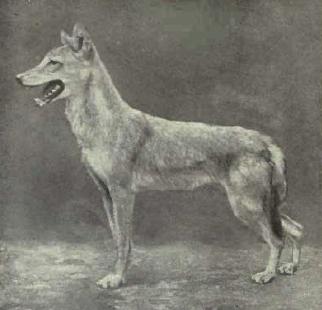
Study- Egypt's Jackal is Actually a Wolf

The African wolf, originally thought to be a jackal subspecies

When most people think of the jackal and Egypt, what comes to their mind is Anubis. This jackal-headed deity had been highly revered during the ancient times as a god of mummification. This can be seen in illustrations depicting the god placing his hands over a coffin. The idea probably stems from the fact that jackals would be seen prowling around cemeteries at night, often stepping on graves. It is no doubt that Egypt was one of the places in the world deeply associated with these cunning scavengers. Its dry and arid landscape makes an ideal jackal habitat. However, recent genetic research from PLoS ONE has found that the Egyptian jackal is not a subspecies of the common and widely-distributed golden jackal. Instead, it turns out to be a member of the gray wolf clan. This wolf, dubbed by researchers as the African wolf, appears to be closely related to the Himalayan wolf. The research also pointed to the early origin of this unique wolf. Researchers say that the animal is older than the wolves of the northern hemispheres. According to the study, the Indian wolf, Himalayan wolf, and the African wolf broke off from the gray wolf before it moved up north to Europe, northern Asia, and America. This process led to a further subdividing into different subspecies. Currently, the study has not made any recommendation whether this wolf should be considered a new species or another gray wolf subspecies. There is still a continuation in debate over a distinction between the species and subspecies of wolves.

This is indeed a very unique and interesting discovery. But it is also a discovery which raises several questions. If Egypt's jackal turned out to be a member of the wolf family, could it have been this particular animal that was worshiped as the descendant of Anubis? This creature, in my opinion, is one of the animals whose ancestors must have migrated either from Europe to the north or the Near East. These creatures include the Atlas bear, which had long since became extinct in North Africa. The only ones that are still flourishing are the Barbary stag, the wild boar, and even the red fox. The discovery of the African wolf is truly a big moment for wildlife experts, researchers, and scientists worldwide. But in its native home, it is persecuted for livestock predation just like other wolves and jackals. I personally feel that a creature like this should be protected at all costs for further study. That way, scientists will learn more about this animal and what roles it plays in Egypt's ecosystems.

View article here

Environment Minister Jairam Ramesh Favors India's Lion Relocation

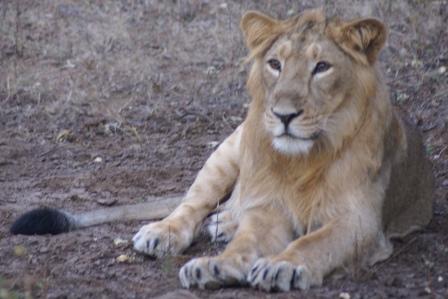
Asiatic lion

Indian Environment Minister Jairam Ramesh, who recently visited Gir Forest National Park, stated that the lions should be relocated to Palpurkuno Wildlife Sanctuary in Madhya Pradesh. According to Minister Ramesh, the lions in Gir Forest are under threat of inbreeding. He further added, saying that scientists had written to him about this threat and provided evidence that thousands of lions in Tanzania had died because of this. Minister's proposal is nothing new. The Palpurkuno Wildlife Sanctuary was selected as a reintroduction site because it was where lions had once roamed before being hunted to extinction in 1873. However, Gujarat has always been in the front line to resist these efforts because it would strip Gir Forest of its status as the lions' current and only home. The issue is now before the supreme court.

I personally feel that before anything happens, there should be a study of lions in Gir Forest to see if any are suffering from inbreeding. I think what Minister Ramesh should do is talk with scientists studying lions in Gir Forest, and listen to them and not those who study lions in Africa. Just because a lion population in Africa is being affected by a threat like inbreeding does not mean it should affect India's lions. In order to find out, one must run a study of a lion population(s) in a particular location and see if there are any cases of inbreeding. That way, everyone would know what to do. Jumping to conclusions would not help. Furthermore, lions have been making their home in Gir Forest for generations. Without them, the national park would definitely lose its status and its tourist industry would be deeply affected.

View article here

Tuesday, January 25, 2011

Africa's Rhino Poaching Crisis 2011

White rhinoceros

The rhinos of Africa are beginning to face a bleak future it seems. Poachers have been mercilessly massacring large scales of these majestic animals for their horns, which are believed to contain supernatural powers against various illnesses. Among the countries badly hit by this ongoing crisis is South Africa. The nation has lost a total of 333 rhinos in the hands of poachers. Recently, five more were killed in the first weeks of 2011. Zimbabwe, on the other hand, has lost a total of seven rhinos from early December to January 19th. Many of these poachers are well-organized and well-funded, according to wildlife officials, and work for powerful syndicates which provide them with light aircrafts to carry out their dastardly deeds. There have even been cases reported far up north in Kenya, which had lost six to 21 rhinos from 2008 to 2009. According to Kenya Wildlife Service official Patrick Omondi, twenty rhinos were killed in 2010. He further added that a temporary lift of an international ban on rhino poaching in 2007 opened a window of opportunity for poachers to smuggle rhino horns into Southeast Asia, rather than stopping them. Vitalis Chidenga, a Zimbabwe-based wildlife chief, stated that world efforts to persuade the public about rhino horns having no medicinal properties failed to show results in Asia.

The news about Africa's ongoing rhino poaching crisis have been making headlines continuously. Based on these reports, it appears the poachers have become more powerful in this battle to save the rhinos. What is worse is that despite the temporary ban in 2007, these ruthless and sophisticated poachers never backed down. I do not know what may be the best solution in dealing with this threat. But all these countries that have been plagued by this crisis should team up with each other, along with other African countries known to have rhinos. They all should keep in contact with each other, and help each other out in intercepting the poachers and smugglers. However, I also feel that people in Southeast Asia should open their eyes and come to their senses that rhino horns, as with any body part of an endangered wild animal, contain no medicinal properties. It is all an illusion. And due to this bizarre and untrue belief, rhinos and other endangered species have become victims of poaching and the illegal wildlife trade.

View article here

Monday, January 24, 2011

Kaziranga National Park to Place Restrictions on Tourism

Wild water buffaloes in Kaziranga National Park

The Kaziranga National Park in Assam is one of the most biologically diverse hotspots in India. It is home to a rich variety of wildlife found nowhere else, but in India's northeast corner. One of the flagship species found there is the Indian one-horned rhinoceros, which makes its home in the park's lush swamplands and succulent grasslands. Other animal species endemic to the region include the wild water buffalo, the swamp deer, the hog deer, and the gigantic Indian elephant. With such abundance of wild creatures, Kaziranga has become popular in India's tourist industry. However, the impact of tourism can also have a negative effect on the wildlife just as illegal poaching and habitat destruction does. Which is why authorities have now began to impose regulations on the tourist flow. This idea has brought them into conflict with business ventures such as luxury resorts, whose owners oppose the move fearing that it would affect the tourism. According to park director Surajeet Dutta, the wild animals have been under tremendous pressure because of tourists flowing every year from November to April. He stated that in order to prevent further pressure, the park has banned the construction of new hotels and restaurants near it. However, he further added that as well as imposing restrictions, the authorities made other plans for tourists. These include introducing jeep and elephant safaris in newly-added areas, and not in the park's core area.

I'm very happy to see how the authorities of Kaziranga are imposing such restrictions, in order to prevent further pressure on the wild animals. I personally feel that this strategy should also be used in other national parks and wildlife sanctuaries across India. One particular national park, Gir Forest, had recently witnessed a massive flow of tourism because of an advertisement featuring Amitabh Bachchan promoting tourism in Gujarat. With so many tourists pouring in, it was easy to say that the local wildlife was deeply disturbed due to increasing pressure. Just because a powerful celebrity in the Indian film industry shoots for an advertisement promoting tourism of a wild place does not mean people should rush down to that place in large swarms. They should understand the importance of their local wildlife, and harmless tourism itself can also have a negative impact as well as poaching and habitat destruction. India is one of the few places in this world for having a rich variety of wildlife found nowhere else in the world. In order to protect the wildlife, it is important that besides establishing national parks and wildlife sanctuaries, there should be limitations in the flow of tourism. This way, the wildlife can continue to flourish without any such disturbance.

View article here

Sunday, January 23, 2011

Black Kites Decorate Their Nests with Human Rubbish as Warning to Intruders

A black kite nest decorated with plastic
A black kite with its young one in nest

In Spain's Donana National Park, scientists recently documented black kites using human rubbish to decorate their nests. The study showed that the kites would use plastic strips from old bags as a warning to other birds wanting to move into their territories. Among the people who documented this interesting behavior was Dr. Fabrizio Sergio, who stated that besides plastic, the birds would use other materials such as cloth and paper. He and his colleagues observed this behavior for five years, and found that the strongest birds were the ones having most plastic in their nests while the young and the elderly had less. The team stated that individuals with most plastic were the best at defending their territory and monopolized the food bait laid out by researchers. The white plastic functioned as a warning similar to a "KEEP OUT" or "NO TRESPASSING" sign. The team even tried to test this idea by making additions to the nests that hardly had any plastic at all. In response, the owners of those nests stripped out the plastic which showed that they would not risk any fights they could not win.

This is a really interesting and unique article, documenting an unusual behavior among birds of prey. Usually, birds like magpies and bowerbirds have earned the reputation of collecting unnatural materials. Magpies are one of the few species of birds that are attracted to shiny objects, which is one explanation why some people end up losing their valuables such as car keys, coins, and even expensive jewelry. Bowerbirds, on the other hand, collect such materials when building their bower-like nests in order to attract females. Each species decorates the nest based on a series of colors. For example, the satin bowerbird is known to decorate its nest with anything that is blue. But these kites collect plastic as a way to fend off any intruders. In my opinion, this behavior could also be a way for these birds to benefit their own natural ecosystem by clearing up plastic. However, that does not mean they will not be affected by any environmental hazards affecting their homeland. The Donana National Park is a UNESCO World Heritage Site, famous for wild residents such as the highly endangered Iberian lynx. With such abundance of wildlife, it is a treasure which should be protected at all costs.

View article here