Saturday, July 31, 2010

Bangladesh Holds Record Number of Tiger Attacks Due to Habitat Loss

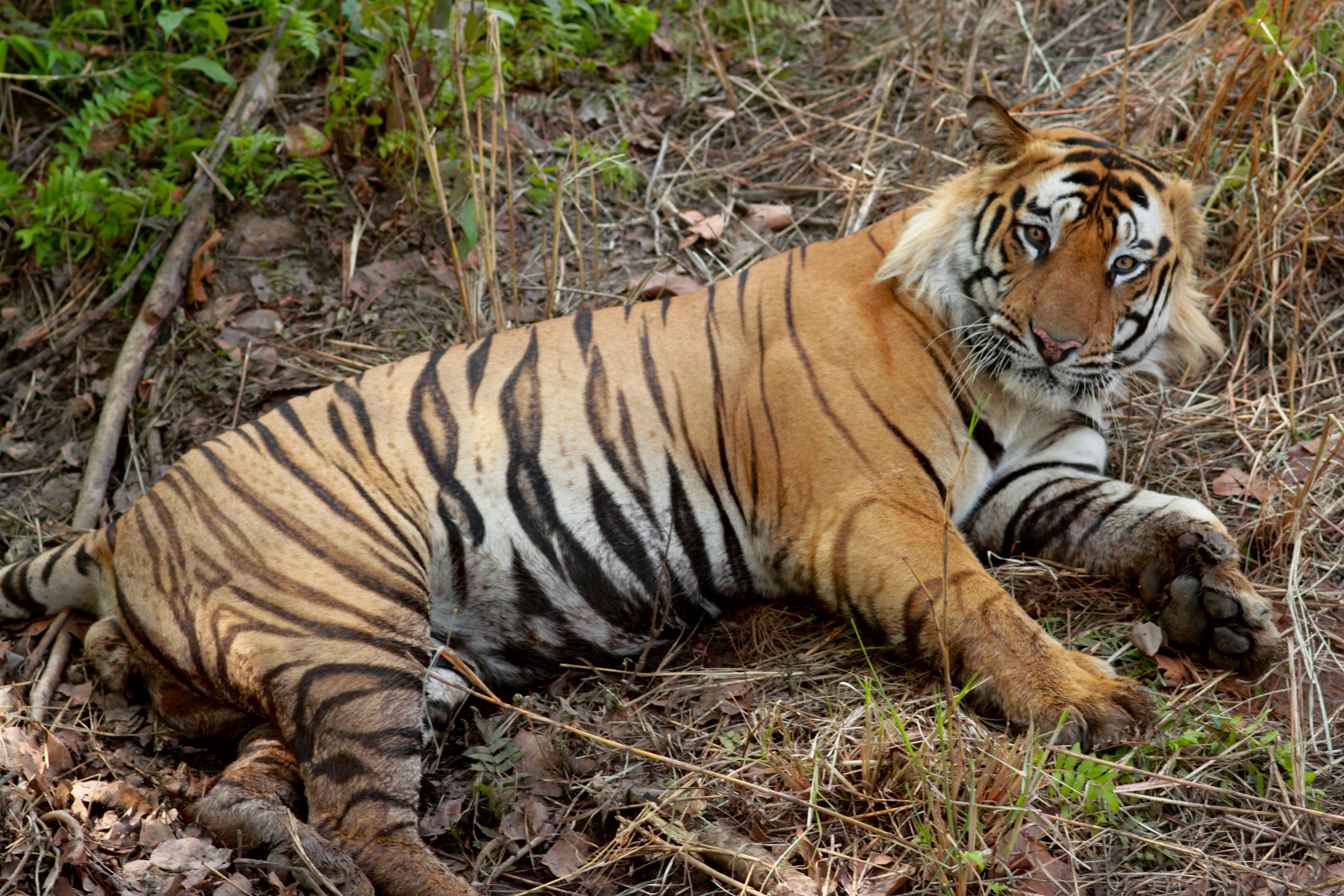
A Bengal tiger in Dhaka's National Zoo

It has been found that Bangladesh has experienced a surge in tiger attacks primarily due to habitat loss. Last year's count showed that a total of fifty people have been killed, the largest record in the last century. In addition to habitat, Bangladesh's tigers also turned to human prey due to lack of natural food sources because of illegal poaching in the Sunderbans. According to Professor Anwarul Islam of Bangladesh Wildlife Trust, a survey was carried out on 800 families living along the fringes of the mangrove forests. During that survey, almost half of the villagers admitted in eating venison (deer meat) last year.

I hope that some alternative solutions will be planned, in order to prevent further tiger attacks. Bangladesh has recently been reported to be part of the 13-Nation Tiger Conservation Summit in St. Petersburg. And like eleven other nations, it will be discussing various strategies to save the species. In my opinion, Bangladesh's situation regarding its tiger attacks is a likely topic for this upcoming discussion and hopefully the nation will receive suggestions from its neighbors in order to save both its tigers and people from further conflicts.

View article here

Friday, July 30, 2010

India and Bangladesh to Participate in Global Move to Save Tigers

Royal Bengal Tiger

India and Bangladesh are both home to the Royal Bengal Tiger. The two nations share a vast stretch of mangrove forests known as the Sunderbans, which make up a prime tiger habitat. Now, the neighboring countries will be attending a tiger conservation function known as the 13-Nation Tiger Conservation Summit in St. Petersburg this September. The purpose of this meeting is to plan urgent measures to save the world's current tiger population. It has been reported that Bangladeshi Prime Minister Sheikh Hasina may join the meeting. Other nations attending will be Nepal, Bhutan, Burma, Thailand, Laos, Cambodia, Vietnam, Malaysia, Indonesia, China, and Russia. According to experts, the remaining populations of the world's tigers will become extinct by the next century unless strong and decisive measures are taken to save them.

To me, this report is a clear representation of the world's nations, known to have tigers, banding together to save the species from the brink of extinction. This will mean that representatives from each of these thirteen nations will discuss various tactics, in order to save the world's tigers. And I think they will be able to benefit from the help of tiger experts and conservationists. This way, the tiger will be saved from becoming extinct.

View article here

Thursday, July 29, 2010

Report on Mass Killings of Wildlife in Orissa's Simlipal Forest

Indian elephants


Bengal tiger
The central government of Orissa has recently issued out a report indicating last month's mass slayings of elephants by poachers in the Simlipal forest. To make matters worse, the forest staff destroyed the evidences as a way to hide the incidents. The report also added that Simlipal's wildlife population, including tigers and elephants, is drastically diminishing. This was provided with citations of field records and statements from the forest staff, including the field director. According to the report, Simlipal has also been suffering from Maoist attacks and said that local villagers had admitted their "presence" in the area. Although there were two Social Operational Groups (SOGs) stationed in the forest, they never carried out patrols with the forest staff. This way, poachers and smugglers were being greatly benefited from the Maoist rebels.

I have a feeling that Simlipal is in a great need of help. It has not just been suffering from poachers, but also attacks from extremists. Therefore, the lives of both the forest staff and wildlife are at stake. Simlipal was known to be the first national park to be placed under Project Tiger. But now, it seems that it's tiger population is under tremendous threat as poachers and Maoist rebels pour into the jungles. I can only hope that central government of Orissa, along with several conservation groups and perhaps the Indian government will team up together to place an end on not just poaching activities but also the repeated Maoist attacks that have been terrorizing the state for a long time.

View article here

Nepal Partners Up with India to Battle Illegal Wildlife Trade

Bengal tigress in Nepal's Chitwan National Park

Nepal had earlier joined hands with its northern neighbor China in an effort to curb the illegal wildlife trade. Now, it has signed a Memorandum of Understanding (MoU) with its southern neighbor as part of battling the environmental catastrophe. According to forest minister Deepak Bohara, Nepal has joined forces with twelve other tiger countries in order to help double the world's tiger population by the year 2022. The Nepalese government is also fully committed in controlling poaching activities, and increase wildlife habitats along with prey animals. As part of intensifying conservation efforts, the government has announced a new national park called Banke National Park in western Nepal. The nation has also taken various steps to combat the illegal wildlife trade, and as a result, the tiger population increased to 155 animals (last year's census recorded 91 animals).

I'm very proud to see that Nepal has been taking serious action, in order to protect its local wildlife. It's also very good to see that it has partnered up with India, along with China to battle the illegal wildlife trade. It goes to show how the nations home to tigers are banding together to protect each others native wildlife, and combat poaching activities that have been ravaging the world's wildlife for many years. I sure hope that this new national park announced by the Nepalese government will receive great protection from poachers and wildlife smugglers. But right now, it's good to know how Nepal has been committing to saving and protecting its natural heritage.

View article here

Tuesday, July 27, 2010

Famed Tiger Expert Calls for Changes in Sunderbans Tiger Conservation

Bengal tiger

Veteran tiger expert and conservationist Fateh Singh Rathore had recently criticized the conservation methods for helping save Sunderbans' wild tigers. According to Mr. Rathore, just trapping and relocating tigers faraway from humans will not help. The animals will always somehow try to come back to the same places if they happen to be deep within their own territories. Mr. Rathore even pointed out that research on Sunderbans tigers is also vital in their conservation. In his words, Sunderbans' tigers are different than the ones elsewhere in India and there has not been any gathering of crucial facts such as their territory size or hunting habits. Mr. Rathore also criticized the use of technology for tiger census. He stated that counting Sunderbans' tiger population is difficult, compared to Ranthambore National Park where he is based. The use of camera traps and radio collars were found to be unsuited in the mangrove forests, as they could easily be destroyed or come off.

In addition to criticizing the methods, Mr. Rathore also made a suggestion in providing alternative earning opportunities for villagers living on the fringes of the Sunderbans. They have been depending on the forests as part of their livelihood, which brought them into close contact with tigers and resulted in several deaths. The Sunderbans have been experiencing rise in water levels due to climate change, forcing the farmers to rely heavily on the forests. As part of safety, Mr. Rathore recommended construction of solid walls as a way to decrease further attacks from tigers.

I'm very proud to see what all flaws Mr. Rathore pointed out in the Sunderbans tiger conservation. Being a tiger expert for many years, he really has the knowledge of helping to save India's wild tigers. This includes using the right techniques, and what all things to consider when saving the tiger. It's also very interesting to learn how different the Sunderbans are compared to other Indian wild places. One possibility is by the difference in their tigers' behavior. They may have different sizes in their territories, they might have different hunting habits compared to tigers elsewhere in India. There could be lots of reasons that set Sunderbans' tigers apart from others. I sure hope that conservationists active in the Sunderbans tiger conservation will find Mr. Rathore's feedback useful before continuing with their job.

View article here

Monday, July 26, 2010

High Hopes for Rare Otter

Asian small-clawed otter

On the island of Borneo in Indonesia, a photograph was taken of an otter which was originally thought to have become extinct. This otter, known as the hairy-nosed otter, is indigenous throughout Southeast Asia but increased hunting for its fur and meat along with destruction of wetlands pushed it to the brink of extinction. The last official sighting of the animal was in Borneo, but it was found dead on a road. It was then never seen on the island, or elsewhere in Southeast Asia. However, sightings have been recorded in Cambodia and Vietnam several years ago in turn raising hopes for the otter's survival. Another recent sighting took place in the Sabah state of Malaysia during the second half of 2008.

I'm very happy to see that a creature, thought to have been extinct many years ago, has been sighted again with hopes for survival. It reminds me of various new findings in biologically diverse jungles around the world in the past few years. Some of the animals were newly discovered, while others were thought to have been extinct long time ago. This otter is a perfect representation of wildlife thought to have perished long back, and has now been rediscovered. I also hope that this animal will be protected by conservation groups and wildlife officials throughout Southeast Asia from the ever-encroaching danger of the illegal wildlife trade.

View article here

Bushmeat Investigation in Chicago

Greater cane rat in Gabon

Federal authorities are investigating an African art store on Chicago's West Side, which had received a shipment of monkey heads and 24 dead cane rats. The animals were likely to have been victims of the illegal African bushmeat trade. The store had been raided last month by authorities, but no charges had been filed since. According to experts, the Windy City has become one of the western centers of the bushmeat trade. Conservationists even say that it is partially responsible for the decrease in numbers of chimpanzees and gorillas. In addition to that, experts had even warned of potential health hazards from monkey meat which includes a simian form of HIV. However, there are differences in opinions regarding the demand of bushmeat trade in North America and Europe. Also, some experts deny of such a virus contained in wild primate meat as there had not been any recorded cases of human transference.

I'm surprised to see that an illicit activity like the bushmeat trade can extend beyond its borders from the dark continent, and into the west. It's also surprising to know about a virus similar to HIV maybe contained inside meats of monkeys and apes. This could pose as a threat to consumers, and indicate how dangerous the bushmeat trade can be. But there have been differences in opinion about whether there really is an HIV-like virus in simian meat, or not. Also, it is unclear about how much impact the bushmeat trade has in North America and Europe. I can only hope that federal authorities will keep track of whatever shipment that enters the U.S, and check to see if any happens to contain exotic species from as far as Africa. That way, the country will know about its impact on the bushmeat trade.

View article here