Friday, July 3, 2020

What is Behind the Deaths of Botswana's Elephants?

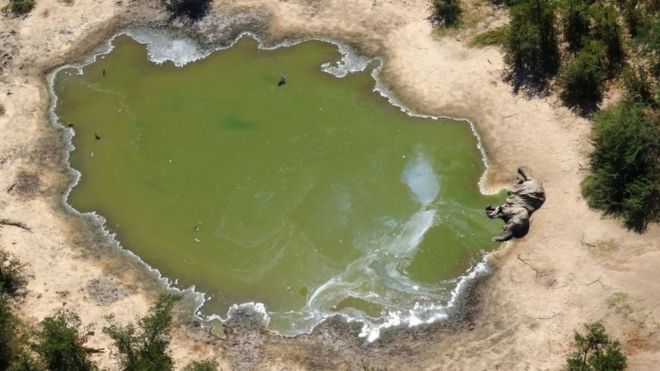
A dead elephant near a waterhole.

Over the last two months, Botswana has been plagued by deaths of hundreds of elephants and no one knows why. According to biologist Dr. Niall McCann of U.K's National Park Rescue, he and his colleagues found more than 350 elephant carcasses in the Okavango Delta. The government stated that lad results on samples collected are still weeks away. Dr. McCann stated that local conservationists first notified the government in early May after they flew over the delta. A total of 169 carcasses were sighted during the three-hour flight and a month later, that figure increased to 350. The government dismissed poaching as the cause of deaths since the elephants' tusks were not removed. Dr. McCann further added that no other animals other than elephants are dying. He experimentally dismissed natural anthrax poisoning, which killed about 100 elephants in the country last year. The way the elephants appeared to be dying consisted of them walking around in circles until dropping down on their faces, which Dr. McCann pointed out to be something possibly attacking their neurological systems. Either way, there has been no possible answer of what could be the cause of the elephants' deaths.
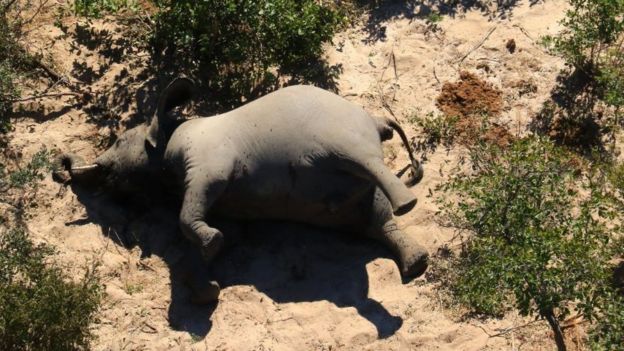
A dead elephant

I find this issue to be extremely calamitous and there has been a constant struggle in determining what is behind the deaths of Botswana's elephants. It arises so many questions such as "Could there be something in the water, food, or soil that is killing the elephants?" or "Is there some kind of a disease that is decimating the country's elephant population?" The second question touches on an issue in India almost two years ago when the Asiatic lion population became devastated by a combination of canine distemper and babesiosis in which 24 animals died. The lion population had been increasing substantially and dispersing beyond the borders of Gir Forest National Park and into areas where they had once disappeared. Even though the results of the analysis of samples collected are weeks away, I think it is crucial to further investigate the elephant mortality in Botswana. This includes conducting more aerial surveys to see the state of the current figures. In addition, more samples need to be collected in the form of water, vegetation, soil, and elephant blood for analysis.

View article here         

Thursday, July 2, 2020

Yellowstone's Bear-Bison Conflict Recorded

A grizzly bear taking on a bison in Yellowstone National Park.

The Yellowstone National Park conjures up an image of a quintessential American wilderness and a home to a wide variety of animals unique to America's wild side. Among the animals making their home in this rugged, untamed landscape are the two most powerful giants: the bison and the grizzly bear. Each one epitomizes the spirit of America's natural heritage. The bison provides food for the park's wolf population, while the bear keeps the plant and small animal populations in check. When it comes to feeding on larger animals like bison, the bear limits itself to scavenging carcasses of such animals. However, on rare occasions, it may choose to target a live one. This was a recent case when a grizzly bear was captured on video attempting to bring down a young, yet well-grown bison near a parking lot on the east side of the Firehole River in the Midway Geyser Basin. Initially, the bison stood its ground and charged towards the bear forcing it to retreat. But then, the bear turned towards its opponent after retreating less than ten yards. Eventually, it grabbed the bison from behind and held on its prey while biting down on its spine just above the hindquarters in an attempt to bring it down and kill it. At the same time, the bear was shaking its head back and forth as the bison slowly wandered past a row of parked cars. The two animals then advanced onto a paved trail leading to a bridge over the Firehole River. After crossing the bridge, they waded into the river and went downstream until the bison succumbed to the bear's strength and power as the two animals came close to the riverbank. The bear then temporarily left the bison to look around before returning to its prey and tear at its flesh.
The two animals are now on the bridge over the Firehole River.

I find it really extraordinary and awe-inspiring that such a rarely-seen dramatic event unfolded in Yellowstone National Park. Usually when a grizzly bear and a bison come into conflict with one another, the bison stands its ground and the bear backs away without a fight. But sometimes, tables get turned. And that is exactly what happened here. Rather than turn tail after a brief retreat, this bear stood its ground and attacked its adversary and would-be prey. According to Yellowstone bear biologist Kerry Gunther, the park's staff does not see bears kill bison very often but it probably happens more often than known. However, such encounters are normally not noticeable. After letting the grizzly bear feast on its prey, the park staff moved the carcass to a dump site in order to keep both predators and people safe from each other. I find that this footage gives an explicit picture of just how powerful grizzly bears in Yellowstone are. Mr. Gunther once saw a large male grizzly kill an adult bison cow and also bison carcasses with bite marks along the spine. He even one time saw a bear chase off a pack of wolves trying to kill a bison before ultimately finishing the animal itself. This goes to show that Yellowstone's grizzly bears are on the top of the food chain and are always on the look out for an opportunity when it comes to finding food. Even if it means going after a full-grown bison!

View article and video here             

Tuesday, June 30, 2020

Cross-fostering a Success in Mexican Wolf Conservation

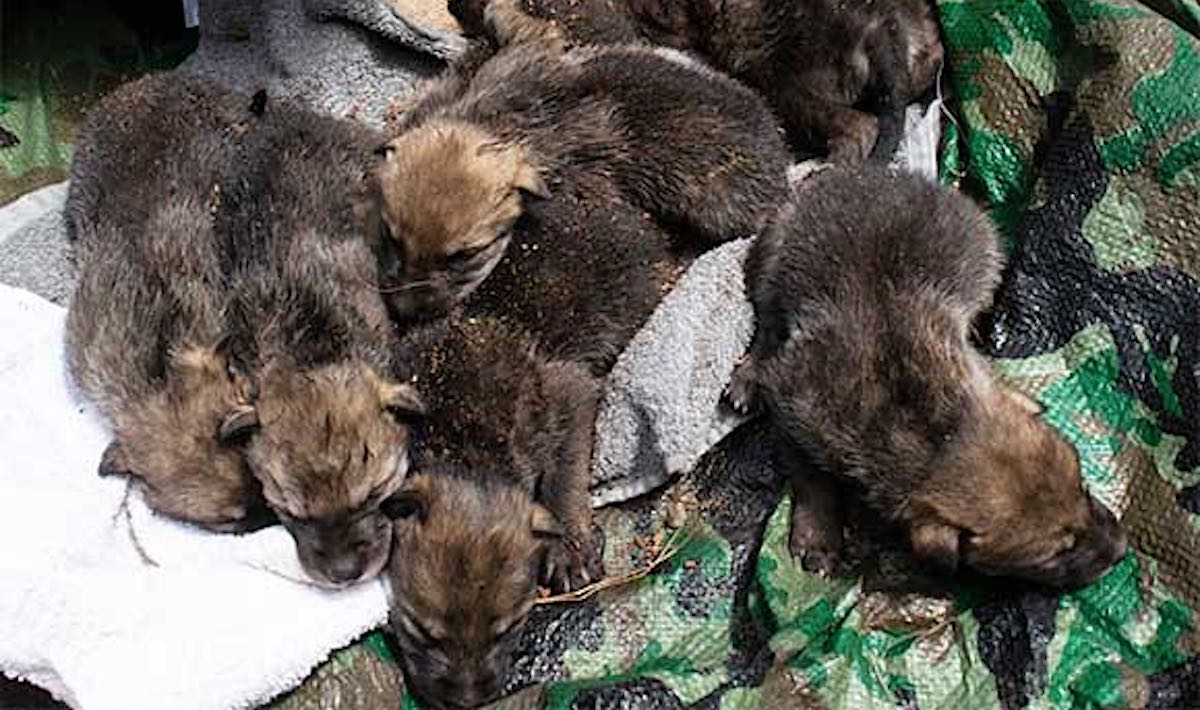
Mexican wolf pups

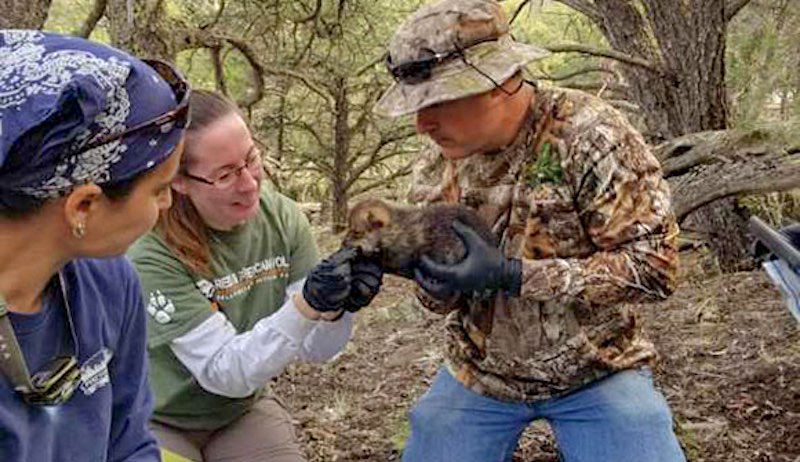
Recovery efforts for the Mexican wolf have recently been given a significant upgrade this spring with the birth of twenty pups in captivity, who were successfully joined with wolf packs in the wilds across the American Southwest. The twenty pups came from seven different litters in captive breeding programs in zoos and wolf centers in Arizona, California, Kansas, Missouri, and New Mexico. They were provided to seven wild packs in Arizona and New Mexico. This ingenious program is operated by the Arizona Game and Fish Department with large-scale support from the U.S Fish and Wildlife Service. This method, known as cross-fostering, has proven to be successful in the reintroduction efforts of Mexican wolves in which cubs are taken at 14 weeks of age and placed in wild wolf dens containing pups of the same age. Studies have indicated that cross-fostered wolf pups have the same survival rate as the ones born in the wild throughout their first year of life. According to Jim deVos, assistant director at Arizona Game and Fish Department, cross-fostering wolf pups helps increase the genetic diversity. Therefore, cross-fostering promises the highest rate of survival of any wolf-reintroduction methods. The Mexican Wolf Interagency Field Team (IFT) began cross-fostering wolves in 2014 with only two pups. Since then, thirty captive-born pups were taken to the wild to be fostered in dens--and, about ten cross-fostered wolves have survived and been raised into wild wolf packs.
Members of the IFT with a Mexican wolf pup
I find this news to be very special because it relates to the one on which I made a blog post two years ago. In that post, I talked about what cross-fostering is and how it is being utilized in the conservation of Mexican wolves. I was initially unsure whether the cross-fostering technique would be successful and how, but according to this news, it has proven to be successful. A census conducted in 2019 recorded 163 wild wolves (76 in Arizona and 87 in New Mexico); an increase from 131 animals counted the year before. I'm confident that cross-fostering will be beneficial in the Mexican wolf conservation and will help bolster the numbers in the American Southwest. I think this method should also be utilized in the conservation of red wolves on a trial basis and see how it turns out. In the meantime, the future for Mexican wolves in the U.S appears bright.

View article here               

COVID-19 Pandemic is No Excuse to Refrain from Protecting Endangered Wildlife

(Left) Kunjok Lama; (Right) Wildlife smugglers and their seized contraband in Rasuwa.

In the past few months, the world has been gripped by the COVID-19 pandemic. The pandemic has forced people around the world to take necessary precautions such as staying home to work, wearing masks in public places, and refraining from travelling internationally. However, the pandemic also came with unexpected side effects. One of them was an increase in poaching in Africa and Asia as a result of poachers taking advantage of the global lockdown to conduct their illegal activities. In response, wildlife personnel swung into action and have since been battling the threat of poaching and illegal wildlife smuggling in those two places. One of the latest incidences was the arrest of an infamous ringleader of a wildlife smuggling gang, who was accused for smuggling tiger bones and pelts to China via Nepal for decades. His name was Kunjok Lama, and he was recently caught in Kathmandu's Baudha neighborhood on June 25. He was then brought to Langtang National Park, which handed him over to the Rasuwa District Court and was held in custody.
Some 130 kg of confiscated leopard and tiger bones and pelts.

The hunt for Kunjok Lama goes back about twenty years prior to the pandemic when Indian security forces seized a stockpile of endangered animal body parts in the city of Ghaziabad. Those arrested during the bust identified Lama as the chief mastermind of the smuggling ring. Since then, poachers caught during every seizure named Lama as the ringleader. In 2005, a Nepali Army patrol stationed at Langtang National Park captured four people transporting 36 leopard skins, 5 tiger pelts, and 113 kilograms of tiger bones to the China-Nepal border in a truck. They also named Kunjok Lama, along with Dondhip Lama and Nudup Lama as the masterminds. The park warden at the time sentenced two of the arrested to fifteen years and one to five years in jail with support from the Appeals and Supreme Courts. Langtang National Park gave details about Kunjok Lama to the Central Investigation Bureau (CIB), which led to a 15-year-long hunt that finally ended last week with Lama's arrest.
Tiger and leopard parts and cash being given to the Nuwakot District Court.

In addition to Lama, another smuggler whose name kept coming up was Jimi Sherpa also known as Lodu Dimey. In 2005, when the police captured another border-bound truck in Rasuwa containing five tiger bones and pelts, they came to know from those arrested that Dimey was the mastermind. The police then stormed Dimey's house in Baudha and confiscated almost Rs. 4 million in cash, along with Chinese, Indian, and American banknotes. In a cache of wildlife contraband, they also discovered four human skulls that are in demand in Tibet for various rituals. A case was filed against Dimey, his wife Diki, driver Nakul Tamang and vehicle owner Suk Bahadur Tamang at the District Forest Office in Nuwakot. Dimey was fined Rs. 100,000 and his wife Rs. 60,000 in absentia while the other two were released on Rs. 100,000 bail. Seven years ago, the Patan Appeals Court sentenced Dimey, who was still at large, to five years in jail. With the help from the Interpol, he was caught in New Delhi after investigations indicated him to be involved in tiger poaching in national parks of Madhya Pradesh. Dimey was then flown back to Kathmandu, but in 2018, the Supreme Court ordered him to pay a worthless Rs. 45,000 fine and released him. Although disappointed, the police began investigating the connections between Dimey and Lama. They discovered that he was born in Dehradun, and had been under investigation in India for various crimes, which included making Nepal an accumulation center for wildlife contraband from India, Sri Lanka, and Bangladesh for smuggling into China. Deputy Inspector General Sahakul Thapa is hopeful that the arrest of Lama will lead the authorities to Dimey.   
Lodu Dimey arriving at the Kathmandu airport.
 
While I admire and applaud the recent efforts in capturing Kunjok Lama, I also believe that law enforcement officials and others involved in the battle against illegal poaching and wildlife smuggling should not be bogged down by the COVID-19 pandemic. Just because the numbers of reported cases and deaths from the virus keep increasing does not mean that efforts to fight wildlife-related crimes should temporarily be stopped. That would be giving poachers, smugglers, and other perpetrators involved in the illegal activities an opportunity to further decimate the populations of various endangered species. I firmly believe that efforts to protect the world's endangered wildlife should remain perpetual during the pandemic and people involved should remain active. At the same time, they should adhere to the pandemic safety protocol such as keeping face masks handy, maintaining social distance, and taking time off if feeling sick.

View article here            

Tuesday, January 28, 2020

Don't be Surprised if You See Cheetahs in India in the Future!

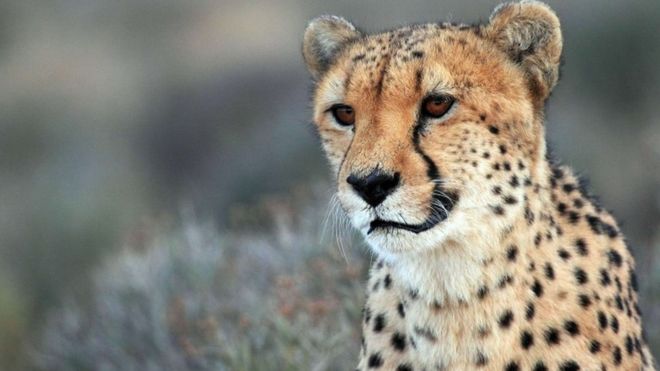
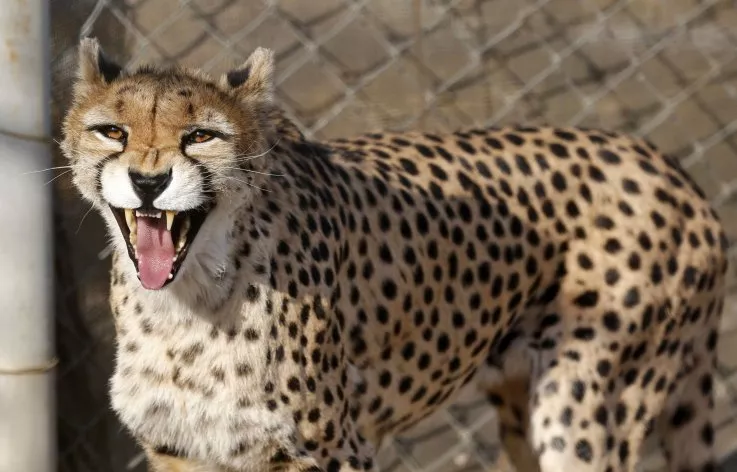
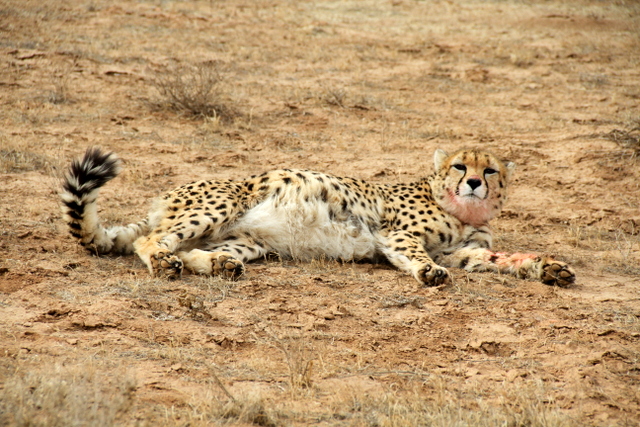
Cheetah

The cheetah once ranged from the vast windswept plains of Africa to the harsh and arid desert landscapes of Arabia, Iran and neighboring countries, and India. In its historic Asian homelands, this majestic cat was kept as a companion of the royalty who used it to hunt fast game. But as time passed, the cheetah began to vanish into extinction due to wide-scale hunting throughout the regions of Western and southern Asia leaving only small populations confined to Iran. In India, the cheetah had become extinct since 1947. But now, after seventy years of extinction, the cat might be on the path of making a comeback. This was seen in recent news, when, the Supreme Court of India announced that Africa's cheetahs could be introduced in a "carefully chosen location." The court further added that the cheetah would have to be introduced on an experimental basis to see if it can adapt to India's conditions. The decision was lauded by former environment minister of India Jairam Ramesh, who had launched the movement a decade ago.
Jairam Ramesh's response to Supreme Court's decision of reintroducing cheetahs in India. 
For more than ten years, cheetah experts, wildlife officials, and conservationists from all around the world had discussed the reintroduction of the cheetah to India. Although they agreed that there was a strong case for it, leading conservationists were afraid that in its hurry to bring the cheetah back, India would end up housing the cats in semi-captive conditions in secured open-air zoos instead of letting them live free. They further added that possible cheetah populations cannot be established without the restoration of prey base and habitat, and the high possibilities of a man-animal conflict. They even pointed to India's inconsistent record of reintroducing animals in the wild. One such example was the reintroduction of Asiatic lions in Chandra Prabha Wildlife Sanctuary in northern Uttar Pradesh during the late 1950s. Although the experiment was successful with lion numbers increasing from three to eleven in 1969, the selected area was not large enough and the animals subsequently disappeared. However, conservationists who had led the cheetah reintroduction initiative insisted that these doubts are baseless and stated that a decision will only take place after the chosen sites are fully analyzed for prey, habitat, and possibility of man-animal conflict.
Asiatic cheetah
I really admire this decision made by the Supreme Court of India. It clearly implies that in order to reintroduce an animal into the wild, the first step would be carry out experimental trials to see how well the animal can adapt to a new environment. In addition to that, it is equally crucial to thoroughly examine a potential release site for factors such as habitat and prey base, and the possibility of human-wildlife conflict. In that regard, here are some issues that any wildlife enthusiast would be interested in knowing to gauge the success of this experiment:
  1. How many African cheetahs will be reintroduced in India on experimental basis?
  2. Which sites have been selected for the reintroduction effort?
  3. How will the cheetahs be monitored during the experiment? Radio collars?
  4. What techniques would be implemented in determining the area size of the release site, prey base, and the potential of human-wildlife conflict?
  5. What native wildlife will the cheetahs be sharing their habitat with?
  6.  How will the cheetahs be protected from poachers and other anthropogenic threats?
  7.  Which agencies will be involved in conducting this experimental introduction and overseeing it?
  8. Will this project have public support?     
Since Africa's cheetahs number around 7,100 animals in the world, they have been chosen as likely candidates for India's cheetah reintroduction project. Asiatic cheetahs, which were once found in India and Western Asia, number only about fifty animals; all residing in Iran. When India asked Iran to lend some of its cheetahs as part of the reintroduction effort, the answer was "no" and now since Iran's cheetah numbers are critically low, it is best not to risk bringing any cheetahs to India from Iran. I think it is very important that the above questions should be addressed in order to give the global community some idea on how India's cheetah reintroduction project is being executed. This way everyone would know about the cheetah reintroduction experiment is progressing. But overall, this initiative sounds very good for the Indian wildlife in general and "Indianized" cheetahs in particular. 

View article here          

Sunday, January 12, 2020

Is the Chinese Paddlefish Officially Extinct?

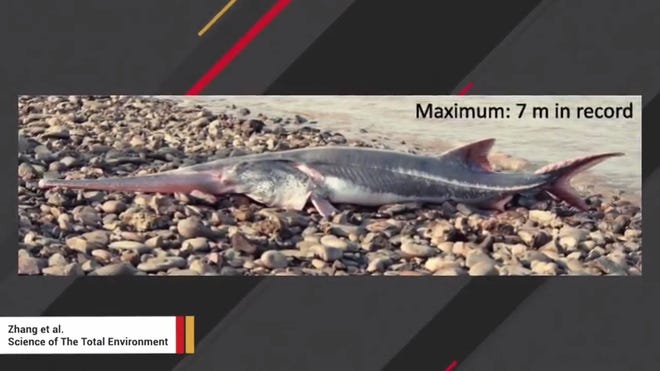
Chinese paddlefish

The year 2020 has begun with a very devastating news that the Chinese paddlefish has reportedly become extinct, according to a study in the journal Science of The Total Environment. Researchers who carried out a year-long survey of China's Yangtze River, in which they spotted more than 330 species of fish, did not identify a single paddlefish. The study also indicated that they could not find any of 140 fish species usually found in the river, and most are considered highly endangered. The last live Chinese paddlefish specimen was recorded in 2003. Since then, it has not been seen. Based on the surveys carried out in early 1990s and 2000s, the IUCN Red List lists the Chinese paddlefish as "critically endangered" and estimated its population as less than fifty individuals in 2009. The Red List further added that despite its first-class state protected status, the fish was historically overfished for food and as a result its populations dwindled drastically during the late 1970s. In addition, it was also tremendously affected by habitat fragmentation which was seen in 1970 with the construction of the Gezhouba Dam in the middle of the Yangtze River. The dam cut China's paddlefish population in two - one half on each side - and blocked off the fish's migration route which prevented the adult individuals from swimming to the upper reaches of the river to spawn. In addition, the construction of the Three Gorges Dam in the early 1990s further decimated the paddlefish's habitat.
Gezhouba Dam

Although I find this news to be very devastating to the world environment, as well as the animal world, I'm at the same time doubtful of the overall conservation status of the Chinese paddlefish. I saw several reports on various major news websites, including this one (USA Today), and they all cited this recent study that the Chinese paddlefish has become extinct. This probably means that the global public is under the impression that this fish has officially vanished into history. I, on the other hand, am unsure about this. Also, some researchers have reported that the said survey was carried out in a very quick manner covering a very large research area in a comparatively short time. I tend to think (and quite hopeful) that perhaps there are some individuals of this fish still in the Yangtze River which were missed by the researchers.

Aerial view of the Three Gorges Dam

I recently emailed the IUCN to confirm regarding the Chinese paddlefish's conservation status and was told that the organization updates the Red List twice each year by assessing and reassessing the conservation status of various species. The upcoming dates for 2020 regarding the assessment and reassessment of species can be found in this link. It states that the official date of update is June 2020. I would strongly advise the public to check out this link or at least wait until the given date, instead of blindly believing what the news reports say. Only when the IUCN gives its declaration will we know officially whether the Chinese paddlefish is extinct or not.

View article and video here  

Sunday, November 24, 2019

Should Cheetah Researchers be Punished for the Work They Do?

An Asiatic cheetah in captivity

The Asiatic cheetah is one of the most critically endangered of animals in the world. With fewer than 50 individuals believed to be remaining in Iran, this magnificent cat's survival hangs in a delicate balance. The cheetah's status in Iran has prompted crucial conservation efforts to ensure that it does not disappear into extinction. However, these efforts have been hampered tremendously with eight researchers from the Persian Wildlife Heritage Foundation (PWHF) being arrested in 2018 on baseless allegations of spying on Iran for other countries by the intelligence section of the Islamic Revolutionary Guard Corps (IRGC). The researchers, as part of their work, used cameras to keep track of cheetahs which to the IRGC appeared that they were supposedly carrying out espionage while using PWHF as a front. Six researchers were found guilty without the presence of legal counsel, while four were charged with "corruption on Earth" which carries the death penalty. One of the researchers arrested was Niloufar Bayani, who was sentenced to ten years in prison. A graduate of Montreal's McGill University, she told the court that she had been tortured physically and psychologically in order for her to confess; a claim which she later took back. According to Amnesty International, she was threatened with hallucinogenic drugs, beatings, and denailing. Other researchers who were found guilty included Mohrad Tahbaz, who also received a ten-year sentence, while Hooman Jokar and Taher Ghadirian were sentenced to eight years. Sepideh Kashani and Amirhossein Khaleghi were sentenced to six years, while Sam Radjabi and Abdolreza Kouhpayeh have yet to receive their sentences. The researchers' arrest shocked and angered scientists around the world.
An Asiatic cheetah with a hare

There are no words to describe such news as this. It shocks and angers me that these innocent researchers were trying to to save the Asiatic cheetah from becoming extinct and end up being arrested and being found guilty on charges of espionage for which there is no shred of evidence. However, it is also true that Iran is constantly facing sanctions from western countries, including U.S, which affects its entire population. So perhaps is Iran motivated to take such extreme actions to get back at western countries? Regardless, incidents like this makes me want to question Iran's stand on the conservation of the cheetah. Is the country trying to save the cheetah from becoming extinct or is it letting the animal vanish into history just the way the Caspian tiger and Asiatic lion became extinct in Iran?
A pair of Asiatic cheetahs

I should point out that Iran does have some programs to protect its wildlife, including the cheetah. The Iranian Cheetah Society is actively involved in the country's conservation of the cheetah and other wildlife and conducts various research projects on the wildlife and is even a consultant for its conservation for the Iranian government. The methods and techniques the Iranian Cheetah Society has been carrying out for its wildlife protection are compiled in this annual report from 2018.
Asiatic cheetah resting

Regardless, Iran has taken this extreme step of imprisoning the researchers which is deplorable. This implies that even though Iran has not given up on the conservation of the Asiatic cheetah, it still holds a grudge against western countries that holds sanctions against it. I strongly believe that better sense prevails and the governments of Iran and other countries work together to find a diplomatic solution to release the researchers.

View article here