Tuesday, November 20, 2018

Could the Death of a Female Asiatic Cheetah Have Been Avoided?

Asiatic cheetah

The Asiatic cheetah has and continues to be a critically endangered species in its Iranian homeland. It remains threatened by issues such as conflicts with humans, habitat fragmentation due to mining and road construction, and even vehicular accidents caused by unsafe roads and reckless drivers. A recent case involved a young female cheetah, who was severely injured in a car accident while walking across the northern fringe of Zamen-e-Ahoo National Park and Miandasht Wildlife Refuge in Iran's North Khorasan Province. The accident was reported by an environmentalist in the area, who contacted the provincial department of environment (DOE). According to Ali Motahhari, general director of the DOE, the female cheetah was still alive when the department's forces arrived at the scene but died on the way to the department due to a severe spinal cord injury. Her death is one of many that continues to decimate Iran's cheetahs. In August, a cheetah cub succumbed to its irreversible spinal cord injury after being hit by a car on the Abbasabad-Mayami road. Deputy environment chief for DOE natural environment and biodiversity doctorate Hamid Zohrabi castigated the Ministry of Roads and Transport for its ineptitude in fencing the roads to prevent cheetahs from being run over by vehicles.
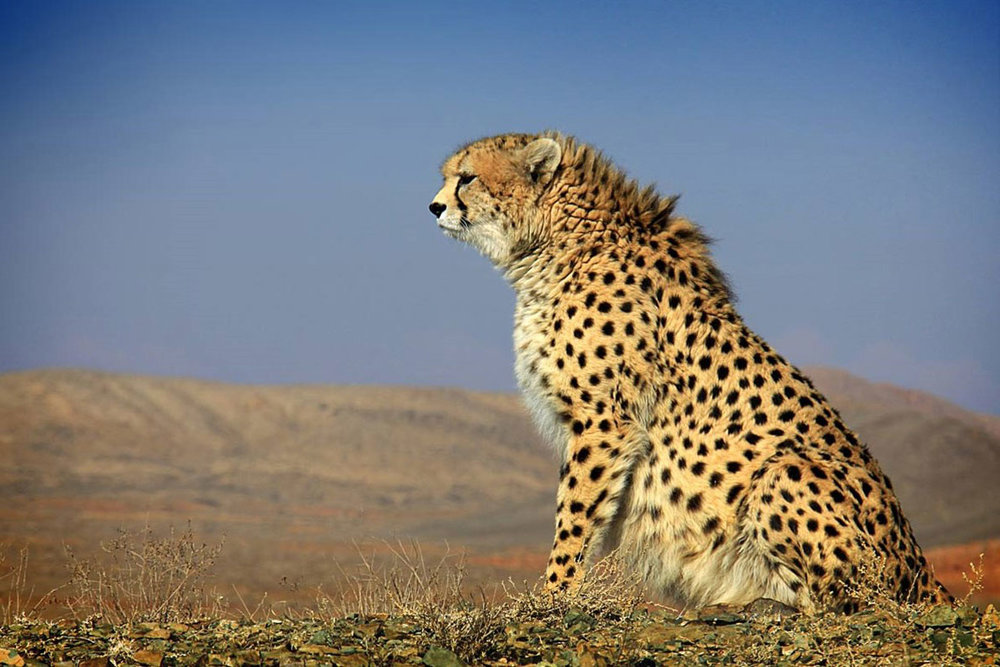
An Asiatic cheetah in its natural habitat

It disturbs me very much that the Asiatic cheetah continues to remain a critically threatened species, despite various efforts being put to save it from extinction. How long should this magnificent cat wait until it can roam freely in its natural habitat while anthropogenic threats continue to persist? I find it extremely disheartening that careless drivers inadvertently continue to decimate their country's cheetah population, despite the presence of road signs warning them about the animals' presence. Had these people paid close attention to the conservationists, wildlife officials, and others involved in Iran's cheetah conservation, then pretty much all the cheetah deaths, including this young female, caused by vehicular accidents could have been avoided to some degree. But it seems to me that the people of Iran are ignorant to the fact that cheetahs are on the brink of extinction. I urge the people of Iran to wake up and join forces with their country's conservation groups, NGOs, and international organizations like the World Wide Fund for Nature (WWF) to save the world's last remaining population of the Asiatic cheetah from extinction. Furthermore, I urge the Ministry of Roads and Transport to also team up with specialists who specialize in cheetah conservation in order to get some useful tips on how to better improve the roads that run through cheetah habitats. In addition, I firmly believe that heavy fines and stiff penalties should be imposed on anyone responsible for killing a cheetah either by vehicular accident or poaching in order to send a message to the public about the importance of protecting Iran's cheetahs. Several tribal communities living in the vicinity of protected areas housing cheetahs need to be educated about using non-lethal methods to protect their livestock from the animals or at least encourage them to settle in lands where there are no cheetahs. The Asiatic cheetah faces an uncertain future and unless the people of Iran become actively involved in the conservation of this cat, it would probably once again make a successful comeback from close to extinction.

View article here

Cooperation Between Anti-Poaching Squads and Local Communities Necessary in Fight Against Africa's Wildlife Poaching

Samia Suluhu Hassan

Tanzania's Vice President Samia Suluhu Hassan recently officiated at an inauguration of a paramilitary group assigned to fight illegal poaching and trafficking of wildlife and wildlife products. The force began with 313 members, which includes female and male personnel, and will function under the country's Ministry of Natural Resources and Tourism. The inauguration ceremony took place at Fort Ikoma in the Serengeti District. In her address, Vice President Hassan hopes that the anti-poaching squad will effectively combat poaching in Tanzania and urged the communities living in the vicinity of the country's game reserves and national parks to cooperate with the appropriate government authorities in fighting the wildlife crimes. She further showed her optimism that fighting poaching would increase the tourism sector by attracting more tourists. Hamisi Kigwangalla, the minister of Natural Resources and Tourism, disclosed earlier in the ceremony that the women and men who form the squad were from the Tanzania National Parks Authority (TANAPA) and Wildlife Management Authority, among others. He further added that they have been enlisted by the Tanzania People's Defense Force (TPDF).
Landscape of Serengeti National Park

I can say that I'm hopeful that this anti-poaching squad will be effective in combating wildlife poaching and the trafficking of wildlife. Due to members' paramilitary background, I have no doubt they are ideal candidates in the ongoing battle against poaching of Africa's elephants and rhinos. I'm very grateful that the Ministry of Natural Resources and Tourism came up with this initiative to not only protect Tanzania's wildlife, but to ensure the benefit of the country's tourism sector. Tanzania, like most African countries, relies on tourism as the main source of income. However, the wildlife also attracts poachers and wildlife smugglers whose activities can have a drastic effect on the country's economy as well as its natural environment. I strongly believe that the work of this paramilitary squad combined with the cooperation from communities living in the fringes of Tanzania's protected areas will certainly help put a stop to poaching and wildlife smuggling activities in Tanzania. If this project works, I hope other African countries will follow Tanzania's example in developing similar initiatives to save their local wildlife and benefit their tourism industries. Illegal poaching and wildlife smuggling cannot be stopped mainly by anti-poaching personnel and other authorities. It is highly essential to have a joint cooperation between local communities and anti-poaching squads to put an end to such crimes against nature.

View article here     

Sunday, November 4, 2018

Can Sunscreens Have a Devastating Effect on Coral Reefs?

Palau's Rock Islands

Coral reefs generally appear in the news regarding the threat of coral bleaching, due to climate change. But there is another unusual threat which some researchers believe is killing off coral reefs and damaging marine environments: sunscreens. This has recently been seen in the case of Palau, which has become the first country to ban sunscreens to protect its coral reefs. According to the Consumer Healthcare Products Association, the law passed this week in Palau describes the prohibited "reef-toxic" sunscreens as containing one of ten chemicals, including oxybenzone and octinoxate, which are found in several sunscreens sold in the U.S. The law clearly indicates that  retailers who break the prohibition will be fined $1,000. Olkeriil Kazuo, spokesman of President Tommy E. Remengesau, Jr., stated that the force behind the ban was a 2017 report by the Coral Reef Research Foundation which uncovered extensive sunscreen toxins in Palau's Jellyfish Lake, a popular tourist attraction and UNESCO World Heritage site. The report urged visitors to promptly switch to "more biologically friendly" sunscreen products. Mr. Kazuo further added that Palau will immediately stop importing reef-toxic sunscreen, but retailers have until 2020, when the law goes into effect, to sell their remaining stock.
Jellyfish Lake

I find it very fascinating that sunscreen products pose a threat to the world's coral reefs. At the same time, I find that it is worth noting about the harmful effects sunscreen can have on coral reefs. A study in 2015 by researchers from University of Central Florida showed that oxybenzone presents a threat to coral conservation by depleting coral of its nutrients and bleaching it white. This implies that sunscreen products containing oxybenzone attribute to coral bleaching, which has and continues to threaten coral reefs worldwide. I really believe that the findings made by such studies should be taken into serious consideration if the global community is to save the coral reefs from further decimation. Places like Palau and Hawaii have already passed laws banning "reef-toxic" sunscreens, which do not go into effect until 2020 and 2021 respectively. I don't believe people should wait that long to go swimming and snorkeling in tropical seas. If they care about the health and well-being of coral reefs and want to do such aquatic activities, they should purchase sunscreen products containing micronized zinc oxide and titanium dioxide (check the ingredients on the bottle or tube). Not only do these minerals serve as safe alternatives to the reef-toxic chemicals, they also protect the skin by reflecting the harmful rays away. This is especially useful since there is an increase in the rate of skin cancers. Hawaii, Palau, and various other islands in the South Pacific rely on tourism as their source of income. Hundreds of visitors are drawn to these tropical islands by their sun-soaked beaches and crystal-clear waters that house coral reefs. The reefs themselves are part of the tourist sector and if they continue to be devastated by coral bleaching, it can negatively affect the economies of these island nations and the livelihoods of their people.

View article here 

Wednesday, October 31, 2018

How can China Ban the Ivory Trade But Allow Trade of Tiger Bones and Rhino Horns?

Seized rhino horns at the Department of Wildlife and National Parks headquarters in Kuala Lumpur. 

In 1993, China had banned the use and trade of rhino horns and tiger bones. But now, 25 years later, the country made an announcement that it will allow the trade of these endangered wildlife products, infuriating conservationists who urged that the move will further devastate the animals. China's State Council indicated that it would partly lift the ban to permit rhino and tiger parts to be used in scientific research, medicine, and "cultural exchanges," emphasizing that the trade will be rigorously controlled and that the parts will come from captive animals. It further added that the animals' body parts may come from licensed distributors and can only be used by certified doctors. No reason was given for the sudden lifting of the ban, but enraged wildlife activists highlighted that the move would encourage poachers and traders to accumulate goods for a country that places phenomenal value on the animals' body parts. According to wildlife trade specialist Colman O'Criodain, the prospect of laundering a tiger or rhino product would be enough to increase the poachers' activities. Experts also feared that probable consumers will look for body parts in other parts of the world, especially Southeast Asia which is rife with tiger farms and South Africa where there are lots of ranches containing rhinos.
Bengal tiger

I find it extremely shocking and sickening how China would first call for a ban on all ivory trade and now announce that it is allowing trade of other endangered wildlife products, particularly rhino horns and tiger bones. It really goes to show how two-faced China and other countries can be when it comes to protecting endangered wildlife around the world. How can you ban the trade of certain products made from the body parts of endangered species and then allow the trade of others? When an animal is endangered, then it should always be protected no matter what. But unfortunately, countries like China seem to find an exception to the rule and make poor decisions by banning the trade of endangered species for some number of years and then lift that ban which further puts the lives of such animals in jeopardy. I find this move made by China will definitely result in an increase in poaching activities towards rhinos and tigers, and therefore further push them towards the brink of extinction. I urge the Chinese government to reconsider its decision and put a stop to the trade of rhino and tiger body parts. I also urge the people of China to refrain from purchasing tiger bones and rhino bones if they care so much about the well-being of the animals and voice their support for the protection of tigers and rhinos.

View article here                  

Thursday, September 27, 2018

Can Genetically Modified Mosquitoes Be Helpful in Eradicating Mosquito-borne Diseases?

A genetically modified Anopheles gambiae mosquito 

Mosquitoes have long been associated with other animals as life-threatening parasites. Although they are food for some animals such as dragonflies and damselflies, mosquitoes have been and continue to be a threat for most animals, including humans. As carriers of some of the most lethal diseases, including malaria, mosquitoes have been responsible for more human deaths throughout history than all the wars and famines combined. Despite the development in vaccination and general precautions against such diseases, mosquitoes, particularly those of the genus Anopheles, claim more than 400,000 lives every year. But recently, a brand-new experiment is being done that could change the ongoing battle against malaria. It is a new kind of genetic engineering that can quickly spread a self-destructive genetic modification through a complex species.
Plasmodium parasite; the main cause of malaria

The scientists involved in this project used an innovative gene-editing tool called CRISPR to create mosquitoes with a "gene drive," which quickly transferred a sterilizing mutation through other mosquito species. A report in Nature Biotechnology showed that nearly all regular mosquitoes were wiped out by the ones carrying the mutation in a high-security basement laboratory in London. The researchers are especially heartened because, unlike in most attempts to use gene drives, the modified mosquitoes did not seem to further mutate in a way that would belittle the effectiveness of the mutation. However, they underlined that several years of supplementary research are required to further analyze the effectiveness and safety of the approach before anyone tries to release these mosquitoes or any other organisms engineered this way into the wild. The researchers also recognized that the technology brings serious concerns, indicating that it will need an extensive political debate, meticulous regulation and the agreement of people living in any areas where the mosquitoes might be released.
Nnimmo Bassey, one of several activists opposed to the technology of using genetically modified mosquitoes against malaria.

Target Malaria, a program promoting the research, has already started comprehensive discussions with African countries where the mosquitoes could one day be released. Nonetheless, there is already strong opposition among some activists like Health of Mother Earth Foundation director Nnimmo Bassey, who stressed that Africa has become a "testing ground for a technology that no one can say is safe definitively." Others like biologist Ricarda Steinbrecher of ECONEXUS added that wiping out or greatly suppressing an entire malaria mosquito species could lead to other more questionable species coming in to fill a niche. Jim Thomas, co-executive director of an international technology watchdog organization ETC Group, voiced his concern that the gene drives could be used to develop new biological weapons. Andrea Crisanti, a molecular parasitology professor from the Imperial College London who led the research, rejected the approach that gene drives could be used to create biological weapons. Although he recognized the concerns, which have been considered by many scientific organizations, Professor Crisanti and others stressed that the possible advantages surpass the risks. The gene drive technology could also be used to significantly suppress other mosquito species, such as those that spread other life-threatening diseases like dengue and Zika. In addition, gene drives could also be used battle agricultural pests.
Standing water containing mosquito larvae

I find it extremely fascinating that a team of researchers have come up with a plan to battle mosquitoes carrying the malaria. Based on the experiments they conducted, they are hopeful that releasing genetically modified mosquitoes in countries known for malaria would change the game in the battle against the disease, especially when there are mosquitoes that are resistant to pesticides. However, I also believe that it is important to note that there is still a great need of supplementary research needed to further study the safety and effectiveness of this approach before these mutation-carrying mosquitoes are released. This is especially true considering the concerns addressed by people like Dr. Steinbrecher, who pointed out that suppressing mosquitoes carrying the malaria virus significantly could result in ecosystem crashes especially when other more problematic species fill the niche. In addition, if ordinary mosquitoes are destroyed by their genetically modified counterparts, what will happen to animals that prey on mosquitoes like dragonflies, damselflies, and mosquitofish? Will they be able to survive on the ones carrying the mutation? This is why it is highly essential to further study these genetically modified mosquitoes to prevent any possibility of an ecosystem crash. In the meantime, emphasis should continue to be placed on preventing and treating malaria and other mosquito-borne diseases through vaccination, elimination of standing water, setting up mosquito nets and window screens, wearing long-sleeved clothes, and applying insect repellents.

View article here                        

Tuesday, September 18, 2018

Wildlife Conservation and Hunting Groups Need to Join Forces in Mitigating Human-Grizzly Bear Conflict

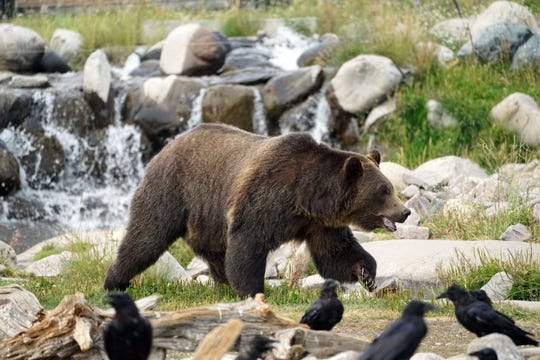
A grizzly bear at the Grizzly & Wolf Discovery Center in Montana

Recently, wildlife managers in the state of Wyoming have euthanized two grizzly bears suspected of killing an elk hunting guide and injuring his client near Yellowstone and Grand Teton National Parks. The two bears, a mother and her cub, are being analyzed in connection with the mauling death of hunting guide Mark Uptain and injuring of his client Corey Chubon of Florida on Friday in the Terrace Mountain area. Wyoming Game and Fish Department spokeswoman Rebekah Fitzgerald believes that all possible evidence shows that the two bears were involved in the attack. Authorities stated that the bears attacked the two men when they field dressed an elk they had shot on Thursday and found it dead on Friday. Teton County officials added that the bears charged them "aggressively," but did not touch the elk. The incident occurred weeks after a federal judge briefly stopped Wyoming state officials' plan for a grizzly bear hunt this month. The hunt, which is currently on hold until October 1, was allowed to be initiated last year when the Trump administration removed the bears from the protection of the Endangered Species Act. The delay has infuriated hunters like Sy Gilliland, who feels that the hunt is required to control the increasing grizzly bear population living near people. While groups that protested the hunt mourned Uptain's death, they also added that life-threatening encounters between grizzly bears and people occur in September and October. These incidents happen when hunters actively move in the areas where the bears are foraging for food before winter hibernation. According to Melissa Thomasma of Wyoming Wildlife Advocates, killing more bears will not only prevent other human-bear conflicts but also threaten the health of the grizzly population around Yellowstone.
Grizzly bear exploring its enclosure in the Grizzly & Wolf Discovery Center

I really believe that it is a high time for hunting groups and wildlife conservation groups to join forces together in order to ensure the survival of the grizzly bear population around Yellowstone, including mitigating human-bear conflicts. Remaining hostile to each other based on beliefs will lead to further incidences of human-bear conflict with both bears and people, including hunters, perishing in each others' hands. I think hunting groups and its members should be thoroughly educated about the current state of the grizzly population. That is, just because the population expands beyond the borders of Yellowstone and Grand Teton does not mean that bears should be hunted. It is highly essential to thoroughly examine the grizzly bear population to see if it is "self-sustaining." Only then legal protections can be removed or not, depending on the results. In addition, hunters should refrain from hunting during the months of September and October when the bears are out foraging for winter hibernation. Or at least they should carry a bear spray, instead of resorting to firearms for protection. Without any partnership between wildlife conservation and hunting groups, the future for grizzly bears in the U.S will remain unknown.

View article here           

Monday, September 17, 2018

Wildlife Refuge in Colorado Needs to Be Thoroughly Inspected for Plutonium Content

One of the gates of Rocky Flats National Wildlife Refuge 

Situated sixteen miles northwest of Denver, Colorado, in an area comprised of more than 5,000 acres of wetlands, trees, and untouched rolling prairie, there is a place called Rocky Flats National Wildlife Refuge. This wild place houses 239 of residential and migratory species, including the endangered Preble's meadow jumping mouse. Although it appears to be a haven for wildlife and an ideal place to enjoy nature and the outdoors, Rocky Flats has a shadowy past. Before becoming a wildlife refuge, Rocky Flats was once a location of a federal nuclear weapons facility during the Cold War period from 1952 to 1989. During that time, a small community stood inside the wildlife refuge where it created grapefruit-sized plutonium spheres known as "pits" which were used as triggers for U.S.A's thermonuclear weapons. The facility closed when the Cold War ended and the area underwent a more than $7 billion cleanup and demolition supervised by state and federal agencies. The cleanup ended in 2005, with the actual site of the old buildings staying fenced off forever, while the land that used to serve as an intermediary around Rocky Flats recently reopened. The Environmental Protection Agency (EPA) indicated that the soil in the buffer zone was tested and concluded as safe for "unlimited use and unrestricted exposure" more than ten years ago. However, there are some skeptics like Professor Tim Mousseau of University of South Carolina who believes that the soil still contains plutonium and that even the smallest and faint particles can be inhaled and embedded in the lungs. As a result, seven local school districts have halted field trips to the area and several lawsuits are seeking to keep the refuge closed off to the public. One of the attorneys involved is Tim Gablehouse, who is representing the neighboring town of Superior. He stated that the government has not conducted a complete environmental evaluation on what the side effects could be from activities like biking and hiking, and the threat of dust from the wildlife refuge being carried into wider linked trail systems and Superior itself.
Preble's meadow jumping mouse

I strictly believe that Rocky Flats National Wildlife Refuge needs to be reevaluated thoroughly for plutonium content in its soil. Even though the EPA has conducted an assessment of the soil and concluded it as safe more than a decade ago, it is highly crucial that scientists and researchers double check to ensure that the soil is plutonium-free. Plutonium is a radioactive chemical element and when it gets lodged in an organism's lungs, it often stays stuck inside the organism's entire life resulting in higher risk of cancer. In the case of Rocky Flats, people would be at risk of coming into contact with plutonium by engaging in outdoor activities such as hiking and biking. In addition, even a simple gust of wind could carry plutonium-contaminated dust into the air and affect anyone or anything in the way. This is why I strongly insist it is very crucial that the wildlife refuge should stay closed to the public until a thorough scientific investigation of plutonium content is carried out. Only then will the public know whether it is safe to enter the wildlife refuge or not. Without any accurate investigation and meticulous planning to eradicate plutonium from Rocky Flats, people's lives would inadvertently be at risk of cancer and other health hazards linked to radiation exposure.

View article here