Tuesday, September 18, 2018

Wildlife Conservation and Hunting Groups Need to Join Forces in Mitigating Human-Grizzly Bear Conflict

A grizzly bear at the Grizzly & Wolf Discovery Center in Montana

Recently, wildlife managers in the state of Wyoming have euthanized two grizzly bears suspected of killing an elk hunting guide and injuring his client near Yellowstone and Grand Teton National Parks. The two bears, a mother and her cub, are being analyzed in connection with the mauling death of hunting guide Mark Uptain and injuring of his client Corey Chubon of Florida on Friday in the Terrace Mountain area. Wyoming Game and Fish Department spokeswoman Rebekah Fitzgerald believes that all possible evidence shows that the two bears were involved in the attack. Authorities stated that the bears attacked the two men when they field dressed an elk they had shot on Thursday and found it dead on Friday. Teton County officials added that the bears charged them "aggressively," but did not touch the elk. The incident occurred weeks after a federal judge briefly stopped Wyoming state officials' plan for a grizzly bear hunt this month. The hunt, which is currently on hold until October 1, was allowed to be initiated last year when the Trump administration removed the bears from the protection of the Endangered Species Act. The delay has infuriated hunters like Sy Gilliland, who feels that the hunt is required to control the increasing grizzly bear population living near people. While groups that protested the hunt mourned Uptain's death, they also added that life-threatening encounters between grizzly bears and people occur in September and October. These incidents happen when hunters actively move in the areas where the bears are foraging for food before winter hibernation. According to Melissa Thomasma of Wyoming Wildlife Advocates, killing more bears will not only prevent other human-bear conflicts but also threaten the health of the grizzly population around Yellowstone.
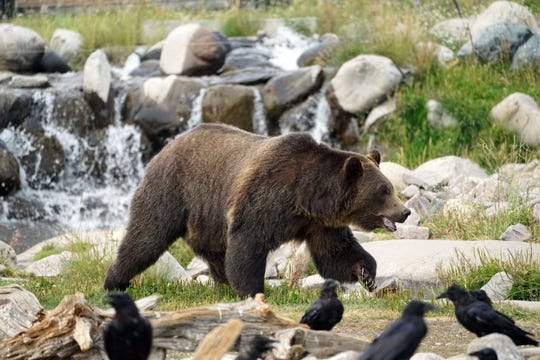
Grizzly bear exploring its enclosure in the Grizzly & Wolf Discovery Center

I really believe that it is a high time for hunting groups and wildlife conservation groups to join forces together in order to ensure the survival of the grizzly bear population around Yellowstone, including mitigating human-bear conflicts. Remaining hostile to each other based on beliefs will lead to further incidences of human-bear conflict with both bears and people, including hunters, perishing in each others' hands. I think hunting groups and its members should be thoroughly educated about the current state of the grizzly population. That is, just because the population expands beyond the borders of Yellowstone and Grand Teton does not mean that bears should be hunted. It is highly essential to thoroughly examine the grizzly bear population to see if it is "self-sustaining." Only then legal protections can be removed or not, depending on the results. In addition, hunters should refrain from hunting during the months of September and October when the bears are out foraging for winter hibernation. Or at least they should carry a bear spray, instead of resorting to firearms for protection. Without any partnership between wildlife conservation and hunting groups, the future for grizzly bears in the U.S will remain unknown.

View article here           

Monday, September 17, 2018

Wildlife Refuge in Colorado Needs to Be Thoroughly Inspected for Plutonium Content

One of the gates of Rocky Flats National Wildlife Refuge 

Situated sixteen miles northwest of Denver, Colorado, in an area comprised of more than 5,000 acres of wetlands, trees, and untouched rolling prairie, there is a place called Rocky Flats National Wildlife Refuge. This wild place houses 239 of residential and migratory species, including the endangered Preble's meadow jumping mouse. Although it appears to be a haven for wildlife and an ideal place to enjoy nature and the outdoors, Rocky Flats has a shadowy past. Before becoming a wildlife refuge, Rocky Flats was once a location of a federal nuclear weapons facility during the Cold War period from 1952 to 1989. During that time, a small community stood inside the wildlife refuge where it created grapefruit-sized plutonium spheres known as "pits" which were used as triggers for U.S.A's thermonuclear weapons. The facility closed when the Cold War ended and the area underwent a more than $7 billion cleanup and demolition supervised by state and federal agencies. The cleanup ended in 2005, with the actual site of the old buildings staying fenced off forever, while the land that used to serve as an intermediary around Rocky Flats recently reopened. The Environmental Protection Agency (EPA) indicated that the soil in the buffer zone was tested and concluded as safe for "unlimited use and unrestricted exposure" more than ten years ago. However, there are some skeptics like Professor Tim Mousseau of University of South Carolina who believes that the soil still contains plutonium and that even the smallest and faint particles can be inhaled and embedded in the lungs. As a result, seven local school districts have halted field trips to the area and several lawsuits are seeking to keep the refuge closed off to the public. One of the attorneys involved is Tim Gablehouse, who is representing the neighboring town of Superior. He stated that the government has not conducted a complete environmental evaluation on what the side effects could be from activities like biking and hiking, and the threat of dust from the wildlife refuge being carried into wider linked trail systems and Superior itself.
Preble's meadow jumping mouse

I strictly believe that Rocky Flats National Wildlife Refuge needs to be reevaluated thoroughly for plutonium content in its soil. Even though the EPA has conducted an assessment of the soil and concluded it as safe more than a decade ago, it is highly crucial that scientists and researchers double check to ensure that the soil is plutonium-free. Plutonium is a radioactive chemical element and when it gets lodged in an organism's lungs, it often stays stuck inside the organism's entire life resulting in higher risk of cancer. In the case of Rocky Flats, people would be at risk of coming into contact with plutonium by engaging in outdoor activities such as hiking and biking. In addition, even a simple gust of wind could carry plutonium-contaminated dust into the air and affect anyone or anything in the way. This is why I strongly insist it is very crucial that the wildlife refuge should stay closed to the public until a thorough scientific investigation of plutonium content is carried out. Only then will the public know whether it is safe to enter the wildlife refuge or not. Without any accurate investigation and meticulous planning to eradicate plutonium from Rocky Flats, people's lives would inadvertently be at risk of cancer and other health hazards linked to radiation exposure.

View article here                   

Saturday, August 25, 2018

Can a Regional Court in Kruger National Park Help Combat South Africa's Rhino Poaching Epidemic?

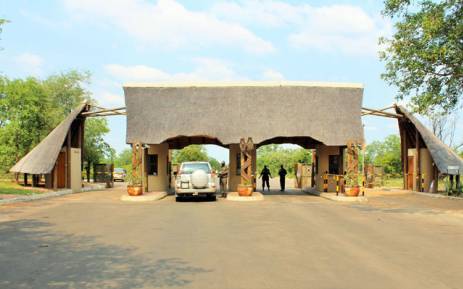
One of several entrances of Kruger National Park

For the past decade, South Africa has been suffering tremendously from rhino poaching with incidents occurring in protected areas ranging from private and public game reserves to national parks, including the famed Kruger National Park. Even though poachers have been arrested and brought into custody following such incidences, majority of the cases were and probably are delayed. But now, there has been a game changer in South Africa's battle against poaching. An opening of a regional court in Skukuza, the main camp of Kruger National Park and the park's administrative headquarters, has resulted in a surge in prosecution and conviction of poachers. In addition, SANParks protection services, in partnership with the South African Police Service (SAPS) and National Defense Force, have been carrying out concerted operations at key spots in Kruger National Park where cars have been stopped and inspected for illegal contraband which includes ammunition, firearms, rhino horns, and elephant tusks. Officials stated that poaching cases have received the much-needed attention since the opening of the regional court. Patrick Sibuyi, commander of the Skukuza police station, indicated that the court is designed to not just hold trials of suspected poachers but also facilitate poaching cases that had been delayed for a long time. He further added that using dogs of the park's K-9 unit has helped in finding illicit substances and equipment, and that a local police station has made it easier for those found guilty of minor crimes like driving in the park without a license to be fined at once.
A mother southern white rhino and her calf in Kruger National Park

I find that this is a very promising news that a regional court has been opened in Kruger National Park. But what I find particularly fascinating about this court is its intention to expedite South Africa's poaching cases that have long been delayed. This will certainly prosecute and convict poachers the way they should have been in the past years when they were tried in courts outside the national park. I'm also happy to see that rhino poaching is overall on the decrease in the country, according to SANParks. However, Kruger National Park has experienced a recent surge in poaching  with at least four incidents involving white rhinos recorded in the past week and a half. In addition, a field ranger was shot dead during a shootout with the poachers last month. Eleven days later, 23 poachers were arrested and charged at the Skukuza Police Station. I clearly believe that as long as vigilance is maintained and justice is served without delay, then rhino poaching would be greatly reduced in South Africa and elsewhere in the world. The demand for rhino horns has been and continues to devastate rhino populations in Africa and Asia. Just recently, a total of 50 rhino horns worth 10 million pounds were confiscated en route to Vietnam. It is highly crucial to step up the efforts in combating the ongoing poaching epidemic that is decimating rhinos and other endangered species indiscriminately.

View article here 

Saturday, July 21, 2018

Can Climate Change Have a Profound Impact on Migration Patterns of Birds?

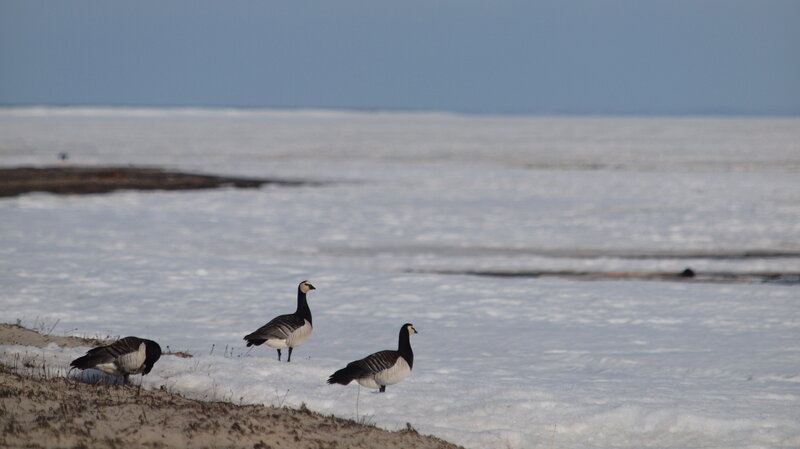
A group of barnacle geese

There are several different species of migrating birds in the world and all of them carry out their epic seasonal journeys in various corners of the world. Each species has its own flight pattern; the most common pattern involves flying north in the spring to breed during the summer in the Arctic Circle and returning in the fall to wintering grounds in the southern regions. One such bird that conducts this kind of migratory pattern is the barnacle goose. Every spring, barnacle geese make an epic 1,800-mile long journey from northern Germany and the Netherlands to their breeding grounds in parts of Russia above the Arctic Circle. According to Dr. Bart Nolet of the University of Amsterdam and the Netherlands Institute of Ecology, the journey normally takes about a month and the birds make several stops to eat and fatten up laying their eggs. However, that migration pattern is changing due to dramatic rise in temperatures which have contributed to early springs in the Arctic. Dr. Nolet's team tracked several geese to understand how they are being affected by the earlier snow melts. Their results were published in a study in Current Biology. The one thing that has not changed is what time of year the birds start flying south. Dr. Nolet stated that they leave their wintering grounds "around the same date regardless of whether it's early or late spring in the Arctic." It is possibly because the geese "cannot predict what the weather is or what the season is up there from 3,000 kilometers distance."
Migration route of barnacle geese with wintering grounds (blue), stopover sites (yellow and diagonal grid), and breeding grounds (red).

The geese historically used to arrive just after the melting of snow and lay their eggs right away. This gives plants time to grow so that the goslings can benefit from what is known as a "food peak." But lately, the weather in parts of the birds' migratory route in the north is warmer than it used to be making them realize they are running late and are therefore forced to speed up. This month-long journey has been reduced to a week-long migratory marathon with geese flying almost non-stop from their wintering grounds to breeding grounds. Although the geese make up time on the way, they could not lay their eggs right away because they need time to rebound and forage which could take some ten more days. Dr. Nolet says that means the goslings are unable to enjoy the "food peak." That is, once the eggs hatch, the food is already degenerating in quality, and what Dr. Nolet and his team found was that goslings "survive less well in such an early ear than they do normally." He further added that the reason the geese do not set off earlier for their northbound journey is because they probably take their cue to depart based on how long daytime hours last, instead of the temperature some 1,800 miles away. Fortunately, the barnacle goose is a "flexible" species that flies in groups, meaning when few start departing early, others would follow.
Barnacle goose family in Sweden

I find this to be a clear indication of how climate change can have a profound impact on wild animals and why it should be taken very seriously. Most people generally think of climate change as melting of polar ice in vast quantities, which threatens the wildlife in the North Pole as well as the livelihood of the local population. But that is not always the case; climate change can impact the world's wildlife in a number of ways. One of the ways is shown here about how increase in temperature can influence the migration pattern of various bird species like barnacle geese. Even though barnacle geese are described as a "flexible" species when it comes to migrating in the midst of climate change, that is not always the case with other birds. For instance, shorebirds find changing climate problematic which Dr. Nolet describes as "having to do with the mismatch between food peak and hatching of eggs." In short, the rise in temperatures in the Arctic results in birds like barnacle geese out of sync with their favorite food sources. This, in turn, also results in fewer chicks surviving their early months. I firmly believe that the study conducted by Dr. Nolet and his team should be taken into serious consideration in an effort to prevent climate change from further impacting the behavior of barnacle geese and other migratory birds. These animals' migration pattern is being affected to the point where fewer offspring could survive and if no action is taken, then it can certainly result in such species falling to the brink of extinction.

View article here        

Tuesday, July 10, 2018

Expert Recommendation is Highly Essential in Saving India's Wildlife

Indian elephants

The Ministry of Environment, Forest and Climate Change (MoEFCC) has recently concluded an array of measurements, in order to reduce instances of human-wildlife conflict and electrocution of animals. These measures include establishing a task force, releasing advisories to states to facilitate notification of elephant corridors and adjustment of road projects to expedite uninterrupted movement of animals. The action is the result of an order by the Supreme Court delivered to the ministry and the National Board for Wildlife (NBWL) in January in response to a petition by wildlife biologist Vidya Athreya. In her petition, Dr. Athreya included an array of suggestions to better the ground situation. In February, the NBWL set up a six-member expert task force to analyze the proposals on human-wildlife conflict, safeguarding of elephant corridors to reduce conflict, wildlife deaths by electrocution, and recovery plans for the great Indian bustard. Based on a report by the task force, the NBWL made final suggestions in its last meeting on June 13 that the ministry should direct state governments to safeguard animal corridors through land acquisition or by announcing such corridors as eco-sensitive zones because of difficulties in land acquisition. The ministry, on the other hand, has also decided it may consider forming a panel in partnership with the Central Electricity Authority, Power Grid Corporation India Ltd, the power ministry, and wildlife experts to discuss measurements that will prevent electrocution of wildlife by transmission lines. On human-wildlife conflict, Dr. Athreya recommended that the Ministry of Environment, Forest and Climate Change should take up a comprehensive approach consisting of extensive studies on ecological and sociological views of conflict, giving conflict management training to forest officials and standard operating procedures (SOPs) to manage wildlife conflict, among other things. The ministry indicated that it will send advisories to states on establishing SOPs for other species besides tigers and leopards that are in the midst of human-wildlife conflict. Furthermore, the expert panel and NBWL indicated that infrastructure development agencies and concerned ministries should make mandatory adjustments in designs of current roads in order to minimize wildlife fatalities on the roads.
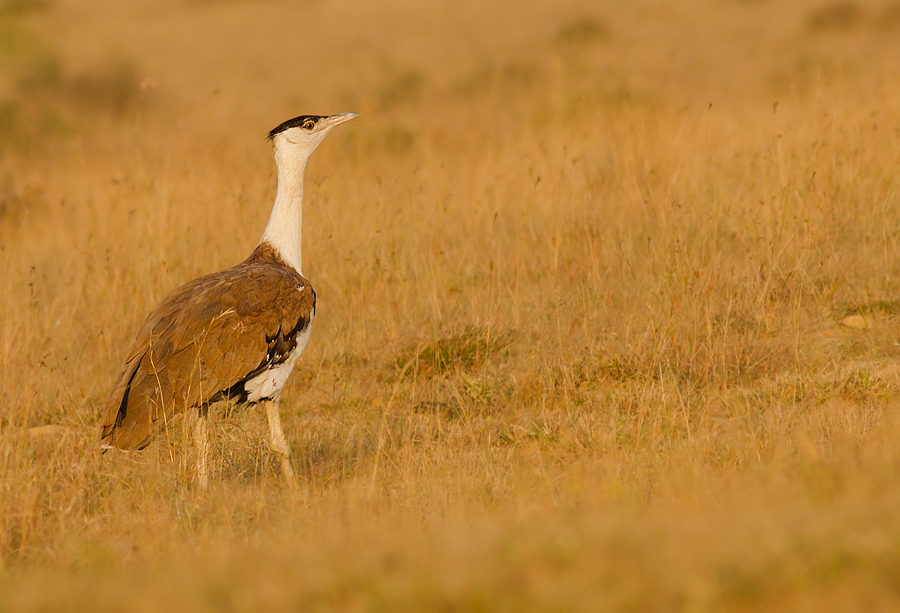
The great Indian bustard is threatened by the installment of renewable energy power lines in its natural habitat.

I feel very glad and hopeful that the Ministry of Environment, Forest and Climate Change and NBWL have acted upon the order issued by the Supreme Court in reference to the petition filed by Dr. Vidya Athreya. Much of India's wildlife is and continues to be under threat from the development and expansion of man-made projects. This is especially true for critically endangered species like the great Indian bustard, whose numbers have been decimated dramatically due to the installment of renewable energy power lines in its natural habitat and is teetering on the brink of extinction. Unless serious action is taken, this magnificent bird will completely fade into history. I believe it is highly crucial that various state governments and ministries should take advisories provided by the MoEFCC and the NBWL very seriously, in order to tackle human-wildlife conflict and other issues related to the endangerment of India's wildlife. I also firmly believe that the country's political organizations and state governments should seriously consider Dr. Athreya's recommendation on tackling human-wildlife conflict. Not only does it include comprehensive studies on scientific views of the conflict, but sociological views as well. In addition, the training and SOPs provided are guaranteed to help keep both people and wildlife safe. In order to save India's wildlife and wildlife of other countries, it is extremely essential to consider and follow suggestions provided by experts who specialize in relationships between people and wildlife.

View article here     

Sunday, July 8, 2018

South Africa's Rhino Poachers "Poached!"

A pride of African lions

South Africa has long been and continues to be hit hard by the poaching of rhinos to feed the growing demand of rhino horns in Asia. Every national park, including the famous Kruger National Park, and game reserve has become a subject of raids by poachers who are members of well-organized criminal organizations that operate the illicit and lucrative rhino horn trade. But recently, in Sibuya Game Reserve, a group of six rhino poachers unexpectedly ran into a pride of lions which were able to kill and eat them before they could do anything. News of this sudden and unusual demise of poachers came one Monday morning when an anti-poaching patrol dog alerted its handler of a nearby commotion coming from the big cats. According to the reserve's owner, Nick Fox, a skull was found in the area along with "half of a pelvis." He further added that he was not sure how many people entered the reserve and how many were killed, three sets of shoes and gloves found at the scene indicating that one person escaped. Authorities also recovered the poachers' tools, which consisted of a high-powered rifle, a silencer, a blood-stained ax to chop off a rhino's horn, and a wire-cutter which the men allegedly used to enter the game reserve. Mr. Fox indicated that the men had planned to set up camp in the reserve and track the rhinos. According to Captain Mali Govender, a police spokeswoman, the remains from the reserve have been sent for forensic testing. The rifle has been sent to a ballistics laboratory "to establish if it has been used in any other poaching or crimes." It is believed that six lions have been involved in this encounter and have been tranquilized so that authorities could examine the scene. At the same time, they were studied by veterinarians and conservation workers who concluded that the big cats' behavior towards them in a game-viewing vehicle was the same as ten years before. Mr. Fox indicated that the lions see people in a game-viewing vehicle as something completely different from people on foot. He further added that game guides and anti-poaching personnel have continued to drive vehicles in the proximity of the lions in the last few days to see if there was any difference in their behavior and there was none.

I'm in both shock and awe that a group of rhino poachers unexpectedly fell victim to a pride of lions. It was an accidental case of hunters becoming the hunted. However, I also see this incident as an indication about how karma plays a crucial role in an individual's life. These men were poachers and their life revolved around ruthlessly slaughtering rhinos and other endangered species for a living and they payed a steep price for their actions by being mauled to death and subsequently eaten by lions putting an end to their illegal activities. I was also amazed by Mr. Fox's explanation about the reason behind the lions' behavior towards people when they are in a vehicle and when they are on foot. The lions of Sibuya Game Reserve do not see people in a vehicle as a threat, as opposed to ones on foot. Due to thick forest and dense bush, people can only view wild animals from vehicles. But the poachers were on foot, thus making them an unexpected target. In addition, the incident took place at night which means the men could not see the lions until it was too late. Even though it was a huge relief for Mr. Fox and the game staff that none of the rhinos were killed, I still firmly believe that it is crucial to stay vigilant for poachers because they will learn from their mistakes even when some of their kind were killed by lions or other wild animals. In addition, I believe it is important to keep a close watch on lions at the Sibuya Game Reserve and keep checking for any differences in their behavior because once they have tasted human blood there is a possibility they might turn to man-eating.

View article here   

An Opportunity to Release Red Wolves into the Wild

A pair of captive red wolves behind Pocosin Lakes National Wildlife Refuge Red Wolf Education and Health Care Facility.  

The Department of the Interior recently proposed a plan that would allow private landowners in North Carolina to kill red wolves that stray onto their property from Alligator River National Wildlife Refuge. The proposal was presented last week by U.S Fish and Wildlife officials at a news conference, who stated that the wildlife refuge would be the only safe place for the red wolves. According to Leopoldo Miranda, assistant director for ecological services in the U.S Fish and Wildlife Service's Southeast region, the goal would be to effectively manage a small population of 10-15 wolves at the wildlife refuge to conserve their genetic value and wild behaviors in hopes that a more proper location outside eastern North Carolina can be found to relocate the wolves. Although he refused to name areas in consideration, Mr. Miranda added that the process of finding an area and guaranteeing an agreement to relocate wolves would probably take three years. The proposal has inflamed anger amongst conservationists who have long argued that the Interior's management of red wolves in recent years deceived the mission to protect them. A public meeting is scheduled for July 10 in Manteo and a public comment period beginning Wednesday will finish at the end of August. If the proposal goes into effect in November, up to 24 red wolves outside Alligator River National Wildlife Refuge would be left to fend for themselves or likely be shot legally by hostile landowners. Two years ago, before a federal court halted the Fish and Wildlife Service from distributing permits to shoot red wolves, the agency received about 400 from property owners to kill them.
Red wolf

I can never think of anything more miserable and cruel than a proposal that would further bring the red wolf towards extinction. But what really frustrates me is that there are more red wolves in captivity (200 to be exact) than there are in the wild. What is taking so long to reintroduce the vast majority of captive wolves back into the wild? Is the federal government calling all the shots when it comes to conservation of America's wildlife, especially of critically endangered species like red wolves? Two years ago, conservation groups sent a petition with half a million names demanding the U.S Fish and Wildlife Service to do more to save the wolves. But there still has not been any change. I urge the Department of the Interior to reconsider its proposal about red wolf management in North Carolina and allow for the reintroduction of red wolves in protected areas throughout North Carolina and other parts of the Southeastern U.S. I also urge that private landowners in North Carolina be educated about the importance of saving red wolves and why shooting them in cold blood will not make a change for the better. Furthermore, I urge the Fish and Wildlife Service to take the petition filed by conservation groups into consideration and act upon it. If no such action is taken, then the current generation of American people will end up seeing the red wolf rapidly fade into history and the next generation will never see a single red wolf roaming freely in the wilds of the South. The red wolf is part of America's wild and natural heritage and in order ensure it stays that way, it should be protected by any means necessary.

View article here