Saturday, March 21, 2015

Gujarat Government Makes a Strong Scientific Persuasion in Supreme Court for its Lions

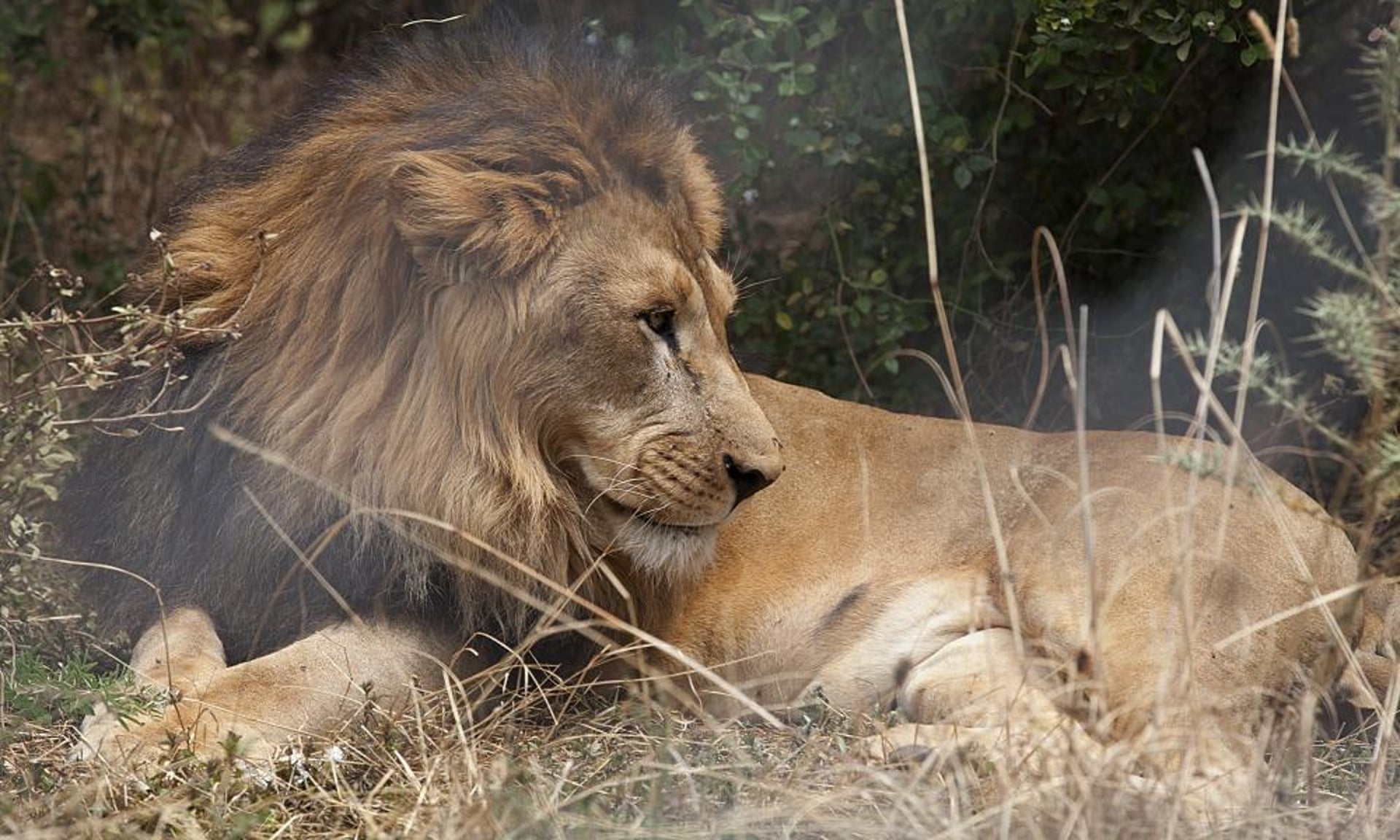
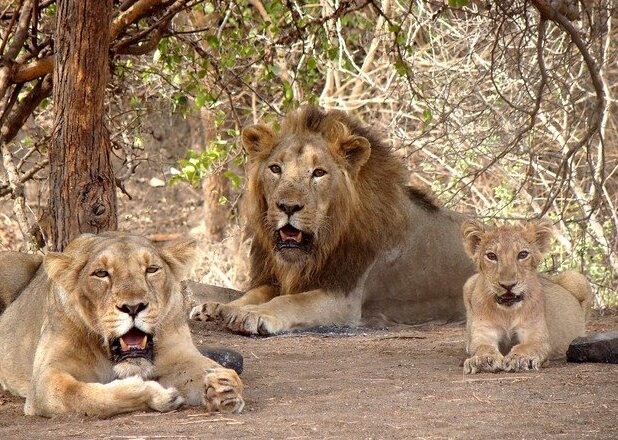
A family of Asiatic lions in Gir Forest

The debate about the reintroduction of Asiatic lions outside of Gir Forest National Park has solely been a political issue, rather than a scientific issue. But now, there appears to be a change in this debate with the government of Gujarat having recently submitted to the Supreme Court what could be the first scientific argument about reintroducing lions in the state of Madhya Pradesh from a state government. Instead of relying on formalities, the government of Gujarat presented before the Supreme Court scientific studies and guidelines of the International Union for Conservation of Nature (IUCN) indicating that reintroducing lions from Gir Forest to Madhya Pradesh's Palpur-Kuno Wildlife Sanctuary may not be a proper move. The argument was presented in the form of an affidavit registered in response to a petition by Wildlife Conservation Trust (WTC), Rajkot, challenging the Supreme Court's order made on April 15, 2013 directing the translocation of lions. The government of Gujarat suggested that there is no immediate ground for translocating lions as the animals do not face any threat of extinction for the next century. In fact, it has hinted that the translocation may prove to be rather detrimental for lions in Madhya Pradesh. The state government has cited a report by the National Tiger Conservation Authority (NTCA) that highlights Palpur-Kuno Wildlife Sanctuary as an important passageway for tiger movement between Ranthambore National Park and Sehore district. Last month, a panel comprised of twelve members asked for maiden opinion from the NTCA whether lions and tigers can coexist in Palpur-Kuno or if the group would instead prefer the wildlife sanctuary as an exclusive tiger habitat.

This move made by the government of Gujarat marks for the first time that a state government has provided an adequate argument with scientific backing in the ongoing debate of India's lion translocation project. Earlier, the arguments for and against the reintroduction of lions did not present any scientific analysis in favor or against the much-debated conservation issue. The only scientific arguments for the reintroduction of lions in Madhya Pradesh were made by wildlife experts and conservationists, who warned that a natural cataclysmic event could threaten to wipe out the entire world's population of Asiatic lions if no action is taken. Now, the government of Gujarat has presented its argument against the reintroduction with proper scientific facts by the IUCN and the NTCA citing that it is not a correct move. It argued that reintroducing lions in Palpur-Kuno Wildlife Sanctuary would interfere with the movement of tigers between Ranthambore National Park and Sehore district. Hopefully, this argument provided by the government of Gujarat will help the Supreme Court whether to reconsider its decision about bringing lions to Madhya Pradesh or continue allowing the reintroduction project to take place. In the meantime, Gujarat needs to work on identifying important corridors that help facilitate the movement of lions beyond the borders of Gir Forest National Park and provide protection from human encroachment. This is very crucial since lions are encountering numerous human-made obstacles that are affecting their movement outside Gir Forest.

View article here                           

Thursday, March 19, 2015

Spanish and Portuguese Groups Team Up to Save Sierra Morena's Iberian Wolf Population

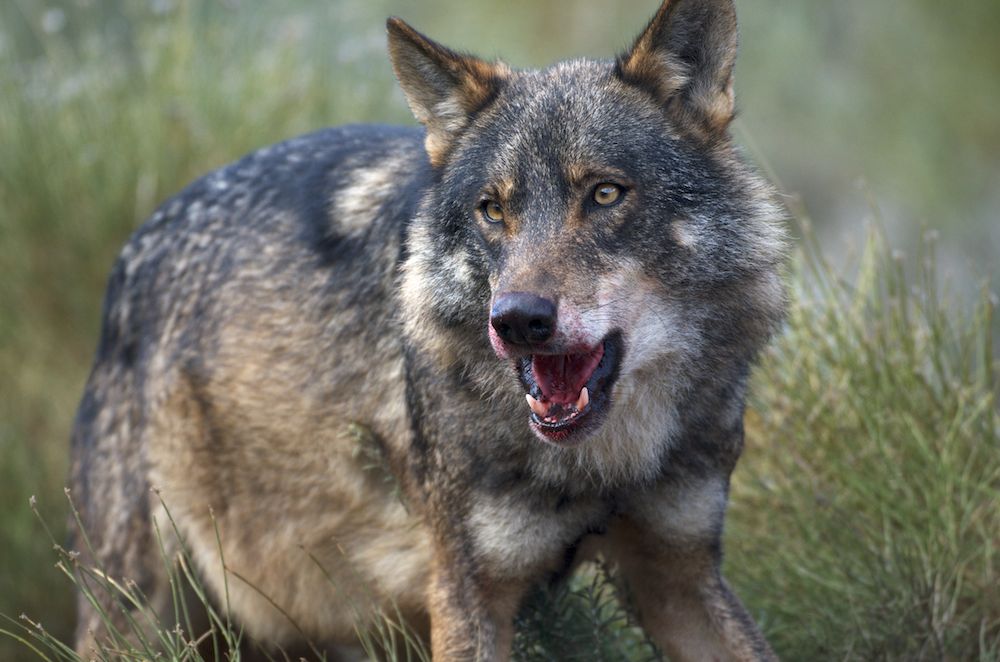
Iberian wolf

More than a dozen groups from Spain and Portugal have recently united to initiate a campaign to save an Iberian wolf population living in the Sierra Morena mountains. The mountain range, which straddles the border between Andalusia and Castilla-La Mancha, has been a haven for these wolves for thousands of years. There are now believed to be only a handful of Iberian wolves remaining in the area, and the groups suspect that this subspecies could become extinct in southern Spain unless authorities revise local hunting laws and modify the management plan for the land included in the Natura 2000 protection scheme. They feel that the wolves should be given first concern treatment if the ongoing decline of the population is to be stopped. The history of Sierra Morena's wolves goes back to 1999 when eight packs were reported, but only one is known to still live as the hybridization of the subspecies and the resulting decline in genetic growth has contributed to the effect of hunting. In 2005, it was said that the goal of the national and regional governments was to increase the wolf population in Sierra Morena to 150 individuals in fifteen packs, but ever since the mid-20th century the animal has been seen as a threat to other prey species is thus a legitimate target for human hunters. The presence of large private hunting reserves has made it difficult to conduct protection measurements, and miles of boundary fences forcefully disintegrate the wolves' natural habitat. In addition, efforts have been made on these reserves to provide hunters with large deer populations and other prey species but at the same time carnivorous species are virtually eradicated. The campaigners cautioned that if political decisions are not taken quickly in 300,000 hectares of Donana National Park and Sierra Morena's Natura 2000 land, then the wolves will disappear forever.

The campaigners from Spain and Portugal have made an excellent decision in coming together in order to save the Iberian wolves living in the Sierra Morena mountains of southern Spain. These particular wolves currently number around 300 individuals, compared to more numerous populations that inhabit northwest Spain and northern Portugal. These animals are under tremendous threat from human hunters, especially when they happen to be living on hunting reserves intended to house deer and other prey species for hunters. This results in wolves getting caught in the crossfire and are virtually eliminated in the hands of hunters. It is highly essential to save Sierra Morena's wolves whose population numbers are in a critical state, and they are living under a constant threat of hunters targeting them like they would towards nearly any other animal in Spain. The establishment of hunting reserves has and continues to disintegrate the animals' natural habitat limiting their access to new territories. In order to save them, it is highly crucial to identify and close down hunting reserves which happen to contain wolves. Furthermore, hunters need to be thoroughly educated about the of wolves as a keystone species and be warned about the consequences of killing them for sport. As part of the effort to save Sierra Morena's wolves, it would also be useful to bring wolves from northwest Spain and northern Portugal in order to repopulate the southern population. It is time to act quickly otherwise Europe's southernmost wolf population will disappear.

View article here                          

Monday, March 16, 2015

Australia Bans Importing and Exporting of Lion Body Parts as Hunting Trophies

African lion

The government of Australia has recently placed a ban on the importing and exporting of hunting "trophies" made from lion body parts, in an effort to help restrict the organized hunting of African wildlife. Environment minister Greg Hunt indicated that he has signed an order to prohibit the import of grisly hunting trophies. The trophies are generally derived from an imitation type of massacre, primarily taking place in South Africa, known as canned hunting. The lions are raised in captivity and placed into enclosures where tourists pay large sums of money for the problematic privilege of killing them with firearms or crossbows. Minister Hunt, who announced the clampdown at a "global march for lions" at the Federation Square in Melbourne on Friday, stated that the practice of canned hunting was "barbaric" and "cruel." He further added that Liberal MP Jason Wood originally introduced the issue with him and that he hoped other countries would ratify similar measurements to help avert the decrease in lion numbers. In the past three years to 2013, hunters from Australia imported bodies or body parts, such as claws and skulls, of 91 lions. The International Fund for Animal Welfare (IFAW) stated that there are fewer than 40,000 lions remaining in the wild, with numbers plummeting by almost half in the past 25 years due to habitat destruction and human-lion conflict. It further added that canned hunting had contributed to this decrease through direct kills and also by distorting the genetic balance of lion populations by selecting large males out of the gene pool to be shot. IFAW's regional director Isabel McCrea welcomed Minister Hunt's "bold" ban on canned hunting trophies.

This is indeed a bold move Australia has made in an effort to put a stop to the bloodthirsty practice of canned hunting. This brutal and unethical form of hunting has been a big business in South Africa and the U.S attracting thousands of tourists who pay large sums of money to shoot captive-raised animals in enclosed areas with no chance of escape. Canned hunting has been severely criticized by not just animal rights groups and activists, but also hunting organizations like the Boone and Crockett Club and Pope and Young Club who argue that the practice eliminates the concept of "fair chase." In addition, this barbaric practice of hunting has and continues to distort the genetic balance of animal populations by taking large individuals out of the gene pool to be shot. This is not just seen in the case of lions, but a variety of other animals such as the scimitar-horned oryx which is listed as "extinct in the wild", the dama gazelle and the addax, both of which are critically endangered and may be on the verge of extinction. As part of its effort to curb any importing or exporting of hunting trophies from lions, Australia has stated that anyone found guilty of wildlife trade crimes should be sentenced to ten years in prison and be fined $170,000 (individuals) and $850,000 (corporations). Countries like the U.S, New Zealand, the European Union, and others, including South Africa, should follow Australia's example in tackling this cruel and barbaric practice of hunting. Furthermore, the battle against canned hunting should be further enhanced by identifying and targeting potential facilities that offer such services to tourists and other clientele, closing them down, and prosecuting the operators in charge of them. The victims of this form of cruelty should be transported to facilities run by rescue organizations to be properly cared for and hopefully set to be released into the wild.

View article here                

Sunday, March 15, 2015

Great Indian Bustard Faces Threat of Extinction

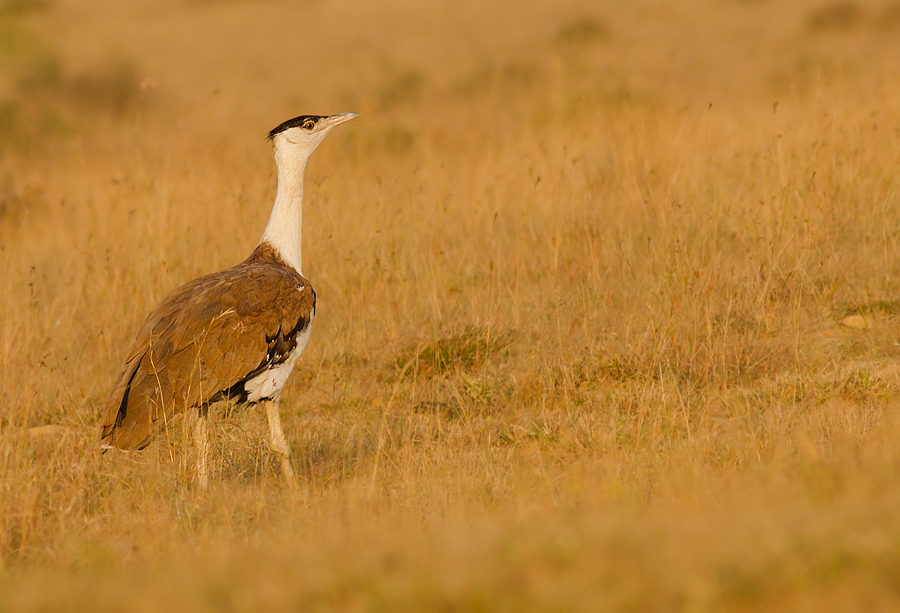
Great Indian bustard

It has been two years since the Ministry of Environment and Forests (MoEF) made an announcement about establishing a special conservation program for the critically endangered great Indian bustard, which experts warn is faced by the threat of extinction. It is said that due to lack of funds, the central government has not made any progress at all on what many say is a crucial matter. The government of Gujarat had even given a recovery plan to the MoEF, but confessed that it is sitting on it because it does not have the money to finance the project. A senior official of the ministry admitted that this issue has been pending for long, but added that a meeting to examine it is anticipated this month. The ministry also confessed that the government of Gujarat had given a species recovery plan of 187.13 crore rupees for the great Indian bustard requesting financial assistance. Unfortunately, the requisite amount of money was not available under a centrally funded scheme known as Integrated Development of Wildlife Habitats. The necessary need to protect the great Indian bustard through a national program was suggested in a meeting of the Standing Committee of the National Board for Wildlife (NBWL) in June 2013 by a wildlife activist named Prerna Singh Bindra. In August 2014 and January, the standing committee of NBWL led by environment minister Prakash Javadekar held two respective meetings where the issue of protecting endangered species was shelved. Ironically, in both the meetings, the standing committee cleared several programs which could disturb the great Indian bustard's habitat in spite of the fact that some members of the committee clearly advised about the negative impact of such programs.
Environment minister Prakash Javadekar

How long must India wait in order to save its endangered species, especially when it comes to critically endangered ones like the great Indian bustard? This magnificent bird once numbered around 1,260 individuals in 1969 to 300 in 2008. Nowadays, there are no more than 250 of these birds confined to states such as Gujarat, Karnataka, Andhra Pradesh, Madhya Pradesh, and Rajasthan. Out of these states, Rajasthan holds the majority of the bustards with around 175 while Madhya Pradesh is believed to have fewer than ten birds. These figures indicate that the great Indian has, over the past decades, suffered tremendously from threats ranging from habitat destruction to poaching. And yet, despite the formulation of any recovery programs directed at saving the bustard, no action has been taken and no progress has been made due to lack of funds. Although the NBWL led by Minister Javadekar held meetings in order to save the great Indian bustard, it postponed the issue on saving this bird as well as endangered species in general. This clearly indicates that the environment ministry has avoided its responsibility as the protector of India's wildlife and that the government of India is clipping the ministry by further shrinking its insignificant budget for wildlife. The necessity to save a critically endangered species like the great Indian bustard is not being stressed enough and it seems that India as a whole is voluntarily letting one of its endemic species go extinct.

View article here              

Thursday, March 12, 2015

Eurasian Lynx to Return to Britain After 13 Centuries

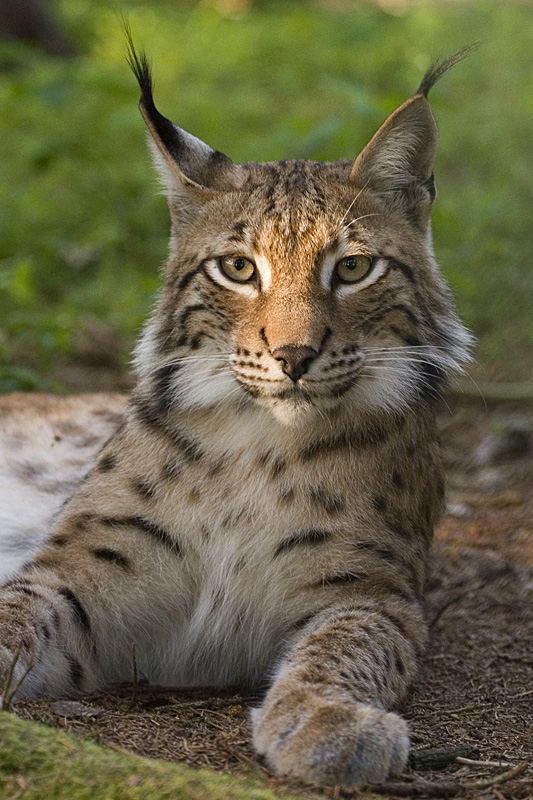
Eurasian lynx

The Lynx UK Trust is preparing to reintroduce eighteen Eurasian lynxes in Britain where this shy and secretive cat had long since disappeared after nearly 1,300 years. What appears to be the most grandiose rewilding project ever to take place globally would mark the beginning of the first ever reintroduction of one of Britain's most apex predators. Solitary and secretive by nature, the Eurasian lynx was historically found from Britain to China. However, due to extensive human encroachment over the centuries, the Eurasian lynx population declined to a handful of individuals remaining in parts of western Europe. In Britain, the lynx was believed to be hunted to extinction for its fur between 500-700 A.D. As part of its efforts to bring the lynx back, the Lynx UK Trust has established a public consultation to find out the public's reaction to the reintroduction plan. It will then lodge a formal application with Natural England and Scottish Natural Heritage (SNH). The trust assured that because of the lynx's secretive and solitary nature, it would not pose any threat to domestic livestock. It further added that it is presently busy in a variety of research to determine possible locations in Britain to release the lynx. Preferred sites of reintroduction include Thetford Forest in Norfolk and Ennerdale area in Lake District. Similar reintroduction projects occurred in the past such as one in Switzerland during the 1990s which saw lynxes successfully breed and flourish in the country, and another in Germany where fourteen lynxes were brought to a site in the Harz Mountains in 2000 and yielded similar results.
Thetford Forest, one of the chosen reintroduction sites

The British Isles were historically home to some of Europe's most powerful predators, which included the lynx, the wolf, and the brown bear. However, these apex predators were virtually wiped out from their homeland centuries ago due to extensive human encroachment. This allowed the population of the prey species, especially deer, to steadily increase without the fear of population control by any predators. But now, with this reintroduction project underway, Britain is on its way to be restored to its former glory. The Eurasian lynx, which has long since been eradicated, is set to make a comeback after thirteen centuries. Not only does this solitary and reclusive cat pose much threat to domestic livestock and farmers, but is a crucial asset to Britain's ecology in keeping the populations of deer and agricultural pest species under control. This is essential because centuries of the lynx's absence has left Britain's natural environment in a state of imbalance due to the overpopulation of deer. Britain is still absent of wolves and brown bears after centuries of persecution and human encroachment. It is also highly essential to reintroduce these apex predators to the country, in order to further restore its natural environments. Proposals to reintroduce wolves in Britain date back to late 1990s and early 2000s, but have never since been carried out due to opposition by farmers fearing that they would lose their livestock. But even without wolves, Britain's and Ireland's deer populations continue to expand leading to further damage in forestry and coming into contact with domestic livestock which would increase the chances of disease transmission. This is why it is highly crucial to reintroduce wolves, as well as the lynx, back to the British Isles in an effort to help further restore the ecological balance. As part of the effort, farmers should not just be reimbursed for livestock losses but also be provided with livestock guardian dogs as a harmless alternative to protect their animals from predation by wolves. Britain also has a significant wild boar population and these animals are known to raid the farmers' fields in search of crops. By having wolves and lynxes back in Britain, the wild boar population would be kept in check and minimize any chances of crop devastation and disease transmission. The brown bear also needs to be brought back to Britain, in order to maintain the ecological balance.

View article here   

Tuesday, March 10, 2015

Almost One Million Birds Illegally Killed on British Military Base in Cyprus

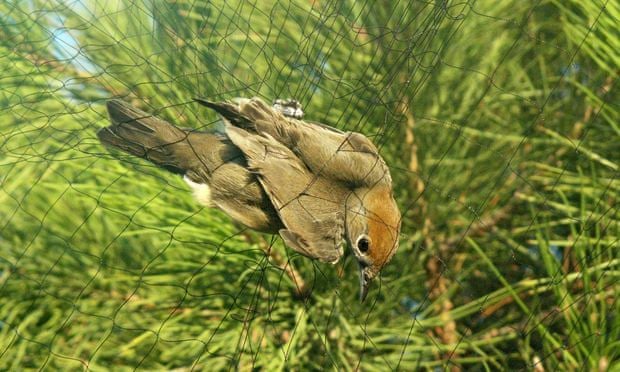
A female blackcap caught in a net

The Royal Society for the Protection of Birds (RSPB) has recently reported that nearly one million birds were illegally killed by poachers in just two months on a British military base in Cyprus last year. The organization's international leader, Dr. Tim Stowe, urged the Ministry of Defense (MoD) to do more to take down poachers who reportedly killed 15,000 birds everyday during September and October from the British Dhekelia Sovereign Base Area. However, the MoD denied the RSPB's discoveries and doubted its survey methods. An MoD spokeswoman asserted that the ministry is committed to fight poaching adding that they detained almost fifty poachers and confiscated 450 nets and 286 pieces of poaching equipment during the previous migration period. According to Jonathan Hill, overseas territories team leader for the RSPB, the ministry had signed off on the 12-year-old survey's methods and that, if anything, the figures were traditional. BBC wildlife presenter Chris Packham, who has reported largely from Cyprus and lobbied against the bird hunt, stated that he believed the figures were gathered by the RSPB in partnership with BirdLife Cyprus arguing that the two organizations could and would not be guilty of misjudgment. The RSPB suspect that organized criminal syndicates are now involved in the sale of bird meat as a black market delicacy. Their auditors have pointed out that extensive planting of acacia scrub attracts birds and creates passages for poachers to hang their nets. Dr. Stowe indicated that the military had made decent introductory steps to remove acacia scrub.
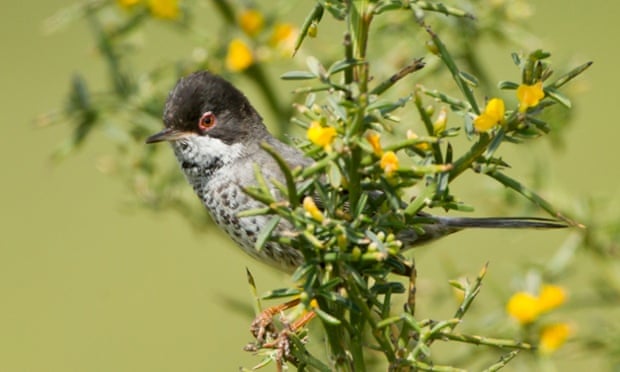
A male Cyprus warbler, one of several rare species of birds at risk of being captured for food.

The poaching of songbirds on Cyprus has been an extremely controversial issue for decades. This illegal method of catching and killing birds has been practiced for centuries in the autumn months of September and October when the birds arrive on this island nation to rest and feed as they migrate to Africa from Europe. Once caught and killed, the birds are used as main ingredients of a local dish known as ambelopoulia. Traditionally, Cypriot people would trap birds by using branches coated with a sticky lime that birds would land on and be unable to escape. But with the development of nets, the trapping techniques became extensive and chaotic as thousands of birds, including threatened species, began falling victims to human consumption and led to the ban in both the practice and the dish in 1974. However, despite the ban, there is still an ongoing illicit demand which is driving the number of birds killed to unparalleled levels and ambelopoulia continues to be served in Cyprus' local tavernas. Majority of the birds caught by poachers are common species such as blackcaps and European robins whose populations are not severely affected by trapping. However, the practice has a severe effect on rare species like the Cyprus warbler and the Cyprus wheatear. It is extremely crucial that the government of Cyprus should take serious action in ending this ongoing catastrophe affecting songbirds. This not only includes targeting poachers, but also identifying and shutting down tavernas suspected of serving ambelopoulia and target organized criminal syndicates that are becoming involved in the illicit sale of Cyprus' bird meat. Several migratory birds, mostly passerines, come to Cyprus for rest and feeding before reaching Africa and fall prey to poachers. This doesn't just disrupt their migration, but it also affects birdwatching for both residents and tourists on the island. Therefore, it is extremely crucial to combat illegal poaching of birds on Cyprus before it is too late.

View article here            

Monday, March 2, 2015

China Halts Imports of Africa's Carved Ivory for One Year

An elephant tusk carved with figures

China recently announced that it has placed a one-year suspension on imports of Africa's carved ivory products, but conservationists indicated that this move would do nothing in itself to curb the illicit ivory trade in the country that is inciting excessive poaching of elephants in Africa. The decision came just before the arrival of Prince William next week, who is a prominent figure in the international campaign to save elephants. It also came days after conservation groups sent a letter to the government of China demanding a complete ban on domestic ivory trade. Late Thursday, the State Forestry Administration (SFA) declared that it would discontinue the import of Africa's ivory carvings acquired since the Convention on the International Trade of Endangered Species (CITES) came into effect in 1975. That following year, African elephants were listed under the convention. According to one SFA official, the brief suspension was established to provide authorities with time to assess its effectiveness and probably take more efficient measurements in the future. However, experts stated that the movement would only apply to very restricted amounts of ivory and failed to focus on a prohibition of the legal Chinese domestic ivory trade that gives cover for a larger illegal trade. Among the people who criticized China's move included Humane Society International's wildlife program manager Iris Ho, who is also one of the co-signatories of the letter sent to the Chinese government. She called the announcement "an encouraging signal that the Chinese government is ratcheting down the import of African elephant ivory into the country." At the same time, she added saying that China and other countries should "permanently ban the domestic trade of ivory and destroy all confiscated ivory stockpiles." In addition, Grace Ge Gabriel of the International Fund for Animal Welfare (IFAW), called the move promising but "far from sufficient." Conservationists proclaimed that the only to end the illegal trade of ivory is to ban the legal trade, enlighten people about the actual cost of ivory, and minimize its status value. Ms. Ho called the ongoing registration scheme "a flagrant loophole for illicit ivory to be laundered into the legal market." China, on the other hand, argued that ivory carving is part of its ancient cultural heritage and that it is making aggressive efforts to end the smuggling of ivory. Last year, China destroyed six tons of ivory tusks and carved ornaments confiscated from smugglers marking a symbolic move in the battle to end the illicit ivory trade. Similarly, Hong Kong destroyed a stockpile of 28 tons of ivory.
Prince William, Duke of Cambridge recently arrived in China as part of the global effort to end the illegal trade of ivory. 

The move China made is not sufficient enough in the battle against the illegal ivory trade. While it may have been applauded by some people like Julius Cheptei, assistant director for the Kenya Wildlife Service (KWS), conservation groups still feel that more needs to be done. The most crucial tactic China needs to employ is placing a permanent ban on the legal trade of ivory which provides cover to the illegal trade of ivory. In addition, the country needs to educate the public about the real cost of ivory and reduce its status value. Although ivory carving has been part of China's cultural heritage, the rules and regulations of this controversial practice are widely disregarded. The rules dictate that the country's 36 officially sanctioned workshops are supposed to primarily use ivory bought in 2008 when restricted sales from existent international stockpiles were permitted. In addition, all ivory sold commercially was supposed to carry a license confirming it originated from those stockpiles or predated the international ban. However, these rules have been put aside to enable the flow of huge quantities of poached ivory into China every year. This is why it is extremely crucial to demand a complete ban on the legal trade of ivory in order to target the illegal trade of ivory. This brutal, yet lucrative practice is not just threatening to wipe off countless numbers of elephants but financing international criminal syndicates and terrorist organizations which puts the public in jeopardy.

View article here