Monday, November 25, 2013

Experts Warn that Poaching of Rhinos Nearly Surpasses Births

A sedated white rhinoceros at a ranch near Johannesburg. 

International experts have recently warned that the ongoing poaching of rhinos is nearly outpacing the number of births. The International Rhino Foundation (IRF) stated that South Africa is the core of the continuous bloodshed with a record of 827 black and white rhinos killed this year, compared to last year's record of 668. According to IRF executive director Susie Ellis, the levels of poaching threaten to destroy decades of conservation advancement and that it is crucial to take action. However, the IRF also stated that despite the ongoing poaching activities, birth rates of black rhinos continue to increase slowly. In addition, the white rhino population is also slowly on the rise. Nonetheless, the situation is almost certainly unsustainable on the long run. Representatives of the IRF met with international conservation leaders in the city of Tampa, Florida to discuss new tactics to put a stop to the crisis. Dr. Ellis stated that the ultimatum is "whether rhino countries like South Africa and consumer countries like China and Vietnam will enforce their laws and whether countries like Indonesia will take the bold actions to save Sumatran and Javan rhinos." In addition, the IRF also warned of increase in rhino poaching activities in northeast India. Furthermore, while specifying steps in the global effort to save rhinos, the organization confirmed some successes in Botswana, India, Indonesia, and Zimbabwe, and implored officials to heighten their efforts to save rhinos and their habitat.

This article is a clear and explicit indication that strong measurements needed to save the world's rhinos are crucial in this time of suffering and carnage attributed towards these majestic animals. While the numbers of black rhinos are currently at 5,000 and white rhinos number roughly 20,400 in Africa, the onslaught of poaching and growing demand for their horns remains inevitable despite the recent news indicating that the birth rates of these animals are steadily increasing. Indian rhinos, which number about 3,300, are also at tremendous risk of poaching in spite of the success stories of forest guards and wildlife officials sacrificing their lives to protect the animals. While Indonesia has also seen its share of success in protecting its local wildlife, the numbers of rhinos are critically low with as few as hundred Sumatran rhinos and around 44 Javan rhinos remaining in the wild. As a whole, both species are considered to be on the brink of extinction. Furthermore, there has not been any evidence (at least to my knowledge) of Sumatran and Javan rhino birth rates being on the rise, diminishing, or remaining stable. This is why it is extremely crucial to take drastic action regarding the protection of the world's rhinos by any means necessary or the threat of poaching and the illegal wildlife trade will gain upper-hand resulting in widespread loss of the world's rhino population, along with other endangered wildlife.

View article here   

Sunday, November 24, 2013

Kyrgyzstan Aims to Save the Snow Leopard

A snow leopard in Kyrgyzstan's Tian Shan mountain range. 

In Kyrgyzstan, it has been found that the snow leopard population has been dwindling prompting the nation to look for ways to keep the species growing. In October, the capital city of Bishkek hosted the Global Snow Leopard Conservation Forum attracting participants from twelve countries making up the snow leopard's habitat along with biologists and environmentalists. One of the major topics of concern was the animal's situation in Kyrgyzstan. The World Wildlife Fund (WWF) estimates that roughly 4,080 to 6,590 snow leopards remain in the wild, with 150 to 500 in Kyrgyzstan. According to Kyrgyz President Almazbek Atambayev, the population in Kyrgyzstan has dwindled by half in twenty years. At the end of the forum, participants agreed to a 2014-2020 global program with a planned budget of $190 million for conserving the snow leopard's habitat in the twelve countries. The countries are hoped for donating more than half of the financing with the remaining coming from international organizations. The project will take multifaceted approach, which includes establishing a future Khan-Tengri National Park next to the Sarychat-Ertash State Nature Reserve which is home to about 25 snow leopards. In addition, Kyrgyzstan has approved a national strategy which considers changes to the law, cooperation with local communities that exist together with snow leopards, establishment of reserves and sanctuaries, and even hunting regulations. Bishkek environmentalist and WWF consultant Azat Alamanov pointed out that it is necessary to administer a legal moratorium on hunting prey species which snow leopards consume. He further added that hunters are allowed to take seventy Marco Polo sheep per year which provides 3.6 million KGS ($72,000) in hunting license fees. The threat of poaching is another major issue, since the snow leopard's habitat is immense, mountainous, and hard to patrol making it an ideal place for poachers to carry out their illicit activities.

I'm very proud to see that Kyrgyzstan and a handful of other Asian countries where the snow leopard lives have come up with an agreement to protect the cat and ensure its survival. This upcoming project will aim at preserving the snow leopard and its habitat through a multitude of approaches. While the establishment of different nature reserves and wildlife sanctuaries are crucial to the survival of the cat, I also feel that it is equally essential to work with local communities and educate them about the ecological importance of the snow leopard. In addition, these communities should also be educated about the dangers of poaching and what they can do to help. One simple way is to inform the authorities about any suspicious activities related to poaching in the mountains. This method was implemented by villagers in Pakistan, which recently witnessed a rise in its snow leopard population. Similarly, if local villagers in Kyrgyzstan follow the example of their Pakistani counterparts, it would help ensure the survival of the snow leopard and other local wildlife in the country.

View article here          

Report: Malaysia's "Lizard King" Returns to Work

Wildlife smuggler Anson Wong being escorted at the sessions court in Sepang, Malaysia in 2010.  

It has been recently reported that the infamous Anson Wong, also known as the "Lizard King", has returned to work despite his conviction in 2010 for illegally smuggling endangered reptiles. He was apprehended in August 2010 at the Kuala Lumpur International Airport for attempting to traffic 95 boa constrictors to Indonesia, and was sentenced to five years in prison. However, a Malaysian appeals court freed him in 2012 resulting in public outcry. Authorities stated that in the followup of Wong's arrest, his licenses for legal wildlife trading were eliminated. But this time, an Al Jazeera reporter Steve Chao, who went undercover to talk with Wong's colleagues and wildlife dealers, revealed that he and his wife Cheah Bing Shee were assumed to be trafficking albino pythons and other animals from their base in the northern state of Penang. The report indicated that trade in pythons demands a permit, and that Wong is using shell corporations to shield his activities. Furthermore, the report also stated that several off Wong's former colleagues claimed that corrupt customs officials in Indonesia, Madagascar, and Malaysia were assisting his activities. In a press release, Al Jazeera stated that Mr. Chao and his team worked with anti-trafficking groups to trace Wong's operation. According to Malaysia's wildlife department enforcement director Kadir Hashim, Wong's permits remained eliminated and added that the "department is investigating both Wong and Cheah" in an email response to an Agence France-Presse (AFP) inquiry.

This article clearly represents of what major figures in the illegal wildlife trade do once they are freed through court appeals. In this case, it is Anson Wong who is described by many wildlife groups as one of the most active smugglers of endangered wildlife. Despite his charges consisting of smuggling 95 boa constrictors from Malaysia to Indonesia three years ago, Wong was able to walk away a free man when an appeals court granted him freedom last year. The result sparked a public outrage, and showed no sign of hope for the protection of endangered species not just in Malaysia but in other parts of the world. Now, it has been found that this infamous trader has returned to his illicit business along with his wife. This can definitely spell trouble for both endangered wildlife and conservation groups worldwide. At this moment, investigations regarding Wong and his activities is still pending and I certainly hope that when he is arrested again, the courts will reconsider their verdicts based on whatever evidence gathered from law enforcement agencies and the media that can help in Wong's prosecution and sentencing.

View article here        

Monday, November 11, 2013

Bollywood Actor Aamir Khan Might Make Film on India's Rhinos

Aamir Khan (right) and his wife Kiran Rao (left)

It has been reported that Kaziranga National Park in the state of Assam received an unexpected surprise. Renowned Bollywood actor Aamir Khan recently visited the national park while on a week-long vacation in the state with his family and friends. Among the notable figures from Bollywood included his wife Kiran Rao and well-known director and producer Karan Johar. During his visit, Mr. Khan received a proposal from Assam Forest Minister Rockybul Hussain to consider making a film on the national park and the significance of the conservation of the Indian one-horned rhinoceros. In his own words, Mr. Khan stated that he will "definitely give it a thought." He further added that he would also discuss the potential with Karan Johar. In addition to touring, Mr. Khan also interacted with the frontline forces who are responsible for the protection of the rhinos and other wildlife of Kaziranga. After meeting with the members of Kaziranga's staff, the actor, who is an avid birdwatcher and wildlife lover, praised the forest guards and other staff members for their dedication and commitment in keeping the wildlife safe from poaching.
Director and producer Karan Johar accompanied Aamir Khan during his visit to Kaziranga National Park.

I feel extremely happy that Mr. Khan stated that he would give thought in making a film about India's rhinos and their conservation, and I hope this idea will be put into effect. Kaziranga National Park is one of the few success stories in this world regarding wildlife conservation. Although the national park is currently home to over 2,300 rhinos due to intense conservation efforts, it is still and continues to be prone to rampant attacks by poachers. This year alone, 24 rhinos were killed by poachers in Kaziranga and the war against poaching and the illegal wildlife trade continues to be a never-ending one. Therefore, it is absolutely crucial to implement more steps in an effort to prevent further destruction from these two threats. One of these steps is through public outreach by making films highlighting the significance of wildlife conservation, the dangers of poaching and wildlife trade, and what to do in order to put an end to these ongoing atrocities that continue to decimate the world's wildlife. And when such films are made by notable faces like Aamir Khan, they would be guaranteed to receive worldwide public attention which would later result in taking action against the issues of poaching and illegal wildlife trade.

View article here                

Sunday, November 10, 2013

British Troops Enlisted to Protect Kenya's Elephants from Al Shabaab

A mother elephant and calf

It has been recently reported that elite British troops are being recruited to help Kenya's frontline forces battling the Al-Shabaab militant group, which has been ruthlessly massacring elephants and rhinos to finance their wars in Africa. These troops, which are from the 3rd Battalion, Parachute Regiment, will assist Kenya's wildlife rangers in trying to halt the illegal ivory trade. Al-Shabaab, which is linked to the Al-Qaeda, is known to finance its terrorist activities by selling elephant ivory and rhino horns in the black market. The illegal merchandise is believed to earn the Somalia-based terrorist group 400,000 British pounds. The profits allow them to pay jihadist fighters 75 pounds per week to conduct bloodshed such as the horrific attack in Nairobi's Westgate shopping mall. In the coming weeks, 25 British troops will provide Kenya's rangers much-needed expert training since at least sixty had been killed in the line of duty.
Prince Charles and Prince William

This article gives an excellent example of a nation helping another nation by providing help from its military to a team of individuals who sacrifice their lives in protecting endangered species that have been drastically suffering from rampant poaching. Britain has even recently launched a campaign titled "If They're Gone", which aims to tackle poaching and highlight global impacts of wildlife crime and habitat destruction. Prince Charles and Prince William disclosed the growing threats to some of the planet's most iconic animals when they hosted a summit at Clarence House earlier this year. During the summit, governmental representatives were told that the illegal wildlife trade was now worth 12 billion pounds per year. On the platform was British Environment Secretary Owen Paterson, who visited Kenya last week to authorize British military support to Africa in its battle to protect its wildlife. Reports indicate that poaching of rhinos has gone up by 3,000 percent in recent years with one animal being killed every eleven hours. The price of ivory has seen poaching gangs apply desperate strategies such as poisoning waterholes to kill elephants. It is estimated that as many as 38,000 will die this year. I strongly believe that this news should be seen as an inspiration for governments in other developed countries to draft their military in parts of Africa that has seen a surge in poaching activities in recent years. Britain has set an ideal example of helping a country in a continent which is in a dire need of help concerning its conservation efforts. Similarly, other non-African countries should pitch in to provide Africa with much-needed help to save its wildlife which is plays a critical and crucial role in the continent's tourism industry.

View article here 

Thursday, October 31, 2013

Texas Hunting Club Auctions Endangered Black Rhinoceros for Hunting

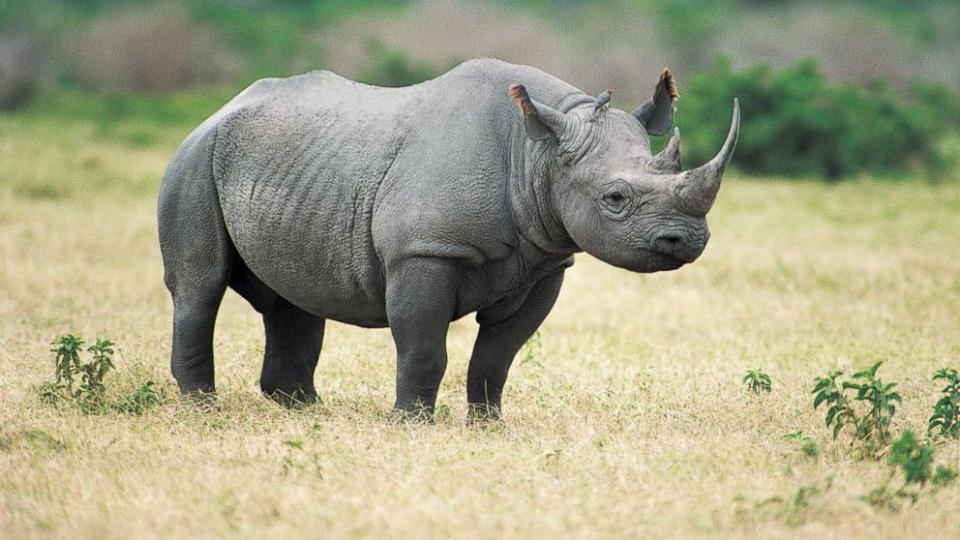
Black rhinoceros

The rhino has been suffering drastically over the past few years in its African homeland due to poaching and the demand for its horn in Asia's black market. Across Africa, hundreds of these majestic beasts have fallen victim in the bloodthirsty hands of poachers who are infamous for being part of global criminal syndicates that function in a similar way as organized crime. This ongoing and rampant bloodshed even led to the extinction of the western black rhinoceros two years ago in Cameroon. In addition, South Africa has seen some of the highest casualties of rhinos than any where else in Africa. But now, there appears to be another threat looming on the horizon that could further contribute in the continuous decimation of Africa's rhinos. It is a Texas-based hunting group known as the Dallas Safari Club. This international organization, which is comprised of hunters and wildlife enthusiasts, has recently been reported auctioning off a hunting permit to hunt the critically endangered black rhinoceros from the government of Namibia. According to the organization's executive director Ben Carter, the purpose of this movement is about saving the black rhino, of which there are roughly 5,055 animals. The group further added that hundred percent of the profits made from the sale of the permit, which is estimated to be auctioned off for $250,000 to $ 1 million, will go towards the conservation trust fund for the black rhinos of Namibia. However, conservation groups argued that the organization's claim to benefit the rhinos was based false logic. According to Wayne Pacelle, president of the Humane Society of the United States (HSUS), it would make more sense to wildlife enthusiasts to bestow money only for the rhino conservation than to kill one of the animals. He further added that the Humane Society is planning to implore the U.S Fish and Wildlife Service in an effort to prevent them from distributing an extra permit that would allow a hunter to bring back a rhino carcass.
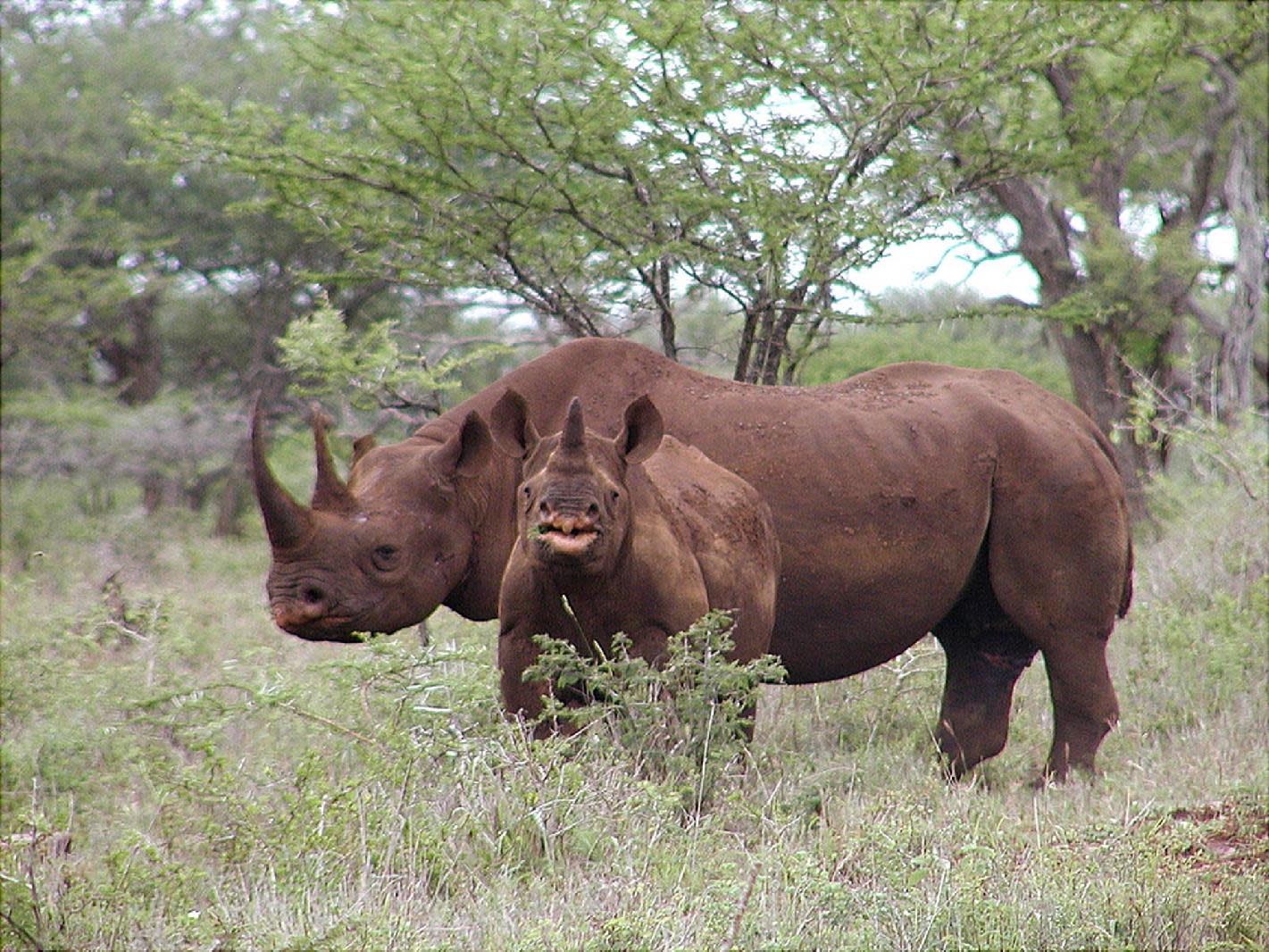
A pair of black rhinos in the Mkuze Game Reserve in South Africa

It is absolutely appalling and disheartening beyond belief that as Africa's rhino population continues to suffer from the rampant poaching crisis, new individuals respond to this message in much the same way as poachers do. That is, instead of helping the rhino in jeopardy by either donating money to conservation groups or joining forces with them on the front lines in an effort to save the species, they do the opposite by providing bidders an opportunity to hunt the rhino for sport and donate the money they acquired to the conservation trust fund aimed at saving the species. My view on the Dallas Safari Club is that it is claiming to help the black rhinoceros, but in reality, it is further contributing to the downfall of its population along with poaching and the illegal wildlife trade. While it has been reported that the Humane Society is going to petition the Fish and Wildlife Service to prevent them from issuing permit to hunt the black rhino, I strongly believe that the Namibian government should also disallow the Dallas Safari Club for carrying out this method of "conservation" if they are to protect their local rhino populations. Similarly, other countries that individually house Africa's rhino populations should bar this hunting organization from allowing international hunters to hunt rhinos and other highly endangered species. Furthermore, a rhinoceros labeled as "counterproductive" should not be taken out of a population by hunting. Instead, it should rather be kept separate until it dies of natural causes.

View article here       

Saturday, October 5, 2013

Zimbabwe Looses 91 Elephants to Poaching

A park ranger walks by an elephant carcass in Zimbabwe's Hwange National Park

Africa is drenched in bloodshed stemming from rampant poaching that has diminished and continues to diminish its elephant population at an alarming rate. All over the continent, elephants fall prey to the greedy and murderous hands of poachers for the purpose of profit. This wave of bloodthirsty carnage has not only been helping to fund the black market, but also finance Africa's militant groups in their efforts to carry out civil wars across the continent. Among these ruthless and barbaric organizations include Al-Shabaab, Janjaweed, and the Lord's Resistance Army (LRA) who for many years have terrorized Africa and its people. Al-Shabaab has gained international notoriety as an ally of Al-Qaeda, and has recently been in the spotlight for allegedly conducting a horrendous attack at the Westgate shopping mall in Nairobi. These facts indicate that the threat of poaching not only intends on thriving to profit from Africa's wildlife, but also instill fear and terror in the hearts of innocent people everywhere in the continent and negatively impact the tourism industry which is one of the major contributors to Africa's economy.
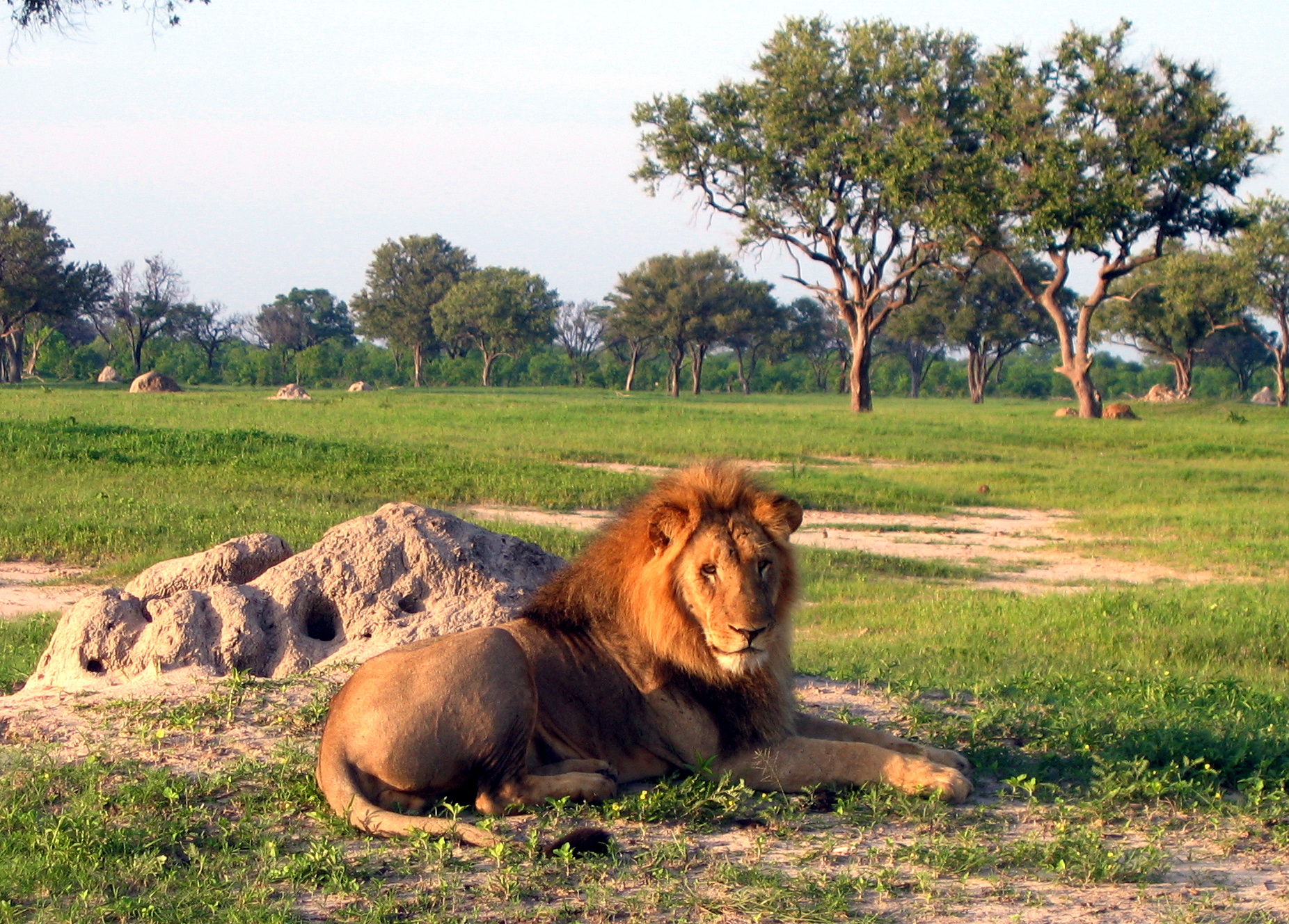
A lion in Hwange National Parks. Lions and other predators, particularly hyenas,  perished as a result of  cyanide poisoning.

Recently, this ongoing bloodbath has claimed lives of 91 elephants in Zimbabwe's Hwange National Park. Officials indicated that poachers had spread cyanide used in gold mining over natural, mineral-rich salt licks which draw elephants and other animals for access to essential mineral nutrients. They further added that the poisoning also claimed lives of lions, hyenas, and vultures after feeding on the contaminated carcasses and drinking nearby. Reports indicate that the elephants had died last month, and that nine suspected poachers have arrested this month. Out of the nine suspects, three were sentenced to sixteen years in prison. According to Saviour Kasukuwere, the newly appointed environment minister following President Robert Mugabe's victory in the 2013 Zimbabwean presidential election, the nation will strengthen its efforts to campaign among other nations around the world to repress the illegal ivory trade. In addition, the State Environmental Management Authority has made a plan to burn elephant carcasses and call for detoxification of areas affected by cyanide, starting with delving out the salt licks and removing top layers of soil tainted by cyanide particles. Officials believe that at least two deeply dug wells providing the waterholes may also be polluted and will possibly have to be shut. New wells will likely be dug away from the contaminated ones.
Elephants drink at a waterhole in Hwange National Park

This article indicates that elephant poaching continues to take its toll on Africa's wildlife by spreading into other countries of the continent, which were not considered as focal points of poaching in recent times. Earlier, it was believed that Central Africa and parts of East Africa, most notably Kenya, were considered to be major hubs of elephant poaching. Now, it has been found that Zimbabwe has become affected by this continuous bloodshed. Although the response to tackle poaching came swift, Zimbabwe's environment and wildlife authorities are said to be underfunded, understaffed, and poorly outfitted due to a troubled economy. This means that authorities cannot afford to care for helicopters or fixed-wing aircraft spotter patrols in an effort to battle poaching. Environment minister Kasukuwere stated that the Hwange National Park only has about 150 rangers and few fully functional off-road vehicles for an area that impeccably should have a staff of 700. He further added that officials have started working with local village communities on the peripheries of Hwange National Park to notify any presence of cyanide, and that eight pounds of (four kilograms) of the poison have been recovered so far. However, I feel that Zimbabwe is in a great need of help to protect its wildlife. I believe that, in order to help Zimbabwe protect its wildlife, it is highly essential to help its economy so that the authorities would not be underfunded and understaffed and provide them with access to helicopters and similar resources to bolster up their efforts to prevent poaching from further taking its toll of the nation's wildlife.

View article here