Thursday, October 31, 2013

Texas Hunting Club Auctions Endangered Black Rhinoceros for Hunting

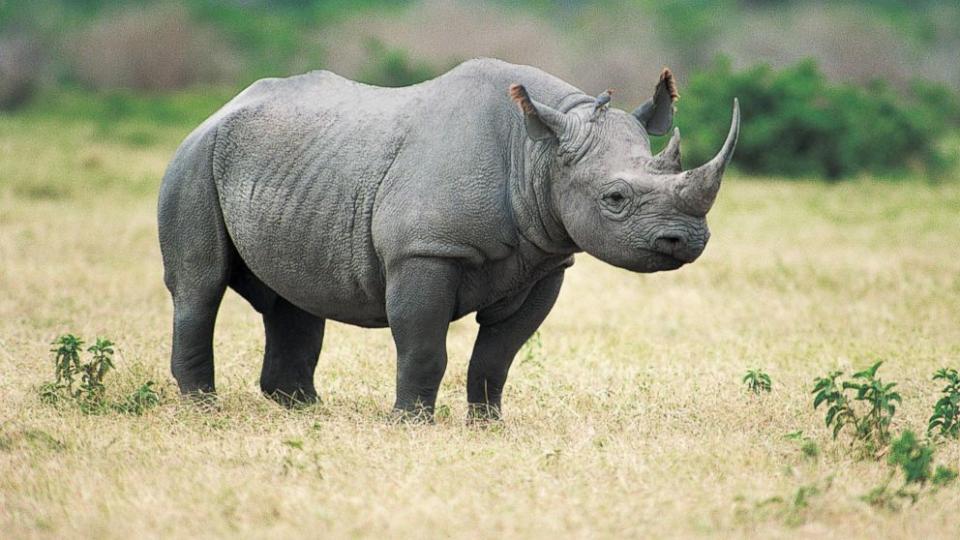
Black rhinoceros

The rhino has been suffering drastically over the past few years in its African homeland due to poaching and the demand for its horn in Asia's black market. Across Africa, hundreds of these majestic beasts have fallen victim in the bloodthirsty hands of poachers who are infamous for being part of global criminal syndicates that function in a similar way as organized crime. This ongoing and rampant bloodshed even led to the extinction of the western black rhinoceros two years ago in Cameroon. In addition, South Africa has seen some of the highest casualties of rhinos than any where else in Africa. But now, there appears to be another threat looming on the horizon that could further contribute in the continuous decimation of Africa's rhinos. It is a Texas-based hunting group known as the Dallas Safari Club. This international organization, which is comprised of hunters and wildlife enthusiasts, has recently been reported auctioning off a hunting permit to hunt the critically endangered black rhinoceros from the government of Namibia. According to the organization's executive director Ben Carter, the purpose of this movement is about saving the black rhino, of which there are roughly 5,055 animals. The group further added that hundred percent of the profits made from the sale of the permit, which is estimated to be auctioned off for $250,000 to $ 1 million, will go towards the conservation trust fund for the black rhinos of Namibia. However, conservation groups argued that the organization's claim to benefit the rhinos was based false logic. According to Wayne Pacelle, president of the Humane Society of the United States (HSUS), it would make more sense to wildlife enthusiasts to bestow money only for the rhino conservation than to kill one of the animals. He further added that the Humane Society is planning to implore the U.S Fish and Wildlife Service in an effort to prevent them from distributing an extra permit that would allow a hunter to bring back a rhino carcass.
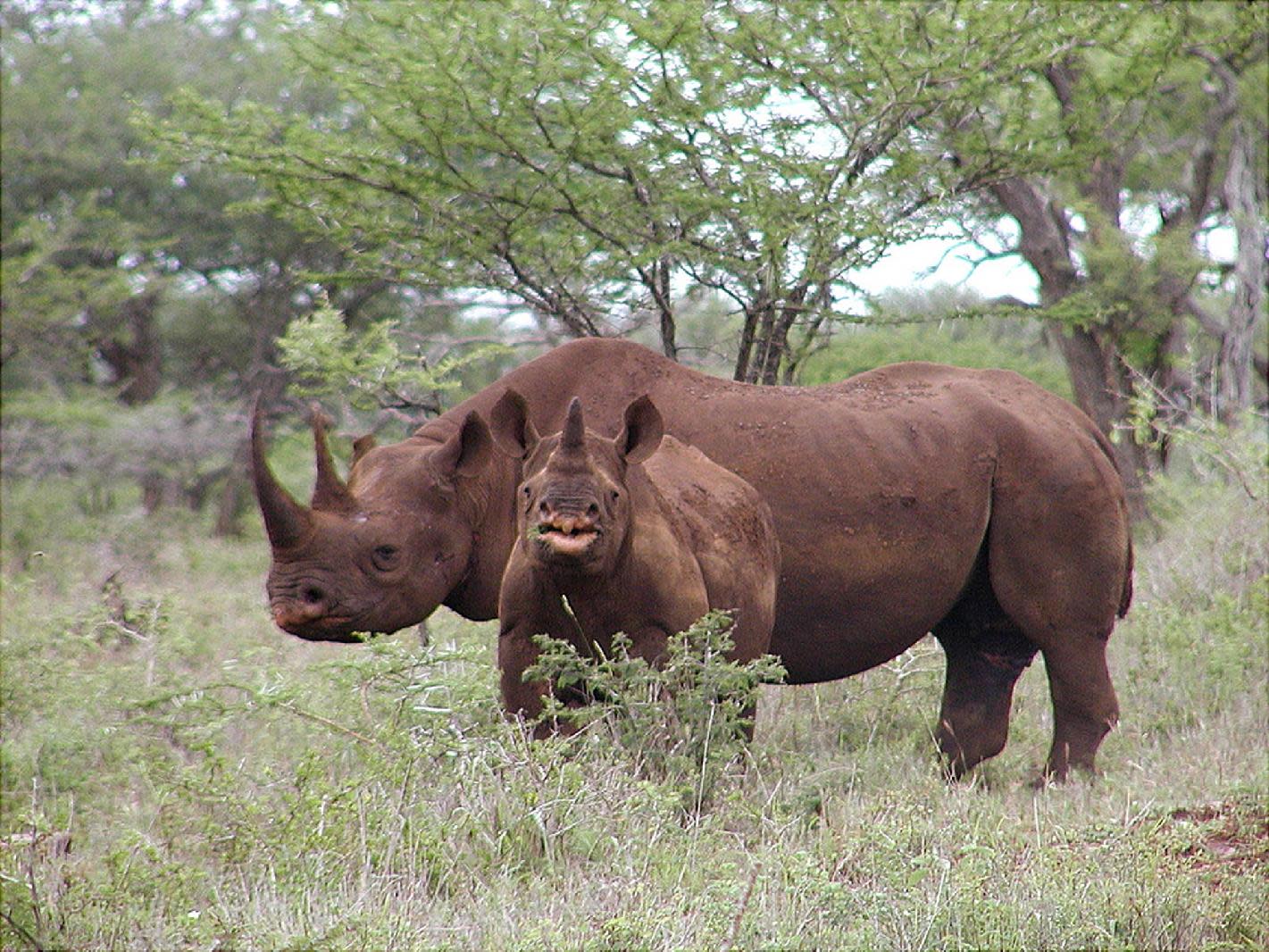
A pair of black rhinos in the Mkuze Game Reserve in South Africa

It is absolutely appalling and disheartening beyond belief that as Africa's rhino population continues to suffer from the rampant poaching crisis, new individuals respond to this message in much the same way as poachers do. That is, instead of helping the rhino in jeopardy by either donating money to conservation groups or joining forces with them on the front lines in an effort to save the species, they do the opposite by providing bidders an opportunity to hunt the rhino for sport and donate the money they acquired to the conservation trust fund aimed at saving the species. My view on the Dallas Safari Club is that it is claiming to help the black rhinoceros, but in reality, it is further contributing to the downfall of its population along with poaching and the illegal wildlife trade. While it has been reported that the Humane Society is going to petition the Fish and Wildlife Service to prevent them from issuing permit to hunt the black rhino, I strongly believe that the Namibian government should also disallow the Dallas Safari Club for carrying out this method of "conservation" if they are to protect their local rhino populations. Similarly, other countries that individually house Africa's rhino populations should bar this hunting organization from allowing international hunters to hunt rhinos and other highly endangered species. Furthermore, a rhinoceros labeled as "counterproductive" should not be taken out of a population by hunting. Instead, it should rather be kept separate until it dies of natural causes.

View article here       

Saturday, October 5, 2013

Zimbabwe Looses 91 Elephants to Poaching

A park ranger walks by an elephant carcass in Zimbabwe's Hwange National Park

Africa is drenched in bloodshed stemming from rampant poaching that has diminished and continues to diminish its elephant population at an alarming rate. All over the continent, elephants fall prey to the greedy and murderous hands of poachers for the purpose of profit. This wave of bloodthirsty carnage has not only been helping to fund the black market, but also finance Africa's militant groups in their efforts to carry out civil wars across the continent. Among these ruthless and barbaric organizations include Al-Shabaab, Janjaweed, and the Lord's Resistance Army (LRA) who for many years have terrorized Africa and its people. Al-Shabaab has gained international notoriety as an ally of Al-Qaeda, and has recently been in the spotlight for allegedly conducting a horrendous attack at the Westgate shopping mall in Nairobi. These facts indicate that the threat of poaching not only intends on thriving to profit from Africa's wildlife, but also instill fear and terror in the hearts of innocent people everywhere in the continent and negatively impact the tourism industry which is one of the major contributors to Africa's economy.
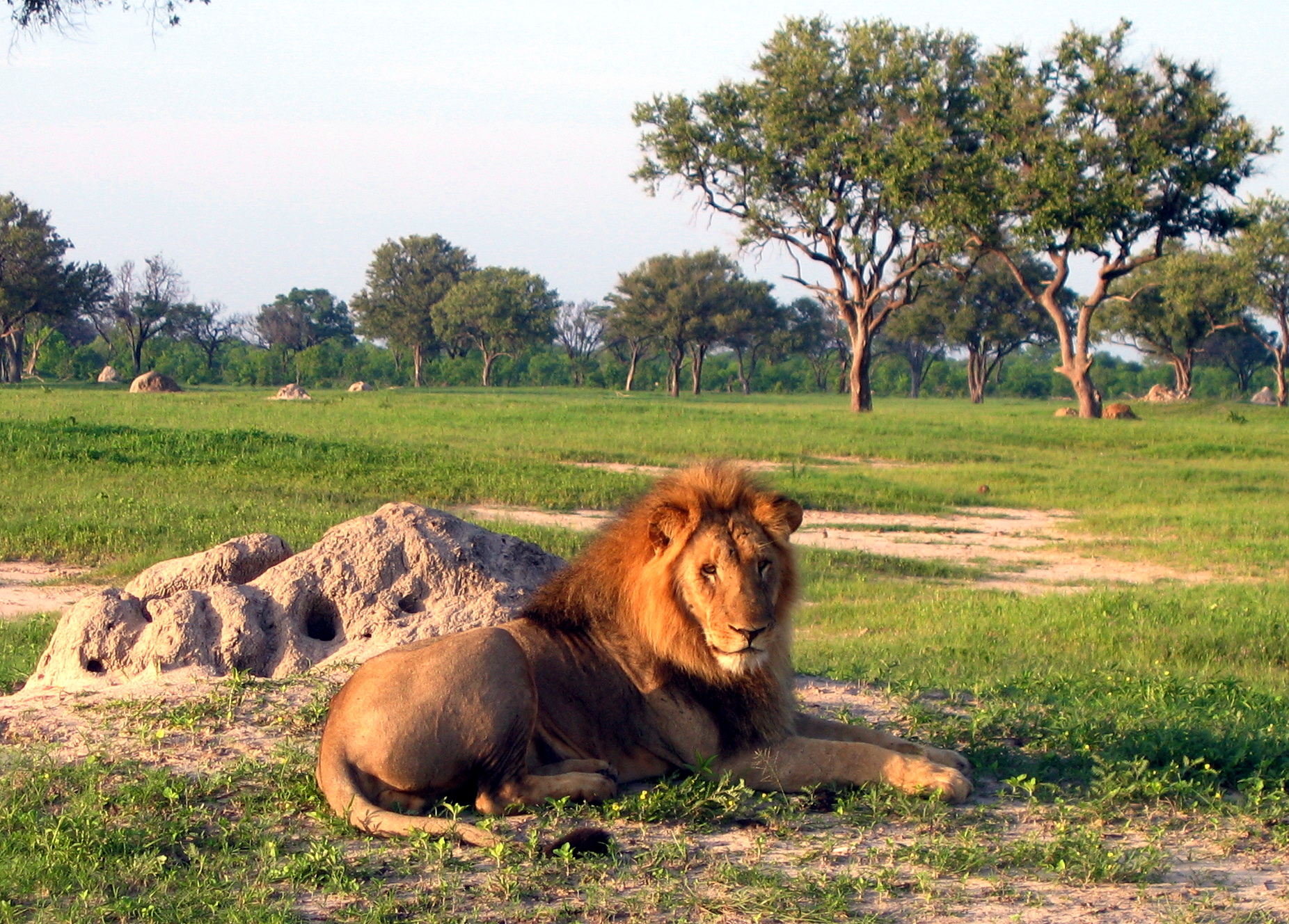
A lion in Hwange National Parks. Lions and other predators, particularly hyenas,  perished as a result of  cyanide poisoning.

Recently, this ongoing bloodbath has claimed lives of 91 elephants in Zimbabwe's Hwange National Park. Officials indicated that poachers had spread cyanide used in gold mining over natural, mineral-rich salt licks which draw elephants and other animals for access to essential mineral nutrients. They further added that the poisoning also claimed lives of lions, hyenas, and vultures after feeding on the contaminated carcasses and drinking nearby. Reports indicate that the elephants had died last month, and that nine suspected poachers have arrested this month. Out of the nine suspects, three were sentenced to sixteen years in prison. According to Saviour Kasukuwere, the newly appointed environment minister following President Robert Mugabe's victory in the 2013 Zimbabwean presidential election, the nation will strengthen its efforts to campaign among other nations around the world to repress the illegal ivory trade. In addition, the State Environmental Management Authority has made a plan to burn elephant carcasses and call for detoxification of areas affected by cyanide, starting with delving out the salt licks and removing top layers of soil tainted by cyanide particles. Officials believe that at least two deeply dug wells providing the waterholes may also be polluted and will possibly have to be shut. New wells will likely be dug away from the contaminated ones.
Elephants drink at a waterhole in Hwange National Park

This article indicates that elephant poaching continues to take its toll on Africa's wildlife by spreading into other countries of the continent, which were not considered as focal points of poaching in recent times. Earlier, it was believed that Central Africa and parts of East Africa, most notably Kenya, were considered to be major hubs of elephant poaching. Now, it has been found that Zimbabwe has become affected by this continuous bloodshed. Although the response to tackle poaching came swift, Zimbabwe's environment and wildlife authorities are said to be underfunded, understaffed, and poorly outfitted due to a troubled economy. This means that authorities cannot afford to care for helicopters or fixed-wing aircraft spotter patrols in an effort to battle poaching. Environment minister Kasukuwere stated that the Hwange National Park only has about 150 rangers and few fully functional off-road vehicles for an area that impeccably should have a staff of 700. He further added that officials have started working with local village communities on the peripheries of Hwange National Park to notify any presence of cyanide, and that eight pounds of (four kilograms) of the poison have been recovered so far. However, I feel that Zimbabwe is in a great need of help to protect its wildlife. I believe that, in order to help Zimbabwe protect its wildlife, it is highly essential to help its economy so that the authorities would not be underfunded and understaffed and provide them with access to helicopters and similar resources to bolster up their efforts to prevent poaching from further taking its toll of the nation's wildlife.

View article here


Thursday, September 12, 2013

United States to Demolish Stocks of Ivory in Effort to Halt Global Elephant Poaching

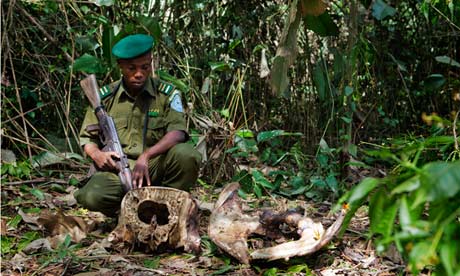
Congolese park ranger with a skull of an elephant killed for its ivory

The Obama Administration has recently announced that it would destroy six million tons of confiscated ivory stocks, in order to boost up efforts to curb an illegal ivory trade that has brought wild elephants to the brink of extinction. The destruction, which was announced by U.S Secretary of State Hillary Clinton and her daughter Chelsea, was part of a large effort by the administration to levitate illegal wildlife trafficking from a paltry conservation interest to serious national security concern. Officials stated that the destroying of ivory would indicate that President Barack Obama was dedicated to halting the illegal trafficking of wildlife that has ravaged species such as elephants and rhinos. They further added that the destruction is scheduled to take place on October 8th. U.S Interior Secretary Sally Jewell announced that a new advisory council, which consists of former administration officials, and business and conservation leaders, will help direct the clampdown on criminal poaching syndicates. She also added that wildlife trafficking had increased over the past five years into an international trade worth $10 billion. The poaching of elephants had doubled by a factor of eight in Tanzania, while the slaughter of rhinos had been elevated by a factor of fifty. In response to the United States' decision to destroy ivory stocks, conservation groups felt that the move would hurt the contraband market. A similar action was conducted by governments in a number of other countries, including the Philippines where fifteen million tons of confiscated ivory were crushed by industrial rollers earlier this year. The recently seized ivory in the U.S included raw tusks and carved ivory apprehended by authorities in the last 25 years.

This article is a clear representation that the U.S is committed to the battle against the threat of illegal wildlife trafficking. This can be seen through the response of U.S State Department officials towards the issue, referring it as a national security crisis. One of the notable political figures who plays a prominent role towards the issue is Secretary of State Hillary Clinton, who stated that as many as 35,000 African elephants were killed last year, accounting to 96 elephants killed in a single day. At this pace, Africa's elephants will become extinct within ten years. She further added that the profits from the illegal trade of ivory were also inciting extremist groups, including associates of Al-Qaeda in Somalia. In the end, she stated that the only way to stop wildlife trafficking is by using a zero-tolerance strategy. In my opinion, this is an absolutely crucial component in the battle against the illegal wildlife trade. By implementing a zero-tolerance policy against the poaching and trade of the world's wildlife, the criminal syndicates monopolizing in these illicit activities would not stand a chance. One of the methods mentioned in this article is imposing tougher penalties on the perpetrators, which the Obama Administration is thinking of introducing. I also feel that a joint partnership among several countries worldwide in targeting and prosecuting these syndicates is also vital in the ongoing battle. This way, the illegal trafficking of wildlife will most likely cease to function.

View article here

Tuesday, August 20, 2013

Climate Change Threatens the Iberian Lynx

Iberian lynx

It has been recently announced that the Iberian lynx is under threat from climate change. A new international study has found that the critically endangered cat could be driven to extinction within fifty years, despite important continuous conservation efforts. Researchers stated that the impact of climate change must be included in strategies to reintroduce the lynx to new habitats, in order to save the species. Present-day management efforts could be pointless if the linked effects of climate change, land use, and prey abundance on population changes of the Iberian lynx are not taken into consideration. Despite the evidence of increase in lynx numbers in the past decades due to intensive management, researchers warn that current conservation strategies could buy just a few ten years before the cat becomes extinct. They stated that the study is the most absolute conservation-management model yet cultivated of the effects of climate change on predator and its prey. They further added that the present increase in numbers of the lynx indicates that accelerated management of habitat and rabbit populations have worked as effective temporary conservation strategies. However, a small population size means that the species is still under threat and prone to future declines in population. This also means that the species is very vulnerable to changes in habitat quality or changes in prey abundance due to climate change.

I very much hope that various conservation groups involved in an effort to save the Iberian lynx will take into consideration about the threat of climate change, and incorporate that into their methods in order to save the species from extinction. The current methods that are being used are only temporary solutions to ensure the survival of this critically endangered cat. Most of these strategies included habitat management, reduction in human activity, and recently reintroduction of the lynx in appropriate areas where it has lived. But now, with climate change in focus, the conservation efforts in saving the Iberian lynx are going to change in some degree. For example, studies by researchers have shown that habitat in the southwestern part of the Iberian Peninsula, which houses two existing populations of Iberian lynx, is most likely to be unfavorable by the middle of this century. In order to ensure the survival of the species on the long run, it has been suggested that peninsular regions at higher altitudes and latitudes would be suitable for the lynx.

View article here  

Monday, August 19, 2013

Kenya Unveils its Inter-Agency Anti-poaching Unit

Confiscated ivory

It has been recently reported that Kenya has revealed its inter-agency anti-poaching unit, which consists of officers from specialized aspects of the Administration Police, General Service Unit, and Kenya Wildlife Service (KWS) in an effort to bolster the fight against poaching. According to Paul Muya, spokesperson for the KWS, the establishing of this organization shows the government's obligation in guaranteeing that the wildlife is safe. He stated that the KWS was working with other conservation stakeholders to confirm that the war against poaching is won. He further added that the increasing poaching crisis has become both an economic and national security issue. In addition, he also pointed out that the KWS requires more resources for it manages roughly eight percent of the country's total landmass which includes 22 national parks, 29 national reserves, and four national sanctuaries including six national marine reserves and four parks. Furthermore, Muya noted that the number of active rangers has decreased significantly due to natural abrasion and retirement. He stated that the government has however made an obligation during this financial year to advocate the enlistment and disposal of at least 1,000 new rangers, in phases, to bolster KWS's capacity to conduct their authority effectively. Muya also indicated that the KWS will continue working with other law enforcement agencies, particularly the Customs, Immigration Department, Interpol, Kenya Airports Authority, Lusaka Agreement Task Force (LATF), and the police in making sure that international and local laws on wildlife crimes are carried out.

This article gives a clear demonstration of a nation's tough stand against poaching. This is seen through joint collaboration between a wildlife agency and other law enforcement agencies such as the police department, customs, and immigration department, among others, in an effort to put a stop to the ever-increasing threat of poaching. Kenya had earlier lost 384 elephants and 29 rhinos to poaching last year. This year, the country has lost 190 elephants and 34 rhinos. Furthermore, the government is enthusiastic on the quick execution of the Wildlife Conservation and Management Bill, 2013, which suggests inflexible and preventative punishments against poaching. In addition, there is even a genetics and wildlife forensics laboratory being built at the KWS headquarters and is set to be installed later this year later this year to support prosecution of wildlife crimes. Although this is promising news regarding wildlife protection, I also feel that Kenya could further bolster its stand against poaching by forming alliances and helping other African nations that do not appear to be taking a similar stand against the threat. For example, Tanzania has recently been in the news where senior officials within the nation's government are behind elephant poaching. Many of these officials come from key government departments responsible for wildlife conservation. The news indicates the threat of corruption is looming large in the nation, and is ultimately responsible for depriving Tanzania's wildlife of its safety. Therefore, I believe that those African countries whose individual governments have made a commitment to take decisive action against poaching and other wildlife-related crimes should provide help to the ones that are not standing a chance in the battle.

View article here

Monday, August 12, 2013

Federal Plan to Increase Range for Mexican Wolves in Arizona

A Mexican wolf inside a holding pen in New Mexico's Sevilleta Wildlife Refuge.

It has been recently reported that the U.S government is providing a plan that would allow Mexican wolves to roam freely across the state of Arizona for the first time. The U.S Fish and Wildlife Service published a draft of the proposed changes last month that, if enforced, would let wolves roam from western Arizona to eastern New Mexico between Interstates 40 and 10. The draft contains likely wolf reintroduction sites in northern Arizona on the Tonto National Forest, all over the Sitgreaves National Forest and other public lands, as well as private lands where there is a cooperating landowner. In addition, the proposal also demands expansion of an area where the wolves could wander to add parts of central New Mexico's Cibola National Forest. As a whole, there would be a decennial increase in the area where biologists are working to restore the population. Environmentalists accepted the possibility of expansion, but also expressed concerns about provisions that could create schemes that would increase situations in which the wolves could be killed for livestock predation or other reasons.

I'm very proud and grateful that the federal government has given the consideration about the conservation of Mexican wolves, and acted upon it by proposing a plan that would allow them to flourish in parts of the American Southwest where they had disappeared. This proposal has received a great deal of support from groups, especially the Apache tribe, who has an agreement with the U.S Fish and Wildlife Service that has let the wolves to roam on their lands in eastern Arizona. In addition, wolves have been sighted in the past in northern Arizona as close to places like Mormon Lake and the city of Flagstaff and Holbrook along Interstate 40. This has led scientists to choose the Grand Canyon as principal wolf territory. They stated that the region could support as many as 200 animals. However, this proposal has also received negative opinions from ranchers in Arizona who feel that the program to reintroduce wolves back into their former haunts has been unsuccessful and that they cannot afford any loss of livestock from these animals. I firmly believe that the U.S Fish and Wildlife Service and other groups actively involved in this project should identify particular areas in Arizona and New Mexico that do not include any ranches. If these areas happen to be close to any ranch lands, then the groups should take the initiative in educating ranchers about the ecological importance of Mexican wolves and provide them with safe measurements to keep wolves off their ranch. One possibility would be to erect fencing high enough to keep the wolves out, and another would be to provide ranchers with livestock guardian dogs to prevent the wolves from attacking their livestock.


View article here 

Friday, August 9, 2013

Tiger Range Countries to Correct Cross-Border Conservation

Tiger

It has been recently reported that representatives from twelve out of the thirteen tiger range countries attended a meeting held in the city of Kunming last week, where they came to an agreement on taking measurements to correct managing of cross-border landscapes and on battling the illegal wildlife trade of tigers. This general agreement, known as the "Kunming Consensus", is targeted at improving earlier obligations made by tiger range countries and supported by heads of state through the St. Petersburg Declaration and the Thimphu Agenda. All are focused at accomplishing the countries' overall goal to increase the number of wild tigers to 6,000 animals by 2022. The blueprint to achieving this goal is the conservation of tiger habitats shared across national borders of such countries. It is said that there is more than three times as much promising tiger habitat in trans-boundary landscapes (920,000 square kilometers) than in any single country's landscape (270,000 square kilometers). Therefore, the consensus advised that the countries examine how best to guarantee management of their trans-boundary landscapes is effectual in the long-term. The consensus also made other recommendations for issues such as the illegal trade of tigers, which includes using innovational enforcement techniques, correcting enforcement capacity through training, and urgently, reconstructing sharing of information and international organization between enforcement and other bureaus. In addition, the consensus also made recommendations regarding efforts to minimize the demand for tiger body parts through figuring out the market for such items and building measures to discourage their consumption.

I'm very proud and grateful to see that majority of Asian countries that house the world's wild tiger populations have come to an agreement in helping one another in an effort to protect their tigers. This consensus outlines various steps these countries are expected to adhere by to ensure that the global tiger population would increase to 6,000 animals by 2022. Leading the way towards this goal is Nepal, which is reported to have its tiger numbers increased to 198 making it a 63 percent rise from the last survey in 2009. In addition, there was also some progress seen on the island of Sumatra in Indonesia. However, it is unclear what might be the situation in the remaining eleven tiger range countries. This is why I hope that these countries will take the initiative in further improving the measurements in managing cross-border landscapes and combating the illegal wildlife trade in an effort to save tigers and other wildlife.

View article here