Wednesday, August 8, 2012

Eco-sensitive Zones Declared in Four Gujarati Wildlife Sanctuaries

Lions in Gir Forest

It has been recently announced that the Union Ministry of Environment and Forests (MoEF) has declared eco-sensitive zones around four wildlife sanctuaries in the state of Gujarat. These include Gir Forest National Park in Junagadh district, Narayan Sarovar Sanctuary in Kutch district, Purna Wildlife Sanctuary in the Dangs, and Vansda National Park in Navsari district. With a rich abundance of wildlife in all four of these sanctuaries, activities such as industrialization, mining, and tourism will be restricted. The eco-sensitive zone of Gir Forest covers an area of 9,318 hectares, and includes 27 villages in Bhesan and Junagadh talukas in a five-kilometer radius. The development there is to be managed through a zonal detailed plan, which is expected to be ready in two years. The zone around Purna Wildlife Sanctuary is 25,036 hectares, with 61 villages included in a two-kilometer radius while Narayan Sarovar Sanctuary's zone will cover 28 villages in three talukas and occupy 22,588 hectares out of which 62 percent would be forest-less land. The zone will expand to 2.5 kilometers throughout the sanctuary's boundary. The zone around Vansda National Park will fan out 5 kilometers of its total boundary, and encompass up to thirteen villages.
The chinkara (Indian gazelle); a flagship species in Narayan Sarovar Sanctuary

I'm very proud to see that these wildlife sanctuaries in Gujarat are having eco-sensitive zones declared, in order help keep the biodiversity safe and preserved. All four of these sanctuaries house some of the most unique wildlife in the state. Gir Forest is well-renowned as the last abode of the Asiatic lion in the world, but is also a haven for a rich variety of plant and animal life. Purna Wildlife Sanctuary, on the other hand, is well-known for possessing almost 3,330 species of trees, herbs, shrubs, mammals, birds, reptiles, and insects. Narayan Sarovar Sanctuary is very special for it hosts three distinct habitats: dry arid grasslands, coastal mangrove forests, and wetlands. It is also a home to some of India's rare and threatened species such as the caracal, chinkara (Indian gazelle), desert cat, great Indian and houbara bustards, leopard, lesser florican, wolf, and the spiny-tailed lizard. Vansda National Park was once famous for having tigers, but are believed to have become extinct. Nonetheless, it houses nine species of mammals in addition to reptiles and amphibians. The national park is also known for having birds unique to the Western Ghats, and various kinds of medicinal herbs and shrubs with ferns, lichens, and orchids. With such abundance of wildlife in these sanctuaries, it is easy to say that human encroachment is never far. Narayan Sarovar, in particular, is known to contain rich mineral deposits such as bauxite, bentonite, lignite, and limestone which makes it prone to mining. Other threats include poaching, habitat loss, industrialization, and even tourism. For this reason, the ministry has declared eco-sensitive zones around these four wildlife sanctuaries in an effort to help keep the biodiversities safe. Although the wildlife in some of Gujarat's wildlife sanctuaries seem to have a promising future ahead, things are different for animals elsewhere in India. One recent example was pointed out by Greenpeace, in which coal mining in some parts of India is threatening tigers. This is why I also believe it is crucial that the ministry should identify other wild places in order to ensure which can be declared as eco-sensitive zones to help save the wildlife.

View article here

Tuesday, August 7, 2012

New Forensic Tools to Catch Ivory Poachers

A pair of captive elephants

Scientists have recently announced that ivory poachers can be tracked down by the use of new forensic tools which can locate exactly where the illegal ivory is from using DNA. The poaching of elephants continues and remains a serious issue, with seizures of large amounts of ivory still going on. But now, researchers have found a way to identify where the ivory comes from after evaluating elephants at 22 locations in thirteen African countries to get their mitochondrial DNA (mtDNA) sequences. According to scientists, mtDNA is a good indicator for determining the origin of ivory since it is only sent by female elephants and they do not migrate between herds. As part of the test, Washington State professor Nicholas Georgiadis shot an elephant with a biopsy dart which would hit the animal's side and scrape off a small piece before falling off. Professor Alfred Roca of Urbana University described the dart "like a biting insect." Researchers collected 653 samples which were sequenced and analyzed, and found categorical subdivisions of the mtDNA out of which seven had geographical distribution. They also recognized 108 unique mtDNA sequences that gave information about the origin of the ivory, in which 72 percent were found in one locality and 82 percent were country-specific. The test revealed that even though many elephants can have the same sequence, 44 percent of the individuals carried a sequence seen only at their sampling location. It was found that nuclear markers categorized between bush and forest elephants, while the mtDNA marker showed an exact location, so the plan would be to combine both the markers together. A study titled The Evolutionary Applications stated that the research should be used by conservationists to analyze the origin of confiscated ivory.

I'm very much impressed that technology is being used in an effort to combat poaching. In this case, it is by locating where illegally smuggled ivory is coming from by using DNA. Normally, anti-poaching efforts include seizures of wildlife products being illegally smuggled overseas or across borders. But now, with the help of newly advanced forensic technology, conservationists and wildlife officials should have a better chance of tracing the origins of such illicit merchandise. This would then lead them directly to poachers behind the killing(s) of elephants. I think the use of DNA would be an effective tool in targeting ivory poachers in Africa and Asia, and hopefully it would also be used in the case of other endangered species. Furthermore, I believe this tactic combined with community outreach and education about elephants and other endangered species would further help in the battle against poaching and the illegal wildlife trade.

View article here

Friday, August 3, 2012

Call to Protect the Arabian Oryx from Sheep/Goat Disease

A captive herd of Arabian oryx

The magnificent Arabian oryx has made a tremendous comeback after several years through captive breeding and reintroduction efforts. Before this successful recovery, the population of this graceful antelope was decimated followed by years of hunting which eventually drove it to extinction in the wild by 1972. But now, there is a new threat that has got conservationists concerned about the oryx's future. It is a deadly disease called peste de petits ruminants (PPR), a highly contagious virus that generally affects sheep and goats. Known as 'goat plague', it takes place across parts of Africa, the Middle East, and the Arabian Peninsula. It is said that the oryx are also prone to the malady, leading to concerns that it could spread from the United Arab Emirates' large goat population. Although there is a vaccine against the disease, it has been found to be effective on sheep and goats but it is not known whether it would be effective on the oryx. For this reason, research on determining the vaccine's correct levels is being conducted at the Wadi Al Safa Wildlife Center in Dubai. During the trial, twelve oryx were vaccinated and three were kept as control animals. After one month, five out of the twelve vaccinated oryx were given a booster dose. The antelopes were regularly tested for a year to check the levels of PPR's antibodies in their blood, a process that allows the capability of the vaccine to be measured. According to Declan O'Donovan, director of wildlife services at Wadi Al Safa, the data collected is still being analyzed and recommendations from the results would be published in a scientific journal.
Effects of PPR in a sheep: Inflammation and erosion of the mouth

I hope that the researchers conducting the study of the vaccine's effects would help in the conservation of the Arabian oryx. This strikingly graceful antelope was once extinct in the wild forty years ago due to limitless hunting throughout the Middle East and the Arabian Peninsula. Captive breeding and reintroduction programs have helped reboost its population in its former habitat. But now, there is news about a new form of danger that is threatening to put the oryx in a would-be jeopardy: PPR. The research of this deadly virus is currently pending at Dubai's Wadi Al Safa Wildlife Center. The center has also covered other subjects since it opened in 1998. These include foot-and-mouth disease, illnesses that affect feral cats and gazelles, and the distribution of the mountain gazelle. I also hope that this research will help in the conservation of other animals that share the habitat with the oryx. Food-and-mouth disease are known to infect antelopes such as mountain and goitered gazelles. The transmission of the disease can be done in number of ways, including close contact between animals. This is why I believe it is extremely crucial to combat this disease along with PPR to help protect the wildlife of the Middle East, Arabian Peninsula, and Africa. In Africa, fighting PPR would help tremendously in the conservation of the Arabian oryx's relative the scimitar-horned oryx which has been labeled as "extinct in the wild" since 2000. With only a handful of these antelopes currently being held in a few reserves located in Morocco, Senegal, and Tunisia, the impact of PPR could affect their last remaining captive populations their native homeland. The time is upon us to help save and protect both the Arabian and the scimitar-horned oryx from any form of threat at all costs.

View article here

Wednesday, August 1, 2012

Tiger Population Increases in Nepal

A captive tiger in an active mood

It has been recently reported that Nepal has witnessed a rise in its tiger population over the last couple years during which numbers jumped from 155 to 176 animals. The latest count made by World Wildlife Fund (WWF) Nepal indicates an increase of 21 tigers from since 2010. Nepal, which was once home to 350 tigers in 2000, had earlier witnessed a downfall in the population to 121 in 2008. Now, this recent report has brought good news for both authorities and conservationists who have been battling the threat of poaching. According to the newly published report of the tiger census released on the World Tiger Day, the greatest surge in numbers has been reported in the Bardiya National Park in western Nepal in the last four years. Since 2008, tiger numbers in Bardiya National Park had swelled to 37 from just 18 individuals. Another notable count was recorded in the Shuklaphanta Wildlife Reserve in Nepal's far west, where the latest census recorded ten tigers which included six females and four males. The famed Chitwan National Park, which is also a World Heritage Site, has been found to have 126 tigers. The census was conducted by the Department of National Parks and Wildlife Conservation with the support of WWF Nepal through camera trapping. As part of the efforts to bolster awareness actions, the World Wildlife Fund has brought in Nepali actor Rajesh Hamal as the Goodwill Ambassador of WWF Nepal for conservation. According to Anil Manandhar, County Representative for WWF, there has to be focus on the conservation of tiger habitat and guaranteeing availability of prey species. He further added that anti-poaching activities need to be intensified along with the control of the wildlife trade.

I'm very happy and proud to see how the tiger population in Nepal has bounced back from low numbers in 2008, to greater numbers over the years. However, I also believe that the recent count is also an indication that poachers would do whatever it takes to go after tigers in the nation. For this reason, it is absolutely crucial to strengthen anti-poaching activities both nationally and internationally. In addition to that, measurements to spread awareness amongst local communities is also essential. The World Wildlife Fund has recently appointed a Nepali actor named Rajesh Hamal as the Goodwill Ambassador for conservation of WWF Nepal. This is one of the ways in which major organizations like the WWF and others persuade the public to stand up for a cause, which in this case is wildlife conservation. I also think that educating the public about the dangers of poaching and illegal wildlife trade, along with the benefits of eco-tourism is another surefire way to provide encouragement in order to help put a stop to any wildlife crimes. Overall, I find that this is extremely good news for Nepal and should be taken as a call in continuation to further strengthen its security against wildlife crimes and conservation of wildlife habitats.

View article here

Sunday, July 29, 2012

Anticipatory Bail Plea Rejected for Anil Madhukar Naik in Blackbuck Poaching

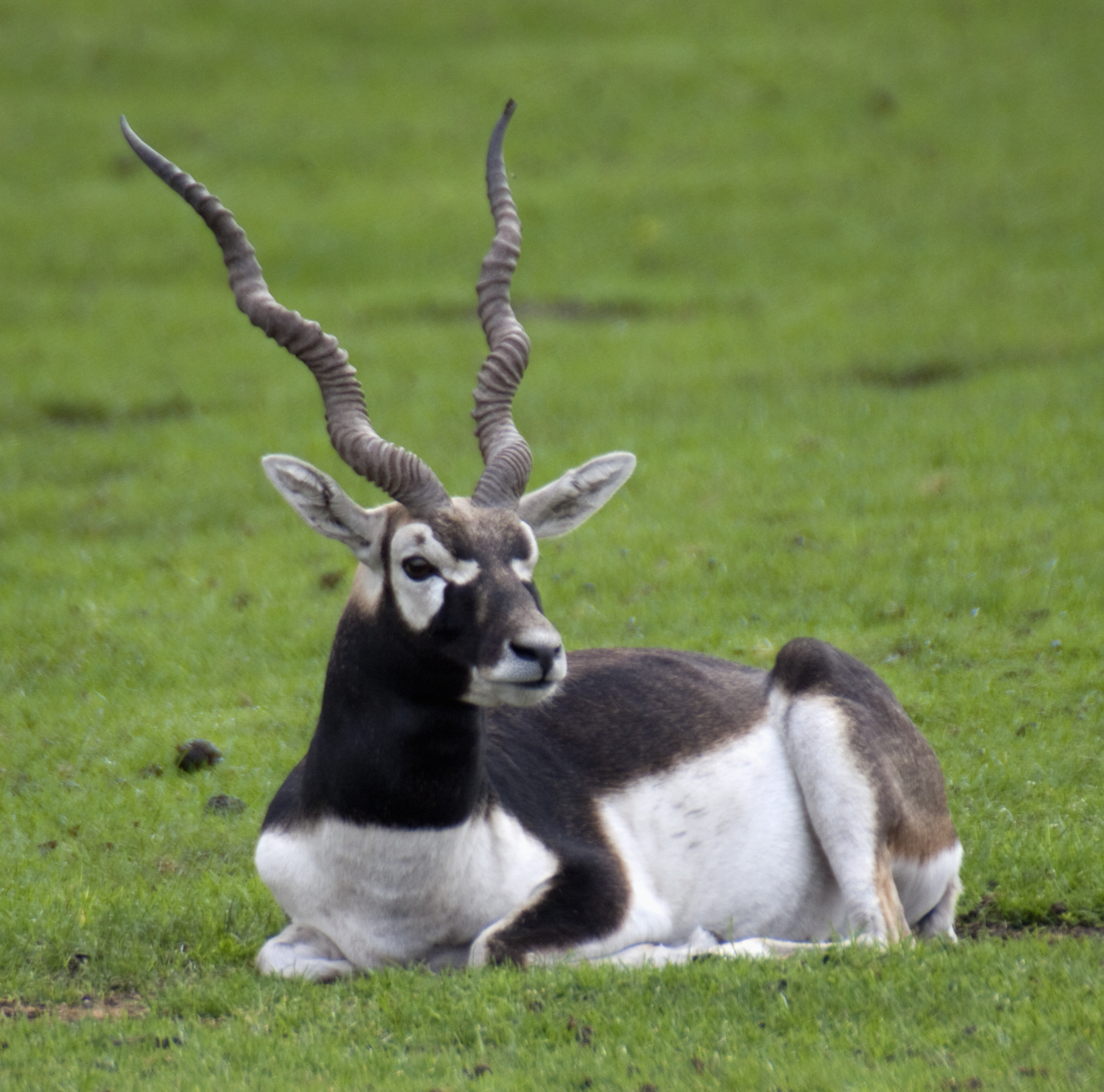
Blackbuck

It has been announced that a Washim additional district sessions judge has recently rejected the anticipatory bail applications of Anil Madhukar Naik, nephew of Maharashtra state food and drugs minister Manohar Naik, who was accused along with his five associates for allegedly killing a blackbuck. Along with Naik, three others involved in the incident were also refused the plea. The poaching of the blackbuck occurred on the night of July 16 by eight people. Forest officials arrested one accused named Yasin Shah Gulzar Shah, who was involved in the disposing of the animal's carcass. According to assistant conservator of forest (ACF) and investigating officer V.G Tehre, Naik and his three associates applied for anticipatory bail through their lawyers and denied their involvement in the incident. However, the court refused their bail application and has decided to hold the final hearing of the matter on July 30. Meanwhile, the accused Shah has been given police custody remand (PCR) until that date. All the eight accused departed secretly.

Although I'm satisfied that Naik and his associates were rejected bail, I hope that the hearing set on July 30 would be satisfactory. That is, all eight of the accused would be prosecuted for the crime they had committed. The blackbuck is listed under Schedule I of the Wildlife Protection Act of 1972, and anyone found guilty for illegally killing this graceful antelope would be sentenced for up to seven years imprisonment. And even though this penalty applies to people everywhere in India, the case of Anil Madhukar Naik was an exception. Instead of being booked under the act, he and his fellow associates were set free after the police learned that he was Manohar Naik's nephew. This gives an idea of how the public perceives politicians and their kin as powerful, compared to any one else including the Indian Army. One person who made this remark of comparing politicians to the army is Kishore Rithe, president of an Amravati-based NGO called the Satpuda Foundation. The organization has demanded a CBI investigation helped by the Wildlife Crime Control Bureau (WCCB). Rithe further added that the issue has "become necessary as both, police and wildlife department, work under the state government, whose minister is misusing his position to scuttle the probe."

I firmly believe that just because Anil Madhukar Naik is a relative of a powerful politician it does not mean that he should be allowed to get away with the crime he has allegedly committed. Politicians maybe higher than other people in terms of status, but they are still human beings and should tried for whatever misdemeanor the same way as regular citizens. While Naik's hearing is scheduled for July 30, the next key figure who has recently been in the news for the same offense is none other than Bollywood celebrity Salman Khan. After fourteen years since his alleged offense in poaching a blackbuck, the film industry's favorite romantic hero of countless movies is likely to stand trial after the Rajasthan High Court finalized the charges against him. If convicted, he could face up to three years in prison according to Section 51 of the Wildlife Act. The news about these two powerful figures should serve as examples to the people of India regardless of what class, or status they fall under. The wildlife of the Indian subcontinent is vulnerable to threats of poaching and the illegal wildlife trade, and the public needs to step up in order to help protect their natural heritage from these ongoing threats.

View article here

Friday, July 27, 2012

Seven Countries Face Punishments Over Trading of Endangered Species

Hong Kong Vietnam Worst Wildlife Crime
Seized rhino horns at the Hong Kong Customs and Excise Department.


It has been recently reported that a total of seven countries may lose their privilege to legally trade endangered species after U.N conservation delegates came to an agreement on Thursday to punish them for lacking strict laws or failure to report on their illegal wildlife trade. These countries include Comoros, Guinea-Bissau, Nepal, Paraguay, Rwanda, the Solomon Islands, and Syria, whose suspensions were favored by the consensus among the delegates will go into effect on October 1. According to Juan Carlos Vasquez, a spokesman for the U.N office that controls the agreement, the suspensions would prevent the seven countries from legally trading any of the 35,000 species managed by the Convention on the International Trade of Endangered Species (CITES). Committees to the week-long meeting of CITES in Geneva agreed to place suspensions on the seven countries based on their lack of national enactments for controlling the wildlife trade. The meeting's attendees also agreed to place suspensions based on the countries' failure to properly report what they are doing to regulate the lucrative trade, as required to do under the CITES treaty.
Mountain gorilla in Virunga National Park

However, it is said that the seven countries could avoid the penalties and losing the possibility of losing millions of dollars in commerce either by framing a required legislation or turning in missing annual reports to CITES by October 1. CITES states that about 97 percent of the species it controls are commercially traded for building materials, clothing, collections, food, forest products, fuel, health care, ornaments, religious items, trophy hunting, and other things. The other three percent are usually banned. It estimates that the controlled wildlife trade is between $350 million and $530 million a year, or almost $2.2 billion over four years from 2006 to 2010. During that time period, the logging of the big leaf mahogany estimated for $168 million in trade. By volume, American black bears, Malaysian box turtles, Senegal parrots, and South American gray foxes were among the most traded. The wildlife trade monitoring network, Traffic, estimates that the commercial trade of wildlife has increased sharply from around $160 billion a year in the early 1990s. But the multibillion-dollar trade is a growing problem, and environmentalists state that the reason is due to the nations' failure to conduct severe penalties for traffickers or implement wildlife laws that are already on the books. The delegates are expected to consider a proposal to resume legal ivory trade as an effort to stop the recent surge in Africa's elephant poaching. The proposal, which is asserted in a CITES-commissioned report, would establish a centralized system to allow for ivory sale from elephants that either died of natural causes or trophy hunting, or culled for ecological reasons. In addition to that, the rise in Africa's rhino poaching is also on the agenda.
A pair of tigers in one of Vietnam's several tiger farms

I'm very much surprised to see that a handful of countries are facing this unusual penalty of being disallowed to trade endangered species. Based on the article, the reasons for coming up with this punishment imposed on these nations is because they do not have stiff laws against the ongoing threat of the illegal wildlife trade and the failure to report any illicit activities related to this ongoing threat. I think this news should serve as a warning, as well as a wake-up call, for other countries around the world that have a similar reputation of enforcing weak laws against the wildlife trade and failing to report any activities related it. One of those could be Vietnam, whose so-called "tiger farms" have been labeled as major hubs for the illegal wildlife trade by the World Wildlife Fund. In addition to that, the delegates who had agreed to impose the penalties on these seven nations, have also started focusing on the resumption of the ivory trade as a way to battle elephant poaching in Africa. The objectives of this plan is to allow selling of ivory from elephants that have died either of natural causes, or as a result of trophy hunting and ecological culling. In my opinion, this plan should be looked over by the governments of various African countries where elephants live. Meanwhile, I believe the main objective is to target poachers and other operators of the illegal wildlife trade. In order to do so, various countries where the threat of poaching and wildlife smuggling persists should impose harsh penalties against these wildlife crimes and report any such activities. Otherwise, they would face similar consequences like these seven countries featured in this news.

View article here

Tuesday, July 24, 2012

Rajasthan State Government to Establish Rescue Center at Ranthambore National Park

Tiger in Ranthambore National Park

It has been recently announced that the Forest and Environment Department of Rajasthan is planning to establish a rescue center in Ranthambore National Park. The purpose of setting up this facility is to help prevent any man-wildlife conflict resulting from tigers and other wild animals straying out of the national park. The most recent conflict occurred last Tuesday when villagers Hanuman Prajapat and Badri Lal were injured by a tiger in the Mai Kalan Village in Ranthambore's Khandar Range. In response, Rajasthan forest minister Beena Kak declared on Thursday that a compensation of 20,000 rupees each will be given to the two victims. She further added that the department will have to pay the expenses acquired on the medical care for the victims. In addition to compensation, Minister Kak also stated that the park boundary will be more modified. That is, the wall around the park is in the process of being raised up further from its initial height at around six feet. Furthermore, the top of the wall will be fixed with iron angles with barbed wire to make it more difficult for tigers to move out of the park. In addition to that, the gaps in the wall will be fixed. It is also said that the government is working on a project to develop buffer zones in the outskirts of Ranthambore in sight of the national park's growing tiger population. The project, which anticipates an expenditure of 175 crore rupees, has been submitted to the National Tiger Conservation Authority (NTCA) and the Planning Commission for approval. Meanwhile, the forest department has also worked out a plan to create natural corridors joining Ranthambore with the neighboring Kaila Devi Sanctuary in Bharatpur district. As part of the plan, 23 villages in Kaila Devi will be shifted outside the forest area so that it would be protected to form prey base for tigers.

I'm very happy and proud to see what government of Rajasthan is doing, in order to help both the people and wildlife in the state. Apart from providing compensation to any villagers, the government has also taken the initiative of establishing a rescue center to prevent any further conflicts between the villagers and the wildlife. Furthermore, the project also includes a modification of Ranthambore National Park's boundary such as increasing the height of the wall and fixing barbed wire on top of it along with repairing gaps to prevent any animals from straying outside. In addition to that, the government also plans to create buffer zones along the edges of the national park for the increasing tiger population while the forest department has devised a plan to develop natural corridors connecting Ranthambore to Kaila Devi. In my opinion, this series of planning and development of helping both the people and the wildlife should be taken as an inspiration for governments and forest departments in other parts of India and around the world in places like Africa. The reason is because people living alongside wildlife are known to have an uneasy coexistence, where people are either seriously injured or even killed by animals they come into encounters with. When this happens, usually the response is either to have an animal responsible for the assault either relocated or killed depending on how serious the situation. This is why it is extremely crucial to conduct steps similar to what the government of Rajasthan has done in order to help both people and wildlife coexist with one another peacefully.

View article here