Thursday, June 14, 2012

Iberian Lynx Protection Extends Beyond Andalusia

Fontana, a three-year-old female Iberian lynx spotted across the border in Castilla-La Mancha.

The Iberian lynx is one of the most fascinating, yet highly endangered of wildcats found nowhere else but in small pockets of the peninsula of the same name. Although much of its range is limited to Andalusia, it has been recently reported that the population of this lynx has spread beyond that area towards Castilla-La Mancha, Castilla y Leon, Extremadura, and even far away as Madrid. While this appears to be good news for the species, it has been said that proper monitoring systems are essential to ensure the cats are safe away from Andalusia where they had been historically confined following years of poaching, habitat loss, road casualties, and poisoning. Some possible protective tactics include regulating the use of herbicides, putting a stop to rabbit-hunting, and making sure that new infrastructure does not destroy the lynxs' habitat. One natural history expert named Ramon Grande Del Brio, whose research found four or five lynx populations in Salamanca. A recent lynx sighting occurred in April this year when a three-year-old female named Fontana was sighted 150 kilometers away in Ciudad Real, over the border in Castilla-La Mancha after coming near a log covered with lynx urine; a technique used by specialists to attract the animal. Born in the Andujar-Cardena mountain range in 2009, she had not been photographed since 2010. A study by a natural history scholar named Luis Garzon has also found lynxes in Castilla y Leon and Extremadura, where the population is estimated to be up to fifty individuals. As part of his study, Garzon interviewed farmers and shepherds, collected feces, looked for lynx tracks, and listened to the cats during their breeding season between December and February. An excrement found in 2006 in Madrid confirmed that it belonged to a lynx.

I'm also very happy to see that the Iberian lynx population has been expanding over the years, and has dispersed beyond Andalusia and into areas where they had historically disappeared. However, I also feel that it is crucial to conduct monitoring systems to guarantee that these cats are safe. Currently, there is no such system in Madrid due to lack of proof that lynxes are living in the area despite the tracks being spotted in the surrounding mountains of the city. In addition to that, it is also said that the feces are known to deteriorate quickly which makes it hard to conduct an analysis as to whether they belonged to a lynx or some other animal. I think in order to carry out a successful monitoring system, there should be community involvement where local people can be educated about the Iberian lynx and help by taking pictures of any strange creature that looks like a cat and presenting them to the authorities. In addition to that, it is also crucial to conduct protective measurements such as stopping hunting, controlling the use of poisons, and preventing any further habitat loss to ensure the lynxs' survival. This way, the conservation of the Iberian lynx will further improvise in an effort to save this mysterious cat.

View article here

Wednesday, June 13, 2012

South Africa's Animal Rights Activists Demand Justice Against Rhino Poachers

White rhinoceros

The nation of South Africa has so far lost a total of 245 rhinos to poachers since the beginning of the year, according to the Department of Environmental Affairs. Last year, amidst the bloodshed, authorities were able to arrest eight people, including two veterinarians and one professional hunter on charges relating to distribution and possession of a tranquilizing drug used by rhino poachers. As the three suspects were brought to the North Regional Court in Pretoria on Wednesday, several animal rights activists followed. Among the accused included Dr. Douw Grobler, an animal conservation expert and former head of wildlife capturing and veterinary services of Kruger National Park. The other two charged were private veterinarian Dr. Johannes Gerhardus Kruger, and professional hunter and animal farmer Hugo Ras. It is declared that the trio contributed to the poaching of rhinos by providing a poaching syndicate with tranquilizer darts. The drug, known as M99 or etorphine, was assertedly used to dart the animals before removing their horns. The case has been postponed until June 19th. However, the activists stated that they would follow the case until its conclusion. Among the participants present were the Outraged South African Citizens Against Poaching (OSCAP), a Pretoria-based animal rights group whose members stated that the government had to crucially improve public awareness on poaching.

This article gives a clear representation of the public's reaction against the ongoing massacre of South Africa's rhinos. Over the past few years, the numbers of these majestic creatures has been diminishing as poaching syndicates consisting of professional hunters and veterinarians who would supply the poachers with tranquilizing drugs in order to hunt down the rhinos. The two veterinarians mentioned in this article were among eight suspects arrested last year on charges relating to the distribution and possession of this drug. The remaining five suspects included Dr. Buti Chibase, a state veterinarian from Klerksdorp, followed by Matthys Christoffel Scheepers, Riaal Booysen, Boksburg Veterinarian Dr. Johan Hendrik Meyer, and Christoffel Francois Naude. All eight of these suspects appeared in the Pretoria North Magistrate's Court in March, but the charges against them were withdrawn in April because of insufficient evidence. What truly shocks me about this ongoing catastrophe is that the people involved did not only include poachers, but also veterinarians whom the public perceives as individuals committed to helping save lives of animals rather than kill them. This really goes to show that poaching is South Africa has reached an all-time high, and it needs to be addressed by the government through public awareness in order to help put a stop to it. Furthermore, the threat of poaching has tremendously affected the tourist industry such that people visiting the national parks may not get to see a rhinoceros about. This is why it is extremely crucial to combat poaching of rhinos and other animals in South Africa, otherwise the problem will continue to spread rapidly across the nation and would exceed beyond the borders and into surrounding regions.

View article here

Zero-Tolerance Declared Against Illegal Online Wildlife Trading

Tigers, leopards, and pangolins seized in Thailand.

It has been recently reported that fifteen leading e-commerce companies based in China have signed a declaration saying that they have a zero-tolerance policy towards their services being used to carry out illegal trading of wildlife. The statement states that buyers and sellers must abide by all aspects of China's Wild Animal Protection Law, and rules under CITES (Convention on the International Trade of Endangered Species) governing in trade of such illicit goods. The declaration was allotted following a workshop on regulating the illegal wildlife trade online by the National Forest Police Bureau of the State Forestry Administration (SFA) in alliance with TRAFFIC earlier this month. The workshop was attended by more than thirty participants from the National Forest Police Bureau, Network Security Bureau of Ministry of Public Security, Wildlife Conservation Department of SFA, China's CITES Management Authority, e-commerce websites, and TRAFFIC. During the workshop, representatives from all e-commerce companies read and signed the "Commitment to Zero-tolerance of illegal online wildlife trade. Among the companies that signed the declaration included Alibaba, Taobao, and Tencent. Due to the popularity of the internet, the availability of illegal wildlife products online has been making progress as a number of websites are illegally offering "high profile" animal species or body parts such as elephant, rhinoceros, sea turtles, and tiger. In April, TRAFFIC discovered 3,389 advertisements for elephant ivory, hawksbill turtle, rhino horn, and tiger bone products being offered through fifteen Chinese-language e-commerce websites and affiliated auction sites and chat rooms.

I'm very proud to see what different China-based e-commerce companies have done, in order to help combat the illegal wildlife trade. The recent discovery made by TRAFFIC in April is a clear indication of how the wildlife trade has been flourishing thanks to technology. For this reason, such companies have adopted a zero-tolerance policy towards being used to conduct illegal activities. However,  there are also thousands of other such e-commerce companies across China that are specializing in selling wild animals and their body parts. This is why it is extremely crucial to tackle this issue of illegal online wildlife trade, and one of the ways would be to form alliances with other nations from where such animals come from. In addition to that, there should also be community involvement to combat the issue with educational awareness conveying the message to never buy illegal wildlife products online.

View article here

Sunday, June 10, 2012

Wyoming Seeks to Remove Grizzly Bears as Endangered Species

Grizzly bear

It has been recently reported that the governor of Wyoming wants the federal authorities to remove grizzly bears as endangered species, in order to open the door for hunting opportunities in the future. Wyoming Governor Matt Mead recently wrote to Ken Salazar, secretary of the Department of Interior, asking to withdraw federal protection of the bears under the Endangered Species Act. The letter, which was written on May 24th and is being reviewed by Salazar's office, said grizzly bears have "unquestionably recovered within the Yellowstone Ecosystem." Steve Farrell, Governor Mead's policy adviser, agreed that managed hunts may be required to keep the population under control. However, Mr. Farrell claimed that the effort to strip the bears of their status as endangered species is not entirely "driven by this need to hunt them." Since 2007, grizzly bears were removed from the Endangered Species List but were placed back in 2009 after a conservation group took legal action. Some of these groups stated that the species has not bounced back enough and faces a threat in which its main food source, the seeds from the whitebark pine tree, is becoming scarce due to a tree infection. One such group is the Greater Yellowstone Coalition, whose spokesperson Jeff Welsch stated that scientists needed more time to understand why Greater Yellowstone's grizzly populations are leveling off and to further study the hypotheses of the demise in whitebark pine trees.
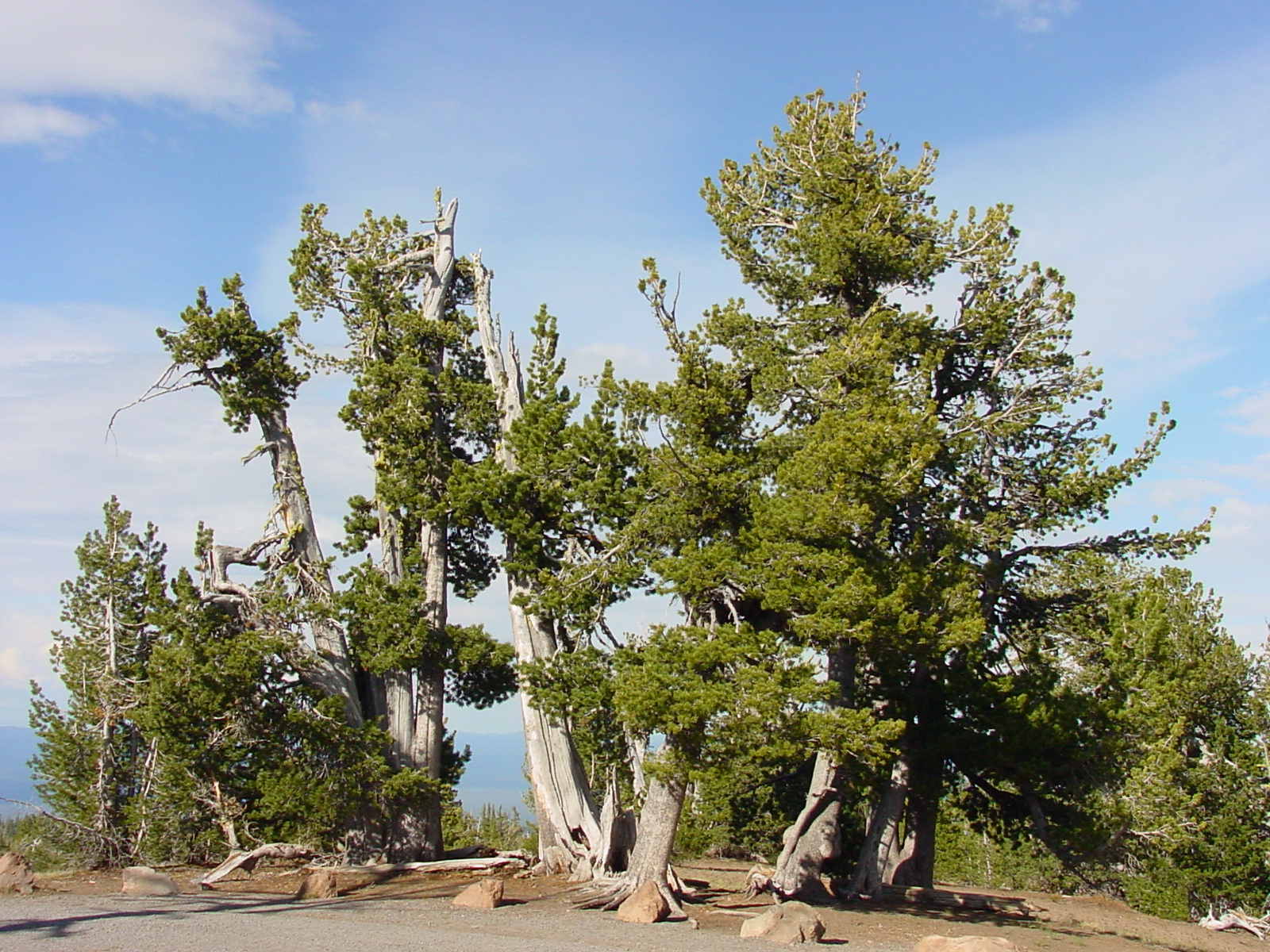
Whitebark pine trees

In the last two years, the famed Yellowstone National Park had suffered four fatal attacks by grizzly bears. According to Chris Servheen, a grizzly bear recovery coordinator for the U.S Fish and Wildlife Service, the rebounding population which is estimated to be at least 600 in the area, partially explains the rise in fatal attacks. While there has not been any finalization of removing the bears off the list, some groups are already advocating the hunting of the animals. One of them is the Wyoming Sportsmen for Fish & Wildlife, whose executive director Bob Wharff stated that the hunting of grizzly bears would "maintain the overall health of the population." Another is the National Wildlife Federation (NWF), which believes that the goals with respect to population have been met through the federal recovery plan. However, some wildlife conservation activists still insist that the bears need protection from hunters until scientists more accurately study the effect of disease-causing whitebark pine trees could have on the population.
Grizzly bear

My opinion is that the public should maintain contact with the scientists studying the whitebark pine trees, whose seeds are said to be the major food source for the grizzly bears. It is said that these trees need protection before they become extinct, and this is something I believe is crucial for not just the bears but also the entire Yellowstone ecosystem. In addition to that, I also believe that the state of Wyoming should try to identify corridors which the grizzly bears use when dispersing beyond the borders of Yellowstone National Park before proposing an open hunting season for them. Furthermore, while the grizzly bear population appears to be improving in terms of population growth, further up north in Alberta, Canada it is a completely different. There, the grizzly bear population has been fluctuating dramatically with recent deaths of five bears. One possible technique I suggest is that the U.S could reintroduce its grizzly bears to Alberta in order to help revive the population. This can also help in maintaining the health of the grizzly population in the U.S, especially in the case of "problematic" bears which are normally killed off by wildlife officials. I personally believe that U.S and Canada should join forces together, in order to help each other with respect to their local grizzly bear populations.

View article here

Saturday, June 9, 2012

MoEF to Act Against Illegal Industries Around Kaziranga National Park

A dead Indian one-horned rhinoceros

It has been recently announced that the Ministry of Environment and Forests (MoEF) has been asked by the National Green Tribunal to take action against illegal industrial units operating in the "No Development Zone" around Assam's Kaziranga National Park. However, the Tribunal also asked the ministry to acquire permission before taking any "coercive action" against three tea processing units functioning within the zone near the Numaligarh Refinery near the national park. Earlier, a bench had held back the ministry from granting any approval to stone-crushing or other industrial units in the area of the park. Now, that same bench has asked the ministry to take action against other units in the zone. The tea processing units approached the Tribunal to be made a party, and to have their testimony in a case filed by Rohit Chaudhary, an Assam-based activist who is looking for directions to halt quarrying and stone-cutting units around Kaziranga. In July 5, 1996, Mr. Chaudhary had asserted large-scale violation of a ministry notification which declared an area within a radius of fifteen kilometers from the Numaligarh Refinery near Kaziranga as No Development Zone. He also asserted unlimited mining and quarrying activities in the No Development Zone around Kaziranga and the Karbi-Anglong Elephant Reserve. The Tribunal had earlier instructed all industrial units to maintain a status quo, and on February 15th, prevented the ministry from allowing approvals to industries or renewing the licenses of existing ones functioning there. But on April 22nd, the Tribunal inquired a report from the ministry on industries operating in the park's vicinity and asked the ministry to carry out a survey. Mr. Chaudhary has inquired directions to the MoEF and the government of Assam to pinpoint stone-crushing and other industrial units functioning without approval in the No Development Zone, and to take necessary action against them. The answers to Mr. Chaudhary's inquiries under the RTI (Right to Information) Act showed that there are nineteen stone-quarrying units in the area and ten of them are within five kilometers of Kaziranga, while the remaining are situated between five and ten kilometers away from the national park.

I sure hope that the MoEF will do whatever it can, in order to prevent these industrial units from further exploiting the region near Kaziranga. I also think that part of the effort to put a stop to these units is to investigate whether they have any connection with the Mafia Raj. The reason is because this network of criminals are known to own various mining and stone quarries across India wherever there is a rich abundance of minerals. And from what is seen in the case of stone-crushing units and quarries around Kaziranga National Park without approval, that just might be the possibility. This is why it is very crucial to address the problem of industrialization operating without permission around Kaziranga, which is also a UNESCO World Heritage Site. If such destructive activities continue, then it would loose that prestige and the impact would also affect the tourist industry in the national park.

View article here

Friday, June 8, 2012

New Hope for Central Africa's Wildlife

A forest elephant calf

It has been recently reported that countries in Central Africa have signed a pioneering plan to strengthen the law enforcement, and improve the battle against poaching of elephants and other species in danger of the illegal wildlife trade. This plan was set up by ten member states forming the Central African Forest Commission (COMIFAC), as the region experienced increasing rates of wildlife crime. Wildlife ministers from each of these ten countries promised to carry out causative levels of cooperation with law enforcement agencies, such as the police, customs and the judiciary, to combat the issues. They also declared plans to hold a head of state conference next year to address the issues of wildlife loss and maintaining the biodiversity of Africa. This conference would not only bring together African leaders, but also government officials from key Asian trading partners and intergovernmental supporters such as the African Development Bank and the United Nations to look into operations for cooperation. The law enforcement action plan includes arrangements to boost up anti-poaching efforts in each of these ten countries and to allow joint-country patrols in some trans-border areas. In addition to that, customs controls are also ready to be prepared at international transit centers. The countries also plan to boost up investigations and carry out more accurate prosecutions, in order to make sure that criminals involved in the illegal wildlife trade would be prosecuted to the full extent of the law after being arrested. Such cases will also be examined for corruption, and action will be taken against those attempting to obstruct justice. The finalization of the plan came after Dr. Donald Kaberuka, president of the African Development Bank spoke about the desperate need to tackle the ongoing threat. In his own words, the increase in large seizures is "evidence of the involvement of well-organized criminal networks in illegal wildlife trade." At an event held in N'Djamena, Chad, the nation along with the Central African Republic and Cameroon signed a tripartite declaration to team up together and increase transboundary alliance to fight poaching. In addition to that, the World Wildlife Fund (WWF), along with TRAFFIC and the U.S Fish and Wildlife Service, has provided both financial and technical support toward the formulation of the plan and is offering ongoing support for utilization.
Black rhinos

I'm very proud to see what the countries in the Central African region have done, in order to help save and protect their local wildlife. The region has experienced some of the most tragic moments in recent times, including the massacre of more than 200 elephants in Cameroon's Bouba N'Djida National Park. In addition to that, the region had also lost the Western black rhinoceros to extinction. Both of these stories are a clear indication that the region has been and still is prone to poaching and the illegal wildlife trade devastating its ecosystems. This is why it was absolutely crucial for the countries forming the Central African region to collaborate together, in order to combat these ongoing threats. Among the strategies implemented include high levels of cooperation with different law enforcement agencies, and more accurate prosecutions such as investigating for corruption in such cases. I think this is a huge step for Central Africa because the region has been affected by corruption over the years, and it looks like the region is taking a stand against corruption by combating poaching and the wildlife trade through this plan. However, I also believe that Central Africa should also remain alert for any strategy the operators of the wildlife trade will use in order to keep their illicit business flowing. For example, if they cannot transport their illegal merchandise from one central African country to another, they may opt for an alternative route which could cover a nation that is not in Central Africa. This type of strategy was seen in the case of ivory tusks seized in Sri Lanka. For this reason, I also believe that Central Africa could further improve their plan by forming alliances with their neighbors in the east, west, north, and south which would make it even more difficult for the perpetrators to carry out their evil and illegal deeds. Furthermore, this forming of a plan is an important milestone for Central Africa and it very much highlights that the region's wildlife have a new hope for survival.

View article here

Wednesday, June 6, 2012

High-speed Ferries Threaten Hong Kong's Dolphins

Dolphin-watching from a ferry

It has been recently reported that a Hong Kong-based conservation group has found that an increase in high-speed ferry traffic is contributing to a dramatic decimation in the Chinese white dolphin population in the city's waters. A research by the Hong Kong Dolphin Conservation Society indicated that catamaran and jetfoil ferry traffic is removing the dolphins from their natural habitats in the mouth of the Pearl River Delta. According to the Hong Kong Marine Department, high-speed ferry traffic between Hong Kong, China, and Macau has increased by 76 percent from 1999 to 2011. The society stated stated that the numbers of dolphins has plunged dramatically in the North Lantau waters since the opening of six ferry services at the Hong Kong International Airport's Skypier in 2003. Figures show that dolphin numbers in Hong Kong's waters decreased from 158 in 2003 to 78 in 2011, with about 2,500 in the Pearl River Delta. According to Samuel Hung, the society's chairman, the dolphins would hear a high-speed ferry until it is as close as 100 meters away which gives them only 10 seconds to react. As a result, the animals were leaving the area in search of safer waters. Dr. Hung further added that there have been plans to build a third runway on a reclaimed land at the airport, which would increase the ferry traffic and put more strain on the dolphin population.
Chinese white dolphin, also called pink dolphin

This article gives a clear idea of what happens to an animal population, due to the ongoing encroachment of humans. In this case, dolphins in Hong Kong's waters are being pushed out of their natural habitats in search of safer waters as a result of ferry traffic. This is an issue that needs to be addressed to both the government and the public, and call for efforts to prevent any further depletion of dolphins in Hong Kong. This unique marine mammal was the official mascot of the Hong Kong handover ceremony in 1997. In addition to that, dolphin-watching is a favorite tourist attraction in the city. If the traffic in high-speed ferries increases, then the dolphin population would deplete to the point in which the tourist industry will be greatly affected. This is why it is crucial to address this issue, and carry out efforts to save the dolphins from wandering off into areas where they might be met with some other danger of some sort. One of the ways I would recommend is to limit the number of ferries from Hong Kong to either China or Macao, and back. Also, the number of tourist ferries heading out into the waters should be limited as well. This would help keep the remaining numbers of dolphins in Hong Kong's waters to some degree. But the best way would be to consult and maintain contact with the dolphin conservation society. That way, Hong Kong's dolphins may remain in their habitats and continue to draw tourists from around the world.

View article here