Friday, May 25, 2012

Wildlife Reserve Needed to Save the Arabian Oryx

An Arabian oryx herd

It has been recently reported that a wildlife expert suggested to have a vast international wildlife reserve established in the Rub 'Al Khali Desert, in order to save the Arabian oryx. The idea was implemented by Dr. Reza Khan, a wildlife and zoo specialist of the Dubai Municipality. He stated that the wildlife sanctuary would stretch across the Empty Quarter, covering the U.A.E, Saudi and Omani territories, allowing the antelopes a wide range of open space to wander. He further added that intensive awareness campaigns need to be issued to the Bedouin tribes living around the edges of the desert to make the project a success. The project has been accepted by Dr. Elsayed Mohammed, program manager of the Dubai office of the International Fund for Animal Welfare (IFAW). In his own words, Dr. Mohammed said that a similar approach had been successfully adopted in Africa to protect its species, including the elephant. He further added that cooperation is needed between Saudi Arabia, Oman, and the U.A.E to have an area where the oryx would cross the borders between the three nations. In addition to that, the planning would cover conservation measures which includes battling the illegal wildlife trade and poaching. The project was also supported by conservationists such as Greg Simkins of the Dubai Desert Conservation Reserve (DDCR), who stated that the ultimate goal "is to have self-sustaining free-ranging herds across the historical range."

I'm extremely proud with what Dr. Khan proposed, regarding the conservation of the Arabian oryx. Ever since these magnificent antelopes made a comeback from the brink of extinction, they have all been living on privately-owned reserves and semi-wild parts in Abu Dhabi, Dubai, and other emirates. Some of the most notable of these reserves are the Dubai Desert Conservation Reserve and Sir Bani Yas Island of Abu Dhabi. However, some of these private collections are known to suffer problems related to inbreeding due to limited gene pools. This is one reason for the establishment of a major reserve that would cover such a vast area for the oryx to thrive. The main reason, I believe, is that the antelopes need miles of open space to wander around in their ancestral homelands where they had long disappeared. The setting up of this wildlife reserve would provide them the opportunity to recolonize the lands where there ancestors once reigned supreme. I certainly hope that this proposed project will go into effect soon, and that the numbers of the oryx will be saved in the process. In addition to that, I also believe that this technique should be implemented in Africa's Sahara region in order to save the scimitar-horned oryx. These North African relatives of the Arabian oryx are still being reared in captivity, and need to be brought back to their ancestral homelands in the Sahara in order to revive their populations.

View article here

Thursday, May 24, 2012

Point Calimere's Blackbucks Under Serious Threat

Blackbuck

The Point Calimere Bird Sanctuary is known to be one of the best places for birdwatching in southern India, especially when migratory birds flock down from the Arctic. However, this avian paradise has come into spotlight for experiencing an increased salinity of water to the reduction in numbers of migratory bird species. In addition to that, the sanctuary's local blackbuck population is also under serious threat. Point Calimere is home to as many as 1,400 blackbucks, which are being threatened due to the scarcity of drinking water and reduction of grasslands. The situation turned worse when the sanctuary was badly hit by the tsunami of 2004. However, officials of the forest department had water tanks set up to provide water for the antelopes. Unfortunately, the supply of water also attracted stray cattle to the sources, leaving the blackbucks thirsty. According to a report by famed ornithologist Dr. Salim Ali, there are as many as 900 cattle (domestic, abandoned, and semi-feral) which graze in Point Calimere's open areas. It is said that the forest department's effort to ban the grazing of cattle by disallowing the issue of permits was met with stiff local resistance. Furthermore, Point Calimere is also under threat from pumping of seawater to the area by a private salt manufacturer to produce industrial salt.
Stray cattle in Point Calimere

I have a deep feeling that Point Calimere Bird Sanctuary is in a great need of help, regarding its wildlife. The sanctuary has been badly hit by increased water salinity, which is keeping away birds of all sorts. In addition to that, it is also being affected the salt industry and non-native invasion by stray cattle and horses. These issues are a clear indication that Point Calimere needs to be given a great deal of attention. As these threats continue to impact the wildlife, the sanctuary will remain unvisited thus affecting the tourist industry. Last year from December to January, the number of birds was very low. Also, the road connectivity was poor making the sanctuary not worth visiting. For this reason, it is extremely crucial to help Point Calimere regarding these issues. The locals need to be encouraged not to graze the cattle and horses in the sanctuary's areas, and move to better land outside its boundaries. Also, the issue of the impact from the salt industry needs to be handled in some way. Point Calimere was renowned for attracting migratory birds from far north, and is on the verge of becoming a wasteland. Therefore, decisive action needs to be taken by any means necessary.

Feral horses in Point Calimere
View article here

Kenya Launches Global Campaign to Improve Wildlife Bill

Lion couple

It has been recently announced that Kenyan conservationists have launched a global campaign to urge the government to establish an emergency bill of the penalty section in the nation's Wildlife Bill to reduce the illegal trade of ivory. The group, known as Concerned Conservationists Kenya, is concerned over the continuous loss of keystone species such as the rhinoceros, the elephant, and the lion through the illegal trade believed to be conducted by criminal syndicates. The group is already filling an online petition via email, Facebook, and Twitter to get 1,000 signatures in order to petition Kenyan President H.E Mwai Kibaki to take action to guarantee that stiff penalties are enforced. The petition is being documented in support Minister of Forestry and Wildlife Dr. Noah Wekesa's request to President Kibaki. The petition is currently available on the Avaaz organization website, a global campaign network that has just registered 914 signers from around the world for the petition. The network's name, which means "voice" or "song" in many languages, has membership from different parts of the world and promises the values and views of the world's people create global decision making.
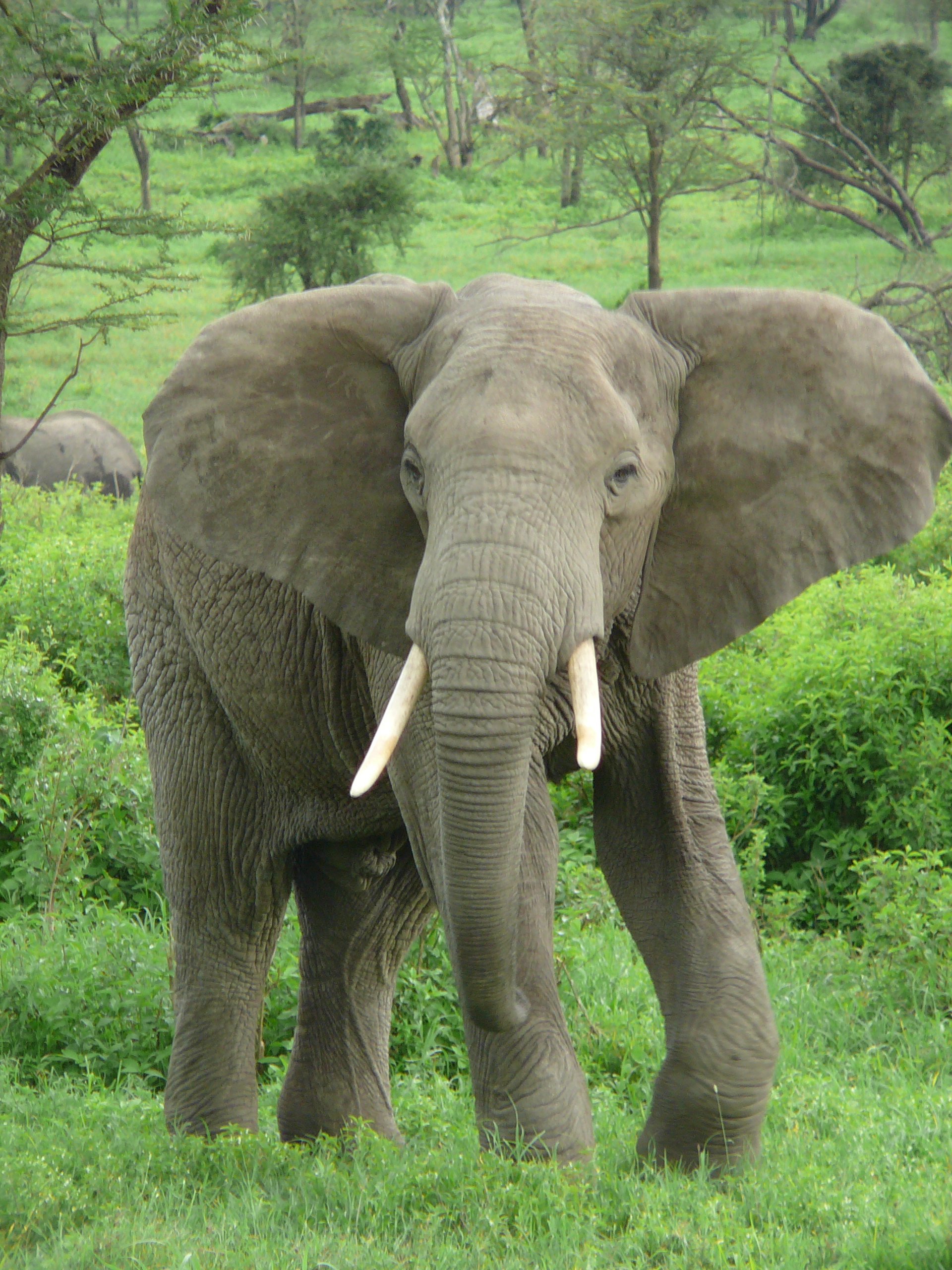
African bush elephant

In addition to that, it is also said that the petition was posted by Kisite Mpunguti Marine Park's warden Mark Kinyua to the Kenya Mammal Marine Network website. It stated that President Kibaki should address the issue immediately when there is time; not least that when Kenya will attend a CITES meeting in Thailand next March. It warned that failure to establish such penalties would not only result in Kenya loosing its greatest advantages, but also its credibility in the international conservation arena. The report also expressed concerns about Kenya being regarded as a failure in conservation efforts without setting up any legal preventive measures that will place the penalties in the bill if it becomes a law. It further added that the nation should not wait for international condemnation or Far Eastern consumers to change. Instead, the report called for mobilization of all available resources and conducting a nationwide joint approach that will prevent any illegal organization or individuals from operating the illegal trade.
A black rhinoceros in Masai Mara National Park

This article is not only a representation about an taking decisive action against poaching and the illegal wildlife trade, but also a reminder of how it is crucial to combat these ongoing threats that are exploiting our planet of its wildlife. I feel that this article is a wake-up call for the world to take a stand against poaching and the wildlife trade, and this can be done with a signature on the petition provided by the organization called Concerned Conservationists Kenya. The petition also clearly states of what would become of Kenya if it does not implement changes to its Wildlife Bill, which are to impose stricter penalties against such wildlife-related crimes. Without these changes, Kenya would not only loose its advantages but also its credibility in the field of international conservation. This, in turn, would heavily impact the nation's tourist industry in a way that majority of the key attractions would be lost to poaching. For this reason, it is absolutely necessary that Kenya must make an example by taking a tough stand against poaching and the wildlife trade. Furthermore, this article in my opinion is also an inspiration to those nations that are also deeply affected by poaching and the wildlife trade. A most recent example is the Democratic Republic of the Congo, which has lost 5,000 elephants to poachers. The wildlife of our world is in a need of help, and let us pledge to do what we can to end this ongoing onslaught that is wiping our planet dry of its natural treasures.

View article here

Tuesday, May 22, 2012

Maharashtra Orders to Have Poachers Shot on Sight

A tiger on a stroll

The Indian state of Maharashtra has been shocked by an alarming increase of poaching incidents. The rise in such incidents have become so stupendous, that the government has proclaimed that the forest staff would be privileged to shoot poachers on sight. At the same time, the National Tiger Conservation Authority (NTCA) ordered all tiger range states to treat every death of a tiger or a leopard as a poaching case unless otherwise proven beyond doubt. The idea was implemented by Maharashtra Forest Minister Patangrao Kadam, who had given orders to provide the forest staff with firearms. The idea was that the staff can only make use of the arms if they either caught or spotted poachers in the act or smuggling cross-border. In addition to that, he also decided during a meeting on Tuesday to protect the staff from criminal proceedings. In his own words, Minister Kadam stated that the staff should first fire a warning shot ordering the poachers to surrender. If that warning is ignored, only then would they shoot the perpetrators. He further added that the staff would be protected from prosecution against their action. However, he also made it clear that measures should be taken to make sure that too much force such as outnumbering and cornering would not be used against the poachers.

This article is a clear example of what happens in a particular region or a state when the threat of poaching reaches to a point that the authorities have no choice but to take drastic action. In this case, the response to a poaching activity is total annihilation; period. Maharashtra is not the only place to have taken this step in combating poaching. It is also a similar story in some parts of Africa, particularly Uganda. This was especially seen in an Animal Planet program called The Jeff Corwin Experience in an episode shot in Uganda where the host met with a team of forest guards whose leader told him that they "terminate poachers." This truly gives an idea about how poaching and other wildlife-related crimes are taken seriously in a sense that the authorities will not hesitate to shoot to kill. And this is seen in the case of Maharashtra; however, Minister Kadam also made sure that the forest staff would use good judgment when dealing with poachers. This is very much similar like in the law enforcement when police officers first order a would-be criminal(s) to surrender and only fire at them if they show hesitation. It is an effective strategy that prevents both law enforcement officers and Maharashtra's forest staff from landing into trouble with the law. I'm very much proud of what Minister Kadam planned when it came to tackling Maharashtra's poaching problem, and I also think that other states in India and places outside the country would benefit if they applied the similar techniques in battling their own wildlife-related crimes.

View article here

WWF- Vietnam's "Unicorn" at Risk of Extinction

Saola in its native habitat

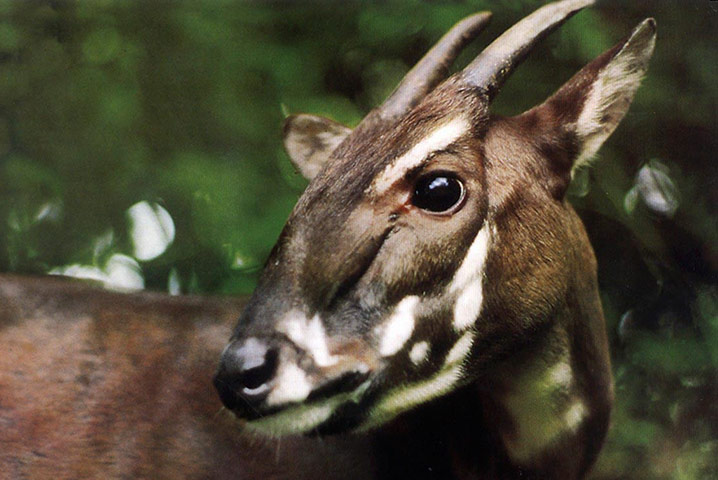
It's been twenty years since the mysterious saola was first discovered in the jungles of the Annamite Range in Vietnam and Laos. But now, the World Wildlife Fund (WWF) has warned that the threat of poaching in both the countries may be driving this strange and unique creature to extinction. The saola, whose name means "spindle-horned" in Tai and Lao languages, came into spotlight in 1992 when surveyors from the Vietnamese Ministry of Forestry and the WWF found skulls of this elusive species in the local villages. DNA tests have shown that the creature is related to cattle, even though its spiral horns give it resemblance to either a wild goat or an antelope. The result of this discovery gave the animal nicknames such as the Vu Quang ox and the Asian unicorn. It is estimated that the current population of the saola varies from ten to several hundred animals, but a meeting of the International Union for Conservation of Nature (IUCN) in 2009 concluded that the population has plunged drastically.
A villager with a saola skull in Vietnam's Bolikhamxay Province.

My feeling about this news is that it is a race against time to save this unique creature from the brink of extinction. The proof shown in this article is stupendous. According to Asian species expert Barney Long of the WWF, interviews with the local communities have confirmed that sightings of the saola have reduced over the past twenty years. In addition to that, poaching has reached an epidemic peak in the Annamite mountains and even though this creature is not an intended target for poachers, it is nonetheless captured in their snare traps. In spite of a recent closure of 200 hunting camps and a removal of 12,500 snares, poaching is still running rampant in the region. Mr. Long further added that in Vietnam, poaching is a by-product of its economic development. The rise of middle-class has spurred the demand for rare and endangered species in the local cuisine. For this reason, it is crucial to help save and protect Southeast Asia's biodiversity no matter what it takes. Vietnam had earlier lost its rhinoceros to extinction, but animals like the saola are one of few that are endemic exclusively to the nation and the surrounding region. Without these animals, it would be as if part of Southeast Asia's biodiversity would be lost too.

Close up of the saola

View article here

Saturday, May 19, 2012

Flooding of Lakes May Disrupt Tibetan Antelope Migration

Tibetan antelope

The Tibetan antelope has long been threatened by poaching and habitat loss over the years, but now there is another threat that could affect its way of life. A recent report has shown that lakes in the Qinghai-Tibet Plateau are overflowing with flood water that may disrupt the antelopes' approaching migration and birthing season. One of these lakes is the Khuse Lake in Hoh Xil Nature Preserve in China's Qinghai Province, which is home to about 70,000 Tibetan antelopes. According to Xiao Penghu, deputy chief of Hoh Xil's administration, the lake has swelled with flood water since last September and has overflown into other lakes such as the Haiding Nor. In addition to the antelopes, the flooding of lakes has also engulfed routes of the nature preserve's mountain patrollers. One patroller named Karma Yarphel stated that a river on his route to Khuse Lake had swelled from 80 meters to about 600 meters wide. The administration is keeping a close watch on the lakes, as flood waters have also swallowed their migration routes. Every June, pregnant Tibetan antelopes migrate to the Hoh Xil Nature Preserve to give birth and then leave with their fawns in September.

I feel that this problem should be looked at closely, and should also involve public support in order to help save the nature preserve. The cause of flooding has confused authorities, and Mr. Penghu noted that meteorological records from the local weather bureau did not show any significant rise in rainwater since last fall. He further explained that melting glaciers on the plateau could be the issue, but even glacial water cannot explain such a catastrophe. However, researchers have found that glaciers on the Qinghai-Tibet Plateau are melting faster due to the impact of global warming. A data from China's Meteorological Administration has shown that about 82 percent of glacial surfaces on the plateau have retreated, and that the area has decreased by 4.5 percent in the past 20 years. Mr. Penghu also stated that setting up of dynamic surveillance is required, along with conducting geographical, hydrological, and meteorological researches in order to find out what causes the floods and their impact on the ecology. I also feel that this article gives a clear representation about the impact of global warming in other places around the world where there is an abundance of glaciers. And for this reason, the world has to do whatever it can to decrease the amount of greenhouse gas emissions. We must not look at one particular place, which is the Arctic region. We must think globally.

View article here

Friday, May 18, 2012

Lion Cub For Sale Ignites Bidding Frenzy on Twitter

This photo is one of many of a lion cub which resulted in a bidding frenzy on Twitter

It has recently been reported that a six-month-old lion cub was put up for sale on Twitter, which sparked a bidding frenzy where more than hundred interested buyers offered at least 30,000 dirham for the animal. This lion cub was purchased by a pet store owner's friend at an animal market in Sharjah. Photos posted on the Twitter account for PetMateUAE, an online pet store based in Dubai "selling all types of pets", showed the young cub wearing a collar and a leash. According to the owner and operator of the pet store, the young cub did not belong to him and he was not trying to sell it. Instead, he was trying to find a suitable home for it. In his tweets, the owner begged for help in finding a private farm for the animal and further added that it would only go to a caretaker with proper licenses and permits. As of now, the cub is custody of an official from the Ministry of Environment and Water which is responsible for the welfare of animals in the U.A.E.

I'm proud to see what this pet store owner did, in order to help save the life of this lion cub. Initially he attempted find a sanctuary for the youngster by posting tweets which appeared to be more like he was going to sell it. However, he corrected that mistake by deleting those tweets and replacing them with the ones in which he explicitly pleaded for help in finding a home with a caretaker who has proper licenses and permits. This way, the owner was able to find an ideal candidate who happened to be an official for the emirates' Ministry of Environment and Water. While this incident resulted in what may be a happy ending for this lion cub, it is not the same with other victims of the exotic pet trade in the Middle East. Dr. Elsayed Mohammed, the Middle East director for the International Fund for Animal Welfare (IFAW), stated that he has seen on more than a hundred cases of exotic pets available in the U.A.E through internet. It is said that the fund is putting together a report about online trading of endangered species, and will present it to the Ministry of Environment and Water after two weeks of scouring websites.

According to this article, the exotic pet trade is not illegal in the U.A.E and is regulated by the Convention on International Trade of Endangered Species (CITES). And according to the convention, African lions are listed under Appendix II which means their trade in controlled and not forbidden. This also means that any imported lion would require several permits, including an export permit from its country of origin and an approval by the ministry. Dr. Mohammed, who was a member of the emirates' national CITES team, stated that the ministry is not providing proper permits to private individuals for dangerous animals. This makes buying or selling of such animals illegal in the country. I think that despite this action, it does not stop the exotic pet trade from spilling in the cities and towns of the U.A.E. For this reason, organizations like the Emirates Wildlife Society and the Environment Agency- Abu Dhabi are working together to trace the origins of animals like this lion cub in order to know where such animals are coming from and whether they are being brought in illegally. In addition to that, wildlife experts stated that anyone having information on any suspicious activity regarding wildlife trafficking should contact the ministry's CITES unit. I believe that enlisting the public's involvement in helping combat the exotic pet trade in U.A.E is crucial, in order help save lives of both people and animals. With scores so-called "pets" showing up in towns and cities, it is an accident waiting to happen at any given moment.

View article here