Sunday, March 20, 2011

Local Village Communities to Help Protect Great Indian Bustards

Great Indian Bustards

It has been recently reported that village communities will be involved in the process of making policies in a conservation plan to save great Indian bustards. On the 21st of March, the forest department of Pune and the Great Indian Bustard Foundation will hold meetings with local villagers. They will also hold workshops with the forest staff on the conservation of these magnificent birds in the Great Indian Bustard Sanctuary located in Maharashtra's Solapur District. One of the key figures in this conservation plan is Pramod Patil, director of the Great Indian Bustard Foundation, who is preparing a state emergency plan draft with the forest department. This draft consists of changes and additions, which will be made after feedback from the villagers and forest guards. It will be reviewed by the Bombay Natural History Society, and sent to the Ministry of Environment and Forests for appeal. According to Mr. Patil, the implementation will take place at state level. He also added that local participation is often neglected. That is, the villagers fear that they will have to be relocated. However, Mr. Patil assured that he and others will dismiss such rumors, saying that this has to be a community-based conservation. And during the meetings held on March 21st, he and his colleagues will present their plans, get feedback from the locals, and evaluate their role towards conservation.

Mr. Patil further added that the forest department will have to look at the future trend in farming, since the birds are attracted to crops like Bengal gram, groundnut, wheat, and millet. He even pointed out that locals have lodged complaints that a development inside the sanctuary is being obstructed because of its protected area. The reason is because many locals are not aware of these legal issues, and should be made aware of future trends in conservation and their impact, laws and legislation, among others. Furthermore, on the March 22nd, a workshop will be held for the forest department in which the staff will learn about the bustards' ecological importance, how to identify them, and conservation issues. There will also be a discussion regarding the department's various constraints, such as its funding. Mr. Patil also said that the department's staff will discuss about the emergency plan. The forest guards will give inputs on the plan and this way, it will be changed and additions will be made accordingly.

I'm very proud and happy to see what Mr. Patil has stated regarding the protection and conservation of the great Indian bustards. Which is by involving participation by the local communities living alongside these critically endangered birds. What amazes me about this plan is that it does not include relocation of various communities, since the idea would spark an uproar among villagers. Instead, it is going to be a community-based conservation where everyone is going to play his/her part in protecting the birds. In places like Ranthambore during the 1970s and '80s, villagers were encouraged to relocate elsewhere in order to make space for the wildlife. This is seen from images of old torn-down hamlets in the jungles' interior. But nowadays, things are different, particularly in the Great Indian Bustard Sanctuary. Rather than forcing the villagers to move, the forest staff and the locals will be working together and share ideas to help protect the bustards. In my opinion, this is the best way to help save India's wildlife: through conservation based on community. I believe that if other Indian national parks and wildlife sanctuaries follow this example, then the wildlife of India will flourish in peace and harmony.

View article here

Thursday, March 17, 2011

Gray Wolf Numbers on the Verge of Decline in Northern Rocky Mountains

Northern Rocky Mountains Wolf

A recent government report has shown that the gray wolf population in the northern Rocky Mountains has dwindled in 2010, largely due to aerial shooting and federal trappings. These icons of the American West have been the subject of debate whether to strip them off their endangered species status, or not. One side, which primarily consists of wildlife and conservation groups, argue that the animals are endangered and will definitely be pushed to the brink of extinction without serious protection. The other side, which is made up of livestock agents, say that the animals have been responsible for multiple livestock killings and giving human hunters a hard time by preying on local elk populations. Amidst this ongoing debate, wolf numbers are decimating.

According to Michael Robinson of the Center for Biological Diversity (CBD), some members of the Congress are serious in stripping away the wolves of their federal protections, despite the decline in numbers. Federal records have shown that the wolf populations decreased from 1,733 in 2009 to 1,651 animals in 2010. The populations range through the northern Rockies, covering states such as Idaho, Montana, Oregon, Washington, and Wyoming. During the 2009-2010 period, Idaho had witnessed the largest downfall from 870 to 705 wolves. This has made it a major contributor to the regional decline. Other states, however, had seen small population growths. Wyoming's wolf population increased from 320 to 343 animals, while Montana's population grew from 524 to 566. Oregon's and Washington's population rose from 19 to 37 wolves, including three breeding pairs.

America's wolves were removed from the endangered species list in 2009, but a federal court order backed by conservation groups, including the CBD, placed them back on the list in 2010. However, a new law introduced in the 112th Congress stated that it would remove the animals as endangered species and allowing a shoot-on-sight policy in the northern Rockies. It has been attached as a rider to spending bill proposals. The CBD stated that the House of Representatives had passed its version of the spending bill last month. Last week, a coalition of 48 conservation groups sent a letter to Senator Barbara Boxer requesting her to exercise her power as the chairwoman of the Senate Committee on Environment and Public Works for stopping the legislature. In the letter, the groups noted saying that management decisions should be based on science.

I'm very shocked to see what has happened to wolf numbers throughout the northern Rockies these past couple years. With this ongoing debate on whether to remove them as endangered species still going, these animals have been decimated through aerial shooting and other forms of hunting. But what is even worse is that there are politicians who are still intent on removing the wolves as endangered species even though their numbers are already in decline. According to this report, Idaho is largely responsible for the regional downfall of the nation's wolf populations. And although there are some states showing growths in their local populations, it is not always a good news for conservationists. That is, conservationists would fear that killing of the animals regarding livestock predation will further diminish the populations.

I personally agree with all the conservation groups, who feel strongly about the wolves' future. That is, decisions on wolf management should be science-based and not based on politics. Just because local population rises to as many as 1,733 animals does not mean that there should be an immediate decision to start killing them. I sure hope that Senator Boxer will exercise whatever power she can, in order to prevent this bill of permanently removing wolves as endangered species from going into effect. These animals are the top predator in America's wild and rugged lands, which means without them, the wildlife would not be in perfect. I believe that one way to prevent the wolves from further reducing the region's livestock numbers would be to employ livestock guardian dogs. This method was suggested by the Cheetah Conservation Fund, who provided the local Namibian farmers Anatolian Shepherd and Kangal Dogs to protect their animals from cheetahs. Similarly, it would be wise if ranchers and farm owners living in the Rocky Mountains region should use this strategy rather go about killing wolves on sight. Without wolves, North America would never be the same.

View article here        

Poaching Takes Toll on Migratory Birds in Hyderabad's Outskirts

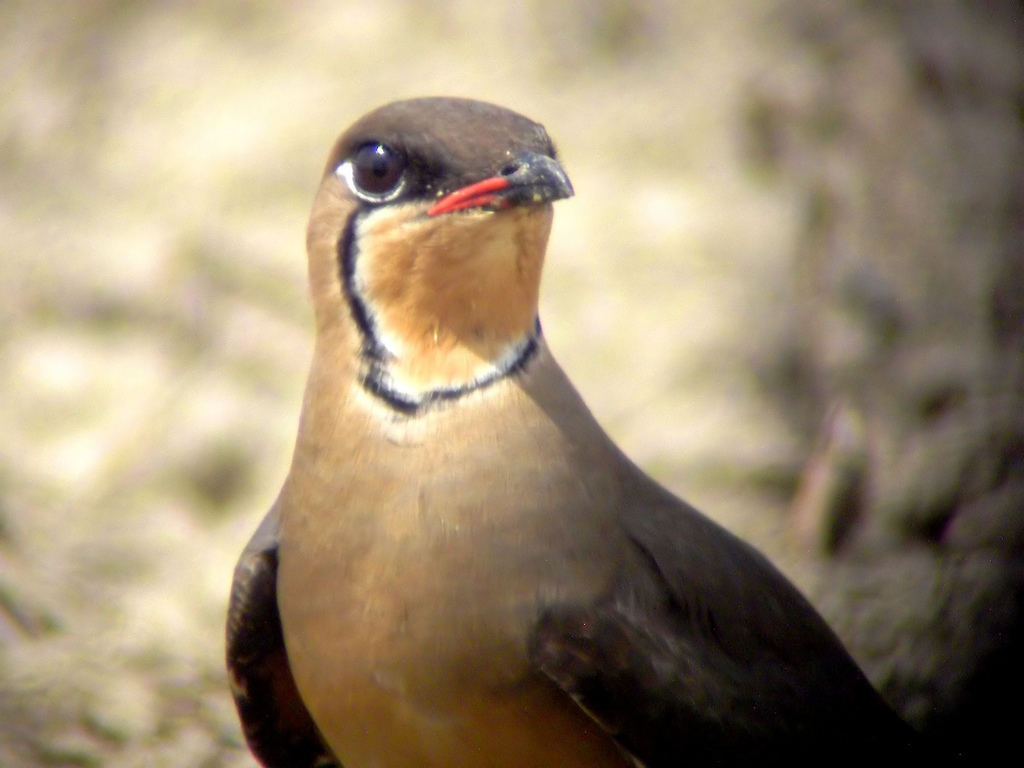
An oriental pratincole

Recently, it was reported that more than a dozen migratory birds fell prey to poachers in the outskirts of Hyderabad. The victims were trapped in a thin, vertical net set up at the Patancheru Lake. Wildlife experts suspect that that it was the work of local residents. The victims, pointed out by them, belonged to a wide range of species such as barn swallows, red-wattled lapwings, bronze-winged jacanas, and oriental pratincoles. According to Tom Hash, a birdwatcher and scientist for ICRISAT, it was the first time a matter like this was recorded near the city. He further added that the net had trapped at least a dozen birds. This incident was immediately reported to the forest department. But even more shocking was that the officials were not aware of any such illegal activities. M. Raja Ramana Reddy, a forest range officer who is in charge of the anti-poaching squad, stated that only partridges and quails are threatened by poachers. The authorities claim that the trapping of waterbirds around Patancheru Lake was the first incident, but wildlife experts say the incident is nothing new. Trapping of waterbirds has been a common occurrence in Hyderabad's lakes, particularly during the migration season. The birds are caught by locals for food, which they either cook at home or sell to customers along the city's dhabas. Members of the Birdwatchers Society of Andhra Pradesh say that Hyderabad has become a thriving market for selling birds, many of which are sold for commercial purposes and consumed by poor households for survival.

I'm very shocked and saddened that many migratory birds flocking to Hyderabad's lakes are being trapped and sold for commercial purposes. But what really shocks me is that the forest department was unaware of these incidents. This is a perfect example of what happens to wildlife when authorities are not paying attention to dangers of any sort being imposed by humans. I personally feel that the forest department should take serious action against these incidents, and target those individuals who do the dirty work of trapping these birds and eventually their employers who oversee the illicit business spilling on Hyderabad's streets. However, I'm also deeply saddened by the way people living in poor households are surviving by relying on the birds as a food source. I feel that a great deal of action should be taken in helping these people. That is, to provide them with better alternatives in order to give up this lifestyle. And also to educate them about the ecological importance of the birds.

View article here

Sunday, March 13, 2011

Rise in Pakistan's Snow Leopard Population

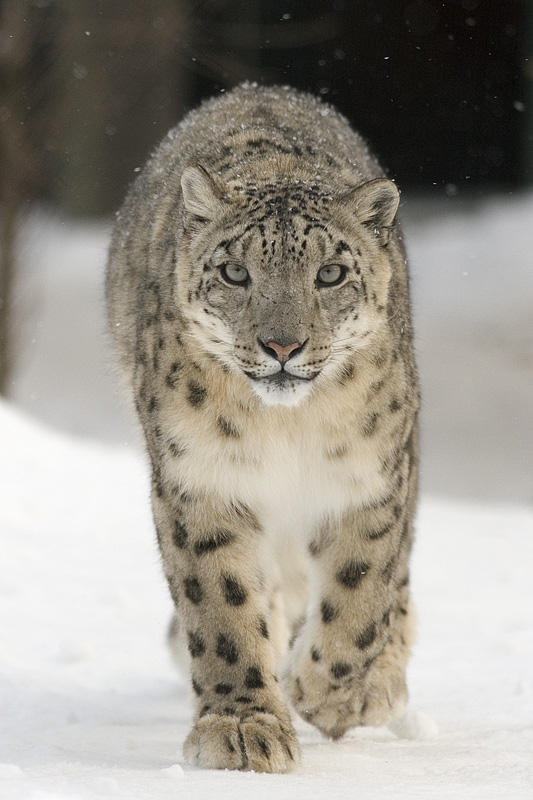
Snow leopard

Recently, Pakistan has witnessed a rise in its native snow leopard population from the town of Bunji after a series of initiatives taken couple years ago. Although no radio collar study was carried out due to lack of resources, eleven villagers claimed that they had seen the animals at a safe distance. According to accounts by wildlife experts, the area's snow leopard population has increased up to fifty to sixty animals compared to nearly thirty some years back. Initially, experts stated that the decrease in snow leopard population was a result of decline in the local markhor population. This wild relative of a goat is a favorite prey of the snow leopard, and Pakistan's national animal. And due to decrease in its population, the leopards began to find it hard to look for food. After interacting with the locals, experts revealed that they have begun monitoring the mountainous areas to keep a sharp lookout for poachers involved in killing of snow leopards and their prey. According to Ashfaqur Rehman, a banker in Bunji, two poachers were caught by the village watchmen and handed over to the police. He further added that the villagers will increase their monitoring mechanism in coming months, since snow leopard cubs are born between April and June. In addition to that, Islamabad-based tour operator Najeeb Ahmad Khan stated that he was quite optimistic and hoped to start his safari expedition again after it was shelved due to the decline in leopard and markhor populations in the past.

I'm extremely happy and proud to see what the local people living in Pakistan's northern mountainous areas have been doing regarding the local snow leopard populations. They have been collaborating with the authorities by keeping vigil for any poachers, and handing them over to law enforcement after catching them. It is amazing to see how a community that lives alongside a mysterious hunter of the high snows can actually help it, rather than kill it for fearing that it would attempt to steal the livestock. I feel that the work done by the people of Bunji are a perfect example of how regular people can help save and protect their wild neighbors. Snow leopards are also native up further north in Central Asia, and east into the Himalaya Mountains. I personally think that if locals living in those places follow the example of Pakistan's people, then the snow leopard population in the world would be sure to increase.

View article here 

Friday, March 11, 2011

Montana and Federal Officials Negotiating Buffer Zones for Yellowstone Bison

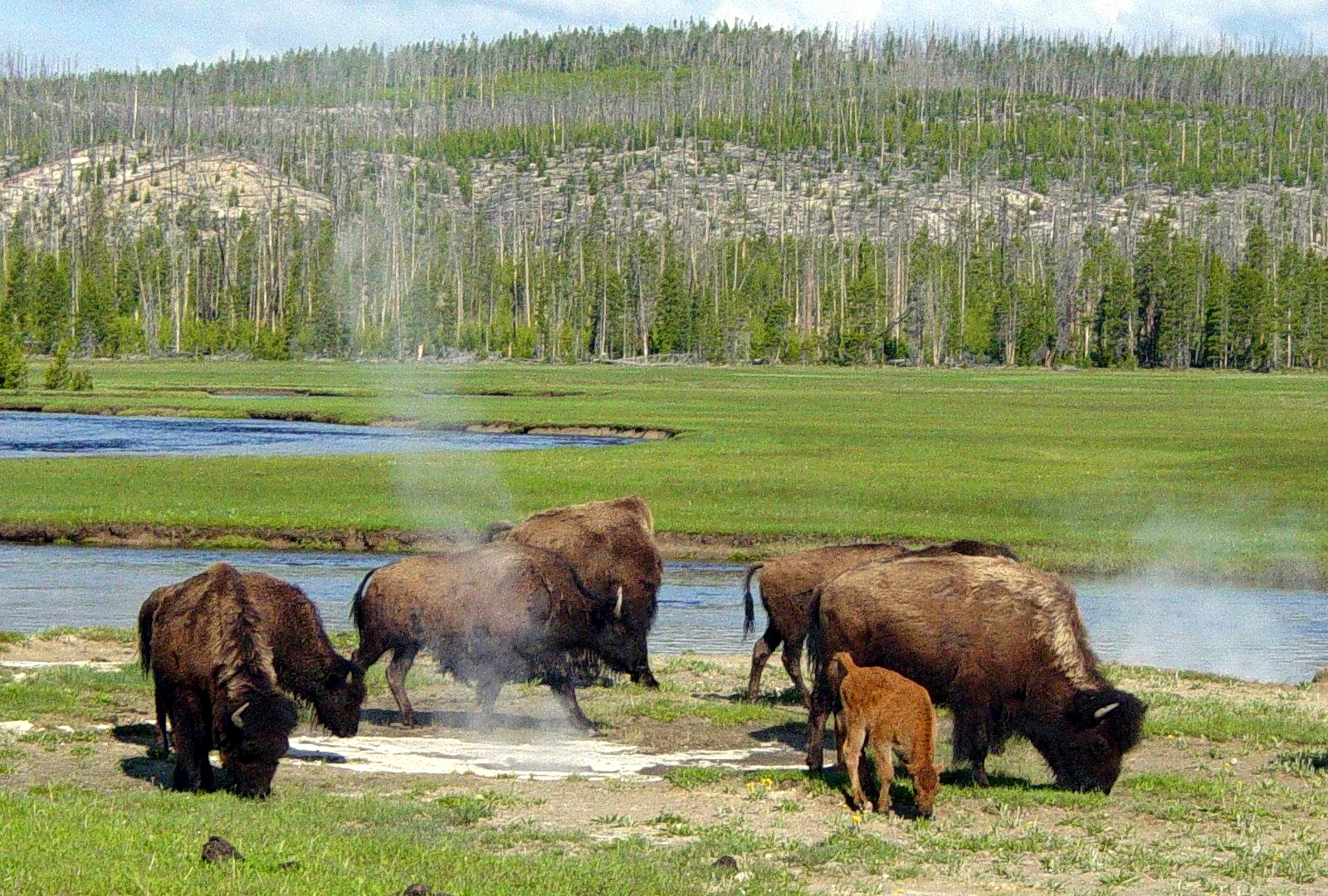
Bison family near a hot spring in Yellowstone National Park

The Yellowstone National Park is one of the best wild places to look for some of America's most extraordinary wildlife. One of the prime attractions there is the American bison. This majestic creature, nicknamed "buffalo" by local people, has been the icon of the American West for generations. However, it was severely slaughtered at a mass scale during the 19th century by early European settlers. With less numbers of these wild relatives of cattle scattered across the western U.S, desperate measures were taken in order to revive their populations. This included establishing various national parks, and Yellowstone was one of them. Since its establishment in 1876, Yellowstone has become a haven for wild bison to roam free without the fear of being further butchered. And as a result, its population grew steadily. But in recent times, there had been numerous reports of these shaggy beasts migrating north of Yellowstone each winter in search of drier pastures for fresh food. This behavior brought them into close contact with cattle ranchers, who fear the animals could infect their livestock with brucellosis, a disease which causes a cow to abort its fetus. However, this is all about to change as Montana and federal officials are in talks of proposing to open a large area consisting of buffer zones north of Yellowstone for the bison to occupy during winter months. According to Chris Mackay, Executive Director for Montana Department of Livestock, the details of the plan could be planned out as soon as next week. This plan has been promoted by conservation group and wildlife agencies for years, but refused by ranchers and livestock groups--until now.

Montana Governor Brian Schweitzer is also in favor of the plan, knowing that it would be a better alternative after ordering a 90-day ban on slaughtering the animals that migrate beyond the national park's boundaries. Yellowstone has even promised to release some bison that have tested negative for brucellosis this spring. As of now, no decisions have been made for those that were tested positive. According to Governor Schweitzer and other officials, the north side buffer stretches roughly 13 miles north of Yellowstone, consisting of the Gardiner Basin and ending at the Yankee Jim Canyon along the Yellowstone River. Mr. Mackay, however, stated that the place would be used to accommodate additional animals that migrate. He further added that fences and other barriers will be erected at the canyon's mouth to prevent the animals from entering Paradise Valley, which has several cattle ranches. The second buffer zone suggested by Governor Schweitzer was in the Madison River Valley, stretching twenty miles west of Yellowstone to Quake Lake. Unfortunately, the area was not included in the discussions.

I'm very happy to see what state and federal officials are planning, regarding Yellowstone's bison. For the past twenty years, these powerful creatures were seen migrating outside the national park and into Montana. Many ended up being shot and slaughtered by livestock agents, and some were rounded up back into the park. But now, there appears to be a new and safer alternative to tackle this problem. The first effort in carving out a new habitat for the bison ended in failure. 25 animals were brought to a 2500-acre patch Gallatin National Forest. But within weeks, they left the forest before government officials returned them back to Yellowstone. However, this new plan will cover an area roughly 25,000 acres, according to Mark Pearson of the Greater Yellowstone Coalition. This could mean that bison will not end up wondering into unknown pieces of land which could be inhabited by humans. This article tells me that all the people, who are taking the initiative in providing a better solution for both ranchers and bison, are studying the animals' behavior closely and keeping track of their migratory routes as they search for fresh pastures to graze. I'm also very happy to see what Yellowstone's Superintendent Daniel Wenk recently stated during a meeting in the capital city of Helena. Which was to include parts of the national park after Governor Schweitzer proclaimed to allow hunting to keep the bison population in check. It was a very bold move, since it is said that many of Yellowstone's bison are genetically pure. However, I personally feel that the bison numbers can be kept in balance with wolves in place. Elsewhere in the nation, wolves have been receiving a bad press for livestock predation and their have been several attempts to de-list them as endangered species. I think one possible solution would be to bring the wolves in this area where there are bison. That way, the population of these gigantic creatures will be in balance and there would not be any livestock predation.

View article here                         

Thursday, March 10, 2011

Report- Nagpur and Raipur are Major Centers of India's Illegal Owl Trade

A brown fish-owl of India

India has always been a home to the tiger and other incredible wildlife for generations. Unfortunately, many of these animals have been targets for poaching and the illegal wildlife trade for decades. Usually when it comes to investigating these horrendous crimes, the victims which top list the list include tigers and other endangered species. However, a recent report submitted by Traffic has shown that owls have now become victims. During this study, a total of twelve owls were recorded. These included three live specimens seen in Mominpura and nine in Bastar district, Chhattisgarh. According to anti-poaching squad officials, Mominpura is a big hub of India's illegal bird trade. In addition to owls, partridges, quails, and parrots are also being sold on Mominpura's streets. Yet, the squad officials have never launched a single raid.

The study further revealed that the domestic trade of owls is highly lucrative and several tribes are making a living by selling them. Director of Wildlife Protection Society of India (WPSI) Nitin Desai stated that the birds are being collected in the local Satpura forests, and big cities like Nagpur and Raipur have become major centers for the illicit activities. He further added that the owls include the famous great-horned owl of the Americas and the native brown fish-owl. Officials say that these birds fetch high prices between 80,000 rupees and three lakh rupees, and are valued by local mantriks and people involved in black magic. The study also shows that this illegal, yet lucrative business is sprouting all over India in states like Andhra Pradesh, Bihar, Chhatisgarh, Gujarat, Madhya Pradesh, Maharashtra, Uttar Pradesh, and West Bengal.

I'm extremely shocked in knowing how the owl population in India has been fluctuating as a result of this illicit business. The report issued by Traffic also included information from a nationwide study of India's illegal bird trade between 1992 and 2000. This gives an idea that the trade has been going on for a while now in the nation. In addition to that, there was also information gathered between 2001 and 2008, which showed that there are as many as 300 markets in India specializing in selling wild birds, including owls. These birds are essential to our motherland's ecosystems, as they feed on small animals such as rats and mice which are destructive to farmers' crops. Without these birds, the rodent population would keep growing steadily which would make lives miserable for farmers. But what really upsets me about this news getting to know that there is hardly any conservation program to save them. I personally feel that India should focus not just on few particular creature(s) like tigers, but rather on the wildlife as a whole. This includes every wild creature- small and large- that is native to the subcontinent. In addition to that, India should also establish rehabilitation centers for rescued animals and enforce a great deal of training for enforcement officials in order to battle various illegal activities such as poaching and the illegal wildlife trade. Furthermore, I also feel that the local tribes involved in these illicit activities should be convinced to give up this way of making a living and rather collaborate with authorities in protecting the local wildlife.

View article here               

Thursday, March 3, 2011

India's Veteran Tiger Expert Fateh Singh Rathore Dead at 73

Fateh Singh Rathore

The Ranthambore National Park is one of the prime hotspots to look for wild tigers and other spectacular wildlife in India. It is also a place which once had a rich history of human occupation dating back to the 11th century. This is seen by the abundance of various ruins dotting the sanctuary. The largest and dominating of these ruins is Ranthambore Fort, which overlooks the park at 700 feet. However, like many of India's national parks and wildlife sanctuaries, Ranthambore has been a place of illegal poaching. Thankfully, in the midst of all the violence and bloodshed, there stood a figure which will forever be remembered as the face of India's wildlife conservation: Fateh Singh Rathore.

Since 1960 when he first joined the Indian Forest Service, Mr. Rathore worked as Ranthambore's Field Director in which he was part of the nation's first Project Tiger team. Fondly acknowledged as the "tiger guru", he became known for his knowledge of the big cat and ability to predict its whereabouts. For nearly fifty years, Mr. Rathore had been working tirelessly to save India's tigers. During his career span, he was granted two awards: First was in 1983, in which he received the International Valor Award for bravery in conservation. He was recently awarded the World Wildlife Fund's Lifetime Achievement Award in Jaipur last year. Sadly, the "Tiger Man" of India had succumbed to cancer and passed away on March 1st. He was 73 years old. He is survived by his son and two daughters.

I'm extremely saddened by the loss of one of the most dedicated individuals in India's battle to save the tiger. As a child, I had looked up to Mr. Rathore as an inspiration to why it is important to protect our motherland's precious and fragile nature from being mercilessly exploited. He has been always in the front-lines to saving India's wild tigers and the wildlife. But now, with his passing, it feels as if part of Ranthambore National Park is gone, too. However, I feel that even though the nation has lost one of its key figures in wildlife conservation, it should not stop experts and conservationists from doing what they do best. There is still a war going on out there in India's wild places, and should be fought valiantly in order to save the wildlife. Backing down will only result in the villains (poachers) taking advantage, and all of India's wildlife would be lost forever. This is why, in order to honor the life of Mr. Rathore, let us work side-by-side with our glorious nation's dedicated experts and conservationists to bring the threat of poaching to a permanent halt.

View article here