Friday, October 15, 2010

Federal Authorities Investigate Killings of Red Wolves in North Carolina

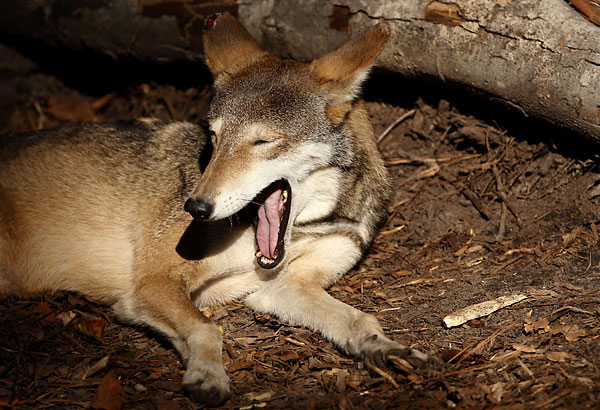
A red wolf

Federal authorities are currently investigating suspected shooting deaths of three endangered red wolves. The most recent killing occurred last week in Alligator River Wildlife Refuge in North Carolina's Dare County. Before that, two more wolves were found dead in Hyde County six months ago. These magnificent animals are being killed at an alarming rate in the perspectives of federal officials and wildlife conservationists. According to the U.S Fish and Wildlife Service, 66 wolves have died of gunshots since 1987 with more than half the deaths occurring in the past six years. In that same year, many were reintroduced back as a result of captive breeding by a red wolf recovery program.

Biologists estimate that between 115 and 130 red wolves exist today along the Albemarle Peninsula. Nine years ago, they identified that the biggest threat to the red wolf population is hybridization with coyotes. However, since 2004, 37 wolves perished; out of which 31 have been breeding pairs. That is, they were alpha males and females who constitute to the establishment of packs. According to David Rabon, director of the red wolf recovery program, many of these deaths result from misunderstandings in which hunters mistake the wolves for coyotes. In addition to that, he also believes that there are also people who are simply intolerant of these animals that were wrongfully thought to have a bad reputation as bloodthirsty killers. Similarly, Kim Wheeler of a nonprofit organization called Red Wolf Coalition states that people are ignorant of the wolves' protected status.

I'm deeply worried about the red wolf population to this day after these recent killings. But what is really shocking and provoking is the issues that have been resulting to this scale of mass killings over the years. And one of them has been mistaking these wolves for coyotes, which are completely different in terms of size, behavior, coat color, etc. I personally think that one way to minimize further reduction to the rampant slaughter of red wolves is education. This way, people will have a sense of understanding before distinguishing the difference between the two animals. However, there are also people who simply kill the wolves out of spite. They should also be educated and persuaded that wolves are not cold-blooded killers as depicted in folklore. But if some of these people turn out to be radicals who simply do not care about the wolves' existence, then they are the real criminals. They should be the ones stripped of their hunting licenses. Or better yet, face a year in jail and $100,000 in fines.

View article

Monday, October 11, 2010

Growing Concern of Livestock Grazing in Assamese Wildlife Sanctuary

Indian one-horned rhinoceros

A wildlife sanctuary in the state of Assam called Pobitora Wildlife Sanctuary has just witnessed a spurt in domestic livestock grazing, which has led to some grave concern regarding its wildlife. This tiny wildlife sanctuary, like its larger counterpart Kaziranga National Park, is home to a very high concentration of one-horned rhinos. Among the major ecological hazards amidst include an increased contact with the livestock, which would expose wild herbivores to diseases from cattle. Another issue is related to the availability of food and space, in which the encroaching livestock would put pressure on food and living space inside the sanctuary that expands only 38.8 square kilometers across. Also, there has also been concerns about the risk of cross-breeding with the cattle which would weaken the gene pool of another flagship species, the wild water buffalo.

In addition to that, forest officials have also shown concern about the risk of human-wildlife conflict as the encroachment of livestock would force wild animals like rhinos to stray out of the sanctuary in search of food and space. According to one forest official, a fence was posted up to prevent the cattle from entering but the people would remove parts of the fence allowing their animals to enter. The official further stated that he and others are in talks with the locals, so that they can understand the ecological problems. Apart from forest officials, conservationists have also felt that excessive livestock grazing would further jeopardize Pobitora and its local wildlife population because it resembles a small island amidst human settlements.

I sure hope that some serious measures will come into action in reducing the chances of any livestock grazing in this wildlife sanctuary. With an area of 38.8 square kilometers, Pobitora truly happens to be a tiny wildlife sanctuary compared to Kaziranga and easily prone to such environmental issues. I'm, however, glad to see that the forest officials have taken action in communicating with the local people about the dangers of raising their cattle in the forests. I'm also happy to see that they have taken a further step advising periodical vaccinations of the cattle against various diseases, but I also hope that these vaccines will not affect the wildlife like how diclofenac did to India's vulture population.

View article

Thursday, October 7, 2010

United Nations Warn of the Dugong's Future

A dugong mother and its baby

A U.N-backed forum recently warned that dugongs, herbivorous marine mammals of tropical waters, are threatened with extinction within forty years unless serious measures ranging from replacing fishing nets to establishing marine reserves will be taken. The United Nations Environment Program (UNEP) recently met in Abu Dhabi, where it summarized various issues that contribute to further depletion in the animals' populations. These include illegal poaching, hunting by local communities, severe injuries from ships and boats, and vanishing of sea-grass beds. The program even stressed that regional cooperation among countries known for having these unusual marine mammals is essential for their survival. One idea suggested by the program is replacing harmful gillnets with an alternative fishing gear to reduce the mortality rates. According to Elizabeth Maruma Mrema, Executive Secretary of Convention on Migratory Species (CMS), simple innovative tools and incentives for local fishermen have been presented to the CMS dugong agreement which might help in saving the animals from extinction. Among the steps include protection of feeding and breeding and feeding areas by establishing reserves, temporal fishing limits, and loans to fishermen to buy new boats and line-fishing gear.

A survey taken in 2008 showed that the dugongs are now extinct in the Maldives, Mauritius, Taiwan, and China. It is also declining in other waters in at least a third of the areas where they are found. Data from fishermen in twenty countries consisting of the Pacific Islands, southern Asia, and the United Arab Emirates to evaluate the threat of fishing on the animals' survival in their migratory range will be joined into a geographical information system to identify the spots where they are threatened. It will also provide important information on existing populations and present crucial habitat areas like sea-grass beds. The assessment will further extend to East Africa, the western and north-western parts of the Indian Ocean, and South Asia.

I feel that it is really helpful the United Nations have identified one of the world's most highly endangered species that requires a great deal of protection from extinction. Earlier, the U.N formed an alliance with local Central Asian governments to protect and conserve the populations of the saiga antelope. I hope that it will establish a similar partnership with governments in nations that house these animals, which were once thought to be "mermaids" by sailors during the days of exploration.

View article

Wednesday, October 6, 2010

South Africa Sets Up a New Task Force to Combat Rhino Poaching

White rhinos

The Minister of Water and Environmental Affairs of South Africa, Buyelwa Sonjica, recently announced that a newly dedicated task unit to combat rhino poaching has started operating. Minister Sonjica was attending a summit in Pretoria, where she stated that tougher penalties did not appear to have any effect of keeping poachers at bay. According to her, 227 endangered white rhinos have been ruthlessly slaughtered this year, and at the current rate, poachers could kill more than 300 of these magnificent beasts by the end of the year.

However, the establishment of this new task unit called the National Wildlife Crime Reaction Unit is directed at responding to wildlife crimes, including rhino poaching. It will be led by the Department of Environmental Affairs, and even includes members of the South African Police Service (SAPS), National Prosecuting Authority (NPA), South African National Parks (SANParks), and Ezemvelo KZN (KwaZulu-Natal) Wildlife. One select team known as the "Hawks" of SAPS have been assigned to focus on rhino poaching. According to Fundisile Mketeni, deputy director-general of biodiversity and conservation, the unit would become permanent in the battle against poaching if it will prove to successful. Johan Kruger, an advocate of NPA, stated that there were 26 cases of rhino-poaching involving at least eighty people accused. The NPA used a variety of tools to prosecute the perpetrators. It looked at charging them with offenses other than poaching such as, breaking aviation laws, organized crime laws, corruption, and tax evasion. The reason NPA would prevent organized crime laws is because most poachers worked in syndicates. According to Mr. Kruger, most of the foreigners arrested in the syndicate were Chinese and Vietnamese nationals. Also, Minister Sonjica ruled out the confrontation with the Vietnamese government, stating that the nation will soon sign a memorandum of understanding on the environment with South Africa.

I think this news article seems like that South Africa is about to put its foot down in the battle against rampant rhino poaching that has been devastating the nation this whole year. Of course some security firms have started military training to combat this ongoing catastrophe, but now it appears that the plan to combat poaching has reached a national level. This was seen in Minister Sonjica's statement during the conference in Pretoria. I sure hope that this new wildlife task force will prevent further encroachment of illegal poachers on South Africa's wild soil, and I have a very good feeling about it. Because it consists of authorities who normally stay focused on regular crimes. Now, it seems that they have taken the initiative and joined forces with wildlife authorities in this battle to save South Africa's rhinos.

View article       

Monday, October 4, 2010

India's Poacher Kingpin Faces the Power of the Supreme Court

Sansar Chand

The Sariska National Park in India's Rajasthan state is now slowly and slowly recovering after a few tigers were successfully released some months ago, in order to help reboost the population. But before that, a massive onslaught of wild tigers had plagued the national park four years ago. At that time, in 2005, a report issued by forest officials revealed that there were virtually no tigers left in the national park. It had been found that illegal poaching had played the role in the dramatic drop to the tiger population, and one key figure behind this ruthless massacre was a sadistic cutthroat named Sansar Chand. Sansar Chand has been regarded as a "kingpin" when it came to poaching, and for a good reason. His whole life has been that of a poacher. He had his first brush with the law in 1974 for possession of tiger skins when he was just sixteen years old. From then on, he made a full-time career in illegally poaching India's wildlife. At the same time, he had been arrested several times but was always granted bail which provided him further opportunity to continue his illicit activities. In addition, his loved ones had also been involved in poaching activities which included his wife, son, and nephew making this a family business. In April 2004, Chand was arrested and sentenced to five years in prison by a court in Ajmer, Rajasthan. However, he jumped bail the next month after which he made his move on Sariska's tiger population. He was again arrested, and in 2006, confessed in selling 470 tiger skins and 130 leopard skins to clients in Nepal and Tibet. He is now currently undergoing another five-year jail term.

Recently, the Supreme Court of India condemned Chand for his heinous crimes. According to the court bench consisting of Justice Markandey Katju and Justice T.S Thakur, the population of the nation's tigers and leopards were fluctuating because Chand is trading their skins to buyers in and across India's borders. The court even stated that because of Chand's appetite for money, he would later move on to selling human skins. This, in my opinion, goes to show how the Supreme Court views this notorious hardcore criminal's actions. In addition to that, the court even strongly rejected the argument of Chand's lawyer Siddhartha Luthra which stated that the poacher was not involved in poaching. In his statement, Luthra argued that if his client was involved in poaching activities then how was it possible that they are still erupting after Chand's arrest. The court was unimpressed by the lawyer's plea, stating that Chand and everybody else who represent him have a lust for money and everything in India is commercial to them. I'm glad to see that the Supreme Court of India is viewing poachers, including Sansar Chand, as criminals who would do anything to exploit their nation's land of resources especially its wildlife. And I sure hope that maybe next time Chand gets out of prison, he will find it difficult to continue his criminal activities.

View article

Saturday, October 2, 2010

1,000 Rare Madagascan Tortoises Illegally Gathered Each Week

Spider tortoise

The WWF (World Wildlife Fund) staff had recently conducted a survey in southern Madagascar, and found that around ten or more bullock carts each filled with a maximum of 100 tortoises were leaving the Mahafaly Plateau every week. These tortoises include the radiated tortoise and the spider tortoise, which are endemic in the spiny forests of southern Madagascar. These reptiles are victims of the illegal bushmeat trade, deforestation, and the exotic pet trade. These tortoises are considered a delicacy among Madagascar's ethnic groups, particularly the Vezo and Antanosy people who consume them during special events such as Christmas, Easter, and Independence Day. Between 2001 and 2010, some 7,855 live tortoises and more than 4.8 tonnes of meat were seized. This seizure represented that around two percent of 600,000 reptiles have been illegally gathered during that period. A survey by WWF's Tiana Ramahaleo showed that the area of Toliara was among thirty communities in the Mahafaly Plateau where the illegal collection of tortoises for public consumption is still rampant.

In addition to that, deforestation has also threatened the lives of these reptiles. In 2008, a study by Conservation International showed that the levels of deforestation increased to four percent annually between 2000 and 2005 from 1.2 percent between 1999 and 2000. The prominent issues that constituted to such dramatic increases include slash and burn agriculture, bush fires, and charcoal production for the towns of Toliara and Fort Dauphin. A wildlife trade network known as TRAFFIC, has recently reported that these tortoises are openly on sale as exotic pets in Thailand and Indonesia. The program had also made reports on occasions when people have been busted for illegal possession of the animals in their luggage. A recent example occurred earlier this year when two Malagasy women were the first to be charged and convicted for the crime after Malaysian authorities uncovered 374 tortoises. Apart from Southeast Asia, Madagascar's international airport in Ivato has also seen a number of such seizures.

According to Tiana Ramahaleo, Conservation Planning and Species Program Coordinator for WWF, Madagascar has been active in the conservation of the spiny forest eco-region since 1999. The nation has seen a drop in deforestation at a rate of 27 percent, and the raising of awareness for the conservation of the tortoises. Several villages cooperated with the authorities, in turn putting a stop to the illegal poaching of the reptiles. This year, the town of Toliara celebrated the Year of Biodiversity with a conference focusing on the tortoises. The objective was to raise awareness among the population and vivify them to protect the species. However, on that same day, participants at the conference received breaking news about a gang of poachers arrested outside of Toliara with 1,475 live tortoises and dried tortoise meat. I sure hope that the people of Madagascar will stand shoulder to shoulder with WWF and other global wildlife organizations in the battle to save these endangered tortoises in peril. Otherwise, as Ramahaleo pointed out, both the reptiles will disappear in less than fifty years if no serious action is taken.

View article

Tuesday, September 28, 2010

Tigers Discovered at High Elevations in Bhutan

Bengal tiger

A BBC camera crew had recently made an astonishing discovery high up in the foothills of Bhutan: Bengal tigers. The crew had set up cameras at a range of 4100 meters above sea level during a three months' period, hoping they would find and film some of the most fascinating wildlife calling Bhutan home. Among the animals the crew filmed included monkeys, leopards, Himalayan black bears, and some highly endangered and rare species like the musk deer and the red panda. But what really amazed the crew were tigers. Their footage showed a male tiger marking his territory and a lactating female, which suggested that there was a breeding population.

With the discovery of tigers making home in Bhutan's majestic alpine foothills, the crew are safeguarding the spot where they captured the animals on film. This has also given hope to conservationists and zoologists that more tigers may be found in the country. According to Michael Baltzer, head of the World Wildlife Fund's Tiger Network Initiative, Bhutan has done an outstanding job in conserving its environment and this particular tiger habitat could become a hotspot for the species' repopulation. Also, tiger expert Dr. Alan Rabinowitz who came with the crew, will be favoring the creation of protected land areas joining isolated tiger populations known as "tiger corridors." However, his first step will be to identify and protect the existing groups of tigers.

I'm also amazed to find that tigers have been seen and filmed at such high elevations in the Himalaya region. As it turns out, these majestic cats are sharing their habitat with another rare and beautiful resident of such harmonious land: the snow leopard. This news is kind of a throwback to what I had learned about the Bengal tiger in terms of its range. The animal inhabits nearly every corner of the Indian Subcontinent, including Bhutan. The only likely place in Bhutan where it has been seen is Manas National Park along the India-Bhutan border. However, in a PBS television program series called The Living Edens, one of the episodes which was about Bhutan's wildlife featured the tiger and showed that it had made tracks as high as 10,000 feet in the Himalayas. Now, it seems like that hypothesis has been proven to be somewhat true.

View article