Saturday, September 25, 2010

Abalone Poacher Killed by Great White Shark in South Africa

A great white shark in action

A group of twelve poachers were illegally harvesting abalone in the waters of South Africa near Gansbaai when suddenly, a great white shark came out of nowhere! One of the dozen, Khanyisile Momoza, was unfortunate enough to be attacked and killed by the 25-foot-long terror of the deep. His friends were so terrified, that they could not save Momoza and frantically swam ashore with their catch. After that, they alerted the authorities about the tragedy. According to news reports, this was the second death by shark attack in South Africa this year. The last one had taken place in January, which involved a tourist named Lloyd Skinner who was killed when he swam a few meters away from the beach in Fish Hoek near Cape Town. Rescuers did not recover his body, except his swimming goggles.

South Africa has been a primary hotspot for shark attacks for years. Most of the victims have been surfers and other beach goers. However, humans do not fall under the sharks' menu like what is seen in the movie Jaws. The reason is because our flesh is not high in fat, compared to other animals that sharks feed on. Usually when a shark bites someone, it will simply let go of that person and then swim away. It is often referred to as an "exploratory bite," in which a shark bites something to see if it's worth eating or not. A common example is when a shark attacks a surfer from underneath, mistaking it for a seal which happens to be the animal's preferred choice of prey. In my opinion, this attack on an abalone poacher was one of the rare cases in which the victim does not have time to swim to safety. Because once the shark has made its attack, it will retreat back underwater and wait for its prey to die. This helps prevent injury to the animal from its wounded victim. And I guess Mr. Momoza appeared to have been too exhausted and injured to swim to his safety. A classic example in which the hunter becomes the hunted!

View article

Thursday, September 23, 2010

Police Arrest Eleven Suspected of Rhino Poaching; Suspects Granted Bail

White rhinoceros mother and calf

The South African police had arrested eleven people suspected of having links to the ongoing mass poaching of rhinos in the nation. The suspects included a game farmer named Dawie Groenewald and his wife Sariette. Even more shocking was that the other suspects included veterinarians Karel Toet, and his colleague Manie du Plessis. All eleven suspects have recently been granted bail in the Musina Magistrate's Court. It was stated that the suspects' families had written checks to values of thousands of rand for their bail before they were scheduled to appear in court on Wednesday. The case has been postponed until April 11 next year. This has caused grave concern to the World Wildlife Fund (WWF), fearing that the accused might flee the country. According to Joseph Okori, head of the WWF's African Rhino Program, it is an extremely long lag of time and that the suspects might have resources to jump bail. He has known from past experience in Zimbabwe where poachers have been known to skip bail. In addition to that, the Democratic Alliance (DA) has urged prosecutors to seek maximum sentences for the eleven suspects until their next appearance. The wildlife monitoring group TRAFFIC estimates that South Africa and its northern neighbor Zimbabwe are responsible for 95% of illegal poaching.

I feel the same worries as the World Wildlife Fund towards the fate of these eleven suspects. Even though they are only suspected of having connection to this massive onslaught of South Africa's rhinos, I'm afraid of what they might do later before their next court appearance. I just hope that South Africa's authorities will do whatever they can with collaboration from the WWF and other wildlife organizations to further tighten the security for the nation's wildlife as a way to prevent any further destruction. I also hope that South Africa and Zimbabwe will somehow work together in a similar manner as Kenya and Tanzania in further reducing the amount of poaching that has been ravaging the land and the wildlife of the two neighbors.

View article

Monday, September 20, 2010

Uttar Pradesh to Have First Special Force to Protect Wildlife

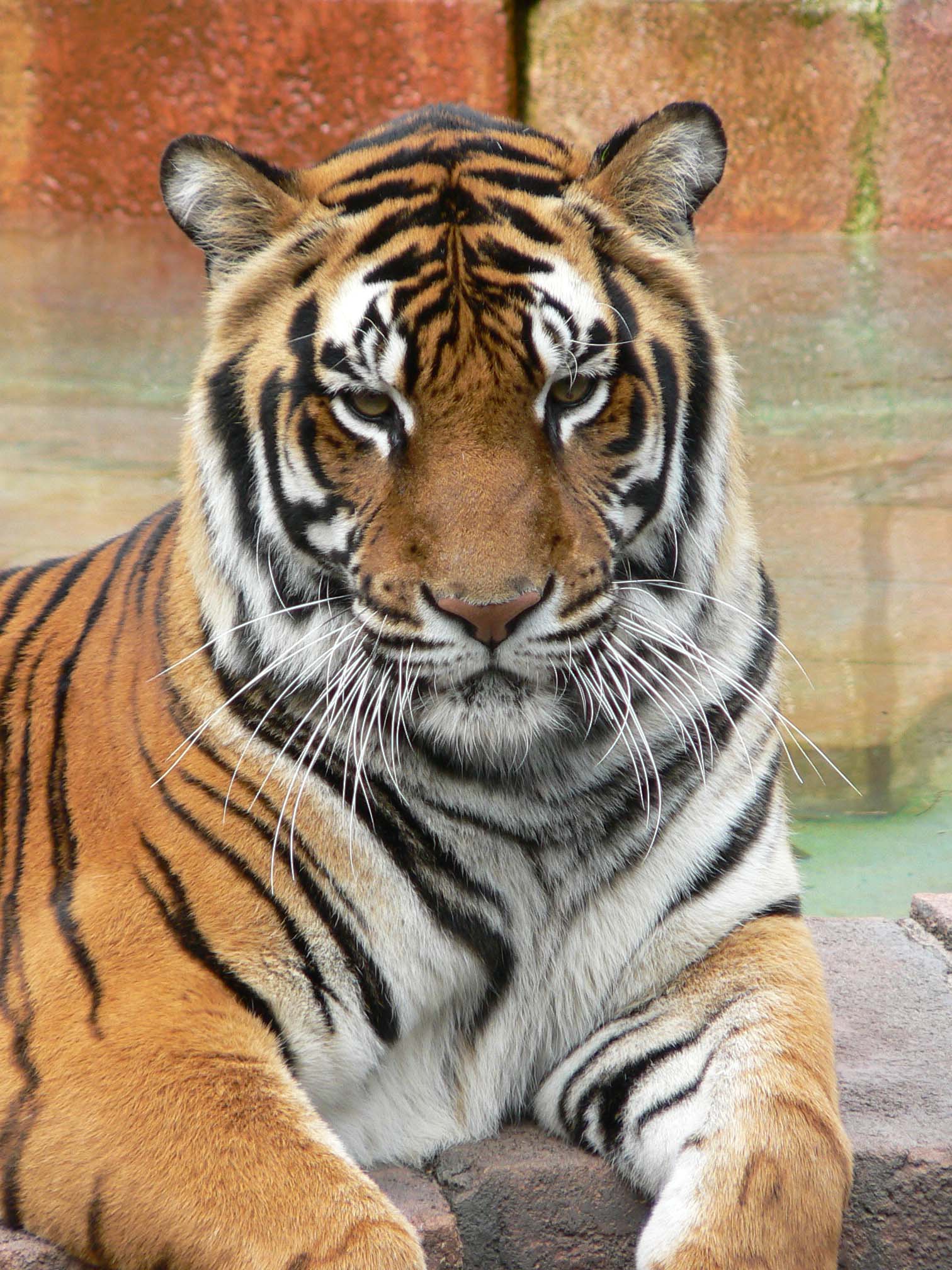
Bengal tiger

The forest department of Uttar Pradesh has planned to set up an armed force (for the first time) to combat poachers and investigate wildlife crimes in the state. Known as the Wildlife Protection Force (WPF), it is being established under the guidelines of the National Tiger Conservation Authority (NTCA). The main focus of this conservation security force will be to investigate crimes against wildlife, particularly tiger poaching. However, its personnel will also investigate other nature-related crimes such as illegal cutting of trees. A senior forest department official recently stated that a proposal has been sent to the state home department seeking training support. Once the proposal is finalized, then the recruitment process will begin. According Fateh Bahadur Singh, Minister for Forests and Wildlife, illegal poaching has affected Uttar Pradesh's tiger reserves like Dudhwa and Kartaniya Ghat. He stated that the forming of this wildlife special force will be the second step after declaring the area as critical tiger habitat. He even stated that the personnel will be embattled across the India-Nepal border. The personnel will undergo police training, and will also be taught India's wildlife Acts. They will also be provided equipment such as firearms, ammo, communication tools, and satellite tracking devices.

I'm very proud to see that Uttar Pradesh has taken a step further in combating illegal poaching by having a special force operating in the jungles. A similar example would be in South Africa, where private security firms have set up military-trained forces after the staggering numbers in rhino deaths. I feel that just like in the military, it is beneficial to have special forces serving to protect the endangered wildlife of our world. This way, poachers and all the criminals who make their living by destroying the world's wildlife will likely to not stand a chance. And that is what Uttar Pradesh is doing. There is even further progress that this special force's personnel will be sent across the Indo-Nepal border for further protection. This goes to show how India and Nepal have formed a joint partnership in the protection of each other's wildlife. I'm hopeful that this way, both India's and Nepal's wildlife will be securely protected.

View article

Thursday, September 16, 2010

Decline of Human-Wildlife Conflict in Kenya's Masai Mara National Park

Tourism in Kenya's Masai Mara National Park

The Masai Mara National Park of Kenya is one of the two well-known national parks in East Africa. The second one being the majestic Serengeti National Park, which lies along the Kenya-Tanzania border. Both of these national parks boast a bountiful of wildlife, attracting thousands of tourists from all around the world just to view the animals that make home in the vast stretches of savanna grasslands and forests. But despite the serene beauty of nature, these natural wonders of the world have always been hot-beds for illegal poaching activities and human-wildlife conflicts which have put both people and animals in danger. However recently, things have changed as the incidents of poaching and human-wildlife conflicts came to a decline.

According to one conservationist, the reduction of poaching and human-wildlife conflicts in the Masai Mara were due to joint surveillance patrols between Kenya and Tanzania. The patrols were conducted by an organization known as Mara Conservancy. It is a private company that manages an area known as the Mara Triangle, which is the North Western part of the national park. Its chief executive officer, Brian Heath, stated that the numbers of tourists have increased as a result of the patrols. He also said that poaching activities and human conflicts with wildlife had a negative impact on tourism, as many visitors connected the issues to insecurity. The poachers, who used to prowl the grasslands and forests of Kenya and Tanzania, have now found it difficult to commit their crimes in one country and hide in another thanks to the ties between the two nations' security personnel. In addition to that, Mr. Heath even made it clear that the conflicts between people and wild animals have also reduced by the anti-poaching unit personnel and sensitization campaigns on the need for neighboring communities to peacefully coexist with the wildlife. Mr. Heath also stated that efforts have been made to keep the wild animals inside Masai Mara to minimize the chances of them wreaking havoc in any of the communities.

I'm very glad and proud to see that Masai Mara National Park has taken a big step in protecting its local wildlife and the tourist industry. The game reserve, where popular BBC nature series Big Cat Diary was filmed, has also joined forces with its neighbor the Serengeti National Park as a way to diminish any poaching activities. Part of the reason for this partnership I think has to do with the annual migration of herbivores, as they migrate from Masai Mara to the Serengeti and back depending on the season. And wherever the animals go, the hunters follow. But the main reason for these two famous national parks to join hands is to protect their wildlife and keep tourism going. The Masai Mara is also making further progress in minimizing the chances of any conflicts between the wild animals and people, both local and international. All I can say is "keep up the good work," and hopefully this plan in Masai Mara can be an inspiration for other national parks in Africa.

View article

Monday, September 13, 2010

United Nations and Central Asian Governments Agree in Saiga Antelope Conservation

Saiga antelope

The United Nations Environment Program and several Central Asian governments have recently made an agreement on the conservation measures of the endangered saiga antelope. An international conference was held in Ulaanbaatar in Mongolia, where representatives from the nation itself, Kazakhstan, Turkmenistan, Uzbekistan, Russia and U.N bodies assembled under the prognostics of the Convention on Migratory Species (CMS) and agreed to include the saiga antelope in an international conservation deal. Even representatives from intergovernmental organizations, non-governmental organizations, and local communities attended the meeting. Also, the experts at the meeting shared a report commissioned by the Convention on International Trade in Endangered Species (CITES) and compiled by a wildlife trade monitoring network known as TRAFFIC. This report showed alarming levels of the illegal trade in the antelopes' horns even before this year's deaths. The report even contained information on the antelope horn trade from interviews with experts and government officials, along with market surveys in Malaysia and Singapore, where the horns are available. It is expected that the new measures in conservation will modulate surveys and monitoring to keep track of the antelope populations. Surveys will be done both at ground and aerial levels to determine population changes, with emphasis on rutting, calving and two migration areas.

I'm very happy and proud that the United Nations and several Central Asian governments have agreed upon the protection of the rare saiga antelope through some new conservation measures. This odd-looking antelope once numbered around one million in the early 1990's, but later declined to between 60,000 and 70,000 animals in 2006. Threats included illegal hunting of meat and horns, but also disease, habitat loss from overgrazing by domestic livestock, disturbances of oil and gas extraction work and possibly climate change. The animal's population, however, managed to stabilize thanks to conservation efforts. But now, these antelopes are going to have a greater chance of hope for survival from these new methods of conservation. According to Elizabeth Maruma Mrema, CMS Executive Secretary, the key to the success in the conservation of the saiga antelope has been the involvement of the local people in the region. Even more good news is that the local governments are seeking to involve local communities in the conservation of these magnificent creatures. Many people have been living in poverty and suffering from unemployment, which is why they turned to illegal poaching for a better livelihood. But now, it seems that they will be given a second chance and provided a better alternative for their livelihoods and that is combating poaching.

View article

Saturday, September 11, 2010

Crocodile Sanctuary Operator Vows to Rebuild the Facility

Cherie Chenot-Rose with a rescued American crocodile

 A non-profit crocodile education sanctuary in Belize, which was recently burned down by a mob of superstitious Mayan villagers, will later undergo some serious rebuilding. One of its operators, Cherie Chenot-Rose, has made a vow to rebuild the sanctuary which was designed to protect two species of endangered crocodiles in the country. One of them is the American crocodile, which is also native to the Florida estuaries as well as Central America. Ms. Rose and her husband have been rescuing crocodiles since the facility's establishment in 2004. Everything had been going according to plan, until a mob of Mayan villagers stormed the sanctuary and burned it down out of superstition, fearing that the couple were holding two missing children hostage. The couple have stated that they know nothing about the children's disappearance, but hope and pray for their safe return. They have even made a statement, saying they do not believe Mayan people in general are savages and believe that only those who mobbed their property should be held accountable. Even more good news is that the psychic who "predicted" the missing children's future has been arrested and charged for inciting the attack.

I'm very happy to see that Ms. Rose has not lost hope in helping save the crocodile populations in Belize. This goes to show that she has shown some strong determination, despite the recent attack on her facility. With the reconstruction of the crocodile sanctuary underway, the populations of Belize's crocodiles will have a bright and shiny future (hopefully). I also hope that the native Mayan people will be educated on making right decisions, and not always rely on superstitions in order to solve problems. This could lead to performing deeds that can be viewed as heinous and atrocious. But for now, what is more important is the sanctuary's rebuilding.

View article

Big Trouble in Maharashtra's Great Indian Bustard Sanctuary

Great Indian Bustard

The Indian Subcontinent is home to many endangered species such as lions, tigers, leopards, elephants, rhinoceroses, etc. But one of the most striking species is the great Indian bustard. This magnificent bird lives out in the wide open spaces of western and central India, which consist of arid and semi-arid grasslands with thorn scrub and tall grass. It is also a highly endangered species in all of India. The species has been savored for its meat since the days of the Mughal Empire, in turn leading to a catastrophic drop in population all over the country due to extensive illegal poaching. Habitat loss has also contributed to its decline. It has been estimated that less than a 1,000 of these birds exist in India.

One recent case of the downfall in bustard population occurred in Nannaj Bustard Sanctuary of Solapur in the state of Maharashtra. What began as a record of 33 birds in 2007 has now dropped to nine. An annual census carried out on August 29th showed drastic results: two male birds, six females, and one sub-adult. According to chief wildlife warden D.C Pant, no conclusions could be made on what caused the sudden drop in the sanctuary's bustard population. Also, the sanctuary was undergoing the period of monsoon making the visibility poor. He did promise to mark the areas for the birds.

One man, however, who has been working for the great Indian bustard conservation has a different opinion. He is veteran bird expert Gopal Thusar and according to him, the decimation in the population is not a good sign. He warned that the recent sightings could indicate that people have no longer become friendly. In his words, the great bird has only managed to survive thanks to the efforts by friendly farmers living in the region. However, it may seem now that the farmers have changed their attitudes toward the birds. Mr. Thusar also stated that the bustard is suffering from the threat of mines and power plants encroaching in its habitat. He and another partner of the bustard conservation, Dr. Pramod Patil, felt that it is time the state of Maharashtra and the forest department should work together in order to save the bird.

It is very saddening to see a wildlife sanctuary lose its flagship species down to just a small number of individuals. But at the same time, I'm shocked to see that the only way the bustard was able to survive until this day was when the farmers in region made sure the species was kept alive. Now, it may seem that they have changed the way they see the birds. This could be one reason to why the bustard population in this wildlife sanctuary plummeted dramatically. I feel that the forest department should have played the part of helping maintain the record number of bustards, instead of letting the farmers to do all the work. Otherwise, this tragedy would not have happened. But now, the time has come for the Maharashtrian government and the forest department to join hands together in order to prevent any further depletion in the bustard's population. And one of the tactics, according to Dr. Patil, to ensure that the great Indian bustard's future remains bright is captive breeding.

View article