Friday, September 18, 2020

Killer Whale Attacks in the Mediterranean Need to Be Investigated

Killer whale


Killer whales
are some of the most majestic members of the dolphin family. Their striking features and remarkable intelligence have earned them a special place in hearts of people worldwide, most notably in Free Willy and performances in several marine parks. However, behind the awe-inspiring image, there are facts that are often overlooked by the general public. Killer whales are the most dominant marine predators in the world; capable of preying on seals, sea lions, other whales and dolphins, and even great white sharks. Their ability to live and work together as a team has made them a force to be reckoned with. This was recently seen in the Mediterranean Sea when, in the last two months, a pod of killer whales was reported attacking boats off the coasts of Spain and Portugal. Most of the attacks on boats occurred from the Strait of Gibraltar to Galicia. Reports indicated that the whales have damaged many boats and injured several people. One of the victims was a sailor named Victoria Morris, who described the attack as "totally orchestrated." She further added that about nine whales surrounded her boat and kept ramming it for over an hour. It felt as if the whales were capsizing the boat. The damage caused by the whales was so severe that the boat had to be towed away. In addition to ramming against the boat, the whales also bit the boat's underside. The attacks have left researchers confused because killer whales are not normally aggressive. Although they often follow boats, there had never been any recorded cases of group-based aggressions among killer whales. Rocio Espada, a biologist from University of Seville, commented that it is possible the whales resorted to this bizarre behavior due to stress caused by heavy boat traffic in the area.
  

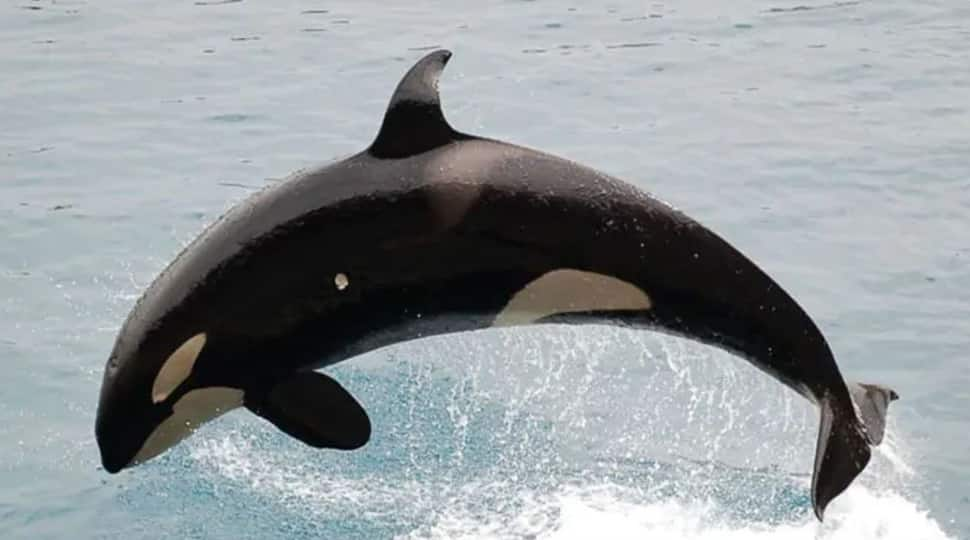
A killer whale leaping in Hood Canal

I also find it surprising and perplexing that killer whales have recently been reported attacking boats out in the wild. This is because killer whale attacks are very rare in the wild and such incidences have never resulted in any human fatality. Majority of attacks on people have occurred in SeaWorld and other marine parks, in which the whales would turn against their human trainers fatally injuring or killing them in the process. Such incidences have resulted in a demand for ban in killer whale shows. But this is the first time wild killer whales attempted to attack people without any human-induced provocation. What caused these animals to suddenly attack people? Is it stress due to heavy boat traffic in a specific part of the Mediterranean where the attacks occurred? Or could there be other issues for such a behavior? I think it is highly crucial to investigate this matter thoroughly, in order to deeply understand why killer whales are attacking boats. But one thing is certain from these attacks is that they clearly indicate how powerful these whales are and that they command respect. Media may depict killer whales as charismatic and fun-loving animals made famous in Free Willy and in other films and television shows, but in reality, these are highly intelligent, social, and potentially dangerous animals capable of killing great white sharks. I would strongly urge for implementation of protective measurements against any further attacks. This includes reducing boat traffic in areas of attacks and identifying times of days or months when the whales frequent the Mediterranean. At the same time, researchers need to thoroughly study Mediterranean's killer whales in order to find out what is causing them to attack boats and why.

View article here 

Sunday, September 6, 2020

Sea Turtles Need to Be Protected During the Pandemic!


Sea turtle hatchlings on Lebanon's Al-Mansouri Beach.

The COVID-19 pandemic forced people around the world from congregating in large numbers at various public places such as beaches. One of those beaches is Al-Mansouri in Lebanon, which recently witnessed a record number of loggerhead and green sea turtles arriving to nest along the country's shores. The beach is now one of Lebanon's most important breeding sites for the turtles. Every nesting season, a local resident named Mona Khalil would count the turtles' nests with a team of volunteers. They would watch over them - protecting them from predators and people - and then help the newly-hatched turtles on their journey to the sea. According to Khalil, the last time she saw an increase in green sea turtle nests was in 2006 when Lebanon was in conflict with Israel. The beach was empty, as Israeli gunboats floated just offshore. However, back then, she had counted only nine nests. This year, twenty nests were recorded. In addition, sixteen loggerhead turtle nests were counted. Ali Badreddine, a consultant for a sea turtle conservation program endorsed by the ministry for environment, stated that his team counted larger numbers of turtle nests at several other important beaches along Lebanon's coastline. He further added that protecting the turtles and their offspring is a real challenge in the face of fishing, where they become ensnared in nets; trash discarded into the Mediterranean Sea; and uncontrollable coastal growth. Khalil has dedicated her whole life fighting these obstacles. During her time, she had risked her life standing up to the local residents who used to use dynamite to fish just off the shore. In recent years, she fought against the construction of the Palagio Beach Resort, which is situated right on Al-Mansouri. Although the area has been declared a "community-protected zone," an investigation by The Daily Star revealed that the planning permission documents had permitted only for a residential complex at the site of the resort. According to Khalil, corruption and financial interest of powerful politicians resulted in the construction of the resort. This year, however, due to the pandemic and Lebanon's economic crisis, the resort has stayed closed throughout the summer. This means mother sea turtles will have no trouble hauling out on the beach to lay their eggs in the cover of darkness. Also, baby turtles will easily make their way towards the sea guided by the light of the moon. In addition to Lebanon, other places like Phuket, Thailand saw an increase in leatherback turtle nests while Florida recorded a rise in both leatherback and loggerhead turtles. In India, thousands of newly-hatched olive ridley sea turtles were sighted on nearly empty beaches heading out to sea.

Volunteers watching over young sea turtles making their way towards the sea in Lebanon.

Although it is exciting to see endangered species like sea turtles benefiting from the global lockdown without any form of anthropogenic disturbance, one should not be fooled. I have a strong feeling that the countries where sea turtles come to nest will slowly and slowly open up for economy as time goes on. This means that sea turtles' lives will again be threatened by fishing and other anthropogenic factors. I strongly believe that waiting until the end of the pandemic is not the wise decision to conduct intensive measurements to save the turtles and ensure their survival. These animals need to be protected by any means necessary even during the pandemic. In Lebanon, sea turtles have become victims of corruption when a beach resort was built on a site which is in fact a "community-protected zone." Even though this resort is closed, I'm sure that it will open at some point in the future. This would have a negative impact on the turtles' behavior. That is, the lights from the resort can confuse the hatchlings, causing them to crawl up the beach instead of toward the sea and this would bring them into conflict with a variety of natural and unnatural obstacles. I strongly urge the people of Lebanon to take necessary measurements to ensure the protection and conservation of sea turtles in the country, including protesting against construction of beach resorts on beach strips identified as sea turtle nesting sites. Other sea turtle countries should also follow suit.

View article here

Friday, August 28, 2020

Are Radio Collars Responsible for Deaths of Asiatic Lions?


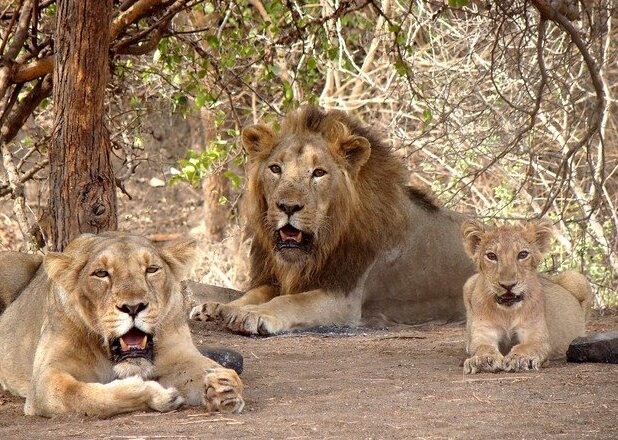
Does this lion appear to be choking on a radio collar?

It has been recently reported that in the past one year, one out of four radio-collared Asiatic lions have died raising concerns as radio-collaring is done on young animals. Some experts claim that the unscientific use of collars could have led to the lions' deaths. Chief Conservator of Forests Dushyant Vasavada sent a letter to the deputy forest officials, imploring them to take essential action wherever they received objections regarding radio-collaring of lions in their area. The Gujarat State Forest Department has received 75 radio collars. So far, 89 lions have been collared to track their movement. This indicates that about 14 radio-collared lions may have died spurring the authorities to use their collars on other animals. Messages and pictures heightening concern over radio-collaring of lions have been distributed in social media. However, Vasavada stated that lions dying because of radio collars are baseless and that there are other reasons behind their deaths. When asked about the letter sent to deputy forest officials, he responded that it was only a precautionary measure.

Teak trees in Gir Forest

Wildlife experts working in Gir Forest that the number of dead radio-collared lions could be higher. H.S Singh, a member of India's National Board of Wildlife and lion expert, stated that it was not necessary to radio-collar such a large number of lions as it could lead to serious behavioral changes. Therefore, he recommended that radio-collaring should be limited to twelve lions. Retired Indian Forest Service (IFS) officer A.K Sharma, who was awarded a Kirti Chakra for rescuing lions from poachers in 1989, stated that that the animals should not be treated like guinea pigs. He further stressed that radio collars cause pressure on the lions' necks hindering their hunting skills and that the practice is being done just to make it easy for forest officials in tracking lions, rather than for any research purpose. In addition to the discomfort caused by radio collars, two wildlife experts stated that collaring young lions, particularly males, appears to be proving fatal. This is due to the lions' manes growing quite fast and that their head size increases for a few years. Because of this, many forest officials in Gir Forest have started to remove the collars if they find the lions facing any discomfort. Sources said that the state forest department did not consult experts before radio collaring such a large lion population. A researcher with the Wildlife Institute of India (WII) suggested that radio-collaring should only be done on one lioness from each pride and that the total number of radio-collared individuals should not be more than 10. However, this was not the case since many lions and lionesses from the same pride had been selected in many cases.

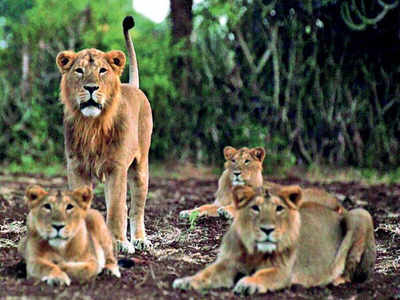
A lion family in Gir Forest

It looks to me that the conservation of the Asiatic lion needs some serious improvement and several fingers are pointed at the practice of radio-collaring the lions. Lions that had been found dead wearing radio collars were suspected of dying of discomfort caused by the collars. But was their cause of death solely attributed to radio collars? Chief Conservator of Forests Dushyant Vasavada disputed that claim calling it baseless and stated that the lions died of other causes. Other experts are saying that the practice is attributed to the radio collars with young lions being susceptible to grievous injuries while growing up with collars on. In 2018, a radio-collared tiger was found dead in Odisha after succumbing to an infection in its neck. However, the news did not confirm whether the infection was caused by the collar itself or something else. I would suggest that any lion found dead with a radio collar on should be thoroughly examined in order to determine whether the cause of death was by the collar or something else. I also strongly believe that tracking lions and other wild animals for research purpose requires considerable consultation from experts. This includes learning about different sizes of radio collars, the proper number of animals to fit with collars in order to track them, and other modes of tagging such as microchips. I think microchips would be a good alternative to tagging young lions, but it would be best to consult the experts and receive guidance from them. Collaboration between state forest departments and wildlife experts is essential for the conservation of lions and other animals.

View article here 

Thursday, August 27, 2020

Regional Cooperation Essential to Save Southern Asia's River Dolphins

Gangetic river dolphin


Experts from India, Bangladesh, Nepal, and Burma have recently joined forces to intensify conservation of river dolphins in the region, paving way for regional collaboration. A webinar was organized by the Inland Fisheries Society of India, Central Inland Fisheries Research Institute (CIFRI), National Mission for Clean Ganga, Professional Fisheries Graduates Forum, and the Aquatic Ecosystem Health and Management Society During the session, Dr. J.K Jena of CIFRI indicated that the dolphins "do not realize boundaries and have tried to find habitat wherever possible." Therefore, regional collaboration is essential in conserving them. Director General of the National Mission for Clean Ganga Rajiv Ranjan Mishra shared his experiences on dolphin conservation connecting its importance to revitalization of the Ganges River. Ongoing efforts of the National Mission for Clean Ganga to bring dolphin conservation to national attention have led to Prime Minister Narendra Modi making an announcement of "Project Dolphin" under the Ministry of Environment and Forests. National Mission for Clean Ganga has given importance to biodiversity and ecological enhancement along with pollution decline and projects have been initiated for improvement of fisheries with CIFRI and for biodiversity conservation with the Wildlife Institute of India (WII). The webinar consisted of former CIFRI Director Professor A.P Sharma pointed out the need to research dolphin habitat restoration, while former Vice Chancellor Dr. Dilip Kumar talked about the social aspects of fishermen's life and dolphins in rural India. Among all the points agreed on during the webinar, the most important fact was that an organized approach is required for energizing trans-boundary efforts and to set up a regional program. Other focal points included fishery conservation efforts under the National Mission for Clean Ganga through CIFRI to better prey base in dolphin habitat resulting in increased dolphin population and improvement in the livelihood of fishermen to help them join conservation efforts.

Irrawaddy dolphin

I have strongly believed that regional cooperation between countries is vital for the conservation of various endangered species. This is especially true when an endangered species inhabits not just one country, but neighboring countries as well. This is seen here in the case of river dolphins, which include the Gangetic river and Irrawaddy dolphins. The Gangetic river dolphin inhabits the river systems of India, Nepal, and Bangladesh. Therefore, instead of each of these countries individually working to conserve and protect their respective dolphin populations, it would be more helpful and effective to join hands. Similar method would also help in conserving the Irrawaddy dolphin, whose populations inhabit rivers and estuaries near sea coasts of India, Bangladesh, and Burma. I have a hopeful feeling that this regional collaboration between these four countries will ensure protection and conservation of river dolphins. I also hope that other river dolphin countries will follow this example in conserving their dolphin populations.

View article here   

Collaboration Between Poachers and Wildlife Protection Personnel is Intolerable!

The four poachers with remains of sambar and mouse deer they killed.


In southern India's Karnataka state, forest personnel from Chikkamagaluru district attempted to bust a poaching ring on Tuesday night when they checked a car with four men in it and discovered it to be filled with dismembered remains of sambar and mouse deer. The four men ranged from ages 18-63 and were identified as Deekshit of Kadabailu, Annappa Shetty and Harish of Mallandur, and Manjappa Shetty of Shivagoor. Forest officials stated that the men entered the Masakali forest area on the peripheries of Bhadra Tiger Reserve on Tuesday at around 10 pm to hunt sambar and mouse deer with a single-barrel gun. After killing their intended targets, the poachers loaded their kills in a car and were transporting them through the Honnahalla checkpoint when they were arrested. Upon being interrogated, the poachers revealed to the forest personnel that an honorary wildlife warden named Satish Gowda was supposedly involved in the poaching racket. The rangers learned that Gowda owned a plantation on the edge of the forest and was assigned to watch for poaching activities. However, the poachers were able to gain entry into the forest area after Gowda permitted them. The four poachers have been produced in court. Gowda, on the other hand, has been charged under the Wildlife Conservation Act for abetment of poaching and is on the run following the recent bust.

A tiger in Bhadra Tiger Reserve

There is nothing more shocking and frustrating than an individual or a group of individuals dedicated to protecting wildlife collaborating with poachers. I think this news highlights the flaws in the battle against poaching and other wildlife crimes in India. In this case, a high-ranking wildlife warden giving a nod to poachers to conduct their illegal activities. Another example took place in 2008 when Panna Tiger Reserve in Madhya Pradesh witnessed a crash in its tiger population and this was largely due to a collaboration between the forest personnel and poachers according to an internal report by the state forest department. Despite repeated requests from the Ministry of Environment, Forest and Climate Change, the state government refused to establish a CBI probe into the matter. I strongly believe that when such people who are dedicated to wildlife protection are discovered to be collaborating with poachers, it should require considerable attention from government and judicial officials in order to ensure that aiding and abetting poaching would not be taken lightly. I hope that Satish Gowda will be made an example of this. In the meantime, it is essential to conduct efforts to track down this miscreant and bring him to justice.

View article here

Monday, August 17, 2020

Will India's Project Lion Conservation Program Benefit the Asiatic Lion?

A pride of Asiatic lions

In India, during the early 1970s, a conservation project titled Project Tiger saved the tiger from the brink of extinction in its homeland. Now, there is a similar program in the works geared at saving and protecting the country's second largest big cat: the Asiatic lion. Titled Project Lion, the program was announced by Prime Minister Narendra Modi during his addressing of the nation at the Red Fort on Independence Day in which he stated that the government would give priority to lion conservation through this project. He further added that the program will "focus on creating health infrastructure which is suitable for the lion." According to the latest count, India's lion population has increased by 29% in the last five years from 523 animals in 2015 to 674 in 2020. In Gujarat, the lions are found in an area of roughly 30,000 square kilometers. A senior officer from the Ministry of Forest and Environment indicated that the project was predicted as the government organization, after the COVID-19 outbreak, had declared a Rs. 98-crore Project Lion for establishing hospital and disease control. The officer further added that the project would help better the habitat, employ modern technologies in lion management and surveillance, and even bring in institutes like the Indian Veterinary Research Institute and National Institute for Virology for disease monitoring. A senior state forest officer stated that the project will also discuss human-wildlife conflict and will be extensive involving local communities living in the vicinity of lion habitat. In addition, the implementation of the project would mean more funds for lion conservation and disease control. Currently, the lions receive funds based on the project under several schemes. But with Project Lion, funds would be properly allocated on the lions of Project Tiger. Furthermore, lions, which are only observed by the Forest Department of Gujarat, will have a group which will be taking decision for the conservation. In addition, CCTV trap methods used for tiger surveillance and monitoring will also be carried out for the lions in Gujarat's Saurashtra region.
View of Gir Forest, the last stronghold of the Asiatic lion.

I'm really amazed that there is a new conservation program in the making after Project Tiger and Project Elephant. It goes to show how India is very serious about the conservation of its wildlife.  The Asiatic lion has for decades been protected in Gujarat's Gir Forest National Park and during the time, its numbers grew exponentially resulting in lions dispersing beyond the borders of the national park and into parts of Gujarat where they had long disappeared. But despite the increase in numbers, India's lions faced numerous challenges outside Gir Forest in the form of man-made obstacles (i.e. wells) and diseases. Disease in the form canine distemper took a life-threatening toll on the lions, killing 25 animals almost two years ago. The situation prompted the need to trans-locate lions outside Gujarat. Now, it looks like there is a glimmer of hope for lions as conservation efforts along the lines of Project Tiger will be implemented to ensure that they are fully protected from anthropogenic threats and diseases. 
Map of proposed trans-location sites for lions (light blue).
Note: Chandraprabha (pink) was a former site of trans-location. 

What struck me about this news is that the implementation of Project Lion could probably mean Gujarat would lose its "monopoly" for lion sightings. I would like to point out that historically the lion's range included central, northern, and western India, including Gujarat. But because of decades of habitat destruction and hunting, India's lion population became reduced to Gujarat where the animal has since remained and became a special icon to the local people. I strongly believe that the lion's home range should never be restricted to just Gujarat; it is highly crucial that it should be reintroduced in parts of India where it had long disappeared. Any disputes over the trans-location of lions out of Gujarat should be done strictly on scientific and not political grounds. I would suggest that some number of lions should be trans-located in a chosen protected area such as Kuno Palpur, and then closely monitored to see how well they are adapting in their new environment. I would also suggest that captive breeding programs should be created as part of this new project. This would help in trans-location efforts when newly released wild lions from Gujarat somehow fail to adapt outside the state. The purpose of captive-breeding programs should not just focus on breeding lions in captivity. It should also focus on providing them with behavioral enrichment to stimulate their instincts essential for survival in the wild before releasing them into the wild. Furthermore, areas both inside and outside Gujarat should be identified as protected areas for lions by checking for any indirect evidence of the big cats, abundance of prey, and make sure they are free of any anthropogenic pressure. I have a pretty good feeling that Project Lion will benefit the Asiatic lion and I hope the people involved in the program will carry it out concertedly in order to ensure the survival and well-being of the lion on the long-run.

Friday, August 14, 2020

Migratory Birds Should Be Protected From Accidental Killings by American Companies


A bald eagle flying over Mill Pond in Centerport, New York.

A New York federal judge recently overruled a decision by the Trump administration to scale down government protection for migratory birds. The decision would have permitted companies that accidentally kill migrating birds during the course of their work no longer to face the prospect of criminal prosecution. In a 31-page document, U.S District Judge Valerie Caproni quoted the novel To Kill a Mockingbird to uphold her decision. Just before leaving office, the Obama administration released a legal opinion saying that the Migratory Bird Treaty Act does include the accidental killing of birds. In 2017, the Trump administration ruled out that opinion pending review. Later, it issued a legal memo saying it would not criminally prosecute such killings. Judge Caproni was positive in her ruling, disallowing the administration's interpretation of of "takings" and "killings" of birds as relevant only if the animals are targeted specifically. In 2018, the National Audubon Society and other conservation groups, along with eight states, sued the Trump administration's legal opinion, which the court joined into one. The U.S Fish and Wildlife Service stated that tens of millions of birds are killed every year by anthropogenic threats, involving flying into communication towers and wind turbines, as well as oil spills. Environmental groups argued that if the Trump administration's legal opinion had been in place ten years ago when the Deepwater Horizon oil spill occurred, BP would have not been prosecuted under the Migratory Bird Treaty Act for the one million birds killed.

President Donald Trump


I'm very proud that U.S District Judge Valerie Caproni overruled the Trump administration's decision regarding the plight of migratory birds. I don't believe it is fair that work progress should continue when birds are accidentally killed by wind turbines and other machinery belonging to major companies. One the long run, this would decimate the migratory bird populations in the U.S. I strongly believe that major industrial companies across the U.S should keep a lookout for such incidences and report them. Protection of birds does not mean that they should be only safeguarded from illegal poaching, habitat destruction, and other deliberate actions by people. Accidental killings of birds should also be taken into consideration. I think in order to prevent further accidental killings of migratory birds, it is crucial to identify their migration routes. If their migration routes happen to be in vicinity of a future site of some power plant or similar building structure belonging to some major company, that company should be warned about the possibility of accidental killings of birds and should be encouraged to find a different location where there is proof of presence of birds and other wildlife. This would help curtail any further decimation in migratory bird populations.

View article here