Tuesday, December 23, 2025

Rooted in Resilience- Tiger Widows Restoring the Sundarbans

Women collecting mangrove saplings in the Sundarbans.

The Sundarbans is an immense expanse of mangrove forest, threaded by a labyrinth of tidal channels where the Ganges, Brahmaputra, and Meghna rivers converge before meeting the Bay of Bengal. Spanning the border between India and Bangladesh, this UNESCO World Heritage Site is one of the world’s richest and most fragile ecosystems. It is home to an extraordinary range of wildlife, including a population of tigers unlike any other. In this watery realm, tigers have adapted to an amphibious existence, swimming vast distances between forested islands in pursuit of prey such as fish and crabs. With an estimated 125 tigers living across the region in Bangladesh and around 88 on India's side, their population remains resilient. Yet as deforestation accelerates and human settlements push ever closer to the forest’s edge, encounters between people and predators have become increasingly unavoidable. Official records of such conflicts are limited, but estimates suggest that 300 people and 46 tigers have lost their lives over the years. Most of the human victims are men who enter the forest to fish or to gather honey and firewood. Their absence is etched into village life through the presence of so-called “tiger widows.” Known locally as swami khejos, or “husband eaters,” these women have long been burdened with stigma, blamed for tragedies beyond their control. Branded as outcasts, many are denied livelihoods and excluded from government compensation, particularly where deaths are linked to illegal forest entry. Left with little means of support, they must navigate a life shaped by loss and isolation. Among them is Malati Mondal, whose husband was killed by a tiger nearly a decade ago while fishing in the creeks of the Sundarbans.

A tiger wearing a radio collar on a riverbank in the Sundarbans, having been released by wildlife officials after being caught too close to human habitation.

But a new conservation effort is beginning to shift that story. Designed to support tiger widows and their families, the initiative seeks not only to restore livelihoods and dignity, but also to heal the fragile environment on which both people and wildlife depend. Known as Mountains to Mangroves, the program is led by Conservation International and stretches from the Himalayas to the Sundarbans, with the ambitious goal of restoring one million hectares of forest. In the Sundarbans, its work is centred on the Jharkhali region along the Matla River. Here, the project is being led by 26-year-old Shahif Ali, founder of i-Behind The Ink, a social enterprise running a youth-led rewilding initiative. Ali has brought together tiger widows and other local women to revive 100 hectares of mangrove forest. At present, more than 100,000 native mangrove saplings are being planted across 40 hectares of coastline between the villages of Laskarpur and Vivekananda Palli. Raised and carefully tended by the women over the past six months, the young trees are now being set along a single embankment—the community’s only defence against rising seas and storm-driven floods. The aim is to regenerate dense mangrove cover lost to farming and fishing, while strengthening natural protection against cyclones that are growing ever more frequent and intense as the climate warms. The restored forest is also expected to slow the spread of saltwater intrusion, which threatens mangrove health, degrades farmland, and disrupts fish populations. Over time, as fish return, both people and predators may find more abundant food—reducing the likelihood of conflict. Malati Mondal is one of seven tiger widows currently taking part among a group of 59 women. Twenty more widows are set to join later this month, and according to Ali, interest is growing rapidly. The women earn around 300 rupees a day—modest by most measures, he says, but enough to bring meaningful change.

An aerial view of a fishing boat in the Sundarbans. Fishermen who venture deep into the forests are at risk of tiger attacks.

There is a quiet power in the fact that women who once lost their husbands to tigers are now helping to safeguard the future of the Sundarbans. Through their work, mangrove forests are beginning to recover, livelihoods are being rebuilt, and dignity—long denied—is slowly being restored. Paid for their labour and recognised for their contribution, these women are reclaiming a place within their communities. Mountains to Mangroves is not the only effort breathing new life into this landscape. In 2005, a local organisation known as Jharkhali Sabuj Bahini—the Jharkhali Green Army—was founded by Akul Biswas, a visually impaired environmentalist who found purpose in tree plantation. What began with roadside planting took on new urgency after Cyclone Aila struck in 2009, revealing the vital role mangroves play in shielding the land from saltwater intrusion and flooding. Biswas launched a campaign to restore mangrove cover, drawing in villagers from all walks of life—children, people with disabilities, homemakers, and tiger widows among them. Over time, their efforts spread beyond Jharkhali, inspiring neighbouring communities to join the movement. Together, these initiatives offer a measure of hope for the Sundarbans’ long-term survival. Restoring this fragile ecosystem is not only about protecting forests or wildlife, but about rebuilding lives and easing decades of conflict. If the mangroves can recover, there is a chance that people and predators alike may once again learn to share this shifting, water-bound world.                

Friday, December 19, 2025

Operation Thunder- A Global Manhunt for Wildlife Traffickers

A caged monkey holding a human hand.

For the ninth year running, a vast international crackdown known as Operation Thunder has swept across the globe, targeting the shadowy networks that illegally trade in wildlife. Led by INTERPOL and the World Customs Organization, and backed by the International Consortium on Combating Wildlife Crime, the operation united police, customs officers, border forces, and wildlife authorities from 134 countries in a rare show of global cooperation. Months before a single seizure was made, investigators quietly exchanged intelligence, traced smuggling routes, monitored online marketplaces, and prepared coordinated inspections across continents. Then, between September 15 and October 15, the operation moved into action. The results were unprecedented: 4,640 seizures worldwide and nearly 1,100 suspects identified in connection with the illegal trade in wildlife and forest products. What authorities uncovered was staggering. Tens of thousands of protected plants and animals were confiscated, alongside more than 30 tonnes of endangered species listed under CITES and vast quantities of illegally logged timber. The scale of the seizures revealed a troubling trend—live animal smuggling has reached its highest recorded level, driven largely by the growing demand for exotic pets. Among those rescued were more than 6,000 birds, over 2,000 tortoises and turtles, 1,150 reptiles, 208 primates, and even 10 big cats, including tigers. In one striking case, investigators in Qatar arrested a suspect who had attempted to sell an endangered primate online for $14,000—just one transaction in a global trade that continues to push countless species closer to extinction.

White-cheeked gibbons and lorises rescued.

But the investigation revealed that live animals were only one part of a far broader and more disturbing trade. Far greater in scale was the trafficking of animal parts, meat, and derivatives—destined for luxury goods, niche food markets, and traditional medicine. Among the most shocking discoveries was a single shipment containing more than 1,300 primate body parts, including skulls and bones. Operation Thunder also exposed a sharp rise in the bushmeat trade. In Belgium, officials confiscated primate meat, while in Kenya authorities intercepted over 400 kilograms of giraffe meat. In Tanzania, law enforcement recovered antelope and zebra meat and skins valued at around $10,000. The trade extended beyond land animals to the world’s oceans. More than 245 tonnes of protected marine species were confiscated, including some 4,000 shark fins. And despite decades of international bans, the demand for ivory remains stubbornly strong. In France, authorities seized 107 ivory items from markets, while in Austria additional pieces were recovered from a private home—clear evidence that the illegal trade continues to thrive, often hidden in plain sight.

Tortoises found in luggage.

The operation also highlighted a lesser-known but rapidly growing threat: the trafficking of insects and spiders. Around the world, nearly 10,500 butterflies, insects, and arachnids—many protected under international law—were seized. In the United States alone, customs officers intercepted more than 40 insect shipments and 80 consignments of butterflies at a mail facility, traced back to Germany, Slovakia, and the United Kingdom.

Beyond animals, the trade in exotic plants and timber proved equally alarming. Authorities confiscated more than 10 tonnes of live plants and plant derivatives, driven largely by demand from horticultural enthusiasts and private collectors. The scale of illegal logging was stark: some 14,000 pieces of timber, totaling over 32,000 cubic meters, were seized. Investigators estimate that illicit logging may account for as much as 15 to 30 percent of all timber traded globally—underscoring how deeply embedded environmental crime has become in the global marketplace.

Summary of animals confiscated during Operation Thunder this year.

The sheer scale of the seizures made during Operation Thunder has laid bare a sobering reality: the illegal wildlife trade extends far beyond the trafficking of exotic mammals, birds, and reptiles. Insects, spiders, plants, and timber are all being relentlessly exploited to satisfy growing global demand. Among the species at risk is the Malaysian purple-femur tarantula, already threatened by habitat loss and now increasingly targeted for the exotic pet trade. Its decline has prompted the Center for Biological Diversity to urge the U.S government to grant the species protection under the Endangered Species Act—a stark reminder that few forms of life remain untouched by this trade. Operation Thunder has also revealed how profoundly the illegal wildlife market has evolved. No longer the domain of isolated poachers and small-scale black-market traders, it has become a sophisticated, cross-border industry—one that undermines ecosystems, fuels corruption, and poses growing risks to human health. Generating tens of billions of dollars each year, the trade has become deeply attractive to organized crime groups, which rapidly adapt their methods to stay ahead of enforcement.

The message is clear: illegal wildlife trafficking must be treated as a global threat on par with drug trafficking, human trafficking, and terrorism. Intelligence gathered through operations like Thunder is vital to mapping international criminal networks, anticipating future crimes, and dismantling supply chains before they inflict further damage. And just as crucially, those orchestrating this trade must face the strongest possible penalties—reflecting the scale of harm their actions inflict on both the natural world and human society.                     

Sunday, November 30, 2025

TRAFFIC’s Tiger Report- Inside the Global Struggle to Keep a Species Alive

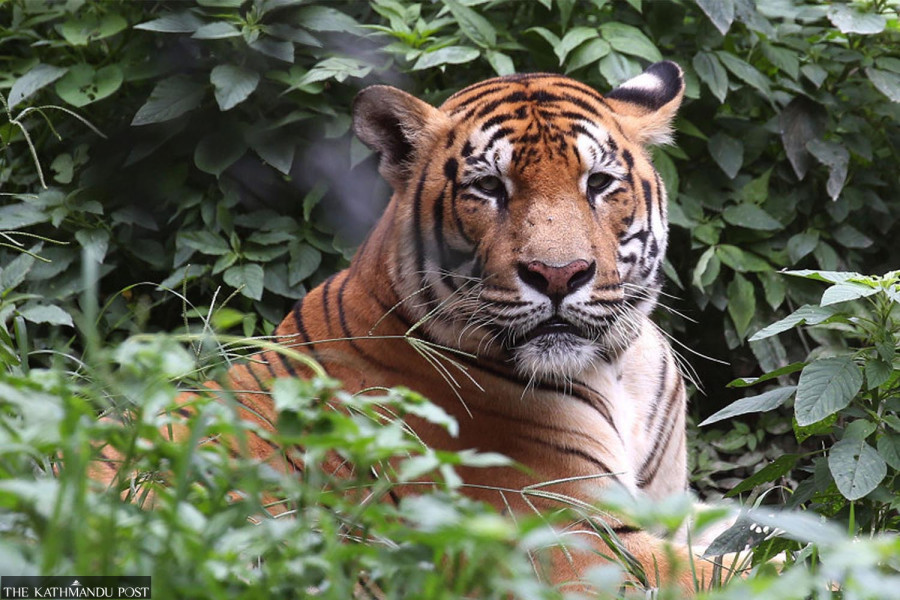
A Bengal tiger in a safari park.

A new analysis from the global wildlife trade watchdog TRAFFIC reveals a troubling shift: criminal networks are adapting more swiftly than the conservation systems meant to stop them. Despite decades of international safeguards, the illicit trade in tigers is not only thriving but increasingly centered on the trafficking of whole animals—both living and dead. Investigators suggest the surge may be linked to commercial breeding operations, as well as to animals seized soon after poaching or before their bodies can be processed. Rising demand for exotic pets and high-end taxidermy appears to be adding further fuel to this burgeoning trade.

The sixth installment of TRAFFIC’s Skin and Bones series paints an unflinching picture of the global tiger trade. Between 2000 and mid-2025, authorities around the world recorded 2,551 seizures—representing at least 3,808 tigers. From 2020 to June 2025 alone, officials logged 765 incidents, the equivalent of roughly nine tigers seized each month. The single worst year on record was 2019, with 141 cases, closely followed by 139 in 2023. While the majority of incidents occurred within the thirteen countries that still harbor wild tigers—most prominently China, India, Indonesia and Vietnam—nations with no wild populations, including the United States, Mexico and the United Kingdom, also reported significant activity. Although enforcement has strengthened over the years, so too has the sophistication of the illegal trade. Notably, the proportion of seizures involving body parts has dropped from 90 percent in the early 2000s to around 60 percent since 2020, signalling a marked rise in the trafficking of whole carcasses and live animals. In Indonesia, Russia, Thailand and Vietnam, more than 40 percent of confiscations now involve entire tigers.

The report also identifies critical enforcement hotspots: tiger reserves in India and Bangladesh, Indonesia’s Aceh province, the borderlands between Vietnam and Laos, and major consumption hubs such as Hanoi and Ho Chi Minh City. Regional demand patterns vary sharply as well. In the United States and Mexico, the appetite centres on live tigers kept as exotic pets; in Europe, interest leans toward traditional remedies and decorative taxidermy. Across much of Asia, however, the demand remains focused on skins, bones, claws and whole carcasses. Ultimately, TRAFFIC emphasizes that seizures tell only part of the story, urging governments to deepen cross-border cooperation and pursue intelligence-driven, multi-agency operations capable of dismantling the criminal networks behind this relentless trade. 

TRAFFIC’s findings amount to a stark warning: law-enforcement bodies and conservation organizations must urgently reinforce their efforts to shield tigers—and countless other imperiled species—from the criminal networks that profit from their decline. The report underscores the need for coordinated, cross-border action capable of dismantling the trafficking chains that span continents. Perhaps most unsettling is the evidence that captive-breeding operations are helping to sustain the black market. Many of these facilities—often referred to as “tiger farms” in China, Thailand and Vietnam—have existed since the 1980s, established expressly to produce a steady supply of animals for their body parts. Their products routinely flow into consumer markets, muddying the waters for investigators trying to distinguish the illegal trade in wild tigers and, in the process, reinforcing and normalizing demand in regions where wealth and consumption are rapidly growing. The report makes clear that rooting out these facilities and closing them permanently is essential. Without a decisive escalation in efforts to interrupt the trade at every link in the chain, the world faces the very real prospect of a future in which wild tigers vanish altogether.        

Monday, November 24, 2025

The Tiger Returns- A Gujarat Wilderness Reborn

The tiger that had entered Gujarat from Madhya Pradesh drinking from an artificial waterhole.

In the early months of 2025, an unexpected chapter began unfolding in the wild heart of Gujarat. For the first time in nearly three decades, the unmistakable presence of a tiger— a young, five-year-old male—was captured on camera. Having journeyed from the forests of neighbouring Madhya Pradesh, the solitary cat was first glimpsed moving quietly along the edges of the Ratanmahal Wildlife Sanctuary in Dahod districtWhat followed was months of careful observation. Forest officials tracked his silent patrols, his shifting routes, and his growing confidence in the unfamiliar terrain. Now, nine months on, they have confirmed what few dared to imagine: the tiger has settled. Ratanmahal, after 32 long years, once again hosts a resident big cat. The announcement has been hailed as a milestone for conservation. Gujarat’s Forest Minister, Arjun Modhwadia, called it a moment of immense pride—proof that the state’s patchwork of ecosystems is robust enough to welcome back one of India’s most demanding predators. Wildlife experts, too, have underscored the significance of this return, highlighting the success of the ecological corridors that link Gujarat with Madhya Pradesh. With the tiger now staking his claim in this landscape, the challenge turns to the future. Conservation teams are working to ensure a healthy prey base and secure habitat—essential ingredients for the long-term survival of this remarkable new resident.

Camera trap footage showing the tiger.

The tiger’s official return to Gujarat casts a revealing light on the quiet, painstaking work of conservation—on the wildlife corridors that stitch together fragmented habitats and allow long-lost species to reclaim their former territories. Once, tigers roamed freely from the northern reaches of Gujarat to its southern forests. But by the early 2000s, the species had vanished from the state, declared locally extinct after decades of decline. Then, in 2019, came a fleeting sign of hope: a lone tiger, having crossed into Mahisagar district from Rajasthan, was recorded within Gujarat’s borders. Its life, however, was tragically short—found dead only two weeks later, its promise unrealised. Now, six years on, a new chapter has begun. Another tiger has not only entered Gujarat but chosen to remain, settling into the landscape as if reclaiming a birthright. The news has stirred a sense of cautious optimism across the conservation community. With this remarkable return, Gujarat once again stands as a stronghold for all three of India’s iconic big cats: the Asiatic lion, the leopard, and now, once more, the tiger.

Another camera footage showing the tiger.

While safeguarding the future of this lone tiger is undeniably vital, its presence also signals a broader responsibility: to prepare Gujarat’s landscapes for the arrival of others that may follow. That effort begins with the careful mapping of wildlife corridors—natural pathways linking Gujarat with Rajasthan, Madhya Pradesh, and Maharashtra. Each corridor must be studied in detail, its reach traced, its connection to protected areas understood, for these routes form the lifelines that allow wide-ranging predators to move safely across the subcontinent.Within Ratanmahal and its neighbouring forests, a modest prey base already exists—four-horned antelope (chousingha), muntjac (barking deer), and wild boar. Though all are part of the tiger’s natural diet, they alone cannot support a stable population. Elsewhere in India, the tiger relies heavily on chital (spotted deer), sambar, and the mighty gaur (Indian bison)—species once common across North and South Gujarat, now lost to history. Restoring these animals to their former ranges would not only strengthen the prey density needed for tigers to thrive, but would also rejuvenate the ecological balance of the region’s forests.

Ratanmahal Wildlife Sanctuary

Equally important is the human dimension. Effective conservation depends on informed and engaged communities. Public awareness initiatives can help local villagers understand the ecological value of tigers and their prey, while equipping them with practical ways to reduce conflict and coexist safely with wildlife. The return of the tiger to Gujarat is more than an isolated triumph—it is a reminder of what remains possible. It offers renewed hope for the state’s wildlife, and for the long-term vitality of the forests that sustain them.                 

Monday, November 17, 2025

Saving the Blackbuck and Nilgai- India’s Most Humane Wildlife Mission

Nilgai in India's Ranthambore National Park

Across the plains of India roam two remarkable antelopes: the elegant blackbuck and the imposing nilgai, or “blue bull.” For centuries, these animals have lived not only in the landscape but in the imagination of the subcontinent, their forms etched into Mughal paintings and echoed through ancient texts. Their significance stretches beyond natural history into the realm of the sacred. The blackbuck, said to pull the chariot of Lord Krishna and revered as the vahana (mount) of Vayu, the god of winds, holds a special place in Hindu tradition. The nilgai, with its towering frame and subtly contoured horns—so reminiscent of domestic cattle—carries a sanctity of its own; its very name, meaning “blue cow,” hints at a spiritual kinship that has long granted it protection and respect. Here, in these creatures, the story of India’s wildlife and its cultural soul intertwine.

Blackbuck

Yet even creatures wrapped in centuries of reverence can find themselves in conflict with the people who share their land. For many farming communities, blackbucks and nilgais have become habitual raiders of precious crops, prompting several states to resort to culling in an effort to stem the losses. But in Madhya Pradesh, a gentler solution has taken shape—one that seeks to preserve both livelihoods and lives. In an ambitious 11-day operation, the state’s forest department, working alongside a 15-member specialist team from South Africa’s Conservation Solutions, undertook the relocation of 913 antelopes from farmland to forest. Conservationists trained local officers in the art of humane capture before the fieldwork began. From above, a Robinson-44 helicopter guided the animals toward a carefully constructed “boma”—a wide, funnel-shaped enclosure woven from grass and green netting, designed to usher the herds safely inside. Once secured, the antelopes were transported to protected havens including Gandhi Sagar Sanctuary, Kuno National Park, Nauradehi Wildlife Sanctuary, and Veerangana Durgavati Wildlife Sanctuary. According to Forest Divisional Officer Beerendra Kumar Patel, who oversaw the mission, the method ensured the animals experienced as little stress as possible. Veterinarians, he added, relied on remote dosing techniques to administer medicines when needed—an approach that kept the operation calm, controlled, and remarkably humane.

Illustration of nilgai by painter and naturalist Ustad Mansur.

Illustration of a lady and a blackbuck.

In the end, this humane approach to managing blackbuck and nilgai numbers has done more than simply shield crops from damage; it has fostered a renewed trust between local communities and the forest authorities. Villagers, once frustrated by the nightly incursions of large herds, became partners in the effort, sharing vital information that helped guide the relocation teams. The project has also drawn wide commendation—from Chief Minister Mohan Yadav to Shajapur MLA Arun Bhimawad—who hailed the initiative for bringing long-awaited relief to farmers whose livelihoods had been repeatedly threatened. As a pilot project, its success signals a promising new chapter in human–wildlife coexistence. A strategy that protects both people and antelopes, carried out with care, expertise, and respect, stands as a rare and welcome model. One hopes that this thoughtful, non-lethal method will inspire similar efforts across India, wherever the delicate balance between agriculture and wildlife still hangs in the balance.  

Thursday, November 13, 2025

At Bandipur’s Edge- Navigating Human Fear and the Science of Tiger Conflicts

Bengal tiger

In southern India, along the mist-lined fringes of Bandipur National Park, a series of unsettling encounters has shaken the farming communities that border the forest. In October 2025, 35-year-old farmer Chowdaiah Nayak set out to plough his field—a routine task he had done countless times. But on this morning, the forest watched back. From behind, a tiger emerged, launching a swift and silent attack, dragging Nayak into the dense undergrowth. As the sun dipped toward the horizon, a search party of anxious relatives and villagers pushed their way into the forest. Deep inside a secluded ditch, they made a grim discovery: Nayak’s partially eaten remains. He was the third farmer to lose his life to a tiger in just days—each attack occurring along the vulnerable borderlands of Bandipur’s vast reserve. The news spread quickly, igniting outrage among villagers who had long felt unheard. Their frustration boiled over when Range Forest Officer Amrutha and her team arrived; some farmers, overwhelmed by grief and fear, reportedly attempted to confront her.

The escalating tension prompted swift action. Forest Minister Eshwara B. Khandre ordered an immediate halt to tourist safaris in Bandipur and neighboring Nagarhole, along with a suspension of trekking in conflict-prone zones. Every available staff member—right down to safari drivers—was called into service for a single mission: find the tiger. Days passed as trackers combed through ravines, riverbeds, and thickets where sunlight barely reached. At last, in Bandipur’s Moleyur range, they located a tiger matching the descriptions. The big cat was tranquilized and transported to Mysuru Zoo’s Chamundi Wildlife Conservation, Rescue and Rehabilitation Center. DNA analysis will ultimately confirm whether this animal was responsible. Yet forest officials already suspect the aging tiger, weakened and increasingly unable to hunt wild prey, had turned to easier targets along the forest edge—a tragic intersection of survival, territory, and human life.

Bandipur National Park

Before any conclusions can be drawn, the story now hinges on a crucial piece of evidence: the DNA tests. Only by comparing the captured tiger’s genetic samples with those taken from the attack sites can we know, with certainty, whether this animal was truly behind the three recent killings—and whether it should bear the grave label of “maneater.” By the National Tiger Conservation Authority’s own criteria, the manner in which Chowdaiah Nayak was killed fits the profile. But the question remains: is this the tiger responsible, or are we once again chasing the wrong shadow? History offers a cautionary tale. In 2023, following the death of a young boy in Nagarhole National Park, mounting pressure from frightened villagers led authorities to seize a tiger they believed was the culprit. During transport, the animal broke its canine teeth—an injury that sealed its fate. Unable to hunt, it could never return to the wild. And yet, in the end, it was not the killer. The true predator slipped back into the forest, unseen and unchallenged. It is a stark reminder of what can happen when fear overtakes patience, when communities desperate for safety demand immediate action. Today, as anger and anxiety ripple through the villages bordering Bandipur National Park, we can see a familiar pattern emerging. And once again, the future of a tiger—and the safety of those who live alongside this ancient wilderness—rests on whether we choose certainty over haste.     

Nagarhole National Park

Relying solely on a tiger’s age, its physical condition, or the wear of its teeth is no longer enough to determine whether it has turned to killing humans. Such clues may have served researchers in an earlier era, before the rise of modern genetics. But today, with sophisticated DNA analysis at our fingertips, we have the means to reach far more definitive answers. For that reason, the investigation into the three recent attacks must continue. By monitoring which tigers stray into villages and farmland, authorities can identify potential suspects, capture them safely, and analyze their DNA. Only then can we match each animal to each incident—and know, beyond speculation, which tiger was responsible. Crucially, the communities living along the forest’s edge must understand that this process takes time. Fear and frustration are natural responses, but pressuring wildlife officials into acting hastily does little to ensure anyone’s safety. Education, patience, and clear communication are essential if these investigations are to unfold without repeating past mistakes. And when a maneater is finally identified, I firmly believe its fate should not be death. Such animals—rare, dangerous, but still part of India’s natural heritage—should be placed under managed, captive care rather than shot. The same principle applies to leopards, especially in places like Maharashtra, where human–leopard encounters are increasing and where officials have even authorized shoot-on-sight orders. In moments like these, the challenge is clear: to protect human life without abandoning our responsibility to the wildlife that shares this fragile landscape.   

Sunday, October 12, 2025

Kaziranga- A Landscape in Motion, A Heritage at Risk

Indian rhino on forest road

In the heart of Assam, where the mighty Brahmaputra winds through a landscape of mist and monsoon, lies Kaziranga National Park — a realm that shelters some of India’s most extraordinary creatures. Here, elephants roam in gentle herds, wild water buffalo graze by glimmering pools, and the great one-horned rhinoceros — the park’s most enduring symbol — stands watch over the floodplains. For over a century, Kaziranga’s vast grasslands and whispering forests have formed a sanctuary of life, teeming with the pulse of the wild. But beneath this timeless beauty, quiet changes have been unfolding. A recent study by the Wildlife Institute of India reveals a startling loss: over 300 square kilometers of grassland have vanished in the last hundred years. Researcher Umar Saeed and his team traced this transformation by blending old topographic maps with modern satellite imagery, mapping a story that spans more than a century. What they discovered is both fascinating and sobering — since 1913, Kaziranga’s grasslands have shrunk by 318.3 square kilometers, an area roughly the size of Kolkata.

As the grasslands receded, the forests crept in. What once covered a mere 0.6 square kilometers of woodland in 1913 has now expanded to more than 229. Waterbodies that had once swelled with each flood began to diminish after 2013, a sign of shifting rivers and changing hydrology. And in the skies above, the climate, too, has been altering — the hottest days now slightly cooler, the nights distinctly warmer. Rainfall has become heavier, the air thicker with humidity, and the soil richer with moisture.

Yet, not all change brings renewal. Scientists warn that while the spread of forests may seem like nature’s triumph, it tells a quieter, more troubling story. The open grasslands — the very lifeblood of Kaziranga’s elephants, buffaloes, and rhinos — are being choked by invasive plants. In the shadow of the trees, a struggle unfolds: a fight to preserve the ancient meadows that have sustained this wild kingdom for generations.

Grassland in Kaziranga

The story unfolding in Kaziranga is not merely one of change — it is a call for renewal. Scientists say the findings underscore an urgent need for adaptive management, strategies that can restore habitats, maintain the delicate balance of water and soil, and build resilience against a shifting climate. For the Brahmaputra floodplains, these actions may decide the difference between persistence and loss. Through the blending of land-use history and climate records, researchers have uncovered a powerful truth: the transformations shaping Kaziranga are driven by both human hands and the changing climate. The once-vast grasslands, lifelines of this ecosystem, are now under siege. At least eight invasive plant species — among them Chromolaena odorata and Mikania micrantha — have crept across the plains, suffocating native grasses and stealing sunlight from the ground below. For the great herbivores of Kaziranga — the rhinos, buffaloes, and deer — these invasions strike at the heart of survival. Species like the hog deer, swamp deer, and sambar rely on open meadows for food and space to roam. As the grasslands shrink, their feeding grounds dwindle, and the delicate rhythms of life begin to falter.

To safeguard this living landscape, scientists stress the importance of identifying and removing invasive plants, reviving the grasslands before they vanish altogether. Alongside this, efforts must focus on restoring the park’s hydrological harmony, strengthening its climate resilience, and curbing human pressures that tip the balance further. For Kaziranga is more than just a protected reserve — it is a UNESCO World Heritage Site, a sanctuary where nature’s grandeur and fragility coexist. Its future, like the river that nourishes it, depends on how we choose to act today.