Tuesday, August 31, 2010

Europe's Songbirds Slaughtered for Delicacy

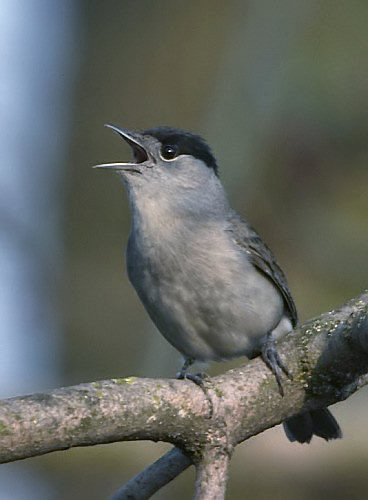
Blackcap

The Committee Against Bird Slaughter (CABS) has recently reported that some parts of Europe are becoming "slaughterhouses" millions of migrating songbirds. One of the places notorious for its killing of such birds is Cyprus. The Mediterranean island nation is known for a songbird delicacy called ambelopoulia. The dish is illegal in the state as it involves trapping birds like blackcaps and European robins. However, due to poor regulation of laws concerning the bird population, ambelopoulia is served in several Cypriot restaurants.

CABS estimates that up to 10 million are illegally poached each year for this dish. The poachers have been known to sell the birds either to restaurants, or people who deal in such illicit trade. A single bird can be sold for around $3.60. The poachers kill the birds using a wide range of gruesome techniques besides shooting. They put up mist nets which trap the birds in mid-flight, and even use lime-sticks. That is, they take a twig and coat it with a "glue" made from boiling fruits of the Syrian plum-tree. When a bird sits on that twig, it becomes stuck and dies while struggling to free itself. In addition to Cyprus, nations of Italy and Malta have also become hot-beds for illegal bird trapping where the committee has been known to set up bird protection camps in summer and autumn months. The illegal slaughtering came from the time when Cyprus was just beginning to look at animal welfare issue. According to Alexia Zalaf, a researcher from University of Leicester who hopes to improve animal welfare in Cyprus and United Kingdom, the infrastructure in dealing with such topics is still in its early stages.

I'm deeply appalled at the fact that some European nations are becoming infamous for their illegal slaughtering of migratory songbirds. Many of these precious treasures are part of the beauty in Europe's woodlands that evokes various images from fairy-tales that we have heard of. In addition to that, the birds also play a key role in the ecosystems. They keep insect populations in control, and they themselves also constitute to diet of various other European creatures such as wildcats. Also, the traps set up by poachers end up trapping bigger birds such as owls who play a vital role in keeping the prey populations in balance. I feel that Cyprus, which is the core of the illegal activities, is in a great need of help following poor law regulations concerning the songbird population. I hope it will receive a good deal of help, in order to enforce its laws and combat the illegal trapping of birds.

View article here

Indian Elephant to be Declared National Heritage Animal

Indian elephants

Indian Environment Minister Jairam Ramesh has recently stated that the Indian elephant will be declared a national heritage animal as a way to boost up the measures of its protection. According to Minister Ramesh, the elephant has been part of the Indian people's heritage for generations and should be given the same degree of importance as the tiger. He also stated that the Wildlife Protection Act of India will be amended such that there will be room for setting up the National Elephants Conservation Authority (NECA) on the lines of the National Tigers Conservation Authority (NTCA), as suggested by the panel. The amendment will be introduced in the Parliament's winter session. Minister Ramesh also recommended his officials to compose a set of guidelines for the animals' welfare to be fulfilled by temple authorities. The 12-member said that of the 25,000 elephants in India, 3,500 are in captivity. According to Mahesh Rangarajan of the panel, elephants in India have not received the same attention as tigers and any other endangered wildlife. Before the elephant, the credit of being declared national heritage animal was given to the rare and elusive Ganges River dolphin for its representation of the health of India's rivers.

I'm very pleased to find that the tiger is not the only animal to have the entire nation concerned about its future. The nation is also concerned about its elephant population, and I'm happy to see that Minister Ramesh is taking the initiative in helping the species. In my opinion, it is true that the Indian elephant has been part of our heritage for ages. People have relied on the elephant for work from timber haulers, to war machines. But those were the old days. Nowadays, the animals are favored as part of the tourist industry in which they give rides to tourists in India's national parks and pack animals. However, it's also important to understand that these animals constitute to our nation's natural heritage. I also believe that this new amendment in setting up an elephant conservation authority to work side by side with the tiger conservation authority is an effective way of protecting the two well-known endangered species that are part of our natural heritage.

View article here

Monday, August 30, 2010

China and Russia Join Hands in First Tiger Transboundary Protected Area

Chinese and Russian officials shaking hands in partnership
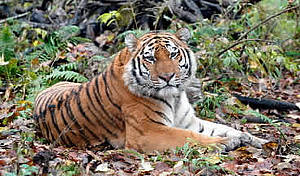
Siberian tiger

The neighboring provinces of Jilin in China and Primorsky in Russia have recently joined forces in establishing first transboundary protected area for Amur tigers (also called Siberian tigers). The treaty was signed by the Jilin Provincial Forestry Department of China, the Wildlife and Hunting Department of Primorsky, and the Bureau on Protection of Rare and Endangered Species of Flora and Fauna. In addition to working on the establishment of the protection area, the two sides will also partner up to restore the endangered species. According to Yu Changchun, Director of Conservation Department of Jilin Forestry Department, the area will not only provide a healthy habitat for tigers but also other endangered species such as the Amur leopard, the musk deer, and the goral (an Asian species of goat-antelope). Another part of the agreement is that the provinces will increase the sharing of information on the Siberian tiger and Amur leopard protection. They will also participate in adopting identical monitoring systems for both the tigers and their prey, conduct communal ecological surveys, and foster plans to launch an anti-poaching campaign along the China-Russia border.

I feel very proud that the nations of China and Russia are teaming up, in order to provide further protection for each other's wildlife. In this case, it is the tiger. However, it's also interesting that the two neighbors have taken a step further in the protection of other critically endangered species, such as the Amur leopards. These magnificent subspecies of leopards are estimated to be around 30 to 35 individuals. I hope that with the effect of this agreement, the population of these leopards will remain protected from the ruthless hands of poachers.

View article here

Friday, August 27, 2010

Tiger Cub Found Stashed and Drugged at Bangkok Airport

Tiger cub

A Thai woman was recently arrested at Bangkok's Suvarnabhumi Airport after authorities uncovered a 3-month-old tiger stashed in her suitcase among stuffed toy tigers. The poor creature appeared to be dehydrated, exhausted, and could not walk. Thankfully, help was there and it was taken down to a wildlife conservation center in the city. There, the cub was kept under close supervision by the medical staff who provided it with plenty of oxygen, water, and lactation. Now, all was left is a DNA test to provide detail's about the cub's origin. The police identified the woman was found to be Piyawan Palasarn, who has been charged with two counts of wildlife smuggling and could face up to four years in jail and a fine of 40,000 baht (an equivalent of $1300) if found guilty. However, Adisorn Noochdumrong, who is the head of an international wildlife division of the conservation center, stated that Palasarn denied that the luggage seized belonged to her. Instead, it belonged to somebody else who asked her to carry it for that unknown person(s). It has also not been proven what the woman allegedly intended to do with the cub.

I'm deeply relieved to find that the tiger cub is safe, and is receiving plenty of attention it needs for its survival. Hearing about this news, in my opinion, is a clear representation about the horrors of the illegal trade of exotic wildlife. It is not just full-grown animals, who are the victims, but also youngsters. A common example would be apes such as chimpanzees, orangutans, and gibbons. The reason why many are illegally smuggled out of their homelands as youngsters I think is because their faces are more humanlike in appearance, and to most people it reminds them of infants in general. This tiger cub, though not having a humanlike face, is also seen as a cuddly-looking organism. This could be the reason why it was being smuggled out of Thailand, and was bound for Iran where exotic pets are a popularity. But just like baby apes, this cub would grow up into a wild and untamed adult in the hands of its owners and end up dead. Thank god the authorities were able to intervene the process. I also hope that the Iranian government will follow the footsteps of Thailand and other countries, in order to enforce strict laws in banning the exotic pet trade.

View article here

Thursday, August 26, 2010

South Africa's Security Firms to Use Military Tactics to Combat Rhino Poaching

White Rhinos in Pilanesburg Game Reserve

South Africa has seen a dramatic drop in its rhinoceros population in recent months, due to a great deal of illegal poaching. The poaching activities have been affecting the nation's rhino population so much, that some security firms have taken drastic action and decided to use military tactics to combat the perpetrators. One of the key figures of this operation is Rusty Hustler, head of security for South Africa's North West Parks and Tourism Board. He has around thirty trackers to patrol almost 150,000 acres of wildlife habitat on the Pilanesberg Game Reserve, which had lost seven rhinos this year. According to Hustler, the process is not going to be easy as some poachers have military background. He even stated that gangs consist of not only South Africans, but also illegal immigrants from Zimbabwe and Mozambique.

Another key figure is Simon Rood of Nkwe Wildlife Security Services. His firm has been known to train recruits for a year before they receive the job full-time. Those who are taken full-time face the ultimate test of living out in the African bush for fifteen days at a time. The men work in pairs and spend most of the time patrolling the bush, and tracking the poachers. Rood, who happens to be an ex-military man, has a strong belief that this commando-style security is an effective way to fight illegal poaching.

I'm impressed to see that South Africa has put its foot down, and decided to take some drastic action against rhino poachers. In this case, it is through military tactics. In my opinion, this goes to show that in some nations that are prone to poaching, officials take a step further and decide to combat the illegal activities through serious measures. This can be seen when one visits a certain African national park and sees forest guards dressed in military-style uniforms and armed with M-16 rifles. I sure hope that this effective form of security will help slow down poaching in South Africa's wild lands where rhinos live.

View article here

Tuesday, August 24, 2010

Arizona Conservationists to Move into New Phase in Mexican Wolf Management

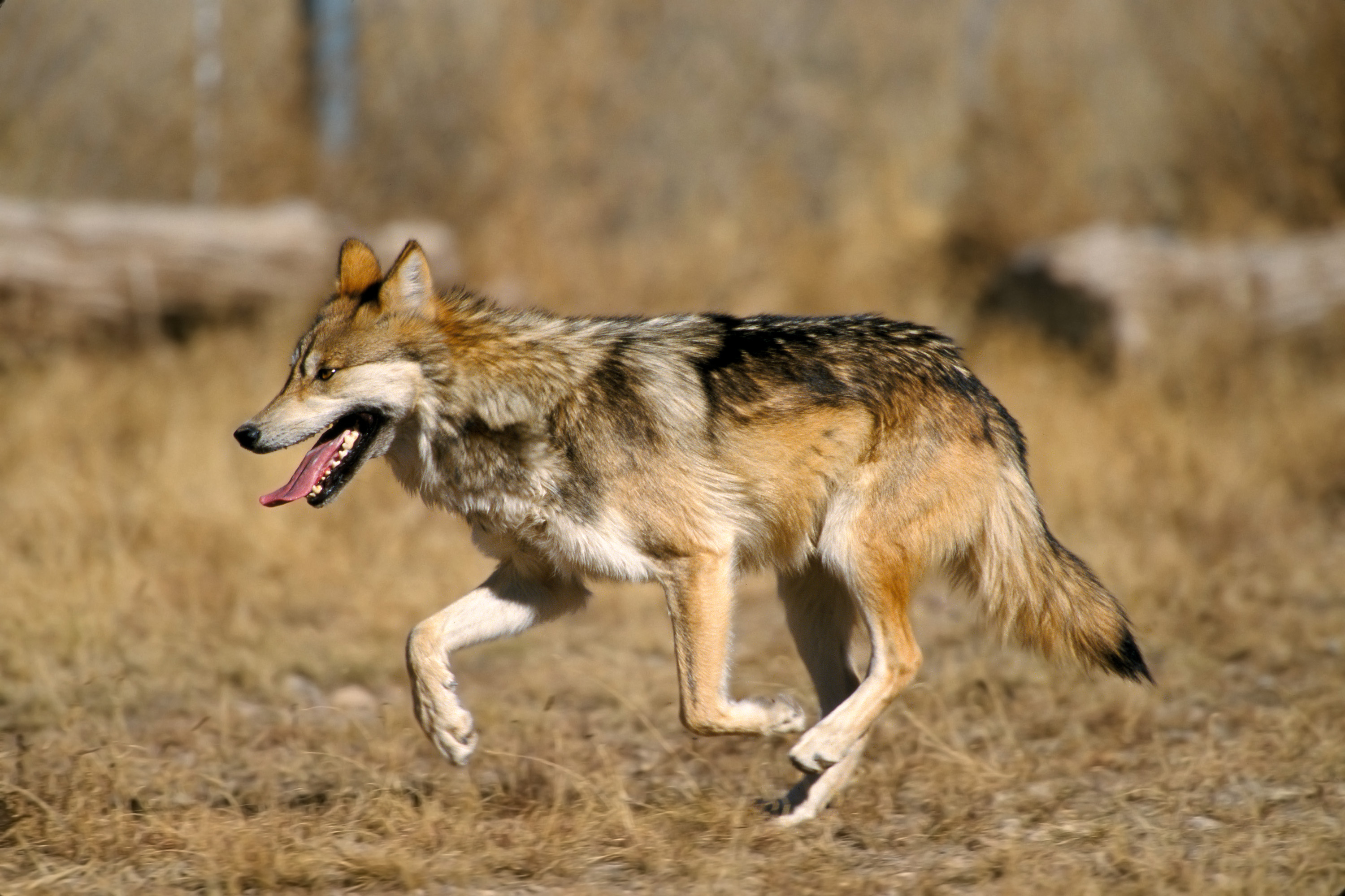
Mexican wolf in captivity

The states of Arizona and New Mexico have witnessed severe losses in Mexican wolf populations due to intense persecution. The animals, though critically endangered, have been killed by ranchers who worry about losing their livestock. These incidents have had a major impact on Arizona's Mexican wolf reintroduction program, which was established twelve years ago. However, recently, conservationists in Arizona have come up with a new alternative plan help save the wolves, allowing them to coexist peacefully with the ranchers. According to Eva Sargent, Southwest program director with Defenders of Wildlife, the program will focus on safe methods to prevent livestock losses from wolves. These tactics include special fencing, and more presence of cowboys  to keep watch on the cattle. This way, there would be less chances of livestock predation. Sargent even suggested that moving cattle further away from wolf dens will decrease the chances.

I'm very happy that the Mexican wolf reintroduction program has moved on to a new phase in helping save the populations of wolves in Arizona and New Mexico. By having more presence of range-riders on the field, there will be a fair chance that ranchers will not lose their cattle. This is because human presence, in general, keeps wolves and other wild animals away. The program previously compensated ranchers for livestock losses, which has now been taken over by the federal government. I also hope that these new tactics will help the conservationists in their future to revive the population of Mexican wolves in the American Southwest.

View article here

Saturday, August 21, 2010

Former Soldier Imprisoned for Smuggling Falcon Eggs

Peregrine falcon

A former Irish soldier, Jeffrey Lendrum, has been recently jailed for smuggling a stash of fourteen peregrine falcon eggs from England. The eggs were stashed inside his socks strapped to his body. Lendrum was destined for Dubai, where the sport of falconry has been around for generations and a single egg can sell up to 5,000 pounds (which is an equivalent to $11,000) in the black market. Lendrum was arrested on May 3, when a cleaner saw him behave suspiciously in a business class lounge at the Birmingham International Airport. In his original statement, he lied to the police that he was carrying store-bought chicken eggs for his bad back. But now, he has plead guilty on charges of wildlife smuggling. He was first arrested in 1984 for stealing rare birds' eggs in Zimbabwe, where he was a member of the Rhodesian Special Forces. During that time, he had put his training in use by either descending down a cliff or lowering himself from his helicopter to reach into birds' nests. Thankfully for the falcon eggs, the police kept them warm after confiscating them. Out of the fourteen eggs, eleven had hatched and the chicks had since been released into the wild.

It's amazing to see how other nations of the world are under threat from animal smuggling, and not just exotic places. In this case, it was in England where the eggs of a bird species which happens to be protected under the British law, were being smuggled out of the country. According to Judge Christopher Hodson of Warwick Crown Court, Lendrum's activities did not just hurt the nation but also the planet and its future in some measure. Therefore, Lendrum is sentenced to 30 months behind bars. Also, retired police officer Andy McWilliam who worked the case for the National Wildlife Crime Unit, will be meeting with Lendrum to learn about his tactics. I think this may be a way for the law enforcement to know about how such illegal smuggling of animals functions, and bring it down. Sort of like "it takes a thief to catch a thief."

View article here